Who?

Okay, now that Battlestar Galactica is on break until next season, Sci-Fi is now airing the new series of Dr. Who on Fridays.

I caught the first two episodes of it last Friday, and so far I’m pleased.

The series seems to be a tad darker and more serious than the original series, which went off the air in the 1980s, but that’s because it’s being written more for adults than kids (now that the original Dr. Who fans have grown up).

It still has a lot of goofy fun in it, though.

I also like how the Doctor’s new assistant (Rose) is much more confrontational with him than many previous assistants have been, demanding to know things (like just who he is) and challenging him when he says things, bringing a more real-life perspective.

My favorite exchange was this:

ROSE (upon meeting a bunch of aliens socially for the first time): They’re so alien. . . . The aliens are . . . so alien. You look at ’em . . . and they’re alien.

THE DOCTOR: Good thing I didn’t take you to the Deep South!

ROSE: Where are you from?

THE DOCTOR: All over the place!

ROSE (still thinking about the aliens): They all speak English?

THE DOCTOR: No, you’re just hearing it. It’s a gift of the TARDIS. A telepathic field gets inside your brain–translates.

ROSE: It’s inside my brain?

THE DOCTOR: Well, in a good way.

ROSE: Your machine gets inside my head. It gets inside and it changes my mind and you didn’t even ask!

THE DOCTOR: I didn’t think about it like that.

ROSE (outraged): No! You were too busy thinking up cheap shots about the Deep South!

BA-BOOM!

As a native of the Deep South, I approve!

I gave ’em a couple of points for the first Deep South/alien joke, but the rejoinder scored ’em an extra TEN!

MORE ON DR. WHO.

Tin-Eared Translators

I meant to blog about this last week but didn’t, so here goes.

Did y’all notice how tin-eared the translation of the Old Testament reading was at last week’s Sunday Mass?

Wow, it was awful!

The passage was the sacrifice of Isaac from Genesis 22. The very first part of the reading revealed the tin ear of the translators of the New American Bible. Here’s the first verse:

Some time after these events, God put Abraham to the test. He called to him, "Abraham!" "Ready!" he replied.

There are so many problems here. First, the text needlessly puts a quotation from God ("Abraham!") right up against a quotation from Abraham ("Ready!"), making the text "unproclaimable." A lector is going to have to be really on his toes to distinguish these two quotations in a way that the congregation will be able to distinguish between who is talking. (This juxtaposition of the two quotations is NOT present in the Hebrew word order of the passage. It’s something that’s been foisted on the text by the translators.)

Worse, what’s with this "Ready!" business? That’s certainly not what it says in the Hebrew. The word in Hebrew is hinneni, which is just hen (pronounced "hain") with a first person singular ("I") pronoun suffix stuck on it. Hen can mean either "lo!/behold!" or it can mean "here" or "there." So you’d either want to translate hinneni literally along the lines of "Behold! It is I!" or "Behold me!" or (more likely) "Here I am!"

In no case does hinneni mean "Ready!"

If "Ready!" isn’t defensible as a literal translation, is it defensible as a dynamic translation? Heck no! If an English-speaker hears God call his name, the English-speaker is certainly not going to respond by saying "Ready!" That’s not part of English style in such situations.

The translation is thus defensible neither as a literal nor as a dynamic translation based on ordinary English style.

It’s simply TIN EARED–the kind of thing that a FIRST YEAR Hebrew student ought to have MARKED WRONG on his homework.

But that wasn’t what first leapt out at me when I listened to this passage at Mass. What leapt out was this part:

But the LORD’S messenger called to him from heaven, "Abraham, Abraham!" "Yes, Lord," he answered.

"Do not lay your hand on the boy," said the messenger. "Do not do the least thing to him. I know now how devoted you are to God, since you did not withhold from me your own beloved son."

What’s with all this "messenger" business?

Yes, it’s true that in the biblical languages the word for "angel" and the word for "messenger" are the same word, but in English we have two different words, and if we’re clearly talking about a heavenly messenger rather than one sent by an earthly king (as in this case) then "angel" is the appropriate translation–at least for a translation that is to be used in the liturgy.

I’d have no objection if a non-liturgical translation wanted to consistently render malak or angelos as "messenger" in order to help the reader see a little more how the text would have sounded to its original readers, but that kind of translation would let you put in a note that explains that this is the same word as "angel" in the original.

But liturgical translations don’t come with footnotes when you hear them proclaimed, and it’s just going to confuse the listeners, who probably won’t know that malak means both "messenger" and "angel." The listener may wonder why "messenger" is used in this passage where other translations have "angel."

He may even think that there’s a difference between this kind of divine messenger and an angel. After all, if he’s been paying attention then he knows that other Mass readings do use the word "angel," and so to find "messenger" in this passage could suggest a difference between the two.

What an amateurish, tin-eared translation we’re stuck with.

I agree with Fr. Richard John Neuhaus:

Conservative priest Richard John Neuhaus complained in First Things magazine that the NAB remains "a wretched translation. It succeeds in being, at the same time, loose, stilted, breezy, vulgar, opaque and relentlessly averse to literary grace."

Fortunately, there’s a new 8-translation edition of the New Testament for Catholics that will at least let Catholics compare the disasters that we’re hearing at Mass with how the same passage reads in other translations.

GET THE STORY.
(CHT to the reader who e-mailed.)

Unfortunately, this New Testament still won’t help folks baffled by readings from Genesis.

Peggy Noonan Has A Question

I think it’s a good one.

EXCERPT:

This week’s column is a question, a brief one addressed with honest curiosity to Republicans. It is: When George W. Bush first came on the scene in 2000, did you understand him to be a liberal in terms of spending?

The question has been on my mind since the summer of 2005 when, at a gathering of conservatives, the question of Mr. Bush and big spending was raised. I’d recently written on the subject and thought it significant that no one disagreed with my criticism. Everyone murmured about new programs, new costs, how the president "spends like a drunken sailor except the sailor spends his own money." And then someone, a smart young journalist, said, (I paraphrase), But we always knew what Bush was. He told us when he ran as a compassionate conservative. This left me rubbing my brow in confusion. Is that what Mr. Bush meant by compassionate conservatism?

That’s not what I understood him to mean. If I’d thought he was a big-spending Rockefeller Republican–that is, if I’d thought he was a man who could not imagine and had never absorbed the damage big spending does–I wouldn’t have voted for him.

I understood Mr. Bush to be saying, when he first came on the national scene, that he was the kind of conservative who cared very personally about the poor and struggling, who would take actions aimed at helping them, and that those actions would include promoting policies aimed at keeping the economy healthy and capable of pumping out jobs. I also understood Mr. Bush to be saying–and he often said it–that he meant to allow and encourage faith-based programs that helped young men who were getting in trouble with, or at risk of getting in trouble with, the law. It was clear by at least the 1990s that local programs run and staffed by the religious and their organizations had a higher rate of success than did programs that excluded religion. Under Mr. Bush, the feds would no longer funnel money exclusively into nonsectarian programs. The inner-city pastor would now be able to get a portion.

GET THE STORY.

Let’s Pray For These Guys

In case you haven’t heard, there was a horrific medical accident in England. Eight gentlemen were taking part in the first human trials of an experimental drug known as TGN1412, which is an anti-inflammatory steroid.

It worked okay in animal tests, but when it was given to humans, disaster resulted. Of the eight gentlement in the test, two received placebos, but the other six collapsed and two of them have major organ failure.

EXCERPTS:

A volunteer taking part in the trial who was given a placebo and therefore escaped the effects described the appalling scene on the ward.

Raste Khan, 23, a television technician, said: "The test ward turned into hell minutes after we were injected. The men went down like dominoes.

"First they began tearing their shirts off complaining of fever, then some screamed out that their heads felt like they were going to explode.

"After that they started fainting, vomiting and writhing around in their beds.

"It was terrifying because I kept expecting it to happen to me at any moment. But I felt fine and I didn’t know why."

Six volunteers suffered catastrophic reactions to trials of the new drug, TGN1412, at Northwick Park Hospital in Harrow, North-West London.

They were the first people in the world to test the drug, being developed by the German pharmaceutical firm, TeGenero, and designed to treat chronic inflammatory conditions and leukaemia. They were paid £2,000 each.

Four are in a serious condition but showing signs of improvement. Two remain critical.

GET THE STORY.

More from The Sun:

"It was terrifying because I kept expecting it to happen to me at any moment. But I felt fine and didn’t know why."

"An Asian guy next to me started screaming and his breathing went haywire as though he was having a terrible panic attack.

"They put an oxygen mask on him but he kept tearing it off, shouting ‘Doctor, doctor, please help me!’ He started convulsing, shouting that he was getting shooting pains in his back"

GET THE STORY.

More from Wikipedia:

Phase I clinical trials conducted by PAREXEL at Northwick Park Hospital, London, hospitalised 6 volunteers in March 2006, with at least 2 of them suffering major organ failure.

After the drug was administered to the last participant, the first participant started complaining of a severe headache, fever and pain and collapsed shortly after. Within a few hours, the remaining participants who received the actual drug had become ill as well, vomiting and complaining of severe pain. Within 12 hours all 6 had collapsed. At least one participant begged the doctors to "put him to sleep" because of the suffering.

Some of the men are reported to have experienced severe swelling with comparisons being made to The Elephant Man. According to doctors, this is caused by the large amount of fluids given as part of the treatment. The patients are being treated with anti-inflammatory steroids. Two of the men were reported to be in a critical condition with the remaining four being in a serious, but improving condition.

TeGenero has apologized to the families involved and insist that these effects were completely unexpected and that all protocols have been followed. An investigation of the case by authorities has now been commenced to find out if the reaction seen is due to a contamination of the drug given, a wrong dose being administered or if it is an inherent flaw in the drug. Criticism has been raised that 6 participants were given the drug in such a short time, which is against the recommendations of some standard literature.

WIKIPEDIA ON TGN1412.

The mention in the Wikipedia entery that police are investigating whether there is "contamination" in the drug given includes the possibility that there was deliberate tampering with the drug, which press accounts indicate the police are looking into.

The options here seem to be: (1) the drug is just harmful to humans where it isn’t to the animals used in trials, (2) accidental overdose, (2) deliberate overdose [highly unlikely], (3) accidental contamination, and (4) deliberate contamination.

The two with major organ failure are not likely to survive. Doctors are trying to flush the drug out of their systems, which produces the massive "Elephant Man"-like swelling that family members have reported.

Any way you go, let’s pray for these guys.

St. Patrick’s Day/Friday/Lent/Meat

Today is St. Patrick’s Day–and it’s a Friday during Lent. So the big question on everybody’s mind is: "Do we get to eat meat today?"

The answer is: It depends.

What it depends on is whether or not your bishop has dispensed everybody from the requirement of abstaining from meat.

St. Patrick’s Day is not a solemnity in the U.S. (though it is actually a holy day of obligation in Ireland, I recenlty learned–understandably since he was the single most important guy in the conversion of the Irish to the faith) and so it does not automatically override the abstinence requirement the way that solemnities do.

This means that your bishop has a choice of either doing nothing and letting the abstinence requirement stand or of dispensing folks so they can have corned beef with their cabbage (or whatever).

I know that the bishop of San Diego did dispense the requirement, and I’ve been told that the folks in New York City are similarly dispensed.

(BTW, for folks in other countries, y’all ought not to assume from this blog that you’re necessarily obligated to abstain. That’s U.S. practice on Fridays of Lent, but it’s not the practice everywhere. I recently got a new commentary on the Code of Canon Law that had an appendix with the particular legislation for other English-speaking countries, and I was startled to see how much variation there is on this point in other parts of the world. More on that another time.)

If you know what your bishop has done, you might want to share it in the combox so others won’t have to call the chancery and ask.

Proxies

A reader writes:

I’ve been coordinating the sacrament preparation @ my parish for 10 years.  Early on, the issue arose of a would-be Confirmation sponsor unable to attend the actual Confirmation liturgy.  In some places, pastors allow sponsors by "proxy" — they are listed in the official Church record, but someone physically stands in for them at the time of Confirmation.   (This practice is not written into canon law.)  When this idea was put forth here, an assistant pastor – a canonist – advised (and strenuously maintained/demanded) that no "proxy" was possible, but in fact a sponsor is the physical witness to the Confirmation.

Since that time, we’ve changed pastors/assistants and the new staff are not as certain/adament with regard to the proxy issue.   I maintain that the logic used with the first resolution of this issue still is reasonable & defensible.  However, I am not a canonist, but a laywoman – and, to make matters worse, the priest whose opinion carried so much weight years ago has since left the priesthood.  So, my source of information is "tainted." 

Now, my son was asked to be a Confirmation sponsor in another diocese, with the plan to have a proxy stand in for him at the liturgy while he is out-of-state.  I told him that the proxy solution was not a true solution, but that whoever is present is the actual sponsor, (according to our errant priest-friend). 

What is correct?

You are correct that the use of proxies as sponsors in confirmation is not found in the Code, however this of itself does not mean that the use of proxies is illegitimate.

There are all kinds of acts for which we can designate someone to act on our behalf, and canon law does not specifically have to name all of them. In general, people can ask someone to act on their behalf (i.e., serve as a proxy) unless this is specifically prohibited or otherwise impossible for some reason.

The ability to use proxies goes so far as to inject itself into the sacraments. Canon law allows the use of proxies in the exchange of matrimonial consent, for example, and one could argue that confession is made by proxy when a person confesses through a translator–something else canon law also explicitly envisions. You can even argue that the parents are serving as proxies of a sort at the baptism of an infant and requesting baptism on his behalf.

There are limites to what a proxy can do for you, though. They cannot be baptized or absolved or married for you–only you can receive the sacrament. But proxies can act as your agent in doing things attendant to the sacrament, such as requesting it, making confession in a form the priest can understand, or conveying your consent to be married.

Given that, it would seem in principle that a godparent could make use of a proxy. If the person who will be receiving the sacrament can make use of proxies to perform certain functions for him then it would seem that a godparent–whose role is much less central to the sacrament–could do the same.

At the very least, there is no in principle impossibility of this (the way there is an in principle impossibility of anyone receiving the sacrament for you). That would seem to kick the question into the realm of what ecclesiastical law says.

As always in law, liberty is presumed unless the law provides otherwise, and there is no law barring the use of proxies by godparents at either baptism or confirmation.

In fact, the green CLSA commentary specifically notes:

Although the canon [i.e., 872] says nothing about a sponsor’s presence ethrough a proxy, this silence is not to be understood as barring the use of a proxy to stand in for an absent sponsor [at baptism] [p. 1061].

Regarding your former assistant pastor’s statement that the godparent must be present because he is the physical witness to the confirmation, this is incorrect, as is shown by several factors:

1) There is no strict mandate to even have a sponsor at confirmation. Canon 892 only says that there should be a sponsor "insofar as possible." If he was the witness to the event then the use of a sponsor would be mandated.

2) The canons on proof of confirmation (894-896) make no mention of the sponsor attesting to the event. Canon 895 does say that the sponsor’s name is to be put in the registry along with the names of the confirmand, the minister, and the parents, but that is so we can tell how who is related to whom–not who witnessed the event. (E.g., if a confirmand’s mother is in the hospital due to a car crash and can’t attend the confirmation, that doesn’t mean that her name gets left out of the "Mother" slot in the confirmatin registry.)

3) The role of confirmation sponsors is expressly modelled on baptismal sponsors in the Code, and when we look at the proofs of baptism section the Code EXPLICITLY envisions someone other than the sponsor serving as witness to the event (canon 875). If a baptismal sponsor is not a necessary witness to baptism then a confirmation sponsor (whose witnessing function isn’t even mentioned in the Code) certainly is not a necessary witness for confirmation.

YOU CAN LOOK UP THESE CANON HERE.

I therefore do not see any legal barrier to the idea of a confirmation sponsor using a proxy to stand in for him on the day of the event.

20

Who’s oppressing who?

SDG here making a rare foray from occasional-blogger semi-retirement spurred by a recent screening of V for Vendetta, scripted by the Wachowski brothers from a graphic novel by Alan Moore.

The scene: In the English-speaking West, a happy couple sits at home, minding their own business. Suddenly, jack-booted Lifestyle Police swoop in and arrest first one, then the other.

Q: Who are these people and what is their offense?

  1. Conservative homeschooling parents guilty of withdrawing their children from mandatory kindergarten sex ed and diversity training about different kinds of families.

  2. Lesbians guilty of violating the religious lifestyle laws of the fascist conservative Christian theocracy.

If the question is which of these two scenarios represents a more reality-based fictionalization or projection of actual current trends in the English-speaking West or anywhere in Europe, it seems to me that the obvious answer is A. Every so often I get a bulletin from the Homeschool Legal Defense Association detailing incidents from around the country of government harrassment of homeschooling parents. If there’s a GLBT Legal Defense Association dedicated to combatting government harrassment of that constituency, I’ve not heard of it.

But of course it’s scenario B that we find in V for Vendetta, which imagines a world in which homosexuals are actively hunted down, owning a Koran is a capital offense, the media is a mouthpiece of the conservative government (!), high-powered Catholic bishops conspire with the government and have kinky sex with child prostitutes, and razing the bastions of Western civilization (e.g., blowing up the English Parliament building) is a moral victory.

Alan Moore, the writer of the original story, has taken his name off the film, which he claims the Wachowskis have turned from an ambiguous story of anarchy vs. fascism into an allegory of the American Right (Evil) vs. the American Left (Good).

In principle, I suppose that Moore, who considers himself an anarchist, would be equally against any form of coercive, overbearing government intrusion into people’s lives, beliefs and expression, whether liberal or conservative (though this is just a guess and I could be wrong).

As Moore complains, though, the film turns the story into a parable of the American left (good) vs. the American right (bad), completely blowing over the facts that [a] both sides are capable of intrusive oppression of dissenters, and [b] right now, in spite of certain conservative trends in recent years, it still looks like being conservative is more likely to get you in trouble in one way or another than being liberal — at least, in the English-speaking West as well as throughout Europe.

At least, that’s how it seems to me, although I tend to be pretty isolated from political issues (which is one reason I avoided reviewing most of last year’s crop of politically themed films, Good Night and Good Luck, Syriana, Munich, The Constant Gardener, etc.).

I seem to recall hearing about, e.g., Catholic leaders in Canada running afoul of the law over the Church’s teaching on homosexuality. It also seems to be that while university professors are typically free to advocate the most radical and extreme leftist points of view, there have been a number of incidents in universities in which individual professors or other faculty members have been internally persecuted and forced to apologize or resign over expressing politically incorrect views.

Here’s an interesting tidbit: Earlier this week, apparently, the Netherlands instituted a "tolerance test" for would-be immigrants that requires applicants to buy and watch a video that includes footage of two men kissing in a park and a topless woman bather, in order to ensure that they’re all right with such behavior before the Netherlands will accept them.

GET THE STORY.

On closer examination, it turns out that this law seems specifically targeted at conservative Muslims, since there are apparently generous exceptions to the requirement for Americans and Australians as well as citizens of EU members, making the Middle East the obvious target of the law.  But this merely illustrates that discrimination against Muslims is not the province of the conservative Christian right; here are ultra-liberal, anything-goes secular lefties doing this very thing. But of course that’s a provocative nuance you would hardly expect to find in an ideologically oriented Hollywood film.

Anyway, I’m writing my review tonight, and would like to be able to cite a few well-chosen specifics on the subject of liberal/secularist government/institutional opposition to, harrassment or punishment of, or otherwise discrimination against conservative/religious individuals, values, expressions, etc. So this is ultimately an info-bleg post. Help me out, politics watchers Who’s oppressing who, and how, and where?

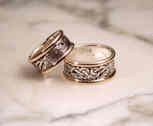
The Rules Of Cheating

Weddingrings_1

For a really grim view of the state of marriage in our society, just look at what some husbands and wives consider to be acceptable behavior: You can cheat on me so long as it is within the agreed-upon bounds of cheating on me:

"A New York magazine article entitled ‘The New Monogamy[Editor note: Graphic picture illustrates article] states that marriages are becoming more and more open. The thinking is that agreed-upon ‘cheating’ will ward off the urge to stray further. In this view, as long as each spouse ‘sluts around’ (their words, not ours) within the boundaries deemed acceptable by both parties (rules range from just kissing to engaging in full-blown orgies), they aren’t actually cheating. Sure, it sounds pretty crazy. But let’s just go with it for now, keeping in mind how unnatural forsaking all others can feel to some in committed relationships — and how striving for true monogamy can outright ruin some relationships. So, provided the rules of engagement are mutually agreed upon, is the open approach reasonable?"

GET THE STORY.

One reason I think the idea of "slutting around" on your spouse is a perverse idea that is gaining ground in our society is because so many people simply have no idea what marriage is. People seem to think of marriage as an official stamp on a romance. Before extramarital sex gained enormous popularity, marriage was all too often seen as permission to have sex. Then when marriage was no longer seen as the gateway to sex, marriage became merely The Piece Of Paper that designated that a couple was Together, not for life but until they grew bored with each other. Now that it’s very easy to shed yourself of a spouse when he no longer thrills you, divorce seems to be becoming The Piece Of Paper that is unnecessary to obtain first before scoping out a hot date for the weekend.

A priest once told me that when he was in seminary some forty years ago, a fellow seminarian commented to him that the Church was badly in need of developing its marital theology. In the years since he was in seminary, my priest friend told me, John Paul II had given the Church fully seventy-five percent of its current theology of marriage. (There is no hard data supporting that number, only an educated guess by clergy with whom this priest had discussed the matter.)

The Church has had a great gift on the theology of marriage bequeathed to it by JPII and the Church will have its work cut out for it passing on JPII’s marital theology to a culture utterly clueless that marriage is not an amoral "hook-up" till boredom-do-us-part, but a vocation intended to form people in sanctity.

Undoing A Godparent

A reader writes:

Is it possible for a parent to un-do a godparent for a child? Here’s our scenario:

We asked a niece and a nephew (not siblings) to be godparents to our third daughter. My niece has responded nicely to being a godmother. She’s been faithful to the church and is an all-around good person. My nephew, on the other hand….

He’s turned out to be, well quite frankly, the southern end of a north-bound horse. He lives a lifestyle that is not becoming of what my wife and I agree with. Now, it’s not like we’re judgmental in the way other people act, I’m sure we have many faults, but the lifestyle he’s chosen is something we cannot condone. As much as I’d like to go into specifics, I realize you only have a few billion things to do and you don’t want our dirty laundry.

One of the biggest reasons I’m considering doing this, if possible, is the manner in which he treats his mother (my sister). Total disdain and disrespect. I don’t want my daughter to grow up and see her godfather treat his mother that way and think it’s okay.

If it’s possible to replace a godparent, what must we do?

Unfortunately, there is no canonical procedure for replacing a godparent or stripping him of his office. This is a little surprising since there have been lame, scandalous godparents ever since the institution was established.

In former days it was held that a spiritual relationship was established between the godparent and the godchild that was so strong and enduring that it served as an impediment to marriage, though this impediment no longer exists in canon law.

The fact that such a relationship was held to exist may be why no procedures for replacing godparents developed. If godparents are sufficiently understood on the model of actual parents then, just as you kinda gotta live with it if your actual parent is a dud then it might be inferred that you kinda gotta live with it if your godparent is a dud.

But even if godparents were understood as having relationships with their godchildren as unbreakable as those of parents, that does not mean that there is no way to address the situation, for when a parent proves fundamentally unable to care for his children then the children can be entrusted to another.

Thus it would be possible for you to tell the gentleman in question that until he shapes up he will not be able to function as the child’s godfather. You can then designate someone else to function as godfather and say, "Honey, Mr. Irresponsible isn’t able to serve as your godfather, so Mr. Responsible will be acting as your godfather instead."

I’d further note that I know that some current canonical opinion holds that, even though there is not a canonical procedure for replacing a godparent that it may be possible to go to the parish and have the baptismal registry annotated to reflect the new situation.

I’d like to have a more simple and definite answer for you on this one but, given the state of canon law on the subject, that’s a bit hard to do. At least there are ways to address the situation.

20