The Gospel Of Judas

A reader writes:

I had the TV on last night on a BBC channel (I’m in Italy right now on vacation and its one of the few English channels I have) and I saw an ad for a TV show on the Gospel of Judas Iscariot and how it could shake the foundations of Christianity and turn everything we know about Jesus upside-down (I’m paraphrasing).  Its obvious that this is shameless sensationalism in the vein of the Da Vinci Code, but I was wondering what you know about the text they are refering to?

I’ve been aware of the so-called "Gospel of Judas" for some time, and rumor is that it’ll be released by Easter.

In fact, the National Geographic Channel is going to be doing a special on it on April 9th at 8 p.m. (Eastern?), apparently.

Here’s the scoop:

In the second century there was a non-canonical work that was known as "the Gospel of Judas," and it was used by a sect of Gnostics called the Cainites who Irenaeus attacked in his work Against Heresies. According to Irenaeus,

Others [i.e., the Cainites] again declare that Cain derived his being from the Power above, and acknowledge that Esau, Korah, the Sodomites, and all such persons, are related to themselves. On this account, they add, they have been assailed by the Creator, yet no one of them has suffered injury. For Sophia was in the habit of carrying off that which belonged to her from them to herself. They declare that Judas the traitor was thoroughly acquainted with these things, and that he alone, knowing the truth as no others did, accomplished the mystery of the betrayal; by him all things, both earthly and heavenly, were thus thrown into confusion. They produce a fictitious history of this kind, which they style the Gospel of Judas [Against Heresies 1:31:1].

Despite being mentioned here, the Gospel of Judas was lost to history, but a copy of it (or, rather, of most of it) turned up on the antiquities market in the latter half of the 20th century. It was finally purchased and has been undergoing translation and preparation for publication in the last few years.

With Da Vinci madness in the air, I’m sure that the Gospel of Judas will be all over the airwaves and the Net once it’s finally published (possibly next week), so the time is ripe to do a heads-up on it.

It’ll all be much ado about not much, though, because this thing ain’t written by the historical Judas. It’s a second century forgery (assuming that it’s not a 20th century forgery of a forgery) that will tell us more about hte beliefs of certain Gnostics than it will about the events of Christ’s life.

It has historical value insofar as it is used to learn more about early Gnosticism. But the press’ll misrepresent the story, breathlessly wondering "What if it’s true?" when it just ain’t true. The press’ll try to press it into service as a window into the ministry of Jesus, and that’s precisely what it’s not.

So, forewarned is forearmed.
MORE FROM WIKIPEDIA.

MORE FROM A SITE DEVOTED TO WHAT IS CURRENTLY KNOWN ABOUT IT, INCLUDING TRANSLATIONS OF SOME PASSAGES.

Sexy Media = Child Promiscuity

From our Great Discoveries In Science Department, researchers have confirmed what social conservatives have been warning a dismissive society about for years: Sex in the media influences youngsters to experiment on their own.

"Sexually charged music, magazines, TV and movies push youngsters into intercourse at an earlier age, perhaps by acting as kind of virtual peer that tells them everyone else is doing it, a study said Monday.

"’This is the first time we’ve shown that the more kids are exposed to sex in media the earlier they have sex,’ said Jane Brown of the University of North Carolina, chief author of the report.

"Previous research had been limited to television, said the study which looked at 1,017 adolescents when they were aged 12 to 14 and again two years later. They were checked on their exposure during the two years to 264 items — movies, TV shows, music and magazines — which were analyzed for their sexual content.

"In general it found that the highest exposure levels led to more sexual activity, with white teens in the group 2.2 times more likely to have had intercourse at ages 14 to 16 than similar youngsters who had the least exposure."

GET THE STORY.

When scientists say this, it is Big News; when social conservatives — particularly traditional Christians — say this, it is shrugged off as starboard paranoia.

Coming Soon To A Homily Near You?

I always get depressed when I read stories like the following one.

SCIENTISTS SPECULATE THAT FLOATING ICE COULD HAVE EXPLAINED JESUS WALKING ON WATER.

The theory is that conditions could have been such that ice could have formed in the saltwater springs near Tabgha in the Sea of Galilee and

With such conditions, a floating patch of ice could develop above the plumes resulting from the salty springs along the lake’s western shore in Tabgha. Tabgha is the town where many archeological findings related to Jesus have been found.

"We simply explain that unique freezing processes probably happened in that region only a handful of times during the last 12,000 years," said Doron Nof, a Florida State University Professor of Oceanography. "We leave to others the question of whether or not our research explains the biblical account."

Nof figures that in the last 120 centuries, the odds of such conditions on the low latitude Lake Kinneret are most likely 1-in-1,000. But during the time period when Jesus lived, such “spring ice” may have formed once every 30 to 60 years.

Yeah, right. Big deal.

There are all kinds of ways to rationalize biblical miracles–the burning bush only seemed to burn because there was a natural gas-emitting fissure that had ignited behind it, the miracle of the loaves and the fishes was really a "miracle of sharing," yadda, yadda, yadda.

Sheesh!

Look, I’m all for recognizing that not everything in Scripture is meant by the authors to be taken literally, but we can’t simply dismiss miraculous occurrences in this fashion, especially not in documents that were written as close to the historical events in question as the gospels (within the lifetime of the eyewitnesses and even by eyewitnesses).

The fact is that there are Aramaic and Greek words for "ice," and if Jesus had been walking on it, the Evangelists could have said so. Even if the ice was hard to see, Peter would have been aware of it, because he got out and stood on the water, at least momentarily.

The gospels also depict Jesus walking on the water, not standing and floating along on something.

This just isn’t the picture of the event that the Gospels give us.

Not that that’ll stop some avant garde priests from using the theory in homilies.

Quote Of The Day

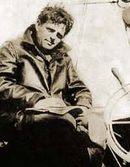
Jacklondon_1

I couldn’t decide whether to file the following Great Quote under About Writing or Social Analysis. I settled on Social Analysis because I think it has a point that is broader than its original context as a remark on literary creativity.

"You can’t wait for inspiration. You have to go after it with a club." —Jack London

For those of you who have never heard of Jack London…

CLICK HERE.

For those of you who have and who also happen to like sci-fi, here is an interesting factoid about Jack London from Wikipedia:

"Jack London appears briefly as a character at the end of Star Trek: TNG [The Next Generation] episode ‘Time’s Arrow,’ Parts I and II as a hotel employee. Mark Twain advises him to go to Alaska."

Septuagint Or Masoretic Text?

A reader writes:

I’ve always got the impression that the Catholic Old Testament is translated from the Septuagint, while the Protestant Bible’s Old Testament is translated from the Masoretic texts. The virtues of this being (A) that the apostles and Christ quoted mainly from the Septuagint, and (B) the Septuagint was translated from older and maybe more accurate versions of the books than what the Jews had in 70 AD. But — at least in a cursory glance, comparing with some Septuagint quotes online — aside from "a virgin shall give birth," all the cited passages in my Catholic Bibles seem to be what’s given as the Masoretic translation. Is this the case?

First a bit of terminology for those who may not be familiar: The Septuagint (LXX) is the major Greek translation of the Old Testament. It was produced between the third and first centuries B.C. and is extensively quoted in the New Testament. The great majority of times that the New Testament quotes from the Old, it’s the LXX version that is being used.

Originally, the term "Septuagint" just referred to the main Greek translation of the five books of Moses (Genesis-Deuteronomy), which were allegedly put into Greek by 70 scholars in Alexandria, Egypt. This is where the name "Septuagint" came from and why the Roman numeral for 70 (LXX) is used as an abbreviation for the translation. Over time (before the first century), it came to include all of the books of the Old Testament, including the deuterocanonicals.

The Masoretic Text (MT) is the main Hebrew edition of the Old Testament. It was prepared between the seventh and tenth centuries A.D. based on earlier Hebrew manuscripts. It does not include the deuterocanonical books.

It’s true that the LXX has an important role in Catholic translations of the Old Testament, but they generally are not straightforward translations from the LXX.

Until recently, most Catholic versions of the Old Testament were translated (primarily) from the Latin Vulgate rather than from the LXX or the MT. They might be based on the Vulgate using the LXX and the MT for purposes of comparison (e.g., to decide between disputed renderings), but the Vulgate was the base text used by most Western Catholics. (It’s different among Eastern Catholics.)

The Vulgate was based on the (pre-Masoretic) Hebrew text, the LXX, and the Old Latin Version.

It was in the 20th century that a significant number of translations started to be made from pre-Latin sources. This was encouraged by Pius XII in his encyclical Divino Afflante Spiritu.

When this started happening, Catholic translators relied on a combination of the LXX and the MT.

The canon of the Catholic Old Testament is based on the LXX, so that’s the top level where the LXX is employed in making translations. (In the ancient world, both the LXX and the Hebrew scriptures had fuzzy boundaries about what books they included, but a few centuries after Christ the Catholic Church settled on one LXX-derived canon and in about the same timeframe the Jewish community settled on one Hebrew canon, which was later used to prepare the MT.)

Some of the books of the Catholic Old Testament seem to have been written as part of the developing LXX tradition (e.g., Wisdom, 2 Maccabees), and so there are no earlier versions. For these, Catholic translators use the LXX since there is no MT equivalent of these books.

Other books of the Catholic Old Testament were based on earlier versions in Hebrew or Aramaic but have survived primarily in the LXX (e.g., Sirach). For these Catholic translators tend to use primarily the LXX, but they may also consult the original language versions to the extent that these have been recovered by archaeology (e.g., the Hebrew version of Tobit).

Still other books are found in both the LXX and the MT. Here recent Catholic translators have tended to use the MT as their base text, using also the LXX and the Dead Sea Scrolls (DSS) for purposes of comparison.

The base text is just a starting point for the translators of major editions of the Old Testament, though. The goal is not to translate what is in the base text but to produce a translation that best reflects what the originals most likely said. This means going with what is in alternative sources (like the LXX and DSS) whenever it appears that the reading in the alternative source is more likely the original reading.

In some passages, it appears that what the MT has is the most original; in others it seems like the LXX or the DSS may better preserve the original.

How this gets sorted out is a complex process, but it’s part of the burden that scholars have to shoulder in an effort to get past the manuscript variation we are confronted with and try to arrive at the original readings. Scholars also disagree, coming to different conclusions or making different choices about what readings should be used. Generally they try to note major alternate readings in the footnotes.

This is not unique to Catholic scholars. Though many Protestant translations lack the deuterocanonicals, Protestant translators are confronted with the same set of questions regarding which readings best reflect the original, and so major Protestant translations of the Old Testament also use a hodge-podge approach to which text to follow in a particular passage (MT, LXX, DSS, or something else). They also generally note major alternate readings in the footnotes.

The major difference is that they let the MT control what they consider canonical.

Hope this clarifies things by muddying them!

How Many Sheep?

A shepherd was herding his flock in a remote pasture when suddenly a brand-new
BMW advanced out of the dust cloud towards him. The driver, a young man in a
Brioni suit, Gucci shoes, Ray Ban sunglasses and YSL tie, leaned out the window
and asked the shepherd, "If I tell you exactly how many sheep you have in
your flock, will you give me one?"

The shepherd looked at the man, obviously a yuppie, then looked at his peacefully-grazing
flock and calmly answered, "Sure."

The yuppie parked his car, whipped out his lap top and connected it to a cell
phone, then he surfed to a NASA page on the internet where he called up a GPS satellite navigation system, scanned the area, and then opened up a database
and an Excel spreadsheet with complex formulas.

He sent an e-mail on his Blackberry and, after a few minutes, received a response.
Finally, he prints out a 150 page report on his hi-tech miniaturized printer
then turns to the Shepherd and says, You have exactly 1586 sheep."

"That is correct; take one of the sheep." said the shepherd.

He watches the young man select one of the animals and bundle it into his
car.

Then the Shepherd says: " If I can tell you exactly what your business
is, will you give me back my sheep?"

"OK, why not." answered the young man.

"Clearly, you are a consultant." said the shepherd.

"That’s correct," says the yuppie, "but how did you guess
that?"

"No guessing required." answers the shepherd. "You turned up
here although nobody called you. You want to get paid for an answer I already
knew, to a question I never asked, and you don’t know crud about my business.
Now give me back my dog."

“Don’t You Know Who I Am?”

I find it truly amazing that some public figures express outrage when they aren’t recognized by members of the public.

I half expect them to follow up "Don’t you know who I am?" by bellowing, "I’M CHARLES FOSTER KANE!!!"

I’m sorry, but this is the attitude of a spoiled brat. There are six billion people out there, and no matter how famous you are, not everybody is going to have heard of you or be able to recognize you. It should come as no surprise, then, when you run into such people–especially in an age in which the MSM can no longer force-feed the public with the same, "one-size-fits-all" diet of stories about public figures.

Yet some folks still take this attitude.

John Kerry is apparently famous for using the "Don’t you know who I am?" line when denied privileged treatment and is expected to take the kind of treatment everyone else gets.

And he’s not the only one with that mindset.

Witness the current brouhaha surrounding an incident on Capitol Hill where Congresswoman Cynthia McKinney apparently committed assault and battery on a capitol police officer.

According to the AP:

McKinney, 51, scuffled with a police officer on March 29 when she entered a House office building without her identifying lapel pin and did not stop when asked. Several police sources said the officer, who was not identified, asked her three times to stop. When she kept going, he placed a hand somewhere on her and she hit him, according to the officials, who spoke on condition of anonymity [SOURCE].

Okay, so the way this works is that ordinary members of the general public have to go through metal detectors, but congressmen get to wear a special pin that identifes them as such and they get to skip the security checkpoint. That already means that they get special treatment compared to members of the public. But McKinney wasn’t wearing her pin and so expected EXTRA-special treatment compared to members of the public (and her own colleagues).

That’s arrogant enough, but I find fascinating the statements issued after the event by her lawyers, who are named James Myart and Michael Raffauf.

Here’s the line Myart is taking (EXCERPTS):

Myart said McKinney would seek a criminal investigation against the officer, and a civil lawsuit against both the officer and the Capitol Police is being explored.

McKinney’s other attorney, Michael Raffauf, downplayed the possibility of pressing charges against the officer, saying, "Not every assault deserves to be criminally prosecuted."

Myart further called the incident racial profiling and said there was "no excuse" for Capitol Police not recognizing his client, and Raffauf said she was stopped solely because of her race, gender and politics.

"It is the job of the Capitol Police to protect members of Congress. As a part of that job, they are to know who those members are," he said. "Whenever you put a police officer out on the street, he is supposed to know his job" [SOURCE].

It seems as if the two lawyers have a kind of "good cop/bad cop" thing going, with Myart threatening a lawsuit against the officer and the capitol police and Raffauf sending the capitol police the not-so-subtle suggestion that "Not every assault deserves to be criminally prosecuted." Put those pieces together and you’ve got a between-the-lines threat/offer of "Drop this case under criminal law and we won’t come after you under civil law."

But not all the pieces here fit together so neatly.

Myart said that the capitol police didn’t recognize Congresswoman McKinney, while Raffauf said she was stopped because of "her race, gender, and politics." I’m sorry, but those two things don’t square. If you don’t recognize someone then how do you know their politics? I assume that McKinney wasn’t wearing anything that identified her political views.

All that–including playing the race and gender cards–is just smokescreen, though.

From the facts presented above, it looks like the officer did what he should have done: Try to stop a person trying to avoid a security checkpoint who was not wearing the pin entitling her to skip it and who was not complying with his instructions to stop.

The idea that he should have recognized her is baloney. There are 535 members of congress, and one cannot expect capitol policemen to recognize them all by sight. That’s why they have the pins in the first place.

(I’m even nervous about them not having to at least show photo ID for inspection at the checkpoint. It seems to me that lookalikes or people with lookalike pins are a potential security threat here. If getting in based on your face alone was enough or simply because you have a pin then it seems to me they’ve got a security hole that they need to close. They may have to now that McKinney’s violent outburst has brought the existence of such pins and the security procedures around them to the attention of the public.)

Unless it emerges that the officer used racial or sexual epithets or that he grabbed her in a grossly inappropriate way (and I’m inclined to give the officer the benefit of the doubt on that one, especially since McKinney seems to be gratuitously playing the race and gender cards) then I support the cop.

The capitol police have already forwarded the case to a federal prosecutor.

Unless new facts emerge, the prosecutor should throw the book at the spoiled brat.

Surviving Sunday Mass

One of the pitfalls of becoming a Catholic educated in the faith is that occasions for outrage rise exponentially. One of my favorite parts of Mass as a baby Catholic was joining hands to sing the Our Father. Now I dread the touch on my arm — or the occasional poke in the ribs — that signals that someone isn’t listening to my “I don’t hold hands at the Our Father”-body language.

As I learned more about Liturgical Correctness — have you noticed that “liberal” Catholics are Politically Correct and “conservative” Catholics are Liturgically Correct? — I struggled with maintaining a sense of worship while a Mass would circle the Pit of Relativity. I wasn’t interested in signing up with radical Traditionalism but I sympathized with the outrage radical Traditionalists feel when liturgical rubrics intended to safeguard the dignity of the Mass are treated as menu options at Cafeteria Catholicism.

One article that helped me during this time was a piece Jimmy wrote on maintaining spiritual peace in the midst of problems in the Church. I especially took heed at the image of outraged congregants becoming spiritual fruitchuckers and my prayer at Mass for spiritual peace would often consist of “Lord, please don’t let me become a spiritual fruitchucker.”

GET THE STORY.

Fortunately for me, over the years that I’ve attended, my parish has improved. So much so that I would unhesitatingly recommend it to anyone seeking a Good Parish in San Diego. A lot of the longstanding liturgical abuses — everything from a missing altar crucifix during Advent and Easter to a horde of EMHCs gathered ’round the altar — have been swept away. Parish life has also improved: We are blessed with perpetual eucharistic adoration (the establishment of this being the point at which I detected the shift to parish orthopraxy) and with regular retreats, missions, and seminars offered by solidly-orthodox lay speakers.

That’s why I was caught off-guard this past Sunday. Here’s what happened:

Because this Mass hosted the third Lenten scrutiny for the RCIA, we used the alternate readings, which meant that the Gospel reading was the raising of Lazarus. I closed my eyes in disgust when three of the lay RCIA facilitators traipsed up to the altar to join in the “interactive” Gospel reading — something only supposed to happen on Palm Sunday and Good Friday. But it was when one of the lay readers cordially invited us to sit for the Gospel that I had to choke back some heated commentary of my own. It had been awhile since this particular abuse had occurred but this time I managed to lower the kneeler without thumping it against the floor in outrage. (My solution to previous invitations to sit for the Gospel had been to kneel — a more profound sign of reverence than standing — rather than contribute to the spectacle by being the lone person standing.) When the “players” proceeded to use a translation not found in my missalette, I dropped my head into my hands and spent the Gospel reading praying for spiritual peace.

The show over, the priest gave a good homily but one that seemed strangely brief. Immediately we found out why: The rest of the time for the homily had been given over to a lay speaker there to encourage everyone to attend a Lenten mission he’d be conducting this week. Although I’d have preferred for the priest to have given a short homily and then invited the layman to speak during the period for announcements — he could even have mentioned at the end of his homily that the layman would be speaking during the announcements to let the early-birds know not to run out during the announcements — I found myself enjoying the talk and looking forward to the Lenten mission. Surely, thought I, the peace I’d prayed for had been granted.

Then came time for the priest to impose hands on the elect. First, though, we sat through a litany of the personal hopes and needs of each candidate. “Free X from bondage to procrastination,” chanted our cantor, “That he might find resolve in you.” Obviously X and his fellow candidates in RCIA had been asked to plug in the vice to which they were enslaved and the virtue they prayed would replace it.  (Curiously, at least three candidates wanted to be freed from Demon Procrastination, so I wondered if the RCIA director had suggested it as a Sample Vice that could penned into the "vice" blank.)  As I’ve done for several Lents now, I once again gave thanks that my RCIA experience in this parish ten years previously had not required me to bare my soul like this. There’s a reason the Church moved from public to private confession over a millennium ago.

Finally the priest imposed his hands and prayed over the candidates, so I thought we were blessedly done with this and could move on to the Creed. Nope. First the congregation was cordially invited to extend their hands to the elect and pray along with the priest. Then we were to “welcome” the elect with a hearty round of applause. To all the world appearing mean and curmudgeonly because I did not want to join in this, I prayed but did not extend my hand and settled for aiming a bright smile of welcome to the elect rather than applaud.

Finally, finally, it was done. The elect were sent back to their seats and we could continue with the Mass. But by this time even the priest apparently was so disoriented that he completely forgot to lead us in the Creed and the prayers of intercession, instead skipping directly to the offeratory. While the congregation was busily singing a hymn of repentance (I kid you not), I flipped to the Creed and, sotto voce, read it aloud. (I’ve found that even a memorized prayer is hard to recall when everyone else is singing a song.)

So, did I leave that Mass angry? Thankfully, no. By the time Mass was over, my spiritual equilibrium was back in place. Certainly grace played its part, but I also reminded myself how rare such spectacles had become at this particular parish. I reminded myself of the overwhelming good this parish has done, and not because I had been in any way directly involved in shaping the parish’s liturgical or communal life. A host of good people, clerical and lay, could take credit for that. All for which I could take credit — and even the credit for this that was mine was limited because God deserved most of it — was for triumphing over the temptation to become a spiritual fruitchucker.

This story is a long lead-in to another post. How do we avoid going rad Trad when the temptations to do so can sometimes be overwhelming? How do we prevent righteous anger at genuine problems in the Church from eating away at our souls like dropped acid and turning us into bitter, disaffected souls isolated from the mainstream of Catholic life? I don’t have the cure, or even an inoculation, to radical Traditionalism, but only some suggestions that may help. Those suggestions will be the focus of an upcoming post.

The Death Penalty & Creeping Infallibilism

A reader writes:

I have heard you talk on "Catholic Answers" several times about what exactly is the Church’s stance on capital punishment.  Invariably you quote from the Catechism that the death penalty is permissible under appropriate conditions and concede that there is some area for discussion over what constitutes those appropriate conditions.

However throughout his long pontificate, Pope John Paul consistently and repeatedly condemned capital punishment at all times in the strongest terms, usually in the same breath as abortion and euthanasia.  Since abortion and euthanasia are considered objectively evil under all circumstances couldn’t this linking the death penalty to them by John Paul (who never spoke an unconsidered word) to be taken as an ex cathedra statement that supercedes the Cathechism that it too is always an objective evil at all times?

I’d take exception to a few of the ways that you’ve characterized JP2’s statements on the death penalty. He didn’t consistently condemn it. He certainly didn’t condemn it when he promulgated the original edition of the Catechism of the Catholic Church, which took a more positive line regarding the use of capital punishment than the later edition.

He also didn’t condemn it in the strongest possible terms. He never said that it is intrinsically evil, as he did with abortion and euthanasia. His statements on the matter frequently include qualifiers and nuances and reservations, because he knew that it is a settled part of Catholic moral teaching (and biblical teaching) that capital punishment is legitimate in principle. It’s only a question of when it should be used (i.e., under what conditions and do they exist today), not whether it is legitimate to use it at all.

Also, while JP2 was a man of enormous intellect and thoughtfulness, he was still a man, and thus could speak unconsidered words (particularly when reading the text of a speech prepared for him by someone else–there are examples of things that had to be corrected in the official editions of speeches he gave that weren’t delivered orally in the way the official edition shows; the most likely explanation here is that he ordered the official edition changed to add or remove a nuance that was in the draft presented for him to read).

Even if he superhumanly never said an unconsidered word, though, and even if he had consistently condemned the death penalty and even if he had done so in strong, unnuanced terms, this would not amount to a ex cathedra statement.

There is no "creeping infallibilism" in the teaching of a single pontiff. If the pope wants to make an ex cathedra statement, he has to make one. One cannot point to a long series of fallible statements by a pope–even one with a twenty six year reign–and say that they add up to an infallible one.

None of the things JP2 said on the dealth penalty used anything like the language popes traditionally use when making ex cathedra statements (the giveaway language for that is "I/we define . . . ," usually buttressed by a direct appeal to his authority as the successor of Peter).

The most authoritative thing JP2 wrote on the death penalty was the brief discussion he gave of it in Evangelium Vitae 56, and there he loaded up what he said with qualifiers and with an acknowlegement of the death penalty in principle.

While he expressed great reserve about the use of the death penalty in this passage, it is (a) a fallible statement and (b) expresses elements of the pope’s prudential judgment rather than matters that belong properly to the deposit of faith given to the Church by Christ and the apostles.

Thus, as Pre-16 noted: "There may be a legitimate diversity of opinion even among Catholics about waging war and applying the death penalty, but not however with regard to abortion and euthanasia."

MORE HERE.

Veiling of Crosses

We’re getting down to that time of year when the crosses in many parishes will be veiled, so it’s nice that the current edition of the BCL [Bishops’ Committee on Liturgy] Newsletter has a brief Q & A on the law regarding the veiling of crosses in the United States.

Here ’tis:

1. Does the new Missale Romanum allow for the veiling of statues and crosses?
The Missale Romanum, editio typica tertia, provides a rubric at the beginning of the texts for the Fifth Sunday of
Lent, which allows that: “the practice of covering crosses and images in the Church from the Fifth Sunday of Lent
is permitted, according to the judgment of the Conferences of Bishops. Crosses remain veiled until the end of the
celebration of the Lord’s Passion on Good Friday; images remain veiled until the beginning of the Easter Vigil.”


2. Have the Bishops of the Unites States expressed the judgment on this practice?

Yes. On June 14, 2001, the Latin Church members of the USCCB approved an adaptation to number 318 of the
General Instruction of the Roman Missal which would allow for the veiling of crosses and images in this manner.
On April 17, 2002, Cardinal Jorge Medina Estevez, Prefect of the Congregation for Divine Worship and the
Discipline of the Sacraments wrote to Bishop Wilton D. Gregory, USCCB President (Prot. no. 1381/01/L), noting
that this matter belonged more properly to the rubrics of the Fifth Sunday of Lent. While the decision of the
USCCB will be included with this rubric when the Roman Missal is eventually published, the veiling of crosses
and images may now take place at the discretion of the local pastor.


3. When may crosses and images be veiled?

Crosses and images may be veiled on the Fifth Sunday of Lent. Crosses are unveiled following the Good Friday
Liturgy, while images are unveiled before the beginning of the Easter Vigil.


3. Is the veiling of crosses and statues required?

No. The veiling is offered as an option, at the discretion of the local pastor.


3. What is the reason for the veiling of crosses and images?

The veiling of crosses and images is a sort of “fasting” from sacred depictions which represent the paschal glory
of our salvation. Just as the Lenten fast concludes with the Paschal feast, so too, our fasting from the cross
culminates in an adoration of the holy wood on which the sacrifice of Calvary was offered for our sins. Likewise,
a fasting from the glorious images of the mysteries of faith and the saints in glory, culminates on the Easter night
with a renewed appreciation of the glorious victory won by Christ, risen from the tomb to win for us eternal life.


4. Why are crosses unveiled after the Good Friday Liturgy?

An important part of the Good Friday Liturgy is the veneration of the cross, which may include its unveiling.
Once the cross to be venerated has been unveiled, it seems logical that all crosses would remain unveiled for the
veneration of the faithful.


5. What do the veils look like?

While liturgical law does not prescribe the form or color of such veils, they have traditionally been made of
simple, lightweight purple cloth, without ornament.


6. Is it permissible to veil the crosses after the Mass of the Lord’s Supper on Holy Thursday?

Yes. The concluding rubrics which follow the text for the Mass of the Lord’s Supper (no. 41) indicate that “at an
opportune time the altar is stripped and, if it is possible, crosses are removed from the church. It is fitting that
crosses which remain in the Church be veiled.”

Why there are three different Question #3s in the list, I couldn’t tell ya, but the data’s good.