Galactica Season Three

GalacticaWell, we’re now well and truly into the gap between Galatica season 2 and season 3, so pretty much everybody who wants to see the season 2 finale has done so.

(If you haven’t, you can download it from iTunes and watch it in iTunes, even if you don’t have a video iPod.)

This gives me a chance to speculate on what we’re going to see in season 3.

One of my favorite things to do when watching or reading a story is to predict where it’s going and then seeing if I’m right or not.

So let’s see how I do with my predictions for BSG season 3. . . .

Continue reading “Galactica Season Three”

More On The Gospel Of Judas

It’s nice to see Catholic news sources getting the message out there that all the "Gospel of Judas" hype is, well, hype.

HERE’S A GOOD PIECE FROM ZENIT.

AND ANOTHER FROM CATHOLIC NEWS SERVICE.

One of the refreshing things about these pieces is how utterly contemptuous the experts being interviewed are about hullabaloo over the Gospel of Judas.

When asked whether the document will "shake Christistianity to its foundations," the Zenit expert replies:

Certainly not. The Gnostic gospels, of which there are many besides this one, are not Christian documents per se, since they proceed from a syncretistic sect that incorporated elements from different religions, including Christianity.

From the moment of their appearance, the Christian community rejected these documents because of their incompatibility with the Christian faith.

The CNS expert is even more blunt:

"It was junk then and it is junk now," he said.

Skin = Sin?

Nasa
Most of us have probably heard that a high-ranking official with the Department of Homeland Security was recently arrested for soliciting sex with a 14 year old.

Shock. Rage. Depression.

Turns out the youngster was a cyber-impostor, in reality the official was fooled by a cop (good thing it wasn’t a terrorist, huh?).

Over at The Smoking Gun, comes a tale about similar disgustingness going on at the highest levels of NASA. I happened to be drinking coffee from a NASA mug when I read THE STORY, so it was of more than passing interest. According to the article:


"On Wednesday morning, federal investigators seized a laptop computer, a hard drive, CDs, and other material from the office of James R. Robinson, who was present when agents with NASA’s inspector general executed a search warrant at his E Street office. According to an affidavit filed in U.S. District Court, Robinson, 42, used his office computer (and another in his Virginia home) to trade and examine illegal images and videos."

So, I thought, the proclivity to want to look at nasty pictures of children doesn’t discriminate, but can be found at all levels of society, all occupations, and in people of great or little intelligence. Once again, the perp was caught by a cyber cop(s) posing as a youngster. As has been said before, sin makes people stupid.

But what really caught my eye was this bit:

"In December, after being contacted by postal agents, NASA’s inspector general opened its own probe of Robinson, which included a review of reports from the space agency’s "web activity monitoring application." The NASA system, dubbed Web ContExt, is apparently a state-of-the-art application that used a "skin tone filtering system" to determine that Robinson was viewing child porn from his office computer, most recently in January, according to the affidavit."

So, NASA has some new, ultra-kewl technology that somehow scans the content of web images and indicates how much of the total is made up of "skin tones". I assume that over a certain threshhold, some sort of red flag would pop up.

I don’t know how widespread this technology is, but it wouldn’t be too surprising to find out that some of the larger corporations were using it. If they aren’t, they soon will be.

This brings up the old debate about public good vs. invasion of privacy. On the one hand, you might catch a bunch of child victimizing cyber-pervs, and on the other, you might have blackmail, extortion and the errant prosecution of innocent people.

One way or the other we will have to come to terms with this kind of technology.

GET THE STORY.

Overcoming RadTrad Temptations

Part Two

As promised in my post Overcoming Temptations to RadTradism, here are some more ideas for taming the spiritual fruitchucker in you. (For those of you who may have missed the article that inspired the spiritual fruitchucking metaphor, click here.)

Once again, more suggestions, in no particular order.

Accept that you don’t Know It All. In my original article in this series, Surviving Sunday Mass, I led into this series by recalling the problems at a recent Sunday Mass in my parish. Turns out, not all of the problems that bothered me actually were problems. At least one thing that occurred was a legitimate option. Which goes to show that however well informed you think you are about the Catholic faith, it is possible (indeed, even likely) that you may have some misconceptions. When you become upset at a perceived abuse in the Church, assuming that there is a possibility that you could be mistaken about what the faith requires can spare you a lot of frustration and resentment. And acknowledging that popes, cardinals, bishops, priests, and religious are more likely than you to be better informed about what the faith requires is a simple act of humility.

Don’t rely on hearsay. Awhile back I read a post by a St. Blogger who was fuming because he had stumbled across an online article reporting on an apparently dubious action taken by a province of a religious order in dealing with alleged abusive members in their ranks. In reading the article to which my fellow St. Blogger referred, I too was concerned, but, unlike my fellow St. Blogger, I personally knew a member of that religious order’s province and so I asked him about the story. His explanation of the province’s action threw entirely new light onto the story and made the previously mystifying action reasonable.

The moral of this story is not to try to track down the Other Side Of A News Story. You probably won’t have the kind of contact I did with an insider willing to speak to you “off the record.” You also probably won’t have the time or resources to invest in researching all such stories like that on your own. The take-away lesson here is to be dubious of what you read in the media. Even when a journalist has all of his factual ducks in a row — which is not always the case — he may be unable to obtain comment from all parties to the story. Especially in the case of religious news stories, authorities with a diocese or a religious order may be unwilling to speak to the media — not out of a nefarious desire to cover up truth but because they are unable to comment on a particular case for any number of justifiable reasons. It will be far easier on your spiritual peace to assume that there is a reasonable explanation that could be offered if the circumstances existed in which it could be offered than to allow yourself to become scandalized over every headline you read on the Internet.

Seek out the good. In the comments to Surviving Sunday Mass, some commenters were perplexed over why I should be grateful that my parish has far fewer liturgical abuses than others. The implied concern was that I should instead seek out liturgical perfection and be satisfied with nothing less.

Liturgical perfection is a meritorious goal. No denying that. But when a parish that has had significant problems is making strides toward liturgical orthopraxy to nitpick over the wrinkles that remain rather than appreciate the work that has already been done is uncharitable. It’s one thing to continue to hope for more ironing; it’s another to refuse to be satisfied with nothing less than instant transformation according to your specifications. Sure, if I were a pastor, there would be things that I’d do differently at my parish than are already done. Fortunately for the parish, that’s never going to happen. And fortunately for me too, because then I’d be on the field exposed to “quarterback sacks” rather than calling the plays from the comfort of my armchair.

Appreciate the concept of spiritual fatherhood. A religious order priest once told me the story of how a parish that was staffed by his religious order decided to offer a pre-Vatican-II Latin Mass to their parish. The priests became more and more concerned because RadTrads in the parish were causing problems because they had to share the parish with “Novus Ordo” Masses. Finally, when the RadTrads demanded that only hosts consecrated at the Latin Mass be offered at the Latin Mass — they did not want hosts consecrated at a “Novus Ordo” Mass — the priests had had enough. In short order the pre-Vatican-II Latin Mass was cancelled and the RadTrads were further embittered over what they perceived to be “persecution.”

But look at it from the priests’ viewpoint: They are spiritual fathers charged with developing Christians into spiritually-mature adults. As an analogy, let’s assume that you were a parent and in your home your family had very specific ideas about what they would eat for dessert. Because you love them, you usually try to accommodate the children’s desire for Haagen-Dazs. But one night you run out of Haagen-Dazs and all you could offer was no-frills, off-brand vanilla. What would you do if your children screamed for Haagen-Dazs and refused to be satisfied with the dessert that you offered? If it were me, the children would be lucky to get fruit for dessert that night, and that would probably be the last they’d see of Haagen-Dazs for quite awhile.

This is an imperfect analogy, but the point is this: Sometimes the otherwise inexplicable actions of the Church become more clear when we remember that clergy are not our employees who must be expected to provide us with what we demand but our spiritual fathers who are charged to provide us with what we need — whether or not we want it.

Please feel free to contribute your suggestions to the combox.

The Evil Of RealPlayer

A reader writes:

I wrote was in response to a comment you made on Catholic Answer about realplayer.  You made a comment that you thought they were evil (like in dante evil).  I was trying to find out what you meant by that comment.  Working for Sun, (M$FT Sworn enemy 😉 ) kind of rules out using Windows media player, and not being a  great fan of iTunes, I had defaulted to realplayer. Is there something really intrinsically evil about real that I should try to avoid?

Yes, RealPlayer is one of the most evilest software applications ever created in the pits of hell.

RealPlayer has been one of the most consistently evil applications over a long stretch of time. As users have complained about one set of evil behaviors on the part of RealPlayer and they get "fixed" by the company, the company just goes and introduces new evil behaviors. Among those the evil behaviors that RealPlayer has been discovered going over various versions are these:

1) It will try to take over your system and become the default player for every type of audio and video file that exists.

2) It will make it very difficult for you to stop it from doing this. You will have to manually uncheck almost a hundred boxes in order to limit RealPlayer to being the default player for only Real’s proprietary formats.

3) It will constantly nag you to register until you finally give in and tell it a phony e-mail address.

4) It will constantly nag you to upgrade to the paid version.

5) It will constantly nag you to upgrade to the latest paid version (for which you will have to pay again).

6) It will try to push content at you that you don’t want.

7) It will push advertisements at you, making it a form of adware.

8) It will stick in your system tray when you turn it off, and you will have to go to extra efforts to get it out of your system tray.

9) It will modify your system registry so that it will put itself BACK in your system tray on startup and you’ll have to get it out again.

10) It will install parallel programs that you don’t want, like AIM and RealJukebox.

11) It will send individually identifying user strings back to the network so that Real can track what music you as an individual (not as an unidentifiable part of a group) are listening to.

12) After you turn off the advertising options so that you won’t get hit with advertising, it will TURN SOME OF THEM BACK ON AUTOMATICALLY so you get hit with ads anyway.

13) It will constantly bombard you with e-mails from Real (unless you gave them a fake address).

14) It will crash your system.

15) It will sacrifice babies to Moloch.

I am NOT kidding about that last one.

After the above, it comes as no surprise to discover that RealPlayer was designed by the Easter Bunny as part of his never-ending war against humanity and should be avoided at all costs!

MORE HERE.

JP2 And The Quran

John_paul_ii_quranA reader writes:

I had never heard you address this on your show or Blog – though I’m certain you are familiar with it and have covered it before.  But what gives about the story of JPII kissing the Koran?!  I’ve seen it mentioned enough times by serious Catholics to accept this must have happened.  However, I don’t know the context of this event or any other details so I can only wonder what our late Holy Father might have been thinking…  Your thoughts?

This question has come up over the years, and I know that I’ve addressed it on the show (though I don’t have the faintest idea in what episodes), but I don’t seem to have done so on the blog, so here goes. . . .

First, I’ve reprinted the famous picture of the event above so that people can see what is being talked about.

Based on the picture alone, I would not be sure what is happening. The book is ornate and could be something other than the Quran. From the looks of it, it could be a book of the gospels.

However, the former Chaldean patriarch–Raphael Bidawid–was present at the meeting where the event occurred, and in an interview with the press service FIDES, he said the following:

On May 14th I was received by the Pope, together with a delegation composed of the Shi’ite imam of Khadum mosque and the Sunni president of the council of administration of the Iraqi Islamic Bank. There was also a representative of the Iraqi ministry of religion. I renewed our invitation to the Pope, because his visit would be for us a grace from heaven. It would confirm the faith of Christians and prove the Pope’s love for the whole of humanity in a country which is mainly Muslim.

At the end of the audience the Pope bowed to the Muslim holy book, the Qu’ran, presented to him by the delegation, and he kissed it as a sign of respect. The photo of that gesture has been shown repeatedly on Iraqi television and it demonstrates that the Pope is not only aware of the suffering of the Iraqi people, he has also great respect for Islam [SOURCE].

What, then, is one to make of the event?

It seems that there are a number of possibilities:

1) The FIDES news agency misquoted the patriarch.

2) Patriarch Bidawid was mistaken about what happened. It was not the Quran but something else.

3) John Paul II kissed the Quran but didn’t know the nature of the book he was kissing.

4) John Paul II kissed the Quran and knew that this is what he was doing.

I would love to think that either option (1), (2), or (3) was the case, but I have no evidence that any of them was the case.

The most likely one of the three, to my mind, would be (3), because so far as I know, John Paul II was not an Arabic speaker and may not have understood the nature of the book that he was being presented with.

People shove all kinds of books into the pope’s hands at audiences, and if the pope was under the impression that the thing to do with a gift in Iraqi culture is to kiss it as a sign of respect to the one who gives the gift then he might have kissed it reflexively, not even understanding the nature of the book.

While this is possible, I think it likely that an interpreter explained the nature of the gift that was being given on this occasion. This still leaves the possibility that the pope kissed it as part of Middle Eastern politeness rather than as a gesture of respect for the book itself.

I have heard claims that in some Middle Eastern cultures that this is a typical gesture of respect for one giving a gift, but I have asked Chaldean friends of mine whether this is the case in Iraqi culture and the answer was a definite "No." "The pope put his foot on the neck of all Chaldeans with this action" was the response I was given. (Just to make things clear, putting your foot on the neck of someone is a bad thing in Iraqi culture.)

Still, the pope may have been under the mistaken impression that this was the appropriate thing to do when receiving a gift in their culture. He can’t be an expert on every culture in the world, and he could get this wrong.

Or maybe he didn’t.

Maybe he knew it was the Quran and kissed it anyway, not as a customary gift giving response, but for some other reason.

What might that reason be?

It certainly wouldn’t be that he believes in Islam or believes that Islam is on a par with Christianity. If he believed either of these two things then he (a) wouldn’t be the earthly head of the Christian faith and (b) wouldn’t have approved the publication of Dominus Iesus, which asserts the salvific universality of Jesus Christ and the Church.

Any attempt to represent him as thinking one of those things doesn’t even get out of the gate.

So what might he have been thinking?

We’re only speculating here, but two things spring to mind as what JP2 might have been thinking:

1) The Quran does contain some elements of truth (as well as grave elements of falsehood) and he might have wanted to honor the elements of truth it contains.

2) Showing respect in this way could foster world peace and interreligious harmony.

Of these two, I would conjecture that the latter would have been uppermost in John Paul II’s mind, though the former may not have been absent.

John Paul II was a man who was enormously concerned with world peace and interreligious harmony. As a young man he lived through the horrors of World War II, which had a permanent effect on him and his generation and their views about war and peace.

As a mature man he lived through the Cold War that repeatedly brought the world to the brink of nuclear disaster, and this also had a permanent effect on him and his generation and their views about war and peace. The constant threat of nuclear warfare hung particularly heavily over Europe–which would have been the chief battleground in a conflict between the Soviet Union and the West–and (particularly on the heels of WWII) it deeply impressed the "find peace at any cost" message on his generation.

As a result of the Cold War, the nations of western Europe were forced into an alliance (NATO) whereby their centuries-long enmities (as between France and Germany) had to be suppressed for the sake of common survival. Negotiation became the key to survival in western Europe, and the same message was driven home to those in Eastern bloc countries, such as John Paul II’s native Poland.

By letting the US shoulder the main burden for the military defense of Europe (during and after the Cold War), many Europeans of John Paul II’s generation absorbed the idea that negotiation was paramount and could solve virtually any problem. It wasn’t until the events of the Global War On Terror that this idea began to be seriously called into question many in European circles.

As a result, as a man of his generation, John Paul II–for the best of motives–may have overestimated both the need for and the utility of gestures such as the one exhibited in the Quran-kissing event.

If the former pontiff did understand that the gift was a Quran and if he wasn’t under the impression that kissing a gift was a standard response in Iraqi culture then I would suppose that he did so out of a desire to foster peace and interreligious harmony, but it would still have been a mistake to my mind.

The Quran, whatever elements of truth it contains, also contains venomous attacks on the divinity of Christ and on Christian doctrine and these make it inappropriate for the Vicar of Christ to kiss it under any circumstances.

John Paul II also may not have been attending to the gravity of the false elements in the Quran. Even if he knew them, he may not have been thinking about them and may have acted on the spur of the moment, without fully thinking through his action.

Fortunately, the infallibility of the pope and the indefectibility of the Church do not extend to such actions. A pope is not attempting to make anything remotely like a dogmatic definition in an act of this nature. And so, however misguided the action may have been and however good the motives for it may have been, it would constitute an error that does not touch upon papal infallibility or ecclesial indefectibility.

It would be one of the mistakes that all fallen humans are heir to, even the vicars of Christ.
JewishEncyclopedia.com

Welcome news for anyone with an interest in Judaica! The Jewish Encyclopedia has gone online and is a free service:

"This online version contains the unedited contents of the original encyclopedia. Since the original work was completed almost 100 years ago, it does not cover a significant portion of modern Jewish History (e.g., the creation of Israel, the Holocaust, etc.). However, it does contain an incredible amount of information that is remarkably relevant today."

SEE THE SITE.

(Nod to Modern Orthodox Woman for the link. MOW also notes that JE.com is soliciting help in updating the encyclopedia, an effort that could lead to "the beginning of a Jewish Wikipedia.)

By the way, for any who may be unaware of it, the original Catholic Encyclopedia is also online. Now we just have to get started on a Catholic Wikipedia….

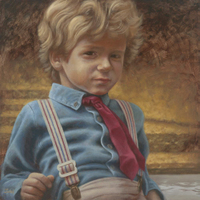
About a Boy

Russianboy2_1
Hey, Tim Jones, here.

I just wanted to share with you all a neat experience I had lately in my work. The recently finished painting at left will always hold a special place for me, for a few reasons.

For one thing, it is the first portrait commission that I received through MY WEBSITE. It’s pretty cool that we live in a time when artists can find customers anywhere in the world. The entire thing was done through e-mail. The client sent me a photo as an attachment, and I sent a preliminary sketch (as well as the final painting for their approval) in the same way. The fees were handled through PayPal. The client even commented in one e-mail how odd it was that we had this transaction without ever speaking to one another. And they were right!

Another thing that made this a good experience was the fact that the customer was a very kind Catholic family, and the boy in the painting is their recently adopted son. I’m thrilled that my work allowed me to be involved with this family in such a personal way. I know the painting is very meaningful for them. Our families have actually been praying for one another since pretty early in the process, and that is a perk for which I am really grateful.

Finally, the whole thing went so smoothly. I am always a bit nervous to begin a commission because things can go off the rails. I recently had to pass on a nice commission because the customer’s needs and my artistic goals just didn’t fit well in the end. I didn’t want to take on a project that I wouldn’t be proud to put my name on. Alot of things can happen; what if the customer doesn’t like the sketch? What if they like the sketch, but don’t like the final painting? What if they want changes that you feel make the artwork worse, rather than better?

I have been blessed, in that I have not yet had a commission go south on me like that, but it does happen. It would be especially uncomfortable if the project fell apart when it was half finished and half paid for! I’ve heard horror stories.

So, as I said, I was a bit nervous while I waited to see what kind of portrait it was that the client had in mind. I usually work from life, or at least from my own photos. Working from someone else’s photography is a crapshoot. The goal is to end up with a painting of a person, not something that looks like a painting of a photo of a person.

I was delighted to see that the photo was not a cheesy commercial portrait or a badly composed snapshot, but was worthy of framing on its own. Portraits of young children always run the risk of being overly sentimental, but this photo had depth and subtlety. I was intrigued by the boy’s gaze, and found the soft lighting a worthy challenge. I also found his Russian features very striking. Overall, I could not have asked for better source material from a client.

The painting does lose something in reproduction, but it did turn out well, and I am glad to have a copy of a high resolution digital scan of it tucked away in my files.

Jobs come and go, but this is one that I will always remember fondly, and for which I will always be grateful.

I just reorganized my website, and have added a few new paintings. Y’all drop by, ya hear?

Overcoming Temptations To RadTradism

Part One

As promised in my post Surviving Sunday Mass, I want to offer suggestions for overcoming temptations to radical Traditionalism. If you too have struggled with temptations to spiritual fruitchucking and have so far triumphed, please feel free to add your suggestions.

First, to deal with a bit of “old business” from the combox for Surviving Sunday Mass:

What is my definition of radical Traditionalism? Unlike a devotion to the ancient Catholic customs and disciplines of the Church, radical Traditionalism is when a Catholic allows himself to become so disillusioned with genuine problems in the Church, such as liturgical abuses, and begins to reject the Church’s authority to regulate the Church’s customs and disciplines. RadTrads are most commonly found attending schismatic and “independent” Catholic chapels, but can also be found filling the pews of indult Tridentine Masses. I must quickly add that not all (or even most) indult attendees are RadTrads — for example, I personally know a number of Traditionalists who can in no way be termed “RadTrad,” who simply prefer the Tridentine liturgy, and who dislike the black eye given the movement by RadTrads. But I can say that the RadTrads are likely to be at least part of the reason many bishops hesitate to expand permission to celebrate the indult Tridentine or to form indult Tridentine parishes.

Another reader said:

"Are you really of the opinion that Catholic Traditionalism is a sin which temptations to must be guarded against, or even a disease for which you must search for a cure or an innoculation?

"Words fail in the face of such condescension."

No, I’m not of that opinion because I believe that a sharp distinction must be made between Catholic Traditionalism (which is a spirituality allowed by the Church) and RadTradism (which is a movement of Catholics who have allowed themselves to become so angry that it has disturbed their spiritual peace). RadTradism is a distortion of genuine Catholic Traditionalism and should not be confused with it. Just as the so-called Spirit of Vatican II is a distortion of the Church since that council, so we might call RadTradism a false Spirit of the Council of Trent.

Now, on to a few of my suggestions, in no particular order.

Don’t church-shop.  Recently, a gentleman contacted Catholic Answers asking if he could register at a parish outside of his diocese because “all of the parishes in his diocese” were allegedly so problematic that he felt could not worship as a Catholic in his own diocese. The only church at which he felt “at home” and “spiritually fed” was in a neighboring diocese. I told him that he was free to register at any Catholic parish he pleased, but I also cautioned him against the church-shopper attitude. Being “at home” in a parish is simply a matter of attending long enough to become part of parish life and Catholics are “spiritually fed” through valid sacraments. Privately, I highly doubted whether he had actually attended “all” of the parishes in his diocese and so could even make such a judgment about his ability to attend them. It was more likely that he was making an over-generalization about his diocese based on an overall impression of the diocese.

Church-shopping can be justified in certain cases, such as when you need to make sure that your children are properly educated in the Catholic faith, or when the problems in the parish completely outweigh any benefit the parish provides. But church-shopping to find a parish that you think will be heaven on earth can lead to RadTradism. Parishes are rarely static — pastors are reassigned, liturgy committees change hands, DREs come and go — and a parish you think will satisfy you could shift toward laxity within a few years. If you too easily throw in the towel and move on, where will your roaming end? For a former cyber-acquaintance of mine who was so disturbed by abuses at parishes he visited in his diocese, his roaming in search of heaven on earth eventually ended in sedevacantism.

Support your priests. A few years ago, a parish in Texas was outraged by the apparently unjust reassignment of the pastor. (I use the qualifier “apparently” because the only information I have on the case was what appeared in the blogosphere.) A member of the parish called Catholic Answers soon after the reassignment, distraught that the majority of the parish’s congregation had left to follow this priest to his new assignment. He was disappointed that the new pastor had adjusted certain traditional practices the previous pastor had adopted, but his main concern was how he could support the new pastor who was facing a terrible situation. This gentleman knew that any new pastor thrust into such a situation would have had a difficult job and he wanted to give this pastor the support he’d have hoped would be there if his own son were a priest facing such a situation. I was mightily impressed with this gentleman’s Catholic spirit. He could have followed the crowd to the new parish, but he felt it important to support the new pastor. And, perhaps because of that, he may have been unwittingly guarding himself against RadTradism.

Get to know your priests and religious. When a priest or religious is just a face on the altar or in the classroom, it is easy to depersonalize them into cogs in a “Vatican apparatus.” When you invite them to a meal, bring them Christmas cookies, get to know them on a person-to-person basis, you are inoculated against a tendency to believe the worst about people with whom you might disagree. One of the reasons I am generally optimistic about the state of the major religious orders is because I’ve met great Benedictines, Dominicans, Franciscans, and even Jesuits. As a Dominican friend once put it, the troubles in the major orders are like a microcosm of the troubles in the universal Church. Being able to think in terms of concrete individuals whom you know and love can keep you from brooding over abstractions like Those Darn Jesuits.

Pray for spiritual peace. Feel free to use my prayer, “Lord, please don’t let me become a spiritual fruitchucker!” But pray for grace to overcome temptation. Without grace any struggle against temptation is futile.

Examine your conscience. Many RadTrads lamented bitterly over John Paul II’s decision to examine the conscience of the human element of the mystical body of Christ and repent of the sins committed by that human element throughout Christian history, rather than implementing their proposed method of dealing with dissent: Kicking butt and taking names. But if we expect God to grant us the grace to overcome the dissent, we must first be willing to repent and seek forgiveness. This is true on the universal level and on the personal level. If your parish disappoints you, first examine your own conscience to see whether you are yourself a part of the problem.

More suggestions to follow later.

First Thoughts On The Compendium

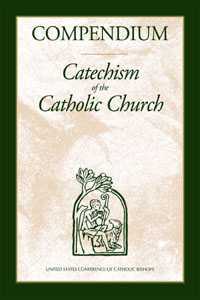
CompendiumThe Compendium of the Catechism of the Catholic Church is now out (FINALLY!) and I got a copy of it (FINALLY!). So here are some thoughts after an initial leafing through of it:

1) This is good. Really good. It’ll really help make the teaching of the faith accessible to people in a way that the Catechism doesn’t. Why do I say that? Well . . . .

2) The Catechism is a big, huge, honking book. It’s too much for the average person to absorb (given how intimidated many are by big, huge, honking books). The Compendium is much more absorbable for the ordinary person, and this will help more folks absorb the faith.

3) The Compendium is also much easier to read than the Catechism. It’s written in a Q & A format that is very friendly and digestible, whereas the Catechism is written in prose that is at times very dense and flowery.

4) The Compendium focuses more on the essentials of the faith than the Catechism does. In order to get the material down to size, they had to leave out a bunch of the less important, more debatable stuff, which has the effect of concentrating the reader’s mind more (not perfectly, but more) on the essentials of the faith. By covering the essentials alongside secondary material, the Catechism had a tendency to flatten Catholic doctrine so that people couldn’t always tell what is infallible and essential versus what is merely the common opinion and non-essential.

5) The Compendium also gives straightforward explanations in a way that the Catechism doesn’t. One of the problems with the way that the Catechism was written is that it often tried to get really flowery and inspiring and it also tried to quote so much from Vatican II and other church documents and various Christian writers and this often impeded its ability to state doctrine in a straightforward manner.

Let me illustrate. . . .

Here is what the Catechism says about original sin:

Original
sin – an essential truth of the faith

388
With the progress of Revelation, the reality of sin is also illuminated.
Although to some extent the People of God in the Old Testament had tried to
understand the pathos of the human condition in the light of the history of the
fall narrated in Genesis, they could not grasp this story’s ultimate meaning,
which is revealed only in the light of the death and Resurrection of Jesus
Christ. We must know Christ as the source of grace in order to know
Adam as the source of sin. The Spirit-Paraclete, sent by the risen Christ, came
to "convict the world concerning sin", by revealing him
who is its Redeemer.

389
The doctrine of original sin is, so to speak, the "reverse side" of
the Good News that Jesus is the Saviour of all men, that all need salvation and
that salvation is offered to all through Christ. The Church, which has the mind
of Christ, knows very well that we cannot tamper with the revelation
of original sin without undermining the mystery of Christ.

That’s it. That’s the whole section.

Now–other than saying "It’s an essential truth of the faith, just look at the section head"–can anybody tell me what original sin actually is based on this passage?

Didn’t think so.

Now here’s what the Compendium says:

76. What is original sin?

Original sin, in which all human beings are born, is the state of deprivation of original holiness and justice. It is a sin "contracted" by us not "committed"; it is a state of birth and not a personal act. Because of the original unity of all human beings, it is transmitted to the descendants of Adam "not by imitation, but by propagation." This transmission remains a mystery which we cannot fully understand.

77. What other consequences derive from original sin?

In consequence of original sin human nature, without being totally corrupted, is wounded in its natural powers. It is subject to ignorance, suffering, and to the domination of death and is inclined toward sin. This inclination is called concupiscence.

Now, the Compendium’s treatment of original sin is not that much shorter than the Catechism’s, but it’s worlds better in terms of telling you what original sin actually is. The reason is that the discipline of giving concise answers to questions people would have about a doctrine–rather than simply discoursing on theological themes–forced the authors of the Compendium to write with much greater clarity than the writers of the Catechism did.

That’s a big, BIG plus in my mind.

The Compendium thus stands to serve as a catechetical tool that will be far more practical in normal settings than the Catechism ever was.

Having said how great I think the Compendium is, though, let me add something else about the Catechism: I’m glad it came first.

At the time the Catechism was released, I was disappointed that it wasn’t more like the Compendium, but having seen what happened in the intervening years and having seen the Compendium, I think it’s a good thing that we had over a decade to get familiar with the Catechism before this one came out.

The reason is that the Catechism had an enormous stabilizing effect on the teaching of the Catholic faith. After Vatican II, everything was topsy turvy. Vatican II took such a different tack in articulating the faith compared to previous councils and magisterial statements that it was very hard for many individuals to harmonize the different articulations of the faith. The content of the faith was the same, but the language being used to express it was vastly different. Because of this, it made it easy for dissidents to simply harp on Vatican II and dismiss everything from before the Council, which was not at all the Council’s intent.

Further, the Vatican II documents themselves were nothing like an attempt to articulate the whole of the Catholic faith. They addressed it in a here-and-there manner, not a systematic manner. There is virtually no treatment of the subject of justification in Vatican II, for example. ("Why should there be?" the Council Fathers might say. "That subject was already treated by Trent. Go look up what Trent said.")

The fact that Vatican II used such different language, coupled with the fact that it was not a systematic presentation of the faith, meant that enormous amounts of chaos were created once the "That’s pre-Vatican II, so don’t pay attention to it" meme kicked in.

What we needed (BADLY!) in the years after the Council was a summary of the faith that was (a) authoritative (not just some author’s opinion), (b) comprehensive, (c) systematically organized, and (d) integrating both pre-Conciliar, Conciliar, and post-Conciliar statements of the faith.

In other words, we needed the Catechism of the Catholic Church. We needed a big, huge, honking book that did all that stuff.

(Incidentally, we also have Bernard Law to thank for the Catechism. Whatever his sins as archbishop of Boston, he was the one that first proposed writing the Catechism at the 1985 Synod of Bishops.)

If the Compendium had been released in 1992 instead of the Catechism, it wouldn’t have had as much of a stabilizing effect on the teaching of the faith as the Catechism did.

So I’m glad that the Catechism came out when it did, and now I’m glad that we have the Compendium, too.

ORDER YOUR COPY TODAY!