Finding The Right Words

I’m looking for the best word or words to express a concept. Maybe y’all can help me out.

Y’know that argument we’ve been hearing from President Bush and numerous others that there are "jobs Americans won’t do" or "aren’t eager to do" and that’s why we need a permissive immigration policy?

Yeah, you know the one. . . . the false and insulting argument.

It’s false because there aren’t any jobs Americans won’t do if you pay them enough (same as people anywhere).

But it’s also insulting, both to Americans and non-Americans.

It’s insulting to non-Americans because it implies that Americans are so high and mighty that they can’t deign to lower themselves to perform certain jobs, so we need lowly foreigners to come here and do them for us.

It’s insulting to Americans because it portrays them as . . . what exactly?

Stuck up immature babies?

Snobs?

I’m looking for the best term of contempt to apply to persons who consider themselves too high and mighty to do certain jobs.

The term or phrase should have as much emotional punch as possible (while being within the bounds of polite discourse; no cuss words!) and being short and pithy ("stuck up immature babies" may be too long).

Adjectives that describe the attitude of such a person could also be useful.

Any help would be appreciated.

Muchas gracias, mis amigos!

The Time Tunnel

TimetunnelWOO-HOO!!!

Back in 1966 there was a TV show that lasted only a season (30 episodes, back then) called The Time Tunnel.

It was about two guys who worked for a secret government time travel project who get lost in time and spend each week jumping from one time period to another.

I was too young to see (or at least to remember) the series when it was first on, but it replayed irregularly on Saturday afternoons on local channels in the 1970s, and I got to see a number of episodes.

I LOVED IT!

But I could never count on seeing it from week to week because of the irregularly with which it played (around ball games or something, I suppose).

BUT NOW I CAN SEE THE WHOLE THING!

Yes, it’s coming out on DVD. In fact, the first half of the series is already out, and the second half will come out next month.

Unfortunately, some of the episodes I remember the best are in the second half (like the one where they went a million years in the future and mankind had evolved into a kind of bee-like society. . .  .Creepy!), but it’s less than a month to wait.

YEE-HAW!

A boyhood ambition (seeing the whole series) is about to be fulfilled!

MORE ON THE TIME TUNNEL.

Special Meeting Of The JA.O Literary Club Tomorrow

Just an announcement that we will be having a special meeting of the JimmyAkin.Org Literary Club tomorrow.

This will be our first meeting, and I’m pleased to say that I have secured the Internet reprint rights to a short story by the renowned Catholic fantasy author Tim Powers.

The story is titled "Through and Through," and it is heavily Catholic-themed. (You’ll be surprised at how much!)

I read the story and thought it would make an excellent text for the JA.OLC, and Mr. Powers was kind enough to allow me to reprint it so we can all read it.

Here’s how it’ll work: Tomorrow at a bit after midnight (Pacific Time), I’ll put up the story, but it’ll have the combox turned off so that folks can just read the story. Then, at about nine a.m. (again Pacific), I’ll put up my review of the story with the combox turned on so that folks can add their own reviews, thoughts, discussions.

Hope y’all enjoy the story, and I hope to see you at the first-ever meeting of the JA.O Literary Club!

St. President

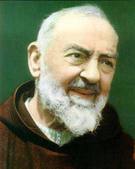
Padrepio_1 In Italy, where they are still trying to elect a president, votes have been cast for a rock singer, the daughter of Italy’s last king, and for St. Pio of Pietrelcina who is better known as Padre Pio.

"With no hope of immediately electing a president, lawmakers have been throwing away votes for the past two days while party leaders negotiate a consensus candidate. A secret ballot has allowed them to get creative.

"For one elector, the political deadlock offered a rare chance to vote for Padre Pio, a 20th century mystic monk who had the stigmata — bleeding wounds in the hands and feet similar to those of Christ — and was made a saint in 2002.

"The speaker of Italy’s lower house of parliament immediately annulled the ballot paper. Padre Pio died in 1968."

GET THE STORY.

Italy’s current scramble for a president kind of reminds me of California’s 2003 recall election, in which candidates included everyone from former child star Gary Coleman ("Diff’rent Strokes") to porn pusher Larry Flynt (Hustler) to the eventual winner, muscleman turned movie star turned Kennedy kin Arnold Schwarzenegger. The only difference is that the votes in the California election were not a joke but all too real.

“A Very Naughty Historian”

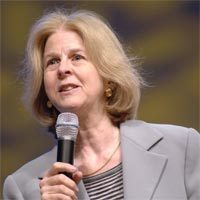
Elaine_pagelsFolks may have heard about Elaine Pagels, who is most famed as the author of The Gnostic Gospels (not the Gnostic gospels themselves, but a book by the same name). She is billed as an expert in Gnosticism and early Christianity and has recently been used as the go-to gal for the MSM wanting juicy pro-heresy quotes on subjects like The Da Vinci Code and the Gospel of Judas.

HERE’S AN ARTICLE BY FR. PAUL MANKOWSKI AT THE PONTIFICAL BIBLICAL INSTITUTE ARGUING THAT ELAINE PAGELS IS  NO SCHOLAR.

EXCERPTS:

Pagels has carpentered a non-existent quotation, putatively from an ancient source, by silent suppression of relevant context, silent omission of troublesome words, and a mid-sentence shift of 34 chapters backwards through the cited text, so as deliberately to pervert the meaning of the original. While her endnote calls the quote "conflated," the word doesn’t fit even as a euphemism: what we have is not conflation but creation.

Put simply, Irenaeus did not write what Prof. Pagels wished he would have written, so she made good the defect by silently changing the text. Creativity, when applied to one’s sources, is not a compliment. She is a very naughty historian.

Or she would be, were she judged by the conventional canons of scholarship. At the post-graduate institute where I teach, and at any university with which I am familiar, for a professor or a grad student intentionally to falsify a source is a career-ending offense. Among professional scholars, witness tampering is no joke: once the charge is proven, the miscreant is dismissed from the guild and not re-admitted.

I am not calling for academic sanctions but, more simply, for clarification. Pagels should be billed accurately — not as an expert on Gnosticism or Coptic Christianity but as what she is: a lady novelist.

Ouch!

Conjugal Relations

A reader writes:

Thank you for your entertaining and informative blog.

I would just like to ask you why you so confidently stated that the Church hasn’t addressed extra-marital intercourse. Pitting Humanae Vitae against the CCC and Merriam-Webster doesn’t seem the best way of ascertaining what Church _Latin_ means by the word "coniugale" (even though I can tell you right now that coniugale meant "marital" in classical Latin).

Moreover, as I point out in your comments box, John Chrysostom, Clement of Alexandria, and everyone else who spoke about contraception, condemn it in any act of intercourse, not just marital. Whether you’re married or not isn’t a matter of important when speaking of contraception.

I am curious whether you have any Church sources to back up your assertion that taking the Merriam-Webster definition over the translation of Humanae Vitae is something grounded in the mind of the Church.

Let’s do this a piece at a time:

Thank you for your entertaining and informative blog.

Thanks very much. I’m glad you find it entertaining and informative, and I wanted to make sure I quoted this part so folks could see that you weren’t just being negative toward me/the blog.

I would just like to ask you why you so confidently stated that the
Church hasn’t addressed extra-marital intercourse.

The Church has addressed extra-marital intercourse. It has said that it is gravely sinful. What I said was that "as Humanae Vitae 14 is worded, it is condemning the use of
contraception within marriage and not really going into its use outside
of marriage." I also said "The same tends to be true of other Church documents."

Pitting Humanae
Vitae against the CCC and Merriam-Webster doesn’t seem the best way of
ascertaining what Church _Latin_ means by the word "coniugale" (even
though I can tell you right now that coniugale meant "marital" in
classical Latin).

I was not "pitting" Humanae Vitae against the CCC and the Merriam-Webster’s Dictionary. I was pointing out a mistranslation in one English translation of HV and pointing to a correct translation of the same passage in the CCC.

The Merriam-Webster’s Dictionary has no bearing on any of this except to document the meaning of the word "conjugal" in English for those English speakers who may not be familiar with its meaning (since it’s a rather uncommon word that is only used technically and people may have read it without attending to its meaning).

Perhaps I could have been clearer about this, but the citation of the MWD is not to prove anything about Latin. If I wanted to prove something about Latin, I’d cite a Latin dictionary. It’s merely to document the meaning of the English word for those who may not know it and may have always assumed that the word meant "sexual" instead of "marital."

I didn’t see the need, here, to cite a Latin dictionary because (a) the meaning of the word is the same as its Latin cognate, (b) it looks the same as its cognate, so folks should be able to see the connection, and (c) I don’t feel the need to quote a foreign language dictionary every time I explain the meaning of a foreign language term.

If I explain that una casa blanca means "a white house" in Spanish, then I don’t feel the need to start cutting and pasting or re-keying from a dictionary. If the meaning of a term is clear, there is no need for this, and if the meaning of a term is unclear then I’m not going to be building my argument based on it.

In fact, the only time that I would be inclined to cite a dictionary is when the meaning of a term is in dispute.

Since you’ve disputed the meaning of this term (though admitting that in classical Latin it means what I say it means), let’s look at Leo F. Stelten’s Dictionary of Ecclesiastical Latin, where we read:

conjugalis -is -e: conjugal, marital

conjugatus -a -um: married

conjugicidium -ii: n.; murder of one’s spouse

conjugium -ii: n.; union, connection, marriage, wedlock

conjugo -are: (1); unite in marriage

As you can see, the adjective in question, conjugalis (in blue) means just what it does in English: conjugal or marital. Even the ecclesiastical Latin cognates of this word (in black) are overwhelmingly oriented toward marriage.

Moreover, as I point out in your comments box, John Chrysostom, Clement
of Alexandria, and everyone else who spoke about contraception, condemn
it in any act of intercourse, not just marital. Whether you’re married
or not isn’t a matter of important when speaking of contraception.

This is as may be, and I would be perfectly happy if B16 or a future pope were to endorse this view. All I said was that Paul VI didn’t go so far as to do so and only addressed himself to the question of contraception in marriage as is obvious both from the term he used and the context in which he used it. (And I also indicated that recent magisterial documents follow his lead in this matter.)

I am curious whether you have any Church sources to back up your
assertion that taking the Merriam-Webster definition over the
translation of Humanae Vitae is something grounded in the mind of the
Church.

I don’t need any because I’m not reading tea leaves here. I’m explaining the plain meaning of the text in Latin, as backed up by (a) my knowledge of Latin, (b) what dictionaries of ecclesiastical Latin say, (c) the structure of the passage, (d) the concurrence of the translation of the same passage in the English version of the CCC, and (e) the concurrence of other Latinists who I know and have discussed this passage with (at least one of whom is a conservative moral theologian with an expertise in sexual ethics).

This just isn’t rocket science. It’s what the text says.

Now, I’d love to be able to point you to an Official Vatican Dictionary that contains technical definitions of every word ever appearing in every Vatican document, but there isn’t one. While the Holy See does maintain a list of Latin neologisms (e.g., the Latin word for "Internet" or "helicopter"), it doesn’t have an official dictionary of words whose meanings everybody already knows and has known for hundreds of years. It uses these words and expects people to know what they mean based on their ordinary meanings in ordinary dictionaries (Latin dictionaries in the case of documents whose editio typica is in Latin; dictionaries in other languages for documents whose editio typica is in another language).

Hopefully this clarifies matters.

Fr. Altier Update

I am not very familiar with the situation that has developed around Fr. Altier of the diocese of St. Paul-Minneapolis–in significant measure because many of the details have not been publicly announced, and I can’t vouch for the information that is currently being reported, but a reader writes:

Father Altier from St. Agnes in Saint Paul and the parish priest,  Father Weizbacher are being moved out of the Archdiocese of Saint Paul- Mpls as of June 17.

It was announced today at morning mass.

You heard it here first.

Unless you heard it elsewhere.

Extreme Diocesan Makeover

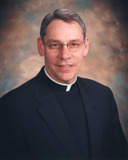
Bpfinn_2 There’s a new bishop in the Diocese of Kansas City-St. Joseph (Missouri) and the National Catholic Reporter is unhappy. No charges yet that this Opus Dei bishop is looking around for an albino assassin, but he has been shaking things up at his diocesan center:

"[Bishop Robert] Finn, 53, a priest of the St. Louis archdiocese and a member of the conservative Opus Dei movement, was named coadjutor of the Kansas City-St. Joseph diocese in March 2004. The diocese comprises 130,000 Catholics in 27 countries of northwest Missouri. He succeeded Bishop Raymond Boland as ordinary on May 24, 2005. Within a week of his appointment he:

  • "Dismissed the chancellor, a layman with 21 years of experience in the diocese, and the vice chancellor, a religious woman stationed in the diocese for nearly 40 years and the chief of pastoral planning for the diocese since 1990, and replaced them with a priest chancellor.
  • Cancelled the diocese’s nationally renowned lay formation programs and a master’s degree program in pastoral ministry.
  • Cut in half the budget of the Center for Pastoral Life and Ministry, effectively forcing the almost immediate resignation of half the seven-member team. Within 10 months all seven would be gone and the center shuttered.
  • Ordered a ‘zero-based study’ of adult catechesis in the diocese and appointed as vice chancellor to oversee adult catechesis, lay formation and the catechesis study a layman with no formal training in theology or religious studies.
  • Ordered the editor of the diocesan newspaper to immediately cease publishing columns by Notre Dame theologian Fr. Richard McBrien.
  • Announced that he would review all front page stories, opinion pieces, columns and editorials before publication."

GET THE STORY.

(Nod to Bill Cork for the link.)

And that was just within the first week! Developments within the first year include this one, my personal favorite:

"Finn upgraded a Latin Mass community, which has been meeting in a city parish, to a parish in its own right and appointed himself pastor. … Later, he asked the parish that the Latin Mass community will be leaving to donate $250,000 of the estimated $1.5 million the Latin group needs to renovate the old church Finn gave them."

May his tribe increase!

Womens “Ordinations” Behind The Iron Curtain

A reader writes:

There is a story making the rounds here that the Vatican-during the Communist days in some European countries- allowed a few woman to be ordained and secrety function in those communist countries.The story even says that one of these women is at Catholic U in Washington but has never functioned..the story is that some did function…some did not..Vatican ‘recalled’ their ordinations after having ‘done’ them???Have you every read or heard of this?

Yes, I am familiar with this, though the story as you received it has been somewhat garbled. The Vatican never gave permission for the ordination of women in Communist countries. What happened was this:

In 1967 Czechoslovakian bishop consecrated the priest Fr. Felix Maria Davidek as a bishop and, the new Bishop Davidek was reportedly assigned to work with the Czechoslovakian underground church.

I do not have information on whether this was done with the Holy See’s approval (which is required for the consecration of a bishop) or not.

This was an extremely chaotic time in the Czechoslovakian Catholic community, and many priests and bishops were ordained, including married priests and bishops, contrary to the requirements of canon law and in ways that the Holy See later judged to raise questions about the validity of these ordinations and consecrations.

Consequently,

OL’ JOE RATZINGER HAD TO CLEAN UP THE MESS.

But not all of the people who had been ordained–including the married bishops–were willing to go along with the Holy See’s efforts to resolve the situation (many of the priests, in particular, objected to the conditional ordinations that they were expected to undergo to resolve doubts about the validity of their orders, and the married bishops didn’t want to give up being married bishops), and as of 2000 there was still an "underground" church functioning in the Czech Republic–in violation of the Holy See’s laws–though the CDF expressly pointed out this church is not actually underground.

Bishop Davidek (who died in 1988) was a principal chaos agent in all of this and is singled out by name in the CDF document linked above as having performed ordinations of dubious validity.

In 1990 it emerged that

HE HAD ALSO ATTEMPTED ORDINATION ON AT LEAST ONE AND POSSIBLY SEVERAL WOMEN.

So naturally

THIS BECAME A CAUSE CELEBRE AMONG WOMENS ORDINATION ADVOCATES.

And so did the case of Ludmilla Javorova, who is the only woman to have publicly admitted to having been ordained by Bishop Davidek.

However, as is clear from Ordinatio Sacerdotalis (among other things), her ordination and those of any other women are invalid.

What we have here was thus not a case of the Vatican allowing the ordination of women but of a rogue bishop sowing chaos behind the Iron Curtain by ordaining bunches of people, incluidng at least one woman, in doubtful or clearly invalid ways.

What Ex-Priests Can & Can’t Do

For a while I’ve been meaning to do a post on what former priests who have been laicized are and are not allowed to do, since questions come up about this periodically.

The place where the rules are spelled out, somewhat surprisingly, is not in the Code of Canon Law or any other universally-binding piece of law but in a document that is issued to each priest as he is laicized.

That document is known as a rescript of laicization, and one is issued by the Congregation for the Doctrine of the Faith for each priest who is laicized. What it says on that rescript is what that priest is allowed to do or not do.

This does not mean that they cut different deals with different priests. Instead, it seems that they base the rescripts on the same template (kind of like a form letter) and basically lay down the same rules for each priest who is laicized.

In the below-the-fold part of this post, I’ve reproduced what I’m given to understand is the standard rescript of laicization that was implemented in 1980 and that, with minor modifications, has been in use ever since.

(The minor modifications would concern things like the name of the current pontiff, the fact that the Sacred Congregation for the Doctrine of the Faith is now called just the Congregation for the Doctrine of the Faith, and updating the numbers of a couple of canons that allow laicized priests to hear deathbed confessions, since the numbers are different in the 1983 Code than they were in the 1917 Code).

The main do’s and don’ts that pertain to how the priest is to conduct himself on an ongoing basis are found in sections 4 and 5 of the rescript and can be summarized as follows:

1) He can’t celebrate any of the sacraments except for hearing deathbed confessions. It is especially noted that he can’t give homilies.

2) He can’t serve as an extraordinary minister of holy Communion.

3) He can’t serve any "directive office in the pastoral field" (e.g., serving as a parish administrator).

4) He can’t do anything at all in a seminary.

5) He can’t serve as a director or teacher in a Catholic university.

6) He can’t teach theology or any closely related discipline (e.g., religious studies, history of theology) in a non-Catholic university.

7) He can’t serve a director (e.g., school principal) in a parochial school.

8) He can’t serve as a teacher in a parochial school unless he gets the bishop’s permission.

9) He shouldn’t live in or frequent places where his status as an ex-priest is generally known, unless he gets the bishop’s permission.

By extension (though there are some doubtful cases), anything a laicized priest is not forbidden to do in his rescript is something he is permitted to do.

In doubtful cases the text of the rescript that was given to an individual priest should be consulted, and the interpretation of the local bishop followed regarding whether a particular action or office violates the instructions the rescript contains.

Continue reading “What Ex-Priests Can & Can’t Do”