The Burden Of History

What happens at the beginning of a religion is important ot its later history. The path that the founder of a religion places it on is the path it will have a tendency to stick to–or return to–in at least a general way.

This is not to say that religions cannot become detached from their historical foundation. Much of modern Buddhism has very little relationship to the teachings of the historical Buddha (Siddhartha Gautama), and much of liberal Christianity has little relationship to the teachings of Jesus and the apostles.

But religions–or notable parts of them–tend to stay at least in the ballpark of what their founder intended.

This bodes ill for the future of Islam and its relationship to the rest of the world. If you want to explain much about the current state of the Muslim world, including its propensity toward jihadist violence, you need look no further than the fact that Muhammad was an Arabian warlord. The mindset of an Arabian warlord was stamped on Islam at its inception, and it has shaped the subsequent history of Islam in ways too numerous to count (at least in a blog post).

In an ideal future, a way will be found to wean Islam away from its violent impulses, but even if that proves to be possible, it will not be easy. The stamp of the Arabian warlord will be hard to erase, and not just regarding the use of violence, but in related areas, such as the way a warlord uses money.

HERE’S AN INTERESTING ARTICLE CONTRASTING MUHAMMAD AND JESUS ON THE USE OF MONEY, VIOLENCE, AND POWER.

(CHT: Southern Appeal.)

The Da Vinci Movie: WORSE Than The Book?

The movie version of The Da Vinci Code is scheduled to be released this Friday and, though I’m not at all happy about it, I’ll need to go see the thing for professional reasons. (I expect that I may come out of the theater so mad I could spit.)

One of the questions I have about the movie is whether the filmmakers will have done anything to ameliorate the anti-Christian elements in the book. For a while, some have been hopeful that they would do so–perhaps even changing central elements of the book in the way that Hollywood films often do.

But if a (non-committal) review carried in The Telegraph is accurate, not only does the film closely follow the book but it may actually be worse than the book:

Although the movie closely follows the book’s storyline, Howard delivers something Dan Brown doesn’t – dramatic recreations of events relating to the book’s central inflammatory theory that for 2,000 years the Catholic Church has been covering up the fact that Jesus was married to Mary Magdalene and fathered a daughter, whose bloodline has survived into present-day Europe.

As well as scenes of the Inquisition and of women being tortured, burned and drowned, Howard shows Mary Magdalene fleeing the Holy Land for France and giving birth there.

GET THE STORY.
(CHT to the reader who e-mailed.)

How To Judge A Book By Its Cover

Perhaps you have heard the old adage that you should never judge a book by its cover. Nonsense! … At least when we’re speaking literally, anyway.

The apologists here at Catholic Answers often get calls from inquirers asking whether we have read such-and-so book and, if so, what do we think about it. Unless the book happens to generate a lot of inquiries — on the order of, say, The DaVinci Code — the answers are often “No” and “We don’t have an opinion on it.”

Don’t despair. There are ways to glean a lot of information about a book without having to read the thing. Here are some tips:

Title: What does the title say about the author’s approach to the subject? If you were wandering through the parenting section of your local bookstore, a quick scan of the titles can give you insight into the approaches taken to parenting. The Strong-Willed Child may suggest a more combative approach to childrearing than Raising Your Spirited Child. If you have a gentler parenting philosophy, you’re more likely to be drawn to Unconditional Parenting than to Laying Down the Law.

Author: What else has this person written? What are his credentials in the field? These answers to these questions and many more can be found by plugging the author’s name into Google. These days, when many authors maintain personal web sites as marketing tools, you’re likely to find out a great deal about an author from the Internet.

Cover blurbs: Who is endorsing this book? Have you heard of them before? Do you know their reputation? If we move back to the parenting section example, if names like James Dobson or Dr. William Sears appear on the dustjacket, you’ve found an important clue about the author’s parenting philosophy. In the Catholicism section of the store, an endorsement of a book by Fr. Richard McBrien will suggest one thing, while an endorsement by George Weigel will suggest something else.

Publisher: What other titles has this company published? What is the company’s target audience? What does its web site reveal about the company? If the book is on Catholicism, is the publisher a Catholic company? If so, is the Catholic publisher orthodox, heterodox, or is it a mixed bag? Is the company secular? If so, what other religious titles has the company produced?

Copyright: If the copyright date is old, will there be current information missing? A book on nutrition from decades ago might still talk about the four food groups rather than the newer food pyramid. A Catholic book written before 1983 might reflect the 1917 Code of Canon Law and thus be out of date in some matters of ecclesiastical law.

Notes: If the book is non-fiction, does the author cite sources? Does he cite sources in a uniform manner, or is his citation haphazard? Are the bulk of the sources primary (e.g., studies, academic papers) or does he rely on general information books in his field in which the authors agree with his thesis? (You’d be surprised at how sloppy some researchers can be.)

Bibliography: What titles did the author use for research? Does the author recommend certain titles? If so, do you know anything about these titles or authors?

Acknowledgements: Who does the author thank? Thanks to experts in the field is helpful and the names can be plugged into Internet search engines for information about credentials and philosophy.

Foreword and Afterword: Who wrote introductory and/or summary matter? What is that person’s experience in the field? A book on the liturgy with an introduction by the former Joseph Cardinal Ratzinger would suggest that the book would be orthodox, while an introduction by Sr. Joan Chittister, OSB, would suggest something quite different.

After your gleaning, take stock. Are there red flags flying? If so, the book may not be worth your time. If you do have time to spare and your curiosity continues to be piqued, you may still want to read the book but you’ll know to rev up your Purity Filter before reading. In any case, you’ll have a pretty good gauge of the book before diving in. So, yes, you can judge a book by its cover!

Discernment

A reader writes:

I have a friend who is not happy in her current job.  She has received a good offer from another company but in a different state.  She wants to do the Lord’s will.  In discerning his will would it be appropriate 1) to lay out the pros and cons of the choices?  2) The choice that leaves her at peace would most likely be his will?  What are good sign posts for determining his will in prayer?  As always, thanks!

This is a difficult question to answer, because I suspect that God works with different people in different ways on subjects like this. However, I can tell you how I would tend to approach the question, and I suspect that the way God works with me on such matters is not that different than how he works with most folks.

There are three general things that God gives us in order to guide us in making decisions:

1) Our instincts

2) Our reason

3) His revelation

The first includes our wants and desires–our emotions and basic physical and psychological drives. This is the most fundamental guide we have. It’s what motivates us to do things rather than just sit passively and do nothing.

The way God has designed us, our instincts provide the basis of human action, and we are to go with this guide unless it is overruled by one of the two higher guides.

Reason includes both moral reasoning and practical reasoning. Moral reasoning includes conscience (Is what I want just or unjust?) and practical reasoning (What are the pros and cons of this? If I go down this path will I really get what I want or will it cost me more than I think it will?)

If making the best application of reason we can to a situation tells us that we should not pursue our desires then we should not pursue them. In man, reason is meant to govern instinct.

But there is a danger here: overthinking. One of the things people often do–especially people of conscience–is to try and overthink decisions, which can lead to paralysis and missed opportunities. While we have an obligation to use reason as a check on any decision of major consequence, if we find ourselves being paralyzed and unable to make decisions then–at some point–we simply have to assume the risk inherent in the decision and "go with our instincts."

These two guides that God has given us–instinct and reason–are gifts of nature. They are things that he has bulit into human nature itself. But human nature is limited and, especially in its fallen condition, it often is not enough. Thus God also gives us a third guide, which belongs to the realm of grace rather than nature: his revelation.

This comes in two forms: the public revelation that he has given to all mankind through his word and through the created order (the laws of God written on the hearts of men) and the private revelation that he makes available as guidance for particular individuals.

The public revelation that he has given takes priority. Private revelation is meant to help implement the principles of public revelation but cannot overrule it (e.g., God will never via private revelation give you permission to sleep with someone other than your spouse; public revelation’s "Thou Shalt Not Commit Adultery" is a moral absolute).

Public revelation interfaces with the two gifts of nature God has given us. We are meant to appropriate public revelation and make it part of our reason and instincts through the education of our conscience. It’s already there to some degree, for the laws of God are written on the hearts of men, but in our fallen condition our consciences and instincts require special training in moral reasoning.

If, in making a particular decision, we’ve done all we can to educate our consciences about what God has said in public revelation, though, that still leaves private revelation.

As the term is commonly used, private revelation refers to extraordinary mystical phenomena like visions that some individuals have (e.g., the children of Fatima), but as I am using the term here it refers to any information that God gives an individual in addition to public revelation.

In the case of extraordinary mystical phenomena, this may take the form of a vision or a voice or sudden, infused knowledge, but this type of private revelation is uncommon, and there is a risk associated with the assumption that God will provide it if asked. The risk is that we will generate a false mystical experience by our own imaginations if we operate on the assumption that God will provide this kind of guidance virtually on demand.

In the case of ordinary experience, many people report experiencing God’s guidance in the form of feelings of confidence or peace or in small coincidences that happen to them in conjunction with prayer.

I know for a fact that God does often give guidance in these manners, but there is a danger here as well of imagining things or fooling ourselves (e.g., rationalizing our desires as a "sense of peace" or seeing coincidences as signs of divine guidance when in reality they’re just coincidences and we’re reading tea leaves).

There is also a danger of overthinking in this area and ending up more confused than we started out.

I think part of the issue can be addressed by keeping the way that this form of guidance works in perspective: Because it is a gift of grace rather than of nature, God means for it to be exceptional. He expects us to make most of our decisions on the basis of the gifts he built into our nature, together with public revelation, and to rely on private revelation only when these prove inadequate.

In other words: Don’t expect God to give you private revelation about which kind of bread to buy at the supermarket. Ordinary decisions like that are meant to be handled by the gifts of nature he has given us, and bad consequences will ensure (like paralysis, confusion, and self-deception) if we expect him to give us supernatural guidance on such matters.

In general, we should use the gifts of nature that God has given us–our instincts and our reason–together with his public revelation–to make most decisions in life.

We should prayerfully ask him to superintend the process of decision-making as we work through it (changing our desires where they need to be changed, guiding us to information resources that can inform our reason, helping us to better understand how principles from public revelation may or may not apply to the question in front of us) and we should ask him to make it clear to us if we are going wrong in our thinking, including via private revelation if necessary.

This much applies to all human beings, but here we come to a point where there seems to be a difference in how God works with certain individuals.

Some individuals report–and I have no reason to challenge their statements–that God gives them many small signs in the form of feelings and coincidences and similar things. Other individuals do not report this.

Myself, I have had a handful of really startling coincidences–usually in conjunction with major life events (like the death of my wife)–that I attribute to unambiguous divine intervention, but most of the time God does not give me the little nudges in prayer that some individuals report (or if he does, I’m too thickheaded to perceive them).

In fact, knowing myself and how introspective I can be, I find it better for me not to try to focus on or hunt for such nudges. At least for me, the way I am psychologically configured, doing so would result in paralysis and endless introspection and the reading of tea-leave.

So I try to make my decisions based on my instincts, reason, and what God has said in public revelation, trusting that he will guide the process and that he’ll hit me over the head (with private revelation if necessary) if I get too far off the path.

I also try to do two other things:

1) Experiment. Whenever possible I try to get more data by experimentation–trying something out to the extent I can and seeing if I meet with success. If I do, it may be a sign that this is the way God wants me to go. If I meet with failure, it may be a sign that he wants me to do something else.

2) Keep in perspective the way God’s will often applies to our lives. Very often people think that–on a particular question–there is only one right answer and that God wills one particular thing for us. If we miss finding that one particular thing, then we’ve missed God’s will, and this thought can generate a lot of anxiety individuals, who naturally don’t want to fail to do God’s will.

But in reality God’s will often does not apply in this manner. There are often a number of options, each of which have good and bad points, that God would be perfectly happy for us to choose. Some options might be better than others, and of course he would like to see us chose from among the best options, but as long as we do not choose an evil option, God is not displeased.

He’s pleased if we choose a good option, and he’s very pleased if we choose a very good option, but he isn’t displeased unless we actually choose evil.

Much of the time we thus don’t need to shoulder the burden of finding the right option or risk God’s displeasure.

This realization can be a liberating experience for many people, and it may help your friend as she makes a decision about what to do regarding the job offer she has.

While taking or not taking a job is a significant decision and the consequences should be carefully thought through, this isn’t likely to be a situation in which God expects your friend to make the right decision or incur his displeasure.

So to sum up, if I were in your friend’s position, I’d try to relax, ask myself what I want (instinct), try to figure out the pros and cons (reason), and then make the best decision I can, while all the while asking God to superintend my thoughts as I work through the decision and asking him to let me know if I’m going wrong.

Hope this helps!
Through And Through

[NOTE: A lot of folks in other countries see the site at unsual hours, and I didn’t want this week’s special event to get buried under other posts and be less visible over the weekend, so I moved the two relevant posts to the top. This should also make it easier for folks who want to participate but who couldn’t read the story during work hours. For an explanation of what we’re doing see here.–ja]

Through and Through

by Tim Powers

ALREADY when he walked in through the side door, there were new people sitting here and there, separately in the Saturday afternoon dimness. The air was cool, and smelled of floor-wax.

He almost peered at the shadowed faces, irrationally hoping one might be hers, come back these seven days later to try for a different result; but most of the faces were lowered, and of course she wouldn’t be here. Two days ago, maybe—today, and ever after, no.

The funeral would be next week sometime, probably Monday. No complications about burial in consecrated soil anymore, thank God . . . or thank human mercy.

His shoes knocked echoingly on the glossy linoleum as he walked across the nave, pausing to bow toward the altar. In the old days he would have genuflected, and it would have been spontaneous; in recenter years the bow had become perfunctory, dutiful—today it was a twitch of self-distaste.

There were fewer people than he had first thought, he noted as he walked past the side altar and started down the wall aisle toward the confessional door, passing under the high, wooden Stations of the Cross and the awkwardly lettered banners of the Renew Committee. Maybe only three, all women; and a couple of little girls.

They never wanted to line up against the wall—a discreet couple of yards away from the door—until he actually entered the church; and then if there were six or so of them they’d be frowning at each other as they got up out of the pews and belatedly formed the line. silently but obviously disagreeing about the order in which they’d originally entered the church.

Last week there had been five, counting her. And afterward he had walked back up to the front of the church and stepped up onto the altar level and gone into the sacristy to put on the vestments for 5:30 Mass. Had he been worrying about what she had said? What sins you shall retain, they are retained. Probably he had been worrying about it.

As he opened the confessional door now, he nodded to the old woman who was first in line. The others appeared to be trying to hide behind her—he could see only a drape of skirt and a couple of shoes behind her. He didn’t recognize the old woman.

He stepped into the little room and pulled the door closed behind him. They wouldn’t begin to come in until he turned on the red light over the door, and he needed a drink.

Continue reading “Through And Through”

JA.O Literary Club Meeting #1

Okay, I’d like to call this first meeting of the JimmyAkin.Org Literary Club to order.

(Bangs gavel several times. Waves it threateningly at one member of the crowd, who quickly settles down.)

Our story today is "Through and Through" by Catholic fantasy author Tim Powers.

If you didn’t do your homework and read the story (or if your time zone prevented you from doing so–drat these global forums!) then kindly read it now. It’s the post just under this one.

To prevent spoilerage, I’m putting my own remarks on the story in the below-the-fold part of this post. Please feel free to add your own remarks on the story and the issues it raises in the combox, and I hope you’ll enjoy this first-ever meeting of the JA.O Literary Club!

(NOTE TO OTHER BLOGGERS: If you like the story and the discussion of it, you might invite your own readers to join in!)

Continue reading “JA.O Literary Club Meeting #1”

Harriet Miers All Over Again?

Word is that

PRESIDENT BUSH IS GOING TO BE GIVING A MAJOR SPEECH ON IMMIGRATION POLICY ON MONDAY.

Word also is that he will be laying out a "comprehensive" policy proposal for dealing with immigration and that it will include tougher border-securing measures.

Talk includes putting the national guard on the border.

That ain’t enough.

#1: The national guard can’t cover every single foot of the border the way that a wall can.

#2: The national guard won’t stay on the border permanently the way a will will. Eventually, units will be pulled back and reassigned elsewhere, when the public and the MSM isn’t looking.

The bottom line is that no solution involving just putting people on the border will serve as the kind of permanent fix for the torrent of illegal immigration that the nation is currently experiencing.

We’ve been down that road before, and it’s led us to the situation we’re in now.

After all the bridges that Pres. Bush has burned with conservatives, any solution that doesn’t involve a wall is likely to be perceived as another piece of insincere lip service from the president.

To put it bluntly: Conservatives no longer trust Bush, to the extent that they ever did. After debacles like the Harriet Miers nomination, the out-of-control spending while giving lip service to conservative principles, the gay marriage amendment that has gone nowhere, the president is simply no longer trusted by his base.

As a result, if the president comes out touting tough new border enforcement ideas and these do not include the building of a physical barrier that will permanently remain and that can’t simply be recalled and reassigned when the public isn’t looking then it may well be viewed as more insincere lip service on the part of the president.

In other words: It may look like another attempt from a phony-conservative president to deceive his political base.

If so, the proposals he trots out Monday will badly burn him.

It may be Harriet Miers all over again.

Pastoral Consequences Of The Mormon Baptism Decision

A reader writes:

My wife came into the Catholic church somewhere around 2000 before we were married in the Church. She had been a baptized Mormon before then, in which the Deacon teaching her RCIA class said the church recognized as a valid baptism. I never thought to double check his assertion on this, and there’s the possibility he flat out just misunderstood or lost record of her telling him this. Whatever the case, she underwent the Preparation for Christians, instead of the Preparation for the Unbaptized. We regularly celebrate the sacraments together now, and I was wondering the validity/invalidity of her confirmation into Catholicism? Would you please shed some light on this for us?

This is a very delicate question, and I want to compliment you for asking it. It shows a willingness to confront potentially unpleasant or disturbing matters and to follow God’s truth even in the face of potential difficulties.

What the deacon told you was probably based on a correct understanding of Catholic practice at the time. Prior to 2001, it was generally assumed that Mormon baptisms were valid and thus that Mormons who became Catholic did not need to be baptized upon their reception into the Church, though many were given conditional baptisms just in case.

Those were the fortunate ones, because in 2001, the Congregation for the Doctrine of the Faith issued the following response :


RESPONSE TO A ‘DUBIUM’
on the validity of baptism conferred by

«The Church of Jesus Christ of Latter-day Saints»,

called «Mormons»


Question:
Wheter the baptism conferred by the community «The Church of Jesus Christ of Latter-day Saints», called «Mormons» in the vernacular, is valid.


Response:
Negative.


The Supreme Pontiff John Paul II, in the Audience granted to the undersigned Cardinal Prefect, approved the present Response, decided in the Sessione Ordinaria of this Congregation, and ordered it published.


From the Offices of the Congregation for the Doctrine of the Faith, 5 June 2001.

+ Joseph Cardinal RATZINGER
Prefect

  + Tarcisio BERTONE, S.D.B.
Archbishop emeritus of Vercelli
Secretary

This means that, after further reflection, the Church does not regard Mormon baptisms as vaild.

Whether your wife received preparation for the baptized or preparation for the unbaptized is not of concern at this point, but what is of concern is the status of her baptism.

If she received a conditional baptism at the time she was received into the Church then her confirmation and her participation in subsequence sacraments will be valid (in the case of confession, for example) and legitimate (in the case of her reception of Holy Communion).

If she did not receive at least a conditional baptism at the time of her reception then she would not be able to validly (and in the case of the reception of the Eucharist, legitimately) participate in the other sacraments since baptism is the gateway to the sacraments.

It would therefore be necessary for her to receive at least a conditional baptism, following which she would be able to participate in a normal sacramental life, including receiving confirmation.

Thus if she was not given at least a conditional baptism at the time of her reception, I recommend contacting the pastor of your parish to pursue these options. Please let me know if you encounter difficulties with this.

I’d also add a couple of additional notes:

First, the response issued by the Congregation for the Doctrine of the Faith is brief and does not go into the reason why Mormon baptisms are invalid. The Vatican newspaper L’Osservatore Romano, however, published a commentary by Fr. Luis Ladaria on the reasoning behind the decision. That commentary may be helpful in better understanding this issue.

IT IS AVAILABLE HERE.

Second, it sounds to me as if everyone was acting in good conscience at the time of your wife’s reception into the Church, and so nobody here is to be blamed–not the deacon, not your wife, not anybody. In fact, Fr. Ladaria’s commentary points out:

It is equally necessary to underline that the decision of the Congregation for the Doctrine of the Faith is a response to a particular question regarding the Baptism of Mormons and obviously does not indicate a judgment on those who are members of the Church of Jesus Christ of Latter-day Saints. Furthermore, Catholics and Mormons often find themselves working together on a range of problems regarding the common good of the entire human race. It can be hoped therefore that through further studies, dialogue and good will, there can be progress in reciprocal understanding and mutual respect.

Thus while the Church has on further reflection determined that Mormon baptisms are not valid, this is not to be understood as a negative judgment on Mormons or on those who were baptized as Mormons. Nor should those who were following the Church’s practice before the clarification issued by the Congregation for the Doctrine of the Faith be faulted.

It is an unfortunate situation that needs to be addressed pastorally through the administration of baptism to those who were received into the Church under the prior practice (if they did not receive conditional baptisms at the time of their reception), but nobody here is to blame or should be made to feel bad regarding this.

I hope this helps, and I encourage my readers to pray for you and your wife.

God bless you both!

20

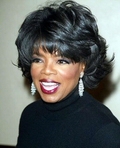
Mother Oprah

Oprah_1

Some time ago, an apologist in This Rock mused about the secular world’s penchant for tossing out Catholicism and adopting paler images of what had been tossed:

"G. K. Chesterton famously observed that when you stop believing in God, you don’t believe in nothing; you believe in anything. Similarly, in the absence of the Catholic Church, you get (before Christ) things that anticipate it or (after Christ) things that are a cheap imitation of it. For instance, Ebay is the modern world’s unwitting testament to the Catholic theology of relics. People who laugh over ‘primitive’ medievals and their interest in the true cross will lay down big bucks to own a pair of John Lennon’s shoelaces. Likewise, what is Oprah but a sort of video testament of the need of the human soul for a mother?"

GET THE STORY.  (Scroll to Item 6.)

Lest you think the apologist was exaggerating, take a look at this: In an article titled "The Divine Miss Winfrey?" La Oprah is hailed as "a spiritual leader for the new millennium, a moral voice of authority for the nation."

"She’s no longer just a successful talk-show host worth $1.4 billion, according to Forbes’ most recent estimate. Over the past year, Winfrey, 52, has emerged as a spiritual leader for the new millennium, a moral voice of authority for the nation.

"With her television pulpit and the sheer power of her persona, she has encouraged and steered audiences (mostly women) in all matters, from genocide in Rwanda to suburban spouse swapping to finding the absolute best T-shirt and oatmeal cookie.

"’She’s a really hip and materialistic Mother Teresa,’ says Kathryn Lofton, a professor at Reed College in Portland, Ore., who has written two papers analyzing the religious aspects of Winfrey. ‘Oprah has emerged as a symbolic figurehead of spirituality.’"

GET THE STORY.

Catholics have the Blessed Virgin Mother; hip materialists have Mother Oprah. The comparison by Professor Lofton between Mother Teresa and Mother Oprah was especially interesting. Mother Teresa once said "I do not pray for success. I ask for faithfulness."  For what do the disciples of Mother Oprah pray?

The Polar Grizzly

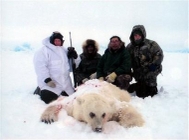
Polargrizzly

What do you get when you cross a polar bear with a grizzly bear? Many have wondered but now the answer has arrived, thanks to a strange-looking bear shot last month by a hunter.

"Roger Kuptana, an Inuvialuit guide from Sachs Harbour, Northwest Territories, was the first to suspect it had actually happened when he proposed that a strange-looking bear shot last month by an American sports hunter might be half polar bear, half grizzly.

"Territorial officials seized the creature after noticing its white fur was scattered with brown patches and that it had the long claws and humped back of a grizzly. Now a DNA test has confirmed that it is indeed a hybrid — possibly the first documented in the wild.

"’We’ve known it’s possible, but actually most of us never thought it would happen,’ said Ian Stirling, a polar bear biologist with the Canadian Wildlife Service in Edmonton."

GET THE STORY.

Thinking: Can a polar hybrid be considered bipolar?

[JIMMY QUIPS: If the two bears are poles apart!]