Harry Forbes & The Non-Nihilistic Nihilistic Worldview

Match_pointOkay, I don’t get it.

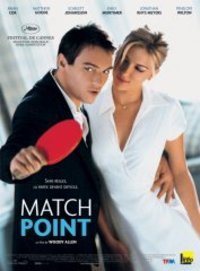
Harry Forbes has a review up of Woody Allen’s latest movie, Match Point, that displays a level of moral incoherence that rivals what was displayed in his original review of Brokeback Mountain.

First, a couple of disclaimers:

1) I’m not criticizing Match Point because I haven’t seen it. At present, it’s only playing in a few cities.

2) I like Woody Allen films–or at least I’m favorably disposed to them. I own many of them on DVD. They aren’t all equally good (Curse of the Jade Scorpion is nowhere near as funny as Small Time Crooks, for example), but many are very entertaining and insightful.

3) Many of Woody Allen’s films contain morally offensive elements, but this does not of itself make a film morally offensive. It’s the overall worldview of a film that makes it offensive, and I’ve been surprised by how firm Allen can be in giving his films a fundamentally moral worldview.

This is particularly notable in films like Crimes and Misdemeanors, which is a meditation on the idea that the universe has "moral structure" in the terms of the film, and also Alice, which involves Mother Theresa and ends with such a strong pro-Catholic statement that it made me wonder if Woody had secretly converted.

I was disappointed, therefore to read

THIS PIECE ON JEFFREY OVERSTREET’S BLOG.

For those who may not be aware, Jeffrey Overstreet is one of the more perceptive Protestant film critics, who is able to do nuanced, balanced Christian film criticism without veering either into the "Nothing immoral must ever be shown on screen" school of Fundamentalist film criticism nor into the "Everything’s okay as long as it’s done artfully" school.

Overstreet also works for Christianity Today, where he does a film roundup that exposes him to the view of many other critics, including those of the U. S. bishops’ Office of Film and Broadcasting, of which Harry Forbes is the head.

Overstreet previously commented on the problems with Forbes’ tenure as head of the OFB, writing:

Since Harry Forbes took over as head of the film review responsibilities for the USCCB, the reviews have indeed declined in quality, depth, and insight.

Now he points out the moral incoherence of Forbes’ review of Woody Allen’s Match Point. To give you a sample, here are some of the things that Forbes says:

  • [L]ike its protagonist, the film delineates a universe governed not by God but by pure chance — a theme that has permeated some of Allen’s other films.
  • The film contains several discreetly filmed sexual encounters but no overt nudity, some innuendo, an adultery theme, scattered profanity and crass words, a couple of violent episodes discreetly filmed, an abortion discussion, and a nihilistic worldview.

Okay. So Forbes says that the film has a nihilistic worldview of a universe not governed by God but by chance.

Overstreet is even more explicit (EXCERPTS):

Match Point is the darkest, most amoral film of his career, basically laughing at anyone who values their conscience.

[I]t has been carefully crafted to recommend a lifestyle that runs directly counter to any kind of ethical worldview.

Yes, Match Point is dripping with style. But its “cautionary points” have to do with how to avoid the consequences of your sins… in fact, it seems to disregard the idea of sin completely, showing us how to live deviously, taking risky gambles and reveling in our exploits.

[I]t seems to exist precisely for that purpose — to contradict any story that suggests there is any God, or any reason not to embrace evil as a method for getting what you want.

A friend of mine who saw the film was taken aback when she heard a line in it in which the adulterer hero says something to the effect of "It would be fitting if I were caught and punished. . . . It would be some small indication of real justice." But the film ultimately makes it clear that, as Larry Niven would say, "There Ain’t No Justice."

That’s the "nihilistic worldview" Forbes says the film has.

So it sounds like Allen has lost the "moral structure" that embued his previous films. We’ve got three different individuals–two of them professional movie critics–attesting to the film’s nihilistic, amoral worldview.

As a Woody Allen fan, that’s disappointing to me, but I assume that’s the way this film is (at least until I see it for myself).

How to explain, then, Harry Forbes also saying:

  • This outlook does not, however, preclude the story being told with a strong moral perspective.

Huh?

How can a film have a "nihilistic worldview" in which the "a universe governed not by God but by pure chance" and yet the film has "a strong moral perspective"?

This is simply incoherent.

A film cannot have both a strong moral perspective and a nihilistic one that specifically repudiates the foundation of the moral order.

Can’t be done.

I’m thus at a loss to explain the moral incoherence of this review. If it were an isolated case, I could chalk it up to simple mistake or miscommunication, but this is on the heels of the Brokeback Mountain fiasco, in which someone at the OFB (presumably Forbes) demonstrated an inability to understand the structure of its own ratings system and only on the third try kinda got it right.

It may simply be that Forbes has no background in moral theology and is not capable of correctly analyzing or articulating the fundamental moral perspectives of films. This Catholic News Service piece on Forbes lists his qualifications as follows:

He came to OFB after a successful career at the New York affiliates of NBC, CBS, and PBS, and most extensively, for PBS itself. Besides a lifetime of movie and TV consumption as a viewer, he brings experience as a theater reviewer for NYC public access TV, Time Out New York and Manhattan Spirit, which is the largest circulation weekly in the city.

There’s on indication in that that he has a background–academic or otherwise–in moral theology, and it may be this lack that is responsible for such incoherence when it comes to his reviews of morally problematic films.

Either Match Point has a nihilistic worldview in which there is no justice and the universe is governed by chance or it has one in which the universe has a fundamental moral structure (whether that structure is seen as rooted in God or not).

If it has the former worldview then the film is saying that there is nothing ultimately wrong with the movie’s central theme–an adulterous relationship (coupled with murder and theft)–and that’s morally offensive. Since this is the core theme of the movie (just as an approved homosexual relationship was the core theme of Brokeback Mountain) then the film deserves an O rating.

In fact, in the third iteration of the Brokeback Mountain review, the film’s approval of adultery–not just homosexuality–was cited as equal reason for giving it an O.

On the other hand, if the film’s worldview isn’t nihilistic but has "a strong moral perspective" (like Alice, where adultery is presented and ultimately rejected in favor of moral redemption) then Forbes shouldn’t be telling us things that imply otherwise.

Forbes can’t have it both ways. That’s just incoherent.

Ultimately–as you might expect–Forbes doesn’t give it an O. He doesn’t even give it an L. Instead,

The USCCB Office for Film & Broadcasting classification is A-III — adults.

He also turns in yet another gushy rave review about a film that seems to endorse a fundamentally immoral central theme, saying:

  • After a slew of disappointing efforts, Allen is at the top of his form in a superbly acted psychological drama. . . .
  • Working in England for the first time, with a largely English cast, has resulted in Allen’s finest work in years. Meyers, who played Elvis Presley in a 2005 CBS made-for-TV movie, gives a well-delineated portrayal resembling, in many respects, Montgomery Clift’s character in "A Place in the Sun." Mortimer is quite believable as the clueless wife, and Johannson impresses anew in one of her most mature outings to date.
  • Other roles are well played by Wilton, Cox, Goode and Margaret Tyzack as Nola’s kindly neighbor, who proves pivotal to the plot.
  • Because of some surprising plot developments, the less you know about the story before going in, the better. But suffice it to say, this hypnotically compelling drama is among the very best of the year.

To be honest, my first thought after encountering the last comment was "Is Harry Forbes just hypnotized by evil?" Further thought suggested that no, it’s more likely that he’s hypnotized by art.

Anything that’s done in an artistic manner tends to get a pass from him when it comes to moral issues.

This strongly suggests that Forbes has not assimilated Vatican II’s statement that

[A]ll must hold to the absolute primacy of the objective moral order, that is, this order by itself surpasses and fittingly coordinates all other spheres of human affairs-the arts not excepted-even though they be endowed with notable dignity [Inter mirifica 6].

Not having seen Match Point yet, I don’t know if it ultimately has a nihilistic or a moral worldview.

I do know that the level of incoherence displayed in Forbes’ review is not what people expect when visiting the U. S. bishops’ website for guidance on the moral character of movies.

I especially know that people expect better moral guidance from the U. S. bishops’ web site than giving movies with nihilistic, amoral worldviews gushy recommendations to go see them like saying "this hypnotically compelling drama is among the very best of the year"!

As Jeffrey Overstreet’s remarks illustrate, even those in the non-Catholic community are starting to take note of the problem at the OFB. Playing on JP2’s reported comment upon seeing The Passion of the Christ ("It is as it was"), he writes:

[I]s it now the perspective of the U.S. Council of Catholic Bishops that a movie’s perspective — whether moral or nihilistic — is something worth noting, but really not all that important? If a film that tells us there is no God, that if we should take a gamble and seize all the pleasure we can grab… should we go around recommending this title to our friends and neighbors?

I have a feeling that if Pope Benedict were to see this film, he would reject its presentation of reality, saying, “It is as it most certainly isn’t.

But Is It Art? Part II

Regisphilbin_1 Suppose an advanced alien race gives you an exotic, high-tech gizmo capable of making a perfectly precise plastic replica of anything. Let’s say it can exactly reproduce every color, texture and detail. Excited, you quickly use it to create a life-sized copy of Regis Philbin to adorn your foyer.

The alien gizmo would take certain information about the original Regis (like size, shape, color, texture…), and reconstitute and re-present it in plastic. However, the copy would lack other original "Reej" properties (like speech, movement, intellect, etc…).

In other words, the copy would be an abstraction of the original Regis Philbin.It could represent Regis Philbin, but it couldn’t work a live studio audience with the verve and panache (what I call the "X-factor") of the original Regis.

Still, anyone familiar with Regis Philbin could walk into your house, look at your plastic Regis monument and think "Wow, this guy really like Regis Philbin" , even if they thought that meant you needed professional help.

Grapepicker_3 Now, if you made a photograph of your alien-tech Regis statue to carry in your wallet, you would find that the image would lose even more of the original information in the process, making the photo more of an abstraction. If you were to use the old office Xerox to make copies for all your co-workers, the images would be even more abstract, though they would still probably carry enough of the original data to be recognizable to fans of daytime television.

Abstraction is just the reduction or simplification of an object, from a complex reality to a less complex representation. In this sense, even the most realistic art is an abstraction. All artists make decisions about how much original data to retain, and which specific pieces of information they want to exclude.

Art that retains more of that original data appears more realistic (like the William Bougereau painting at left), while art that discards more information is more abstract (like the Picasso below). Though many people use the term "abstract" to describe images that are unrecognizable (or nearly so), in fact all art is abstract.

Or is it?

Picassostilllife_2 True abstraction presupposes an original object that is being abstracted, even if that object is imaginary. I could imagine a blue-skinned, reptilian, evil Anti-Regis and make a picture of that. It would still be an abstraction.

But there is art that does not represent or refer to any object. Not surprisingly, it is often referred to as non-objective art. Many proponents of this type of art assert that it transcends ordinary, traditional art, because it is not mired in the emotional or intellectual baggage associated with a recognizable image. People can respond directly to it’s native, visual properties, without interference.

Kandinsky Non-objective art often represents something, though, even if it is just a feeling, or an idea (Kandinsky was known for this type of image – like the one at left), so it must be distinguished from art that truly represents nothing. This kind of art (the Mark Rothko piece below, for example), which is called non-representational art, is so transcendent and self-existent that it refers to nothing outside itself. It passes beyond any attachment to the reality we understand, and (it is argued) establishes a new, independent reality.

There are problems and pitfalls associated with all these different categories. I’ll talk about those in my next post.

Rothko_2 In the meantime, what’s your favorite piece of art?

Real Cowboys Steamed Over Brokeback Mountain

The fiasco over the "gay cowboy movie" Brokeback Mountain had me wondering what real cowboys thought about the film. As I suspected, the common answer is "Not much."

"Jim-Bob Zimmerschied is not a happy cowboy. ‘They’ve gone and killed John Wayne with this movie,’ he says angrily, beer in hand. ‘I’ve been doing this job all my life and I ain’t never met no gay cowboy. It wouldn’t be right.’

[…]

"But away from the bellicose posturing, a more subtle view emerged. Dave Miller, 48, a rancher in regulation black cowboy hat, leather waistcoat, blue jeans and boots, said: ‘It’s not the sort of movie that I’d go to see, but this is America and people can watch whatever they want.’ Nonetheless, he repeated the common refrain that he had never encountered a gay cowboy. ‘Well, not that I knew,’ he added. ‘I just don’t think our way of life is conducive to them.’ And like many others, his concern was that the film would give the wrong impression of life in the West."

My favorite reaction:

"Lee Hagel, 47, who was herding cattle there last week, had his own objections to the film. ‘They aren’t even cowboys — they’re sheep herders,’ he said witheringly. ‘You can’t just put a hat on someone and say they’re a cowboy.’"

GET THE STORY.

(NOTE: The article, although written for a mainstream newspaper, contains some crude language that may not be suitable for all readers.)

(JIMMY ADDS: JimmyAkin.Org rates the newspaper piece L for limited adult audience, articles whose problematic content many adults would find troubling.)

King Of The Box Office

Aslan_1

King Kong may have thrashed Aslan in a Google Fight, but at the box office, where it really counts, Aslan proves that he remains the King of the Beasts:

"The Chronicles of Narnia: The Lion, the Witch and the Wardrobe snatched the box office crown from King Kong during another fierce four-day holiday battle for the top spot.

"Old acquaintances met again: Less than $2 million has separated Kong and Narnia the past two weekends.

"’We edged out Kong. It’s been neck-and-neck,’" Buena Vista’s Dennis Rice said Monday. "’These are two great movies in the marketplace that are doing great business.’"

"Narnia took in an estimated $32.8 million during the Friday-through-Monday period, nudging Universal’s King Kong out of the No. 1 spot and into second with a New Year’s weekend take of $31.6 million."

GET THE STORY.

Brokeback Mountain Review Redone

The review of Brokeback Mountain at the U.S. bishops’ Office of Film and Broadcasting has been heavily edited.

THE REVISED REVIEW IS HERE.

Most of the edits are in a positive direction. Many of Harry Forbes’ over-the-top gushy raves about the gay cowboy love story have been removed. For example, his opening remark that the movie "arrives at last" has now been snipped.

The review still gives the moral aspects of the film a back seat (not even getting to them until late in the review), but some of the deficiencies previously noted have been fixed. For example, the review’s discussion of Catholic teaching on homosexual behavior now reads:

The Catholic Church’s teaching on homosexuality is unambiguous. As the Catechism of the Catholic Church says, homosexual acts are “intrinsically disordered" and the inclination itself is “objectively disordered.” At the same time, homosexually inclined persons “must be accepted with respect, compassion, and sensitivity” (#2357 and #2358).

That’s a dramatic improvement over the original, which read:

As the Catholic Church makes a distinction between homosexual orientation and activity, Ennis and Jack’s continuing physical relationship is morally problematic.

The bottom line moral assessment of the film is better, but still a bit perplexing. It reads:

Use of the film as an advocacy vehicle to promote a morally objectionable message that homosexuality is equivalent to and as acceptable as heterosexuality does a disservice to its genuine complexity. While the actions taken by Ennis and Jack cannot be endorsed, the universal themes of love and loss ring true. The film creates characters of flesh and blood – not just the protagonists, but the wives, girlfriends, parents, and children — who give the film its artful substance.

However, the physicality of the men’s relationship and the film’s inherent sanctioning of their affair necessitate an O rating.

The opening statement that "use of the film as an advocacy vehicle . . . does a disservice to its genuine complexity" is perplexing. Talking about "use of the film" in the passive voice makes it sounds
like homosexual activists will be "using it" contrary to the true
"complexity" of the film. This generates a "Huh?" reaction.

As noted previously, the film sounds eminently suited to be an advocacy vehicle–and an especially dangerous and destructive one because it is made by a talented director (Ang Lee) who has imbued it with artistic qualities that enable it to better deliver its morally offensive payload to the audience.

Also perplexing is the statement that "the physicality of the men’s relationship and the film’s inherent sanctioning of their affair" are what necessitate an O rating.

Earlier the review cited two morally offensive grounds: (1) the homosexual nature of their relationship and (2) the fact that they commit adultery with each other after having married women.

The review goes out of its way to assert that the adultery aspect is "just as offensive from a Catholic perspective" (an assertion that is quite open to question; St. Thomas Aquinas would not concur), and so it’s no surprise to see the adultery aspect showing up in the justification for the O rating. But notice what’s changed: Previously it was noted that both homosexual behavior and the homosexual orientation itself are problematic (as are any sinful behaviors and sinful orientations–regardless of what the sin in question may be).

This has been downgraded in the final assessment to just "the physicality of the men’s relationship" making the movie morally offensive. As if it wouldn’t be offensive if the film communicated the message that it’s okay for two men to have an intense, romatic relationship as long as it doesn’t get physical?

This sounds like whoever is editing the review is still foot-dragging.

It’s not the physicality of the relationship that is the source of the problem, it’s the homosexuality of it.

At least, though, we now have an unambiguous O assigned to the film, without the finger-pointing at the Catholic News Service audience and the hinting that the film really still deserves only an L and that the OFB is being forced to assign it a rating other than what it believes the film deserves.

As you can see, not all gushy remarks about the film have been deleted. For example, there’s still the sonorous remark that in the film "the universal themes of love and loss ring true."

There’s are also the remarks that "The performances are superb" and "Australian Ledger may be the one to beat at Oscar time." The former may be true, and the latter probably is true–given Hollywood’s current tendency to reward iconoclastically morally offensive films at Oscar time (Cider House Rules [abortion], Million Dollar Baby [euthanasia], Boys Don’t Cry [transsexualism]).

It is not clear who is making these revisions, whether it is Harry Forbes or someone else. The OFB reviews do not carry bylines and the edited version of the review does not seem to appear on Catholic News Service (where Forbes’s byline was removed when the rating was changed from L to kinda-maybe-sorta O).

What is clear is that whoever did the edits has seen the film. In fact, there is new information in the review about the content of the film, including some that should have been given to the audience the first time.

The review is still flawed and still retains elements of Harry Forbes’ initial gushy rave review, but it’s a lot better than it was.

But, Is It Art? Part I

MotherwellHey, Tim Jones, here.

I’ve been asked by some commenters here at JA.O what I thought about abstract art, and whether I appreciate any modern art (like that of Robert Motherwell, shown at left).

Now, I am no expert on anything. I am a practicing artist (a painter ) *begin hypnosis – VISIT MY WEBSITE – end hypnosis* with a Master’s degree in Fine Art. Maybe something worthwhile rubbed off while I was in college, but I do not present myself as any kind of Art Pundit.

I am also really not that well-read, so I can’t lay claim to any great depth of historical knowledge.

What I can try to do is to clarify some terms and state, in very simple language, what I believe art is and is supposed to "do". Art should not be presented (in my view) as the exclusive purview of highly trained experts. If you have to read a paper to understand a painting, it has already failed as a work of art, in my opinion.

I had a professor once, who traced the meaning of the word art back to it’s Latin root ars, pointing out that this was also the root of the word artificial. He went on to say that, in a sense, everything that is not from nature, that is "man-made", could be called "art".

This was received with knowing nods of approval at the time, probably even from me. It is an idea that still holds a great deal of sway in the world of modern art. The idea was that we should not take a narrow view of what is and is not art, which sounds okay, until you try to really begin talking about art.

The truth is, this is just not the way that people think and talk. In this broad, philosophical view of art, the tissue that I just used is "art". So is the notepad I just scribbled on, my shoelace, and every other human artifact you can think of.

The logical conclusion to this kind of thinking led the Dada-ists to hang latrines in museums, and still resonates to this day.

So, what separates art and fine art from non-art? Here is where it might help to draw and define some broad categories. You will see that there will be a good deal of possible overlap between them.

To get the ball rolling, I offer these working categories:


Spearpoint_1DESIGN
– Everything that people make has a design. A tent, a spear point (like the one pictured) a clay pot, a mocassin, a tissue – all are made with an ideal design in mind. The actual object may be more or less close to the ideal, but the design is still evident. The design of an object can be pleasing, but this is not necessary. While some man-made objects may incidentally strike people as pleasing, the same is true of non-man-made objects. Design – in itself, then – would not be what we would call "art" in any commonly understood usage of the word. Art certainly incorporates design, but art is more than just design. Some design is so consciously elegant, though, that it becomes…

Korean_potDECORATION – You might think that early in human history, people made plain things and gradually began to decorate them over time. There is no evidence for this, in fact. People have always decorated things. It’s what we do, and part of what makes us qualitatively different from the animals. From the beginning, people wanted to make their stuff look cool. So, clay pots received etched, painted or stamped decoration. Clothing was beaded and fringed and dyed. Spears were hung with feathers. People tattooed their skin. Decoration is just built into human beings.

Some of these decorations had symbolic meaning, and some did not. Decoration could be a simple geometric pattern, or an actual picture of something else. The purpose of the decoration, though, was always to add something (appeal, interest, information, etc…) to an already existing object, and was not there to be appreciated simply for itself. So while art can incorporate elements of decoration, decoration – by itself – does not constitute art. Decoration can, however, begin to take on the characteristics of…

Alta_miraILLUSTRATION – Now we come to the real magic of art; that is, the ability to invoke, or to make present (in a way that is truly mysterious) something that is not there. Not only objects and creatures, but events and environments can be re-presented, merely by the etching of lines or the arrangement of pigment. You probably already have an intuitive grasp of something else that separates illustration from decoration – storytelling. Where do we generally find illustrations? In books.

Illustration exists, not to enliven some existing object or tool, but at the service of a story, or narrative. Many great pieces of art are illustrations, including so many of the wonderful religious icons you are familiar with. Norman Rockwell was proud to be called an illustrator. The strong narrative (story) element in his art makes it very illustrative. All illustration is art, then, but at times it can be elevated to…


LeggpotsFINE ART
– What sets fine art apart from illustration is the way it treats this element of narrative or story. All images tell some kind of story, of course, but in fine art the narrative element is subordinated to the visual, sensual properties of the depicted objects (like in the piece at left, by artist Jeff Legg).

It might be a landscape, a woman, a bowl of fruit… but a piece of fine art exists as an homage to some discreet part of creation. Fine art is meant to be appreciated in itself, and by itself. It needs no underlying narrative (as a religious icon or other illustration does) to make sense of it.

Many great illustrations (like Michelangelo’s Pieta) cross over into the area of fine art, owing to the importance that they give to the native visual properties of the depicted objects, environments or people. Great artists often walk a line between illustration and fine art.

There is a danger, in pushing an illustration toward becoming fine art, that the visual elements of the image will overwhelm or detract from the desired narrative. This is why many religious icons are so graphic and simple. Too much attention to realism would actually serve as a distraction. As long as people can readily recognize who the icon symbolically represents, things like realistic shading or accurate anatomy are unnecessary.

There is, conversly, also a danger in allowing a piece of fine art to become bogged down in sentiment and narrative, to the detriment of the image. If an object can’t stand on it’s visual properties alone, then it’s presence in a piece of fine art becomes questionable.

Now, because of the arrangement of the above categories, you may have the idea that I think that fine art is superior to illustration, illustration to decoration, etc… . This is not the case. All of these things are good and necessary in their own right. The reason they are placed in a kind of ascending order is because each successive category comprehends, or incorporates, all the previous categories. So, all art involves design, but not all design is art. This will also be important in the next post…


BEYOND?
– There are those who posit another kind of art that passes beyond mere illustration or representation, and becomes something greater. I will examine that idea in my next post, where I discuss Realism, Abstraction and Non-Objective Art.

There will be a quiz next Thursday. Bring two #2 pencils.

If you have read this far, God Bless You!!

When Vampire Novels Get It Wrong–Part III

After writing my previous post on the transfusion issues in Dracula, I ran into another factual problem with the novel. This time it isn’t medical; it’s religious.

Someone had told me about it years ago. In fact, though I was an Evangelical at the time, a friend of mine who was reading the book asked me about it to see if it squared with my understanding of Catholic belief and practice, because it sounded wrong to him.

My friend was right: It was wrong.

Or at least it would be in the real world.

Here’s the issue: Y’know how Dracula is vulnerable to crucifixes? Crucifixes are symbols of Jesus. So if he’s vulnerable to those, he ought to be vulnerable to Jesus himself. (And who isn’t?)

Now, in the novel as in the real world, Jesus isn’t available to descend from the heavens with a shout to rescue the heroes.

But he is present in the Eucharist.

And so Van Helsing (a Dutch doctor who is the leader of those arrayed against Dracula) uses the Host to ward off vampires. Specifically, he uses it in five ways:

  1. He (and others) hold up pieces of the Host in order to ward off vampires–just like they otherwise do with crucifixes (only the Host is more effective since it is more sacred as it isn’t just a symbol of Jesus).
  2. He places pieces of the Host in vampires’ coffins to keep the vampires from being able to take refuge in them.
  3. To help a woman who Dracula has been praying on, he touches a piece of the Host to the forehead, but since she is already infected with latent vampirism it burns a scar on her forehead (this was not Van Helsing’s intent, and the scar disappears when Dracula is killed, signalling that she is free).
  4. A couple of times he draws a circle on the ground, passes the Host over it, and then places fine crumbles from the Host in the circle so that vampires cannot enter or leave the circle.
  5. He takes a whitish material that is described as being like dough or putty and, after putting crumbles from a Host in it, he uses it to line the cracks of a tomb so that a vampire can’t slip into or out of the tomb through the cracks.

To any well-formed Catholic from the real world, this kind of use of the Host is profoundly offensive to pious sensibilities.

In the novel, all of this is done with great reverence, and the novel makes it very clear that Van Helsing considers the Host to be the most sacred thing there is in the whole world. He also tries to avoid using the Host in this way if he can, not wanting to expost it to the presence of evil unnecessarily.

And he explains that what he is doing is okay because he has "an indulgence."

My friend wanted to know if that sounded right to me concerning Catholic belief and practice.

Even as an Evangelical, it didn’t.

The subject is a little ambiguous, though, because what Stoker means by all this isn’t clear. For example, Van Helsing’s remark that he has an indulgence is ambigous.

Stoker may be calling to mind the common misunderstanding that an indulgence is a license to do something sinful (it’s not). If that is what he means then the novel portrays Van Helsing’s use of the Host as something that is sinful in and of itself, but it’s "okay" because Van Helsing is a Catholic and has a hoojoo way of being forgiven in advance through his indulgence.

If that’s what Stoker means then this element of the novel is based on a misunderstanding of Catholic theology, because indulgences do not give one a license to sins. Sins are always sins and cannot be forgiven in advance, only when the person repents of having done them.

On the other hand, Stoker may have meant (and badly phrased) the idea that Van Helsing has an indult allowing him to use the Host in this manner. In other words, he’s received special permission from a competent ecclesiastical authority authorizing him to do this.

If that’s what Stoker meant then the question of how the Host is used in the novel becomes more complex.

In our world, you certainly would never get an indult allowing you to use a Host in this manner. Canon law has no provisions for anything like this. But then vampires aren’t real in the real world, and so in a world where vampires are real canon law may have taken note of this fact and allowed for procedures to deal with this threat.

In fact, in such a world the Church might even have vampire extirpators who are equivalent to exorcists in our world, and Van Helsing may be such an individual.

Supposing such to be the case, what are we to make of Van Helsing’s use of the Host?

Vampire literature has already established the use of sacred things (crucifixes, holy water, rosaries) to ward off or injure vampires and if these lesser holy things do so then it would be expected that the Host would be all the more effective–in fact, the most effective thing possible. (One wonders that vampires don’t burst into flame the moment that a Host is held up to them.)

Where the revulsion comes in is the idea of exposing something so holy to something so evil. It feels like profanation.

But then . . . God allowed the devil to have access to heaven for a sigificant amount of time (see, e.g., the beginning of Job). And Jesus allowed himself to suffer for our sake on the Cross, which was certainly a profanation.

In the Host he can’t even be hurt by the presence of a vampire, nor can his heavenly beatitude be disturbed. So, intrinsically speaking, he suffers no injury.

That is true, though, of any situation in which the Eucharist is profaned, yet profanation is still morally impermissible.

The reason would not seem to be that profanation injures Jesus (it can’t) but that it involves a disrespecting ON OUR PART of the holiness of God.

We can handle the Eucharist in ways that God permits (e.g., receiving holy Communion, reserving it in the tabernacle, carrying it in Eucharistic processions) but not in ways that God does not permit. As long as we are handling the Eucharist in a way that God permits, no profanation is committed.

So in a world where vampires are real, would God allow the Eucharist to be used to ward them off?

I don’t know. He might. (He can do what he wants. He’s God.)

Certain specific ways in which Van Helsing handles the Host seem to me to be more plausible than others (at least in terms of real-world sensibilities.)

For example, holidng up a Host to cause a vampire to stop or flee seems to me to be the least problematic. In fact, something in my memory says that at some points in history (I’m NOT recommending this NOW), consecrated Hosts may have been used in exorcisms–e.g., seeing if the possessed person can tell the difference between a consecrated Host and an unconsecrated host (and thus displaying supernatural knowledge) or holding one up or touching it to the person’s forehead to compel the demon to flee.

If so then we would have a potential real-world parallel to a couple of the things that Van Helsing does (i.e., #1 and #3).

#2 is more problematic because it involves leaving the sacred species to be corrupted by the elements. By plaing the host in a dirt-filled coffin, it will be soiled and eventually the species will corrupt and the Real Presence will cease. Before that happens–in the novel–the deposition of the Host will hallow the place, though, so that it cannot be used by vampires.

#4 is more problematic yet because it involves the destruction of a Host not by the elements but by human agency–APART from the way that God has ordained–in the real-world–for humans to disassociate the sacred species (i.e., by consuming them and, when this is not possible, by dissolving them in water).

#5 is the same and even worse because not only is a Host destroyed but the remnants are then mixed with another substance.

In the novel, when #4 and #5 occur Van Helsing is said to finely crumble up a piece of the Host. If he crumbles it very finely then it will cease to appear to be pieces of bread and the Real Presence will cease, which would partially ameliorate the situation. (I.e., it would be worse to scatter or embed species that still held the Real Presence in something than to scatter or embed species that no longer held it). Unfortunately, I don’t think Stoker knows this, and I think we are meant to understand that Van Helsing believes that the Real Presence continues in these cases.

Ultimately, it’s up to God the ways in which he chooses to authorize man to handle the Eucharist, and I can’t gainsay what he might sovereignly choose to do in another world.

What I CAN say is that all of this (particularly the latter numbers) is PROFOUNDLY offensive to pious sensibilities and that it is a LITERARY FLAW in the novel for Bram Stoker to have handled things the way he did.

I suspect (as I’ll explain in a future post) that he simply didn’t understand the theological implications of significant parts of what he was writing, and so this may to some extent be a case of "Forgive them, for they know not what they do."

NYT On SDG

GET THE STORY.

NOTES:

  • Unfortunatley, SDG only gets a brief mention in the story, but it’s nice to see him getting recognition from the MSM. (He’s also been cited by Ebert.)
  • Love the NYTnoid headline: "New Cultural Approach for Conservative Christians: Reviews, Not Protests"–as if protesting movies was the only approach conservative Christians have had up till now, never having reviewed and thoughtfully interacted with and critiqued culture up to now.
  • One of the other review services mentioned in the article–MovieGuide–is an exceptionally disingenuous entity. In a MASSIVE AND UNPROFESSIONAL CONFLICT OF INTEREST the people involved act as a publicity agency for certain movies–which have a suspicious tendency to end up with positive reviews. They also have a knee-jerk Fundamentalist approach to films whose content they don’t like (i.e., "It’s morally objecitonable so it must be artistically lousy, too"). SEE HERE FOR MORE INFO.

When Vampire Novels Get It Wrong–Part II

In my life, I think I’ve read three vampire stories: The Vampyre, Interview with the Vampire, and Dracula.

Each is a major landmark in vampire fiction (which is why I read them; the genre doesn’t have a lot of native appeal to me, but I’m not opposed to reading the classics in it). Yesterday I was listening to an audiobook that I made out of Dracula, and it got me to thinking about the medical aspects of vampirism, which led me to do a pair of posts on the subject.

I must say that I’m impressed with the way Bram Stoker wrote Dracula. Though, from what I can tell, Stoker was an Irish Protestant, his novel is remarkably Catholic-friendly and spends a great deal of time discussing spiritual matters.

It’s also quite cosmopolitan culturally. Though the main characters are British, there are not only representatives from different English social classes but also a lot of characters from and portraits of other cultures. As he goes to visit Count Dracula in Transylvania, Jonathan Harker describes various eastern European cultures in significant detail. Dracula himself is Transylvanian. Dracula’s nemesis–Dr. Van Helsing–is Dutch. And there’s even a major character who is a cowboy from Texas.

A special treat for me is the way that different languages and dialects bleed through into the language of the novel–as when Van Helsing speaks of things that in English are neuter using the masculine or feminine genders they would have in Dutch. (E.g., referring to "corn" [i.e., wheat] as "he" instead of "it.")

The novel is told in semi-epistolary form. An epistolary novel (in the strict sense) is one told exclusively through the use of letters written by characters in the novel, though in Dracula not only letters are used but also diary entries, telegrams, and newspaper articles. (I’m sure one day soon someone will write an e-pistolary novel told entirely through e-mails.)

So it’s a cool read.

But there are still flaws.

Some of these occurred to me when Stoker got to a particular point in the plot in which a character named Lucy had become the object of Dracula’s predations and her health was suffering. Dr. Van Helsing determines (I presume correctly) that her blood loss is sufficient that she needed transfusions in order to survive. He then sets about arranging these.

At the time, this would have been REALLY cool. I don’t know of ANY prior vampire story in which they tried to bring (then) modern science to bear on the problem of vampirism by giving blood transfusions. So megakudos to Stoker for that!

But there are some oddities for the modern reader.

One of the first things that struck me about the way the novel treated them was how DRAMATIC the transfusions were held to be. I mean, the characters were making a WAY bigger deal over transfusions than we would today.

Some of that may be natural for the time period, though, since I assume transfusions weren’t done as regularly as they are now.

One of the ways that a bigger deal is made of transfusions is that there is a big hullaballoo over who can be a donor for the procedure. Van Helsing is willing to do it himself, but his student–the English Dr. John Seward–points out that he is younger and ought to do it. Better yet is Lucy’s fiance, an even younger lord who is simple and healthy and uncomplicated–unlike the two doctors who, being engaged in intellectual pursuits by their profession, have higher strung "nerves" and are less suitable donors.

This sounds very suspicious. Old people give blood all the time today. In fact, blood banks rely HEAVILY on the generosity of older people; the young frequently being unable to be bothered with giving blood. And having an intellectual career has NOTHING to do with the ability to give blood.

Still, this may have been the 19th century understanding of things.

Another way a bigger deal is made of the transfusions than we would make of them is that discussion is made of giving the donors an opiate in order to knock them out during the procedure. I guess maybe folks back then were so horrified at the thought of giving blood that they wanted to be knocked out for it, though today people give blood all the time without any sedation at all. (I’d also have a hesitancy of giving the donor a sedative as anything that goes into his bloodstream is, of necessity, going to go into the recipient’s bloodstream in short order as the transfusion progresses–see below.)

After the transfusions are over, Van Helsing orders that the donors "eat and drink much," which is fine by modern medical science. They should do that to help their bodies replenish their blood supply.

I’m less sanguine (pun intended) regarding his advice that one of the donors should be given port wine to drink after a transfusion. I’m not sure about the effects of alcohol on a person who has just given blood (won’t that at least make him EXTRA woozy?), but I can let that pass.

What really set off alarm bells was Van Helsing administering to LUCY (the blood recpient) an opiate BEFORE the transfusion in order to knock her out.

WAIT A MINUTE! Lucy is suffering from acute posthemorrhagic anemia! She’s lost so much blood that she’s going to DIE if you don’t get more blood into her. Her blood pressure is DOWN and her heart is STRUGGLING ot beat fast enough to keep her blood pressure up and her cells oxygenated. Is giving her a sedative that will depress her system REALLY the thing to do at this moment?

"Please, Jim! Don’t leave her in the clutches of 19th-century medicine!"

Where Dracula really loses it, though, is in the fact that Van Helsing administers the blood transfusions with NO ATTEMPT WHATSOEVER to establish whether the donors have blood types that are compatible with Lucy’s blood type or not.

I’m sorry, but Dracula came out in 1897, and blood typing began (in a rudimentary form) almost a hundred years earlier. Doctors had realized that far back that the reason that people often died from blood transfusions was that they had different types of blood than the donors. It was the discovery of blood typing that ALLOWED transfusions to begin to become commonplace. Previously it was too dangerous.

Now, I’m not an expert on the history of medicine, and it could be that a doctor in 1897 would have made no attempt to type the blood of a donor and a recipient, but it seems to me that almost a century after this discovery–when it was this discovery that really allowed blood transfusions to take off–that a supergenius such as Dr. Van Helsing should have been on top of this one.

So, like later authors of vampire stories, I think that Stoker could have done with a little more medical research amidst his admirable cultural and historical researches.

That doesn’t stop the book from being a really cool read, though.

GET THE STORY (FROM PROJECT GUTENBERG).

UPDATE: Further investigation reveals that Van Helsing did just fine by not checking for blood typing. The original criticism was based on a Wikipedia statement that blood typing was discovered in the first decade of the 19th century, but whoever wrote that was wrong. It now appears that blood typing was not described in medical literature until three years after Dracula appeared.