MP3 Bleg

I don’t normally blog from work (all my blogging is done from home during the evening), but a work-related question just came up.

We just had a meeting to see about how we can push forward making Catholic Answers Live available in .mp3 format and a couple of questions came up that I thought pitching to y’all on the blog might be good given folks’ experience of different players and how they behave.

So here goes:

1) We have a decision to make on the calendar pages at Catholic.Com having three or four links per show. If we have four the links would be:

  • (a) Listen RealAudio,
  • (b) Download RealAudio,
  • (c) Listen MP3,
  • (d) Download MP3.

We’re wondering whether link (c) is really needed. Whaddya y’all think?

2) Is anyone aware of compression rates that could cause problems for us if we use them? Alternately, are any compression rates especially desirable?

Thanks, folks!

Marking Time

Schiavomarker

Michael Schiavo couldn’t resist the temptation to inscribe his version of his late wife Terri Schindler-Schiavo’s passing into her final resting place. CNN reports that he has created a self-serving tombstone to mark Terri’s final resting place:

“Michael Schiavo, who said he promised his wife he would not keep her alive artificially and waged a long legal battle to remove her feeding tube, had the words ‘I kept my promise’ inscribed on her bronze grave marker.

“The marker also lists February 25, 1990 — the day she collapsed and fell into what most doctors said was an irreversible vegetative state — as the date Schiavo ‘departed this Earth.’

“Schiavo actually died March 31 [2005], nearly two weeks after her feeding tube was removed by court order. The marker lists that date as when Schiavo was ‘at peace.'”

GET THE STORY.

Michael Schiavo continues to prove that he has only a great yawning hole where his conscience should be.

In other news, former L.A. detective Mark Fuhrman has written a book on the case, which is scheduled to be released June 28 and titled Silent Witness. If there is to be any human justice in this case at all, we might hope that Fuhrman’s book does for Terri Schiavo what his book Murder In Greenwich did for murder victim Martha Moxley and all those who despaired of human justice in her case.

"And With Your Spirit"

A reader writes:

I have heard it mentioned that in the Latin Mass the

response to the priest’s statement "The Lord be with

you" was actually "and with your spirit". It seems to

me that "and also with you" makes more sense, but I

think I’m missing something. What does "and with your

spirit" really mean?

Not only does it say "And with your spirit" (Latin, Et cum spiritu tuo) in the Latin version of the Mass, it’s going to say this in the forthcoming new English translation of the Mass as well, if things go as currently planned. This was one of the items that the Vatican wanted fixed in the new translation.

To answer your question, the meaning of "And with your spirit" would depend on the context in which its used. Since there is no express subject for the phrase, that has to be filled in by context. In the liturgy (the only place one encounters this phrase typically) the context is, as you note, as response to "The Lord be with you." "And with your spirit" is thus an abbreviated way of saying "And [the Lord be] with your spirit." It’s a way of wishing the priest the same thing that he just wished us: that the Lord would be with us.

If one were to give a dynamic equivalence rendering of this–one that seeks to preserve meaning without worrying about giving a literal translation–"And also with you"would be an acceptable rendering of the phrase. They mean the same thing.

The problem is that the translators of the current rite of Mass went crazy with dynamic equivalence and totally steamrollered the sacred style of the Mass, making it seem far more banal and blasé than it is in the original Latin. Even if it requires a bit of education to help folks understand what is being said when the Mass is translated in a way that better reflects what the original says, the Holy See has judged that this will be offset by the gain in reverence and appreciation of the richness of the language of the Mass–it’s poetry and art, if you will.

What the previous translators did was the equivalent of taking Shakespeare and paraphrasing it so that ten year olds can understand it without effort. That flattens the art and dignity of the text.

Ultimately, it’s better to teach people to understand and appreciate the elevated style rather than dumbing down the text so they don’t have to learn anything new. The former, educational strategy ennobles the people; the latter, style-squashing strategy dishonors the text.

“And With Your Spirit”

A reader writes:

I have heard it mentioned that in the Latin Mass the
response to the priest’s statement "The Lord be with
you" was actually "and with your spirit". It seems to
me that "and also with you" makes more sense, but I
think I’m missing something. What does "and with your
spirit" really mean?

Not only does it say "And with your spirit" (Latin, Et cum spiritu tuo) in the Latin version of the Mass, it’s going to say this in the forthcoming new English translation of the Mass as well, if things go as currently planned. This was one of the items that the Vatican wanted fixed in the new translation.

To answer your question, the meaning of "And with your spirit" would depend on the context in which its used. Since there is no express subject for the phrase, that has to be filled in by context. In the liturgy (the only place one encounters this phrase typically) the context is, as you note, as response to "The Lord be with you." "And with your spirit" is thus an abbreviated way of saying "And [the Lord be] with your spirit." It’s a way of wishing the priest the same thing that he just wished us: that the Lord would be with us.

If one were to give a dynamic equivalence rendering of this–one that seeks to preserve meaning without worrying about giving a literal translation–"And also with you"would be an acceptable rendering of the phrase. They mean the same thing.

The problem is that the translators of the current rite of Mass went crazy with dynamic equivalence and totally steamrollered the sacred style of the Mass, making it seem far more banal and blasé than it is in the original Latin. Even if it requires a bit of education to help folks understand what is being said when the Mass is translated in a way that better reflects what the original says, the Holy See has judged that this will be offset by the gain in reverence and appreciation of the richness of the language of the Mass–it’s poetry and art, if you will.

What the previous translators did was the equivalent of taking Shakespeare and paraphrasing it so that ten year olds can understand it without effort. That flattens the art and dignity of the text.

Ultimately, it’s better to teach people to understand and appreciate the elevated style rather than dumbing down the text so they don’t have to learn anything new. The former, educational strategy ennobles the people; the latter, style-squashing strategy dishonors the text.

Convalidation Questions

A reader writes:

I am a Catholic was married in a civil ceremony several years ago. I have
since realized that I needed to be married in the
Catholic Church in order to receive Communion. My wife agreed that we
would get our marriage blessed even though she is not Catholic.

We asked the priest about having
sexual relations and he told us that since we weren’t going to get it
blessed for another year (gave ourselves plenty of time to plan) that
it is not expeced that we hold off for that long.

Okay, what the priest told you on this point is wrong. He was trying to make things easier on the two of you, but he was wrong. If two people are not validly married then they should not be having sexual relations until such time as they are.

My wife and I agreed
on several months but overstepped it ….on the last time
however she has gotten pregnant.

At the wedding she will probably
not be showing yet.
Is there any issues with going ahead with the wedding. Do we tell the
priest that she is pregnant?

You should go to confession about this, but I’m not seeing any other issues. I also don’t see any need to tell the priest about the pregnancy at this time since it is not relevant to the wedding. You will want at some point talk to the parish about making arrangements for the child’s baptism, though.

I want to be able to receive our Lord in Communion but I want to do it
the right way and not be in mortal sin.

The way to do this is to resolve to live continently until the wedding and go to confession. Then you’ll be able to receive Communion immediately, even before the wedding.

Just a curious question…..is masturbation or contraception still a
mortal sin when ones wife is already pregnant??

Masturbation is always gravely sinful, and the fact that one has a pregnant wife does not change this. I don’t understand why one would want to use contraception with a pregnant spouse since the purpose of contraception is to prevent conception, and this is not at issue while she is pregnant. Some forms of contraception (e.g., condoms) also damage the unitive aspect of the sexual act and so couldn’t be used for that reason. Others might pose a danger to the child.

In your case, though, since the two of you are not yet validly married, you shouldn’t be engaging in sexual relations until the wedding. Once that happens, though, you’d be able to engage in them the same as any other married couple during pregnancy, provided it isn’t posing a danger to the child.

MORE INFO HERE.

I know that this may not all be what you were hoping to hear, but you deserve the truth, and I want to be straight with you. You also should be commended for your willingness to do what is needed to follow Christ and rectify your marital situation. You wife also is to be commended for her willingness to help you follow your conscience even though she is not Catholic. God will bless you both for your efforts.

Hope this helps!

20

Happy Summer Solstice Day

Today, June 21, is the summer solstice, which in the northern hemisphere means a really, really long day (and, in the southern hemisphere, a really, really short one)–your latitude may vary.

Pagans often make a big, sacrilegious deal out of the summer solstice, but I don’t think that ought to stop Christians from taking note of the day. After all, God set up the Earth to have a summer solstice, and it’s a day of note in the planet’s annual cycle. We just don’t have to attribute any magical significance to the day.

The day is also known as Midsummer, which is totally kitty-corner to the way we in the U.S. commonly reckon summer as beginning on the day.

Maybe I’ll listen to an audio book of Shakespeare’s A MIDSUMMER NIGHT’S DREAM tonight.

Pleasant dreams.

Requirements For Baptism

A reader sends in an e-mail from someone who says:

My friend has some questions about baptizing his
new baby girl.  He wants to know can you have
your baby baptized at a Catholic church if:

  1. Dad is a lapsed Catholic
  2. Mom is a lapsed Presbyterian
  3. The parents don’t belong to a local church
  4. The parents want to get his baby baptized at a Catholic
    church on vacation in Oregon

I think my friend is at a cross-roads in his faith and I’m
trying to encourage him to get back to his Catholic
roots.  What do you think??

Okay! Let’s whip out our little friend, the Code of Canon Law. It provides:

Can.  868 §1. For an infant to be baptized licitly:

1/ the parents or at least one of them or the person
who legitimately takes their place must consent;

2/ there must be a founded hope that the infant will
be brought up in the Catholic religion; if such hope is altogether lacking, the
baptism is to be delayed according to the prescripts of particular law after
the parents have been advised about the reason [SOURCE].

As you can see, there is nothing in the requirements that, strictly speaking, rejects any of the four things in the fact pattern named by the e-mailer.

The fact that neither of the parents is an active Catholic at the moment is not per se an obstacle since what is strictly speaking required is their consent, not their own religious status.

HOWEVER, there is also the requirement of a founded hope (not a pie-in-the-sky hope) that the child will be raised as a Catholic, and this is where we run into a problem. Parishes will definitely want to know how founded the hope is of the child being raised Catholic if neither of the parents are practicing Catholics. Will they take the child to Mass? How do we know this if neither of them goes to Mass? Will they make sure that the child is catechized in the faith? Will they make sure that the child is confirmed and makes her first confession and first Communion at the proper times? If they’re both completely disconnected from parish life, how are they going to fulfill these responsibilities? Will they even know when it’s time for them? What will the practical arrangements be for fulfilling them? Just how strong is their commitment on these points?

As a result, though there is no absolute requirement that one of the parents be Catholic, the fact that neither is an active Catholic is likely to pose a practical barrier to their providing the kind of founded hope that the parish needs for the child’s Catholic rearing.

The logical solution is for the parents to examine their hearts and recommit themselves to the practice of the Christian faith. In particular, the husband should take the child’s need for baptism as a sign that God is calling him back to his faith. He should go to confession and resume life as an active Catholic. It would also be ideal if the wife were to investigate the possibility of becoming Catholic, primarily for her own sake but also to present the child with parents who are united in faith.

I hope they’ll giv prayerful consideration to these things.

As to getting the child baptized while on vacation. I assume that the reason they wish to do this is because they will be vacationing near family and it would make it easier for family members to attend the baptism. (There may be "destination weddings" these days, but I’ve never heard of a "destination baptism," so I assume that family is the reason.)

Again, strictly speaking there is no prohibition on this. However, there may be practical obstacles. Normally baptisms are performed in the parish to which the parents (or the Catholic parent) belongs. There are also typically preliminary sessions that the parents need to attend to help them understand and prepare for the event of baptism.

All I can recommend is that the parents explain the situation and ask what kind of arrangement may be possible. I don’t know that there is one, but then the most important thing is that the child get baptized, not where this occurs or who can more easily attend. The baptism is for the sake of the child, not anybody else, so the parents should be flexible on this point if no solution emerges that would allow the baptism to take place where and when they would like.

Hope this helps, and God bless!

Let’s pray that God will shower his blessings on the child and her family!

20

Now . . . What Was The Nutritional Supplement I Was Going To Buy?

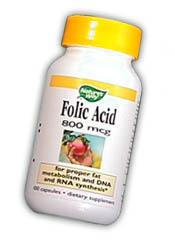
This just in: 800 micrograms of folic acid (a B-vitamin) appears to help memory and may prevent age-related decline in mental function.

GET THE STORY.

This isn’t the only benefit of folic acid, though. It also helps prevent heart attacks and treat depression, epilepsy, and a variety of other conditions.

It’s also known that women who take folic acid have fewer children with spina bifida and related birth defects. The method of action that produces this is not known, however. (It may help the child develop so that it doesn’t get the defect–or it may increase the miscarriage rate for children with the defect. Nobody knows for sure.) And so (unlike the U.S. government) I can’t recommend that all women of childbearing age simply take it.

If you’re a guy, though, or a woman not likely to become pregnant, folic acid may be a useful nutritional tool.

LEARN MORE ABOUT IT.

GET MY FAVORITE NUTRITIONAL THERAPY BOOK.

Now . . . What Was The Nutritional Supplement I Was Going To Buy?

Folic_acidThis just in: 800 micrograms of folic acid (a B-vitamin) appears to help memory and may prevent age-related decline in mental function.

GET THE STORY.

This isn’t the only benefit of folic acid, though. It also helps prevent heart attacks and treat depression, epilepsy, and a variety of other conditions.

It’s also known that women who take folic acid have fewer children with spina bifida and related birth defects. The method of action that produces this is not known, however. (It may help the child develop so that it doesn’t get the defect–or it may increase the miscarriage rate for children with the defect. Nobody knows for sure.) And so (unlike the U.S. government) I can’t recommend that all women of childbearing age simply take it.

If you’re a guy, though, or a woman not likely to become pregnant, folic acid may be a useful nutritional tool.

LEARN MORE ABOUT IT.

GET MY FAVORITE NUTRITIONAL THERAPY BOOK.