Steve Ray Has A Riddle

Over yonder on his blog, Steve posts the following riddle:

This puzzle was written by a lady in California in 1890 in response to a gentlemen in Philadelphia, who said that he would pay $1,000 to anyone who could write a puzzle that he could not solve. He failed to do so, and paid the lady $1,000 (a great sum at that time).

The answer is one word, five letters long, and appears only four times in the King James version of the Bible. An eight-year-old boy figured out the puzzle. Can you? If you give up, need a hint, or guess the answer, write me at sray@rc.net. Happy hunting!

*******************************************************

God made Adam out of the dust,
but thought it best to make me first.

So I was made before the man,
according to God’s Holy plan.

My whole body God made complete,
without arms, or hands, or feet.

My ways and acts did God control,
but in my body He placed no soul.

A living being I became,
and Adam gave to me a name.

Then from his presence I withdrew,
for this man Adam I never knew.

All my Maker’s laws I do obey,
and from these laws I never stray.

Thousands of me go in fear,
but seldom on the earth appear.

Later, for a purpose God did see,
He placed a living soul in me.

But that soul of mine God had to claim,
and from me took it back again.

And when this soul from me had fled,
I was the same as when first made;

without arms, legs, feet, or soul,
I travel on from pole to pole.

My labors are from day to night,
and to men I once furnished light.

Thousands of people both young and old,
did by my death bright lights behold.

No right or wrong can I conceive;
the Bible and it’s teachings I can’t believe.

The fear of death doesn’t trouble me;
pure happiness I will never see.

And up in Heaven I can never go,
nor in the grave or hell below.

So get your Bible and read with care;
you’ll find my name recorded there.

A NOTE FOR COMBOX GUESSERS: The in the above the statement that God did not put a soul in this thing must be understood of a rational soul. (Hint! Hint!)

The Kingdom Of Not

There’s this Ridley Scott movie coming out called Kingdom of Heaven that’s about the Crusades. Word I’m getting is that it is problematic, though not an all-out Christian bashfest.

For some of the problems, here’s films critic Peter Chattaway semi-fisking the NYT-noids at the New York Times and their comments about the movie.

EXCERPT:

The article continues: "Mr. Scott and his screenwriter, William Monahan, have tried to be balanced. Muslims are portrayed as bent on coexistence until Christian extremists ruin everything. And even when the Christians are defeated, the Muslims give them safe conduct to return to Europe."

Um, this is balanced? All the extremists are Christian and all the Muslims are nice and peaceful? I think the film, to say nothing of history, is more complicated than that, though I don’t think the New York Times is.

GET THE STORY.

And So It Begins . . .

666616?

That’s a question some folks are asking themselves right now. Actually, they’ve been asking that question for a while, but they just started asking it more insistently. Lemme ‘splain why:

Y’know those Oxyrhynchus manuscripts they’ve been reading lately? Well,

TURNSOUT ONE OF ‘EM’S A MANUSCRIPT OF REVELATION THAT GIVES THE MARK OF THE BEAST AS 616 INSTEAD OF 666.

Of course, the press is already getting the story wrong. The above link, for example, goes to a story headlined:

Revelation! 666 is not the number of the beast (it’s a devilish 616)

I’m sorry, but we just can’t say this with that kind of certainty.

616 Y’see . . .

The discovery of a manuscript with the number 616 isn’t exactly news.

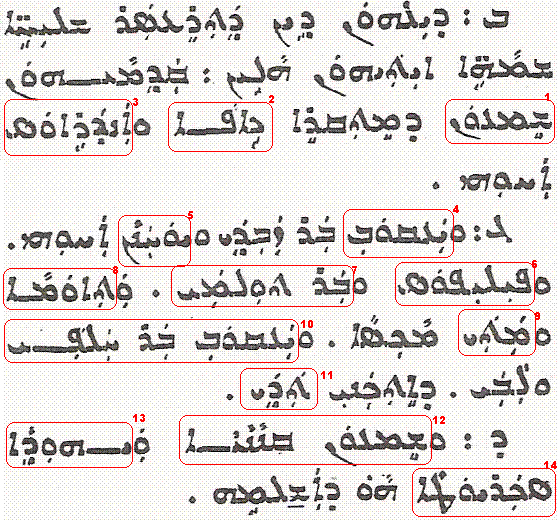
Over yonder to the left, for example, is a photo of manuscript P115 (sorry I can’t do the fancy Germanic P)–also found at Oxyrhynchus, incidentally–which also gives the number of the beast as 616–only we’ve had it for a long time.

What’s why if you look in the footnotes for Revelation 13 in your Bible (assuming it’s a modern translation), you’ll see a note saying that the number may be 616 instead of 666.

So all they’ve turned up now is yet another manuscript saying this. But if the evidence we had wasn’t decisive, adding one more manuscript to the pile won’t settle things.

Especially when the new manuscript is reportedly from the late 3rd century.

So it’s still undecided what the number originally was.

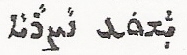
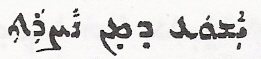
A favorite conjecture (though only a conjecture) is that the origin of the discrepancy has to do with the spelling of Nero’s name. The Emperor Nero fits the description of the beast really well, and it happens that his name adds up to 666 in Aramaic if you spell it NRWN QSR, which is one of the ways it was historically spelled. But it was also speled NRW QSR, which adds up to . . . you guessed it! 616. (N = 50 in Aramaic numbering.)

I am intrigued by something the Independent article mentions, though.

Y’see, there’s more than one Roman emperor who fits the description of the beast really well. The other is Gaius Caesar, better known to the world as Caligula.

Caligula did all kinds of beast-like things: He wanted people to worship him as a god, he tried to have a image of him put in the Jewish Temple, he had a "head wound" (blazingly intense headaches coupled with what may have been a nervous breakdown) from which he recovered and came back mad as a hatter, he slaughtered tons of people, etc., etc., etc.

He then was followed by the similarly beast-like Nero (with the milder Claudius in between them).

Many scholars, putting the book of Revelation in the A.D. 90s (which is much too late in my opinion) have looked at the revival of the beast and thought it’s based on the "Nero Revividus" rumors that circulated in the late first century. These were the ancient equivalent of the "Hitler ain’t dead" rumors that were found in the mid 20th century. According to Nero Revividus, Nero really didn’t die but was in hiding, waiting for his chance to come back and persecute everybody all over again.

Since I place Revelation earlier than that, before A.D. 70 (since it speaks as if the Jewish Temple is still standing), I’ve wondered whether the the revival of the beast isn’t something else. Caligula fits the beast so well–in some ways better than Nero–that I’ve wondered whether Revelation means us to understand that Nero is or will become a revived Caligula, or that there is an emperor yet to be elected (Nero, possibly Domitian) who will be a revived Caligula. In any event, I’ve wondered for some time whether Caligula isn’t much more central to the beast than interpreters generally credit.

So here’s the interesting thing that the Independent mentions:

The number 616 was applied to Caligula.

I did some checking, and folks have found a couple of ways that his name might equal 616. In Hebrew (and therefore Aramaic, which uses the same alphabet and numbering system), "Gaius Caligula Caesar" appears to equal 616. Also in Greek "Gaius Caesar" equals 616. Here’s the math:

ARAMAIC:

Gamal = 3
Simkath = 60

Qop = 100
Lamed = 30
Gamal = 3
Simkath = 60

Qop = 100
Simkath = 60
Resh = 200

Total = 616

GREEK:

Gamma = 3
Alpha = 1
Iota = 10
Omicron = 70
Sigma = 200

Kappa = 20
Alpha = 1
Iota = 10
Sigma = 200
Alpha = 1
Rho = 100

Total = 616

Interesting!

(Incidentally, I also thought the comment by satanist guy in the Observer article was also refreshingly honest.)

Oh, one  other thing: Last go-round some folks asked what if the Oxyrhynchus papyri turned up different versions of existing books of Scripture? Would the Church accept them? As manuscript evidence, yes, as the case of P115 illustrates. As definitive replacements, no–the Observer’s attempt to canonize the new manuscript notwithstanding.

(CHT to the reader who e-mailed!)

Speak, Lord

Remember those billboards with pithy comments attributed to God, such as "Keep using my name in vain, I’ll make rush hour longer"? Well, God is speaking again and a new series of billboards capture his comments:

"One nation under me."

"Life is short. Eternity isn’t."

"If you must curse, use your own name!"

GET THE STORY.

(Nod to Katie Allison Granju for the link.)

I read in the recent coverage of Benedict XVI’s election — it was either Time or Newsweek, but I don’t have the issues in front of me — that Theodore Cdl. McCarrick of Washington said, probably with heavy irony, that the cardinals knew that Cdl. Ratzinger was the favorite when they read it in the newspapers. He figured that the Holy Spirit could speak through newspapers.

Looks like the Holy Spirit speaks through billboards, too.

Tales Of The Plush Cthulhu

<Rule 15b>R. V. Miole</Rule 15b> writes:

Hope you’ve been having a great week. Offered you and your apostolate up during Mass today. Thought I’d give you this hilarious link since you mention H.P. Lovecraft once in a while. Don’t die of laughter…the Church still needs you. I think you should post more of your thoughts on Lovecraft–I don’t think I’m the only one who’d want to hear your views on his life and works.

In Jesus and Mary,
R.V. Miole

http://www.logicalcreativity.com/jon/plush/01.html

P.S. You have permission to credit me for the link

P.S.S Dude, you should blog about pipe smoking. Seriously, what sort of tobacco do you smoke? What kind of pipe do you use?

Yeah, I’ll have to blog on that soon, I s’ppose.

In the meantime . . .

GET THE STORY.

Bwa-ha-ha-ha-ha!!!

Plush_cthulhu

The Commission Of Error

A reader writes:

I’ve heard a number of times (most notably from my pastor!) that Pope Paul VI convened a panel of ‘experts’ to help him in deciding whether contraception should be morally acceptable. These experts allegedly unanimously reported that contraceptions should be allowed among the faithful. Then Paul VI unilaterally rejected this opinion and published his encyclical "Humanae Vitae" prohibiting the use of contraception. I’ve also heard that then-Cardinal Karol Woltyla was instrumental in convincing Paul not to allow contraception.

This story seems awfully suspicious to me, and I figured that since it’s a nasty little rumor that’s out there, I’d appreciate it if you could clear this up on your blog.

The story as you report it is not true, but it is based on something that really did happen. There was a Papal Commission on Birth Control, and it’s mentioned in the text of Humanae Vitae. It was first set up by John XXIII in 1962 and then expanded by Paul VI, who explains:

The consciousness of the same responsibility induced Us to confirm and expand the commission set up by Our predecessor Pope John XXIII, of happy memory, in March, 1963. This commission included married couples as well as many experts in the various fields pertinent to these questions. Its task was to examine views and opinions concerning married life, and especially on the correct regulation of births; and it was also to provide the teaching authority of the Church with such evidence as would enable it to give an apt reply in this matter, which not only the faithful but also the rest of the world were waiting for [HV 5].

This was a really dumb thing.

Establishing "expert commissions" is what large entities do before they announce a policy change, and the creation and later expansion of this commission started generating expectations of a policy change on contraception just as the Pill was taking off in popular consciousness and the early phase of the swinging Sixties was underway (even though the Free Love movement hadn’t yet arrived).

The better way to do things is not to publicly announce commissions but to have somebody you trust privately conduct a consultation with experts so that there isn’t a big, out-of-control commission making headlines.

The existence of the commission also cramped Vatican II, because when Gaudiam et spes was written, nobody knew what the commission would report or what the pope would do in response. As a result, we get the following tepid statement on birth control:

[S]ons of the Church may not undertake methods of birth control which are found blameworthy by the teaching authority of the Church in its unfolding of the divine law [GS 51].

And the even more ambiguifying statement in the footnotes:

Certain questions which need further and more careful investigation have been handed over, at the command of the Supreme Pontiff, to a commission for the study of population, family, and births, in order that, after it fulfills its function, the Supreme Pontiff may pass judgment. With the doctrine of the magisterium in this state, this holy synod does not intend to propose immediately concrete solutions [n. 14].

So then the commission turns in its final reports in 1966, after the Council, and guess what: They’re split! 30 of the commission members apparently were in favor of a more open position on contraception (or certain forms of contraception) while 5 were not. (So it warn’t unanimous.)

This became public in 1967 and got everybody expecting that the pope would accept the recommendation of the majority report. This was, incidentally, the year of the Summer of Love.

And then . . .

. . . a year goes by.

What happens in that year? Back to Humanae Vitae:

When the evidence of the experts had been received, as well as the opinions and advice of a considerable number of Our brethren in the episcopate—some of whom sent their views spontaneously, while others were requested by Us to do so—We were in a position to weigh with more precision all the aspects of this complex subject. Hence We are deeply grateful to all those concerned [HV 5].

Yeah, and while Paul VI was weighing all this, the delay allowed public expectations of an approval of the Pill ("After all, it just stops ovulation. It doesn’t introduce something foreign into the sex act, like a condom or a shield or a coil or anything," people were saying).

So Paul VI decides that

the conclusions arrived at by the commission could not be considered by Us as definitive and absolutely certain, dispensing Us from the duty of examining personally this serious question. This was all the more necessary because, within the commission itself, there was not complete agreement concerning the moral norms to be proposed, and especially because certain approaches and criteria for a solution to this question had emerged which were at variance with the moral doctrine on marriage constantly taught by the magisterium of the Church.

Consequently, now that We have sifted carefully the evidence sent to Us and intently studied the whole matter, as well as prayed constantly to God, We, by virtue of the mandate entrusted to Us by Christ, intend to give Our reply to this series of grave questions [HV 6]

Bang! Humanae Vitae comes out in 1968 and everybody’s shell shocked. After six years of having the expectation fostered that some form of contraception would get permitted, while the Church is still reeling from Vatican II, and while the sexual revolution is exploding around the world, Paul VI comes out with a big, loud, and long-overdue "No!"

So a buncha theologians including the infamous Charlie Curran get together and discuss and issue press statements.

The public reaction to Humanae Vitae is so negative that Paul VI goes into shock and becomes didactically paralyzed. After having issued seven encyclicals in his first five years in office, Humanae Vitae is the end of the line for his encyclical writing days. After it comes out in 1968 he writes no more encyclicals for the next and final ten years of his reign. After HV, he’s done.

It was a shattering experience for him. Having had the chutzpah to tell the world "No!" on contraception, he then lost his nerve to tell it anything ever again in the form of an encyclical, the principal form of papal teaching document. (Though, to be sure, he did issue other documents, including ones of a doctrinal nature.)

Meanwhile, the fallout of the raised and then dashed expectations around this issue and the networking that occurred among opponents of Humanae Vitae result in the first seriously organized dissident movement in the wake of the Council, and so we have a mess on our hands that we’re still cleaning up to this day.

Now, the Papal Commission on Birth Control and the way Humanae Vitae was delayed were the sole cause of the current mess. The Sixties and the invention of new contraception methods have a lot to do with it as well. But the actions of John XXIII and Paul VI in handling the matter were contributing causes.

It’s only now that folks are getting the sense that the cafeteria really is closed on this issue.

Now . . . it sounds as if the story as you put it had quite a bit of anti-Humanae Vitae spin layered on it. For example, about Paul VI acting "unilaterally" in regard to the Commission. Well, duh! It was always up to the pope to accept or reject the advice of the Commission. That’s advisory commissions do: Give advice. When an individual has created such a commission and then gets its advice, it’s up to him to either accept or reject that advice, and since that decision is made by an individual, it is in that sense "unilateral."

But the term "unilateral" is meant as prejudicial language to make Paul VI appear isolated and therefore wrong. In regard to this, two points may be made:

First, he wasn’t isolated. Many, many, many people–including, for example, the bishops he consulted–supported the Church’s historic teaching and were immensely relieved when HV came out. That’s not the decisive consideration, though, because the Church is not a democracy and you can’t establish doctrine by doing a poll. So . . .

Second, this is a matter of faith. God has either guides the Church and its Magisterium or he doesn’t. If he does–this being the fundamental supposition of Catholic doctrinal epistemology–then you have to trust that he guided them on this matter. God promised to guide the Church and the Successor of Peter in a way he didn’t promise to guide papal commissions. If you’ve got to go with one or the other (and in this case you do) then you go with the former and chalk the commission’s results up to erroneous thinking in an unsettled age of social and moral upheaval.

Finally, regarding Karol Wojtyla’s involvement in this, I’ve heard rumors of his involvement as well, and I think it likely that he did have some involvement, though what specifically that was is too difficult for me to tell at present. I think it is probably too much to say that Wojtyla was instrumental in "convincing" Paul VI to reject the Commission’s majority’s advice.

The Benedict Code

Benedict_xvi_armsA reader writes to <humor>tap my expertise as a world-famous symbologist</humor> and says:

What is the significance of Pope Benedict XVI using a miter in his coat of arms instead of the tiara? Is their a difference between the two?

There is indeed a difference between the two. A mitre is the symbol of a bishop–a leader of the flock of God. A tiara–as a kind of crown–is a symbol of the ruler of a state, a worldly leader.

The pope used to be the head of the papal states and even today is the head of state for Vatican City (which is an independent country), but as popes have focused more and more on their spiritual office, they have de-emphasized the worldly authority they have as heads of state.

Consequently, Paul VI discontinued actually wearing a tiara on certain occasions. A tiara were previously used, for example, when a pope was crowned after being elected. (And Paul VI apparently was crowned, though he later discontinued the use of the tiara.) John Paul I and John Paul II were merely installed as pope rather than being crowned. (Actually, they already were pope from the moment they accepted their elections, but there was still a formal installation ceremony replacing the crowning ceremony.) They still retained the tiara in their coats of arms, though.

Benedict XVI completed the process by not even having a tiara in his coat of arms, replacing it with a mitre, which symbolizes the true essence of his office as the bishop of Rome and the leader of God’s flock rather than a worldly ruler (even though he may still be the ruler of Vatican City).

Despite the absence of the tiara from his coat of arms, there’s still a lot of fascinating stuff in it.

LEARN MORE ABOUT BENEDICT XVI’S COAT OF ARMS.

ALSO LEARN MORE ABOUT PAPAL TIARAS.