Olly Olly Oxen Free!

Remember in hide and seek when the seeker calls "Olly Olly Oxen Free" and all the hiders get to come back?

I thought that the tales of Japanese soldiers holed up in remote Pacific islands long after World War II was over were the stuff of legend. Apparently not.

"Sixty years after the guns of World War II went silent, reports that two Japanese Imperial Army soldiers had been found in the mountains of the southern Philippines sent Japan’s diplomats on a frantic mission Friday to try to contact them.

"The two men, in their 80s, reportedly have lived on the restive southern island of Mindanao since they were separated from their division, staying on for fear they would face court-martial if they returned to Japan."

GET THE STORY.

Ten Worst Books?

CHT to the reader who sent me this link to

HUMAN EVENTS ONLINE’S RANKING OF THE TEN MOST HARMFUL BOOKS OF THE 19TH AND 20TH CENTURIES.

It makes interesting reading. Human Events Online asked a number of folks to nominate and then vote on which books they thought had done the most damage in the last two centuries.

The list (sans the reasons why the books are on the list–read the article for that) is:

  1. The Communist Manifesto by Karl Marx and Friedrich Engels
  2. Mein Kampf by Adolph Hitler
  3. Chairman Mao’s Little Red Book
  4. The Kinsey Report by Alfred Kinsey
  5. Democracy and Education by John Dewey
  6. Das Kapital by Karl Marx
  7. The Feminine Mystique by Betty Friedan
  8. Course in Positive Philosophy by Auguste Comte
  9. Beyond Good and Evil by Friedrich Nietzsche
  10. General Theory of Employment, Interest, and Money by John Maynard Keynes

The article also lists many books in the (dis)honorable mention category–ones that were apparently nominated but didn’t make the final top ten (e.g., The Origin of Species, Beyond Freedom and Dignity, The Greening of America).

Of course, the fascination of such lists (since they have little practical use) is analyzing them to see whether or not one agrees with them.

In this case I’d buy some of the entries (Communist Manifesto, The Kinsey Report), I’m open to others being in the top ten (Charman Mao’s Little Red Book, Democracy and Education), puzzled by others (Beyond Good and Evil, and Course in Positive Philosophy–I just don’t know if Nietzsche and Comte’s works had enough influence to rank in this way).

One book that I’m surprised is not there (nor even in the [dis]honorable mentions) is An Essay on the Principle of Population by Thomas Malthus. This was the book that popularized the whole "overpopulation" problem by postulating that the means of production only grow arithmetically while the population grows geometrically.

The authors of the list might have not named this one since the first edition came out in 1798, and thus at the very end of the 18th century, but all five of the revisions (which amounted to quite substantial changes) came out in the 1800s, qualifying them.

What’re y’all’s picks for the ten worst books category?

Death Of A Superfan

Where will all the superfans go now that the Star Wars phenomenon is no more?

"Now that any die-hard Star Wars fan worth his lightsaber has seen Episode III: Revenge of the Sith at least once, what’s a Jedi to do?

"The end of the Star Wars movies leaves a gaping hole in the galaxy of geekdom. And it begs the larger question: Is the era of the superfan over?

"No longer is there any variation of Star Trek on TV. The Grateful Dead essentially passed with Jerry Garcia, and even Phish is done now. The seminal pop-cult experience may be a thing of the past."

GET THE STORY.

In the spirit of optimism for the fate of the superfan, I propose that we figure out what will happen to the Superfan Geeks now. Remember the old proverb "Old soldiers never die, they just fade away"? Fill in the following blank for the Superfan in the combox:

Old Superfans never die, they….

Deep Throat

DeepthroatthenY’know, I was just talking about how they got information in All The President’s Men.

One way I didn’t mention in that post was how Woodward got info from the source dubbed "Deep Throat."

Now come to find out that they’ve up and revealed who Deep Throat was/is.

YEE-HAW!

I love a real-life mystery, and I’ve been fascinated by who Deep Throat was for years. I read John Dean’s e-book trying to crack the mystery, and I’ve ready I don’t know how many articles on it.

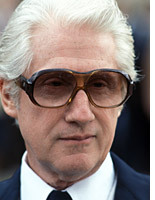
Turns out he was a former #2 guy at the FBI named W. Mark Felt (above). That explains how he had the dirt he did: The FBI was investigating the Watergate break-in, and Felt had access to the info that the investigation was turning up. He then used that info to carefully help steer Woodward in the right direction.

At the behest of his family Felt, now 91, finally spilled the beans in A VANITY FAIR ARTICLE.

When I first encounted the claim in press reports yesterday, I was a bit hinky as the same accounts quoted Carl Bernstein (Woodward’s former partner and one of three people other than Throat himself to know Throat’s identity) refused to confirm that Felt was Throat, saying that the existing deal with Throat would be honored and his identity wouldn’t be revealed until his death.

This set off alarm bells for me that the identification might be fake, since Woodward has said that Throat’s identity would be revealed if Throat altered the terms of the agreement and allowed it to be known earlier.

Bernstein might have been simply playing for time, though, not wanting to confirm it on his own without consulting Woodward, who was the real contact for Deep Throat.

Or Bernstein might have been fearful that Felt was being pressured to do this by his family and was not now, at 91, in a proper frame of mind to make a fully free decision in the matter.

However that may be, late in the day yesterday Woodward, Bernstein, and Ben Bradley (the third person known to know Deep Throat’s identity) CONFIRMED THAT W. MARK FELT WAS INDEED DEEP THROAT.

Bradlee, who apparently cusses as much as Jason Robards does when portraying him in All The President’s Men, said: "The thing that stuns me is that the goddamn secret has lasted this long."

While the secret lasted, it wasn’t as if nobody had speculated that Felt was Deep Throat. Reportedly, he was the person Richard Nixon most suspected. Others suspected, too. And there was a brush of suspicion a while back when it was revealed that Bernstein’s son had blurted out the identification to a friend at summer camp. (Bernstein’s then-wife tried to smooth this over by claiming that the boy had just hear he "speculating" about Deep Throat’s identity.)

While I’m pleased that we now finally know Deep Throat’s identity–and that all those who claimed that there was no Deep Throat or that the character was a composite of different sources, despite vigorous denials by Woodward and company, have been shown wrong–I must confess that I’m a little disappointed.

I look forward to learning more about Felt, but I’d always secretly harbored a kind of hope that Deep Throat would be revealed to be someone with a more prominent public profile. For example, there was considerable speculation that Pat Buchannan was Deep Throat, and I always found this an intriguing suggestion. Buchannan is such a maverick that you could easily imagine him turning on Nixon if he felt his principles required it of him. A large number of other "high-name" guesses were also made for who Deep Throat was.

I think I was attracted to such suggestions simply because I knew the names of certain people being touted as possible Deep Throats. I didn’t turn as much attention to the theories that held Deep Throat was in the FBI or the CIA because, frankly, these people weren’t as famous and I didn’t know them, so it was less intriguing to think that they might be Deep Throat. I thus tended to hurry through analyses pointing to such individuals as possible candidates.

But all’s well that ends well, and we now know who Deep Throat was.

Though I’ll always harbor a suspicion that Deep Throat was really . . .  Hal Holbrook!

MORE ON DEEP THROAT.

AND MORE.

Art For . . . Something Else's Sake?

A new study by the Rand Corporation analyzes the fairly recent phenomenon of "selling" the arts based on their instrumental effects (like an enhanced local economy, or higher student test scores) as opposed to their intrinsic value. The study, entitled Gifts of the Muse: Re framing the Debate of the Benefits of the Arts,  concludes that in promoting the arts across the country there has been too much focus on broad economic and social benefits.

The report places the origin of this kind of thinking in the early 1990s, and offers alternatives. The assumption is that there are just not enough people enjoying art.

One recommendation is that "attention and resources be shifted away from  supply of the arts and toward cultivation of demand" . The summary of the study gives several suggestions for the "promotion of satisfying arts experiences" including the need to develop the language needed for discussion and acknowledging the limitations of current research. In other words, like alot of research, the study concluded that more study is needed (a little job security, there).

But the money quote is right here:

"Research has shown that early exposure is often key to developing life-long involvement in the arts. That exposure typically comes from arts education…  The most promising way to develop audiences for the arts would be to provide well-designed programs in the nation’s schools."

So, rather than paying artists to produce more art that nobody looks at, we should strap students into specially designed art-appreciation chairs and refuse to release them until they grasp the "surrealism of the underlying metaphor" ("Welcome, Billy. Are you ready to have a satisfying art experience?").

This is wrong-headed for several reasons. For one, there is no shortage of art in kids’ lives. They are practically choked with art. Animé, comic books, movies, tattoos… heck, they are bombarded with art through cable television. Sure, it is generally of a low quality, but in a culture that has elevated subjectivism and relativism to the level of religious dogma, how would an art teacher even begin to help these kids distinguish "good" art from "bad" art? The very idea of good or bad art is anathema to the current art establishment. It’s all good, Billy, in it’s own way. Graffiti is as valid an expression as the Sistine ceiling. We have been feeding people this line for years.

Funding for the arts indeed began to come under (quite justifiable) attack around the early 1990s, as the preposterous excesses of goverment funded art began to come to light. The arts bureaucracy unwisely aligned themselves with the purveyors of artsy anti-religious hatred and pornography. Now they find themselves somewhat against the wall in trying to justify continued funding.

If the art establishment in this country had not been peddling ugly, meaningless art to the public for so long I doubt that they would find themselves in this position. Graffiti may not really be as good as the Sistine ceiling, but it is as good or better than Mark Rothko or Willem de Kooning.

Beauty is the key. People are starved for it. Alot of animé is quite stunningly beautiful, which is why kids respond to it. Give the people beautiful art and they will respond to it. Continue with the present course and the arts will always go begging for funds.

The report can be found online in the full version or just the summary.

GET THE REPORT HERE.

(Warning!! Evil File Format – PDF)

Art For . . . Something Else’s Sake?

A new study by the Rand Corporation analyzes the fairly recent phenomenon of "selling" the arts based on their instrumental effects (like an enhanced local economy, or higher student test scores) as opposed to their intrinsic value. The study, entitled Gifts of the Muse: Re framing the Debate of the Benefits of the Arts,  concludes that in promoting the arts across the country there has been too much focus on broad economic and social benefits.

The report places the origin of this kind of thinking in the early 1990s, and offers alternatives. The assumption is that there are just not enough people enjoying art.

One recommendation is that "attention and resources be shifted away from  supply of the arts and toward cultivation of demand" . The summary of the study gives several suggestions for the "promotion of satisfying arts experiences" including the need to develop the language needed for discussion and acknowledging the limitations of current research. In other words, like alot of research, the study concluded that more study is needed (a little job security, there).

But the money quote is right here:

"Research has shown that early exposure is often key to developing life-long involvement in the arts. That exposure typically comes from arts education…  The most promising way to develop audiences for the arts would be to provide well-designed programs in the nation’s schools."

So, rather than paying artists to produce more art that nobody looks at, we should strap students into specially designed art-appreciation chairs and refuse to release them until they grasp the "surrealism of the underlying metaphor" ("Welcome, Billy. Are you ready to have a satisfying art experience?").

This is wrong-headed for several reasons. For one, there is no shortage of art in kids’ lives. They are practically choked with art. Animé, comic books, movies, tattoos… heck, they are bombarded with art through cable television. Sure, it is generally of a low quality, but in a culture that has elevated subjectivism and relativism to the level of religious dogma, how would an art teacher even begin to help these kids distinguish "good" art from "bad" art? The very idea of good or bad art is anathema to the current art establishment. It’s all good, Billy, in it’s own way. Graffiti is as valid an expression as the Sistine ceiling. We have been feeding people this line for years.

Funding for the arts indeed began to come under (quite justifiable) attack around the early 1990s, as the preposterous excesses of goverment funded art began to come to light. The arts bureaucracy unwisely aligned themselves with the purveyors of artsy anti-religious hatred and pornography. Now they find themselves somewhat against the wall in trying to justify continued funding.

If the art establishment in this country had not been peddling ugly, meaningless art to the public for so long I doubt that they would find themselves in this position. Graffiti may not really be as good as the Sistine ceiling, but it is as good or better than Mark Rothko or Willem de Kooning.

Beauty is the key. People are starved for it. Alot of animé is quite stunningly beautiful, which is why kids respond to it. Give the people beautiful art and they will respond to it. Continue with the present course and the arts will always go begging for funds.

The report can be found online in the full version or just the summary.

GET THE REPORT HERE.

(Warning!! Evil File Format – PDF)

More Rad-Trad Than Thou

Did you know that not all pre-Vatican-II popes were created equal in the eyes of disaffected post-Vatican-II radically-traditionalist Catholics? Apparently, not all of the pre-Vatican-II popes made the grade as Sufficiently Loyal To The Post-Vatican-II Rad-Trad Vision Of The Church.

Case in point: When the former Joseph Cardinal Ratzinger took the name Benedict XVI many Catholics were touched by his explanation that the choice was made, in part, to honor the largely-forgotten twentieth-century Pope Benedict XV. Not all, though. There was at least one person, herself a radically traditionalist Catholic, who saw dark designs in the new Pope’s choice of name:

"Benedict XV came into his Papacy as Europe was entering World War I. In his first Encyclical, Ad Beatissimi issued November 1, 1914, the Pope, who refused to take sides in the Great War, made a dramatic call for peace between the warring factions of Europe. He also made it clear that inside the Church he was calling for a stop to the war against the modernists.

"Even while he referred to the ‘admirable fruits’ of [the] previous pontificate [that of St. Pius X], he called for concord among the members of the Church, that is, the modernists and the ultramontanes — the traditional Catholics who had been strengthened by Pius X. This ‘peace’ orchestrated by Benedict XV is what gave the modernists the opportunity to emerge from their dark, semi-occult caverns back into the light of day with a comfortable position in the Church."

"Dark, semi-occult caverns"? This rhetoric is so over-the-top that it practically fisks itself. To continue, let’s look at what this cheery individual sees in store in a Ratzinger pontificate given the current Pope’s choice of the name Benedict:

"I believe Benedict XVI intends to oblige traditionalist Catholics to ‘reconcile’ with Vatican II and the New Mass, to finish with our resistance and incorporate us in the Conciliar Church. It would be a maneuver similar to that of Benedict XV 100 years ago, when he struck his blow at the Sodalitium Pianum and the anti-modernist reaction. It is my opinion that we should be prepared for this kind of progressivist maneuver."

A pope who hopes to reconcile disaffected Catholics with the Church they claim as their own? Imagine that!

"What should be the position of Catholics at this important juncture? To be aware of the maneuver that is probably being prepared. To continue our resistance against the errors of Vatican II and its consequences. To offer an intransigence [sic] opposition to any proposition that implies acceptance of error. To display an invariable determination to remain always within the bosom of the Holy Roman Catholic and Apostolic Church and remain faithful to her perennial teachings. To maintain a firm belief in the promise of Our Lady that she will intervene and restore Holy Mother Church to shine again with her purest doctrine and lead the world to build the Reign of the Immaculate Heart of Mary."

GET THE STORY.

You know, in some ways, radical traditionalism — as opposed to a legitimate Catholic traditionalism that merely prefers traditional expressions of the faith but does not reject Vatican II and the contemporary Church — annoys me more than progressivism. Perhaps it is because the progressivists are usually honest enough to admit that they wish to change the doctrines and disciplines of the Church. They are easier to deal with because their agenda is clear. Radical traditionalists, on the other hand, present their discontinuity with Church history and their rejection of the authority of the Church’s leaders as a supposedly Truly Catholic Response to concerns about the admitted difficulties in some human sectors of the modern Church. Anyone who rejects their understanding of the Church and its teachings is not as Catholic as they.

And that "anyone" apparently includes even a pre-Vatican-II pope.

Happy St. Justin Martyr Day!

Today–June 1–is St. Justin Martyr’s day on the liturgical calendar.

This is special to me for several reasons:

  • St. Justin Martyr is a main patron saint of apologists (myself being an apologist).
  • He also was a philosopher (myself being a philosopher by training).
  • St. Justin was a very early apologist, living in the second century.
  • He also was native to the Middle East, being born in what is modern Nablus.
  • Justin was, in his way, the greatest apologist of "the Age of the Apologists," when Christianity was struggling (not for the last time) with gaining intellectual respectability in an age hostile to it.
  • He also gave his life for his faith, as the sobriquet "Martyr" tells you.
  • He’s just a really cool guy, okay!

So I hope you’ll join me in celebrating his day.

LEARN MORE ABOUT ST. JUSTIN MARTYR.

AND MORE.

Or read his writings:

THE FIRST APOLOGY.

THE SECOND APOLOGY.

DIALOGUE WITH TRYPHO THE JEW.