Diet Soda Dilemma

I think I’ll pretend I didn’t see the following story until another group of experts announces that the exact opposite is true:

"People who drink diet soft drinks don’t lose weight. In fact, they gain weight, a new study shows.

"The findings come from eight years of data collected by Sharon P. Fowler, MPH, and colleagues at the University of Texas Health Science Center, San Antonio. Fowler reported the data at the annual meeting of the American Diabetes Association in San Diego.

"’What didn’t surprise us was that total soft drink use was linked to overweight and obesity,’ Fowler tells WebMD. ‘What was surprising was when we looked at people only drinking diet soft drinks, their risk of obesity was even higher.’"

GET THE STORY.

(Nod to the friend who sent me the link.)

Of course, this kind of thing is probably why the diet-soft-drink industry chooses advertising slogans such as "Just for the taste of it."

JIMMY ADDS: Actually, there are a couple of theories I’m aware of that may explain this. The first is that most folks who drink diet cokes think that they are saving more calories than they actually are and thus give themselves liberty for too much extra calorie intake, resulting in more net calories (e.g., "I didn’t drink that 180 calorie glass of Coke–I had Diet Coke instead–so it’s okay if I eat this 300 calorie piece of cake").

Another theory that may play a role is that most artificial sweeteners still have a very high glycemic index–higher even than sugar–and this may result in your brain thinking that you’ve just drunk a whole mess of sugar. The brain then gets ready to digest sugar and causes the insulin spike that inhibits weight loss.

My own conjecture is that the former conjecture may play a larger role than the latter. I lost a great deal of weight over a long period of time while drinking diet coke the whole time. The diff was that I had cut out almost all carbohydrates out of my diet and so wasn’t giving my body much to generate an insulin spike, even if the Nutrasweet in the diet coke was giving me a bit of one.

Ghosts?

A reader writes:

Gallup reports today that 42% of liberals believe in ghosts – but only 25% of conservatives.

As G. K. Chesterton said, "When people stop believing in God, they do not believe in nothing. They believe everything."

First,

GET THE STORY.

Second, I’m not so sure that one should so quickly dismiss this subject. While there are, no doubt, many liberals who are attracted to the ghost hypothesis on account of New Age beliefs, consider the following:

  • "Ghost" is simply the German-derived equivalent of the Latin-derived word "Spirit." That’s why the Holy Spirit is sometimes referred to as the Holy Ghost. Originally in English "ghost" and "spirit" referred to the same thing. Indeed, in German the word for "spirit" is still "geist." Rather than get hung up on semantics, we may wish to analyze claims about ghosts in terms of what we know about spirits.
  • First, spirits exist. This is a truth of the faith.
  • Second, spirits can sometimes manifest themselves to those in this life, as in the apparitions of the saints.
  • Third, there are even reports in Catholic history that spirits in purgatory have–by God’s will–occasionally manifested themselves to those on earth. In these cases, those on earth may see the spirits experiencing their purgation in some way.
  • Therefore, if these reports are true, God may at times allow spirits to manifest to those on earth in a way that might lead folks to describe them as "ghosts."

Now, I’m not saying that this actually happens. I’m just saying that we shouldn’t quickly scoff at the idea. It certainly has a place in Catholic tradition (lower "t" tradition). I know that folks today often repeat the mantra "There’s no such things as ghosts," but it seems to me that this may have more with the influence of a secular/scientistic worldview than anything else. I see no theological reason to say that God doesn’t allow this to happen on occasion. (On the other hand, I see no theological reason that compels us to the conclusion that he does, either.)

One note on the possibility of ghosts: Sometimes folks think of ghosts (or some ghosts) as malevolent. I don’t see how that would be possible on the above account. Souls experiencing purgatory might seem strage or disquieting to individuals in this life and might appear malevolent, but they would not be. I don’t see any evidence, though, that genuinely malevolent souls–i.e., the souls of the damned–could manifest on earth. Thus any genuinely malevolent ghosts would more likely represent demonic activity as far as I can tell.

These two phenomena–the "purgatory ghosts" and demons–also might explain so-called haunted houses and poltergeists ("noisy ghosts" in German).

Peeking At Potter

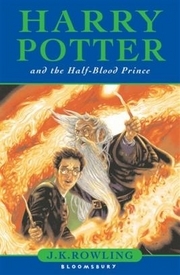
Hpbritcover_1 Did you know that the latest installment in J. K. Rowling’s Harry Potter series, Harry Potter and The Half-Blood Prince is on store shelves already?  Fourteen people managed to snag copies of The Half-Blood Prince before a Canadian store realized its mistake in selling before the July 16 release date and pulled the copies.

You’d think that this wouldn’t be an earth-shattering event.  After all, I’ve seen books sold in bookstores before their release date all the time.  It’s not kosher, but it’s routinely done.  Only if you’re a publishing industry superstar do you rate an iron-clad "no sale" prior to the official date.  When you’re J. K. Rowling, you rate a Canadian judge ordering the fourteen early-buyers to keep their mouths shut about the book’s contents:

"A handful of people in Canada got a sneak peak of the latest Harry Potter book, but a British Columbia Supreme Court judge ordered them to keep it a secret.

"The book was sold to 14 people who snagged a copy of J. K. Rowlings’ much anticipated Harry Potter and the Half-Blood Prince, when it landed on shelves last Thursday at a local grocery store.

"The book, officially set for release this coming Saturday, has been shrouded in secrecy and its debut has been highly orchestrated to enable everyone — readers, reviewers, even publishers — to crack it open all at once. It’s the sixth in Rowling’s seven-book fantasy series on the young wizard.

"But the store slipped up and sold 14 copies before realizing its mistake."

GET THE STORY.

The individuals involved should be grateful that all that happened was that they were legally gagged by a Muggle judge.  A Wizard court would probably have made them drink one of Snape’s potions.

Mass Translation Update

CNS is carrying the following story:

VATICAN CITY (CNS) — An international Vatican advisory board said the sooner new English translations of Mass prayers are ready the easier they will be for Catholics to accept. Members of the Vatican-appointed "Vox Clara" Committee, which advises the Vatican on English translations, said they share the concerns of bishops about how the new texts will be accepted by their faithful, but they also "expressed their conviction that this reception would be impeded by delays in a timely completion of the project." The committee met July 5-7 at the Vatican to review "various and recent draft translations" of the Latin edition of the Roman Missal promulgated by Pope John Paul II in 2002. The missal contains all the prayers and readings used for Mass in the Latin rite [SOURCE].

LAP-BAND Surgery & Fiber

A reader writes:

I was wondering if there is any problem with having LAP-BAND surgery.  It is a Laparoscopic Adjustable Silicon Banding and has been proven to be a safe bariatric surgical procedure.  It is minimally invasive, adjustable and reversible. 

‘Kay, lemme interrupt for a moment. For those who may not be aware, LAP-BAND surgery involves inserting a small, adjustable band to constrict part of the stomach so that only a small amount of food can be taken at one time. This form of surgery is not as radical as others since the band can be adjusted and even removed when it is no longer needed. INFO HERE.

Let’s resume. . . .

Is there a Cathlic stance on having a procedure like this done?  I have gained weight after every baby (4 live births and 2 stillborn) and I cannot lose it.  Even with Atkins, I gain it back any time I get sick and have to go on anitbiotics or something.  I weigh a lot (over 300 pounds) and I have done every thing possible to lose except starve myself and not eat any more at all. 

Interruption! Don’t do that! Your body needs nutrients to keep going. Starvation diets are not safe.

I walk an hour a day and I try to stick with mainly protein and vegetables.  I have dieted so much in my life that my body refuses to lose weight.  With the LAP-BAND procedure, I could just take vitamins and eat a tiny bit and not get so shaky from hunger that I can’t think straight.  Do you know the Church’s position on this?

Okay. First, it sounds that you’ve been trying a lot of good things, though you should not do anything so extreme that it causes you to get so shaky from hunger that you can’t think strait. That is not healthy.

That being said, the levels of obesity that you are talking about are serious and lead to long-term serious health problems. Getting the weight off is important.

The Church understands that and, while there is no specific Magisterial statement on this type of surgery, Catholic moral theology recognizes that surgery can be used to address serious health concerns, including obesity. As a result, any surgery for which the expected medical benefits are proportionate to the expected costs (medical, financial, psychological) is licit in principle. There are, however, a few caveats:

  1. The surgery can’t be predicated on anything intrinsically evil, like killing someone else to get an organ for transplant–but that isn’t what’s happening in this case. Implanting a silicone ring that can be adjusted and removed isn’t intrinsically evil.
  2. You should seek to form as realistic an understanding of what the

    surgery will mean as possible. I know that for folks who are obese, the

    idea of surgery can seem like a dream–a cure-all that will finally

    take care of the problem. But there are risks and possible side

    effects. You need to learn about these. For example, will artificially

    shrinking your stomach stop you from being hungry? Even if it stops

    hunger, will it leave you weak or suffering other side-effects? What’s the success rate of this surgery? What is the risk of infection? I don’t know the answers to these questions, but you need to find them out.

  3. There must be a real weighing of the costs and benefits here. At a minimum, you should both be in close consultation about these with your doctor and get a second opinion before having the surgery. You should also test what the doctors tell you and try to poke holes in what they say, whether they are positive or negative regarding the surgery.
  4. Prior to surgery, you should also seek alternatives that you may not have tried.For example: There may be a way to accomplish a similar effect without actual surgery.

It may be providential, but your query raises a topic that I’ve been thinking about posting on. Of late I’ve been modifying my own diet and trying out a few new techniques. One of them in particular shows rmarkable promise. It’s this: . . . Fiber.

Fiber is the part of our food that we can’t digest. It thus doesn’t add calories but it does take up space. It also absorbs toxins and helps purify the system generally. There are also different types of fiber, and different types do different things for us.

Most Americans get about 10-15 grams of fiber per day in their diet. It’s thought that we need 25-30, though many question whether that is enough. In some places, people eat much more fiber than this. It is reported, for example, that in some parts of China they manage to get 75 grams of fiber per day.

Fiber can be gotten both from eating foods that contain it (e.g., nuts) and in the form of nutritional supplements. The latter are often packaged as compressed tablets, capsules, or powder.

It’s not easy to get significant amounts of fiber without adding calories just by eating food. Most foods don’t have enough fiber in them to make that easy. Tablets also aren’t great as they may not dissolve fully. Capsules can suffer from that, too. But powdered fiber works great.

Of late I’ve been incorpoating significant quantities of powdered fiber into my diet (about 45-55 grams per day, in addition to what fiber I get from food), and I have been very pleased with the results. The fiber generates a sensation of fullness, a notable desire to eat less, and I’ve been losing weight more rapidly and without hunger. The effect has been dramatic.

It also may be accomplishing the same thing as the LAP-BAND surgery (shrinking your effective stomach space), only without the surgery. You therefore might want to try this as an alternative before you try surgery.

If you do, a few important notes:

  1. Rule #1 of using fiber is to Drink Lots Of Water with it. If you drink too little, problems will result. I generally stir three heaping tablespoons of fiber (about 15 grams) into 12 ounces of water, drink that rapidly, and then follow it with another 12-20 ounces of water while the fiber expands.
  2. Rule #2 of using fiber is Build Up Slowly. It takes your system a bit to adjust to processing fiber, and if you add too much, too quick then you feel an uncomfortable bloating. Start with one tablespoon (not even a heaping one) and build up slowly from there.
  3. Rule #3 of using fiber is to recognize that it changes the absorption pattern of food, vitamins, and medicine. You therefore need to sequence fiber into your daily diet in places where it won’t interfere with any medicines you may be taking. If you need to take any medicines on an empty stomach, don’t take fiber for at least an hour before or after you take the medicine. If you need to take any medicines with food, don’t take the fiber too close to mealtime.

Personally, I try to take fiber immediately after eating (it kills any desire I have to eat further), but if you are taking medicines then you may not be able to do that. I’ve even been experimenting with adding moderately carb-laden food items (well, popcorn, anyway) and then taking fiber immediately afterward so that it slows the absorption of the carbs and doesn’t cause my blood sugar to spike. It’s worked well, and I’m still losing weight even though I’m allowing myself moderate portions of popcorn (one of my favorite foods that I haven’t been able to eat in years while doing low-carb).

If you want to get started with fiber, any health food or nutritional supplement store should have it. You can also order online. It’s best to use a mixed fiber supplement since (as noted) different types of fiber do differnt things. YerbaPrima has a couple of good mixed fiber supplements in powdered form that I’ve used.

If you can’t get a mixed fiber supplement, use powdered psyllium husks, which are readily available and one of the best individual kinds of fiber to use. Metamucil is psyllium, though be sure that you get a sugar-free version (Metamucil likes to add sugar and flavors to its fiber). If you add sugar at the same time as you add fiber, you’ll be working against the weight loss purpose for taking it.

Hope this helps, and good luck, whatever weight-loss path turns out to be best for you!

20 on the moral theology aspect.

SPECIAL NOTE: Every time I mention low-carb dieting, people come out of the woodwork to say how "unhealthy" such diets are supposed to be, which is simply not true. However, I don’t want low-carb dieting to be the issue here. Low-carb dieting is not the purpose of this post (talking about LAP-BAND surgery and fiber is), so please do not add any such comments to the combox this time.

LAP-BAND Surgery & Fiber

A reader writes:

I was wondering if there is any problem with having LAP-BAND surgery.  It is a Laparoscopic Adjustable Silicon Banding and has been proven to be a safe bariatric surgical procedure.  It is minimally invasive, adjustable and reversible. 

‘Kay, lemme interrupt for a moment. For those who may not be aware, LAP-BAND surgery involves inserting a small, adjustable band to constrict part of the stomach so that only a small amount of food can be taken at one time. This form of surgery is not as radical as others since the band can be adjusted and even removed when it is no longer needed. INFO HERE.

Let’s resume. . . .

Is there a Cathlic stance on having a procedure like this done?  I have gained weight after every baby (4 live births and 2 stillborn) and I cannot lose it.  Even with Atkins, I gain it back any time I get sick and have to go on anitbiotics or something.  I weigh a lot (over 300 pounds) and I have done every thing possible to lose except starve myself and not eat any more at all. 

Interruption! Don’t do that! Your body needs nutrients to keep going. Starvation diets are not safe.

I walk an hour a day and I try to stick with mainly protein and vegetables.  I have dieted so much in my life that my body refuses to lose weight.  With the LAP-BAND procedure, I could just take vitamins and eat a tiny bit and not get so shaky from hunger that I can’t think straight.  Do you know the Church’s position on this?

Okay. First, it sounds that you’ve been trying a lot of good things, though you should not do anything so extreme that it causes you to get so shaky from hunger that you can’t think strait. That is not healthy.

That being said, the levels of obesity that you are talking about are serious and lead to long-term serious health problems. Getting the weight off is important.

The Church understands that and, while there is no specific Magisterial statement on this type of surgery, Catholic moral theology recognizes that surgery can be used to address serious health concerns, including obesity. As a result, any surgery for which the expected medical benefits are proportionate to the expected costs (medical, financial, psychological) is licit in principle. There are, however, a few caveats:

  1. The surgery can’t be predicated on anything intrinsically evil, like killing someone else to get an organ for transplant–but that isn’t what’s happening in this case. Implanting a silicone ring that can be adjusted and removed isn’t intrinsically evil.
  2. You should seek to form as realistic an understanding of what the
    surgery will mean as possible. I know that for folks who are obese, the
    idea of surgery can seem like a dream–a cure-all that will finally
    take care of the problem. But there are risks and possible side
    effects. You need to learn about these. For example, will artificially
    shrinking your stomach stop you from being hungry? Even if it stops
    hunger, will it leave you weak or suffering other side-effects? What’s the success rate of this surgery? What is the risk of infection? I don’t know the answers to these questions, but you need to find them out.
  3. There must be a real weighing of the costs and benefits here. At a minimum, you should both be in close consultation about these with your doctor and get a second opinion before having the surgery. You should also test what the doctors tell you and try to poke holes in what they say, whether they are positive or negative regarding the surgery.
  4. Prior to surgery, you should also seek alternatives that you may not have tried.For example: There may be a way to accomplish a similar effect without actual surgery.

It may be providential, but your query raises a topic that I’ve been thinking about posting on. Of late I’ve been modifying my own diet and trying out a few new techniques. One of them in particular shows rmarkable promise. It’s this: . . . Fiber.

Fiber is the part of our food that we can’t digest. It thus doesn’t add calories but it does take up space. It also absorbs toxins and helps purify the system generally. There are also different types of fiber, and different types do different things for us.

Most Americans get about 10-15 grams of fiber per day in their diet. It’s thought that we need 25-30, though many question whether that is enough. In some places, people eat much more fiber than this. It is reported, for example, that in some parts of China they manage to get 75 grams of fiber per day.

Fiber can be gotten both from eating foods that contain it (e.g., nuts) and in the form of nutritional supplements. The latter are often packaged as compressed tablets, capsules, or powder.

It’s not easy to get significant amounts of fiber without adding calories just by eating food. Most foods don’t have enough fiber in them to make that easy. Tablets also aren’t great as they may not dissolve fully. Capsules can suffer from that, too. But powdered fiber works great.

Of late I’ve been incorpoating significant quantities of powdered fiber into my diet (about 45-55 grams per day, in addition to what fiber I get from food), and I have been very pleased with the results. The fiber generates a sensation of fullness, a notable desire to eat less, and I’ve been losing weight more rapidly and without hunger. The effect has been dramatic.

It also may be accomplishing the same thing as the LAP-BAND surgery (shrinking your effective stomach space), only without the surgery. You therefore might want to try this as an alternative before you try surgery.

If you do, a few important notes:

  1. Rule #1 of using fiber is to Drink Lots Of Water with it. If you drink too little, problems will result. I generally stir three heaping tablespoons of fiber (about 15 grams) into 12 ounces of water, drink that rapidly, and then follow it with another 12-20 ounces of water while the fiber expands.
  2. Rule #2 of using fiber is Build Up Slowly. It takes your system a bit to adjust to processing fiber, and if you add too much, too quick then you feel an uncomfortable bloating. Start with one tablespoon (not even a heaping one) and build up slowly from there.
  3. Rule #3 of using fiber is to recognize that it changes the absorption pattern of food, vitamins, and medicine. You therefore need to sequence fiber into your daily diet in places where it won’t interfere with any medicines you may be taking. If you need to take any medicines on an empty stomach, don’t take fiber for at least an hour before or after you take the medicine. If you need to take any medicines with food, don’t take the fiber too close to mealtime.

Personally, I try to take fiber immediately after eating (it kills any desire I have to eat further), but if you are taking medicines then you may not be able to do that. I’ve even been experimenting with adding moderately carb-laden food items (well, popcorn, anyway) and then taking fiber immediately afterward so that it slows the absorption of the carbs and doesn’t cause my blood sugar to spike. It’s worked well, and I’m still losing weight even though I’m allowing myself moderate portions of popcorn (one of my favorite foods that I haven’t been able to eat in years while doing low-carb).

If you want to get started with fiber, any health food or nutritional supplement store should have it. You can also order online. It’s best to use a mixed fiber supplement since (as noted) different types of fiber do differnt things. YerbaPrima has a couple of good mixed fiber supplements in powdered form that I’ve used.

If you can’t get a mixed fiber supplement, use powdered psyllium husks, which are readily available and one of the best individual kinds of fiber to use. Metamucil is psyllium, though be sure that you get a sugar-free version (Metamucil likes to add sugar and flavors to its fiber). If you add sugar at the same time as you add fiber, you’ll be working against the weight loss purpose for taking it.

Hope this helps, and good luck, whatever weight-loss path turns out to be best for you!

20 on the moral theology aspect.

SPECIAL NOTE: Every time I mention low-carb dieting, people come out of the woodwork to say how "unhealthy" such diets are supposed to be, which is simply not true. However, I don’t want low-carb dieting to be the issue here. Low-carb dieting is not the purpose of this post (talking about LAP-BAND surgery and fiber is), so please do not add any such comments to the combox this time.
The Christian Marketplace

RockhitsThe Denver Post reports that sales of religious books have increased 285% since 1983, and that growth in the Christian Book market is outpacing that of other adult book categories. Religious books accounted for 7% of all book sales in 2004. Denver is hosting the national convention of the Christian Booksellers Association for 2005.

I attended one CBA convention several years ago (about the time Veggie Tales was breaking big) and found the experience a mixed bag. I got to see some of the top names in Christian Music perform live. I got to hear Franklin Graham speak and I went home with a whole bag of cool freebies for the kids, but I was somewhat uncomfortable with the commercial atmosphere and kept wondering what Jesus would think as he wandered down the colossal aisles of million-dollar vendor displays.

How the money do flow!

The CBA is about more than just books, of course. Christian bookstores carry devotional items, music, jewelry, toys, videos, framed art – all kinds of products, some of which I find helpful and am grateful for. I even found a vendor that was carrying beautiful icons from eastern Europe (Catholic products are rare in the CBA, however). I know from experience that the success of the Christian marketplace has attracted many that have no interest in the spiritual nature of the products they are associated with. It is a business.

One has to wonder what this all means. Is America on the verge of a religious awakening? Or have great commercial interests simply awakened to the "Christian Market?"

GET THE STORY.

The Forbidden Flavor

When I was a kid, a childhood fad was those scratch-‘n-sniff stickers; you know, you scratch a picture of a chocolate bar and lean close and smell chocolate. There was a whole range of flavors — everything from orange and lemon to gasoline and motor oil.

It was those last two fragrances that caused an uproar among activist groups, eventually culminating in the end of scratch-‘n-sniff gasoline and motor oil stickers for fear that a slight sniff of manufactured "fumes" would lead gullible children to huff the real thing. (As a personal note, I collected a few of those stickers in my youth and was never tempted to huff gas or oil fumes.)

Well, now another novelty item is apparently going the way of the scratch-‘n-sniff stickers of gas and motor oil: Suck-‘n-taste marijuana-flavored candy is being targeted for prohibitive legislation around the country:

"The [Chicago] City Council passed a law Wednesday banning the sale of marijuana-flavored lollipops, gumdrops and other treats, becoming the first major city to prohibit the confections that have appeared in convenience stores nationwide.

"The candies are legal because they are made with hemp oil, an ingredient used in health foods and some household products. The oil imparts marijuana’s grassy taste but not the high.

"’I can’t imagine the degree and the extent to which people will go to make a buck — and to make a buck on kids, trying to get them to experiment with something that is going to be a lead-in to the use of marijuana,’ said Alderman Edward Burke, who sponsored the measure.

"Chicago is not the only city weighing the issue. A New York City councilwoman plans to hold hearings on the candies this summer, and an Atlanta suburb passed a resolution opposing them, which caused merchants there to remove the treats from their shelves."

GET THE STORY.

While such legislation may indeed be proper, I long for the day when such novelties will die by the Law of Supply and Demand: Enough parents will refuse to purchase — and refuse to allow their children to purchase — such items that the supply of the product will dry up because there is no demand for it.

The Catholic Church & Salvation

A reader writes:

I had heard a show where it was discussed that the

Catholic Church is the Church that Jesus established.

This is true.

That the Catholic Church is the only Church that can

be traced back to the succession of Bishops and St.

Peter.

This is also true.

But can the Catholic Church state that it is the only

Church that will provide a path to Heaven?

If one knows the truth about the Catholic Church, then yes. In the words of Vatican II:

This Sacred Council wishes to turn its attention firstly to the Catholic faithful. Basing itself upon Sacred Scripture and Tradition, it teaches that the Church, now sojourning on earth as an exile, is necessary for salvation. Christ, present to us in His Body, which is the Church, is the one Mediator and the unique way of salvation. In explicit terms He Himself affirmed the necessity of faith and baptism and thereby affirmed also the necessity of the Church, for through baptism as through a door men enter the Church. Whosoever, therefore, knowing that the Catholic Church was made necessary by Christ, would refuse to enter or to remain in it, could not be saved [Lumen Gentium 14].

If one knows that the Catholic Church is made necessary by Christ and one refuses to enter it then one is refusing to accept salvation on Christ’s terms and so is refusing to accept salvation. In this sense the Catholic Church is the only Church that provides a path to heaven.

This does not mean that the same standard applies to those who are innocently unaware of the necessity of the Catholic Church. For those who are innocently unaware of this fact, it is possible for them to be saved if they otherwise respond to God’s grace.

Is Jesus and/or the Holy Spirit not present in

Churches of other denominations?

Yes, they are, in the sense just mentioned. For those who are not aware of the necessity of being Catholic, God works with them where they are and graciously makes it possible for them to be saved. Because they are not in the Catholic Church, however, their salvation is more risky than finding salvation is when one has the full means of grace available in the Catholic Church.

I ask because it seems that the Apostles sent letters

to many churches in their time. Did they become

Catholic or did they remain Christian?

Catholics are the original kind of Christians. All other forms of Christians split off (directly or indirectly) from the Catholic Church. The original churches to which the apostles sent their letters were part of the Catholic Church, though this term may not have been in general use at the time the letters were sent. (It entered general use in the second half of the first century.)

In Revelations …

16 I Jesus have sent my angel, to testify to you these

things in the churches. I am the root and stock of

David, the bright and morning star. This from the

Douay-Rheims Bible. This seems to imply that there is

more than one Church that this will be spread amongst.

Yes, it does. The verse you quote (Revelation 22:16) does refer to local churches (specifically, those in Asia Minor; see Revelation 1:4). Again, these were local churches that were part of the one, worldwide Catholic Church.

The word "Church" is used in Scripture in two different senses. On the one hand, it is used to refer to individual local congregations (the sense in which Revelatin 22:16 uses it). On the other hand, it is used to refer to the worldwide communion of these churches in union with St. Peter (or, today, his successor). This is the sense in which Jesus uses the term when he says:

You are Peter, and on this rock I will build my Church [singular] (Matthew 16:18).


There are many local churches that are part of the worldwide Catholic Church, but there is a single, worldwide communion of Churches that Jesus founded on St. Peter. That worldwide communion is the Catholic Church.

I was raised Catholic by adoption. I believe in the

foundation of the faith, lately I have struggled with

my faith in the Catholic Church. I do not think I need

to explain why.

I assume that you may be referring to the recent sex-abuse crisis in the American part of the Catholic Church. It is understandable that this posed challenges for the faith of many, but we must recognize that Christ’s teachings and promises remain true even when individual humans are untrue to them. . . . as we all are when we fall into sin.

I can point you to more resources on both the subject of the Catholic Church and the sex-abuse crisis if you wish.

I hope this helps!