Veterans Day

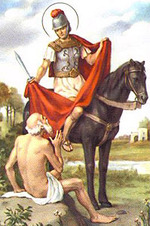
Stmartin Armistice Day, which honors the official end of World War I on November 11, 1918, falls on the feast of St. Martin of Tours, a pagan soldier who gave up his military career upon becoming a Christian. (Martin Luther, whose birthday was November 10, was baptized on November 11 and given the name of the saint whose feast fell on his baptismal day.) After World War II, the name of Armistice Day was changed to Veterans Day in the United States.

In honor of Veterans Day, I recommend checking out The Legacy Project, a project that seeks to preserve the wartime letters of America’s service personnel. You can listen to readings of a few of the letters, which are on display at the Gilder Lehrman Institute of American History in New York City.

One of my favorite letters in the collection (Warning: evil .pdf format) was written in July 1969 by a soldier named Dean Allen, a first lieutenant, to his wife Joyce. The letter ended this way:

"Some letter, huh! I don’t know if I have one sentence in the whole thing. I just started writing. Don’t worry about what I have said[,] these are just things I think about sometimes. I am so healthy I can’t get a day out of the field and you know I’m to [sic] damn mean to die. Now I better close for now & try to catch a few z’s. It will be another long night. Sorry I haven’t written more but the weather is against me. You can’t write out here when it rains hour after hour. I love you with all my heart. All my love always, Dean."

SEE THE DOCUMENT.

The museum reports that four days after writing this letter, Lt. Allen stepped on a land mine. Three days after that, Lt. Dean Allen, a multiply-decorated soldier, died.

Eternal rest grant to all our deceased veterans and may perpetual light shine upon them through Christ our Lord.

I Like Koalas!

KoalaWho doesn’t?

I mean, they’re furry and slow moving and cute.

What’s not to like?

Well, maybe the fact that they have razor sharp claws and that the males can’t stand each other and will battle and scar each other with their razor sharp claws, but those are minor things.

They’re still cute!

This is something I recognized even as a child.

In fact, the VERY FIRST THING THAT I BOUGHT WITH MY OWN MONEY was a toy koala.

A local drugstore had stuffed toys, and one was a really cute koala bear. It was made of really soft animal fur (brown rabbit, I think), and it had flexible black plastic claws, and brown plastic eyes, and when I was five years old I set my heart on it.

My parents, who were encouraging me to learn the use of money, allowed me to save up for it and do chores to earn more money, and so the little toy koala was the first thing I ever bought! YEE-HAW!

I’m afraid that I’ve lost track of it now, but I’m sure it’s still at my parents’ house, tucked away in a closet, and I’ll stumble across it again someday and take it out and let the memories come back.

The memory of the toy koala itself came back when I stumbled across

THIS ARTICLE ABOUT REAL KOALAS.

Really interesting stuff!

Koalas are most unique creatures.

As many people know, they live entirely on eucalyptus leaves (y’know, those sap trees that drip sap all over your car if you park under them in California?).

Eucalyptus leaves are poisonous to almost all creatures–but not to koalas!

Except when they are.

The article doesn’t mention this, but during a certain part of the eucalyptus tree’s annual cycle, they become so toxic that even koalas can’t eat them, at which point the little critters have to fast until the poison level in the trees goes down again.

LEARN MORE ABOUT THIS FASCINATING CREATURE OF GOD.

Blue Meanies?

Beatlesyellowsub_1There’s a new biography of the Beatles–a THOUSAND PAGE BIOGRAPHY–and in it the Fab Four don’t come across as all that "Fab."

Except maybe for Ringo.

According to Time Magazine’s reviewer:

The Fab Four hated the silly, lovable mop-top image they created, and
on that score alone they would probably love Spitz’s book. He marshals
a staggering mass of research in support of the conclusion, broadly
speaking, that Lennon was a drug-addled, attention-hungry rageoholic
who picked fights and cheated on his wife; Paul McCartney was a smarmy,
manipulative charmer; and George Harrison was dour and sour. Before you
lose faith entirely, it turns out Ringo really was just a lovable
goofball.

Well, at least there was one lovable goofball!

Or maybe more than one.

I haven’t read the book–or studied their lives in detail–so I really can’t say.

GET THE STORY.

Growing Up Potter

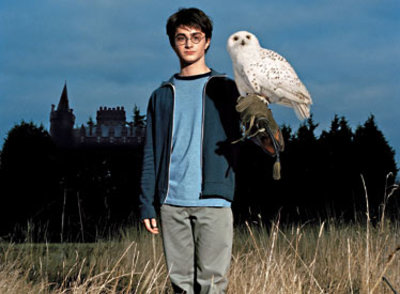
HarrypotterWhat’s it like to grow up as Harry Potter?

I don’ t know. And in fact nobody knows since Harry Potter is a fictional character.

But one kid has an unusual insight on the matter–Daniel Radcliffe–the kid who plays Harry Potter in the movies.

Time Magazine has a story about him and the other kids playing in the Potter films.

Reading the article makes for an interesting insight into the world of child actors.

The fact that the Harry Potter movies are so successful has kept the kids locked in an unusual sociological bubble for years, with years yet to go (apparently–unless they re-cast the parts).

Personally, I’m disturbed by some of the things child actors go through. I often see scenes in movies and TV shows where I find myself thinking, "I really hope they got the child actor off the set before they filmed what’s going on in this shot"–or realizing that they clearly DIDN’T.

I couldn’t imagine allowing a child of mine to grow up in the entertainment biz, and especially not becoming a central player in a franchise like Harry Potter. I’d want my kids to have much more normal experiences growing up. Even with precautions taken (like only letting the kids film for four hours a day), I’m afraid that the experience would fundamentally warp them as adults. After all, former child stars don’t have a very successful track record as a whole.

GET THE STORY.

Happy Birthday, Martin Luther!

Luther

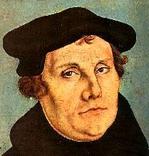
In case you forgot to circle the date on your calendar, today is the 522nd birthday of Martin Luther, founder of the Protestant Reformation — or the Protestant Revolt, depending on your point of view — and author of 95 theses that he nailed to a church door in Wittenberg, Germany. Had he been contemplating how best to disseminate his theses today, perhaps he would have blogged them, a la the Internet Monk.

If you’re trying to think of the perfect gift for Luther, might I suggest obtaining a partial or plenary indulgence for his soul? Wherever Luther is now, I’m sure he now knows the value of an indulgence.

MYTHS ABOUT INDULGENCES.

PRIMER ON INDULGENCES.

Vatican And The iGod Generation

Available now for an iPod near you: Vatican documents, which can be downloaded to your very own portable MP3 player.

"In the beginning there was… Madonna. Now you can also download Pope Benedict XVI into your iPod.

"Inspired by Vatican documents that called on Church officials to exploit the full potentials of the computer age, the Holy See’s official broadcaster, Vatican Radio, is ‘podcasting’ audio content to any of the world’s one billion plus Catholics who own a portable MP3 player.

"The service, launched with little fanfare during the summer, has proved unexpectedly popular.

"’It has been a success right from the start,’ says Jean-Charles Putzolu of the Vatican Radio’s web team."

GET THE STORY.

I’m no techno-geek but I did a bit of Internet fishing to try to find the Vatican’s podcast service. If you are a techno-geek and if you want to start listening to Vatican podcasts, I think you need to go to the site of Vatican Radio.

Growing Protestant Devotion To Mary

Bvm

Catholic News Agency reports a surge in Marian devotion among British Protestants:

"Walsingham is home to two Marian shrines — one Catholic and the other Anglican — located at opposite sides of the town.

[…]

"According to the New York Times, the number of Protestant pilgrims visiting the Marian shrine and staying overnight has risen since 1999, from 10,000 to 12,000.

"Protestant worshipers in Walsingham often belong to the Anglo-Catholic tradition, which accords greater reverence to the Virgin Mary than other Protestant sects, and uses the bells and incense like in the Roman Catholic liturgy.

"The shrines also appeal to other Christians, and the Orthodox and Methodist churches in the town are indicative of this."

GET THE STORY.

This Rock ran an article a few years back on how one Catholic teacher presented the reasonableness of Marian devotion to Protestant students.

GET THE ARTICLE.

Can A Priest Force You To Break The Seal On Yourself?

A reader writes:

My neighbor is areligious yet very curious:  Can a priest make
absolution conditional when a crime (e.g., murder, child abuse) is
being confessed?  I’m assuming real sorrow for the sin(s) here.  The
CCC says only that there are no exceptions to the seal.  Thank you for
your time and attention.

A priest cannot make his absolution conditional on you going and confessing a crime–i.e., he can’t assign it as a penance that you go tell the police (or anyone else) what you did.

If he could do this then the seal of the sacrament would be meaningless as any priest could force any penitent to publicly disclose what he did.

This means that some crimes that come to light in the confessional will go undiscovered and unpunished by civil law, but the Church has judged it better to encourage the faithful to confess their sins by giving them an absolute assurance of confidentiality rather than leaving them to wonder whether the priest will disclose what they have done or–just as bad–force them to do so themselves.

The Code of Canon Law provides:

Can.  983 §1. The sacramental seal is inviolable;
therefore it is absolutely forbidden for a confessor to betray in any way a
penitent in words or in any manner and for any reason.

Can.  984 §1. A confessor is prohibited completely
from using knowledge acquired from confession to the detriment of the penitent
even when any danger of revelation is excluded.

Though Canon 983 doesn’t address specifically the issue of forcing a penitent to confess to the police, it does cover this case implicitly by stressing the inviolability of the seal and forbidding the priest to betray the penitent "in any manner" (including forcing the penitent to betray himself) and "for any reason" (even reporting a grave crime against the civil law).

Indeed, as canon 984 states, the confessor is prohibited from using what he learns in confession to in any way harm the penitent even if he could do so without breaking the seal.

Breaking the seal of confession is one of the gravest crimes that exists in ecclesiastical law. Any priest (or anyone else bound by the seal, such as a translator or an eavesdropper) who violates the seal is automatically excommunicated and this excommunication is reserved to the Holy See.

(NOTE CAUSE FOLKS WILL WONDER: The penitent himself is not bound by the seal. They’re your sins; you can tell them to anyone you want. But if you tell them to a priest in confession then the priest–and anyone else who hears them as you are confessing–cannot disclose them.)

Propositions 41-45

HERE ARE THE NEXT FIVE PROPOSITIONS FROM THE SYNOD ON THE EUCHARIST.

(Just five more to go after these!)

Proposition 41 deals with the reception of Commuion by non-Catholic Christians. It stresses that this generally isn’t possible but is in some cases. The Fathers of the Council stress that the conditions mentioned in the Catechism and the Compendium must be observed, which is odd since neither of these is a legal document. The place where the conditions are set forth in a legally binding way is canon 844 of the Code of Canon LawI suppose they cite the other two works because they are more generally accessible to the laity.

I suspect that there’s a translation error where Zenit represents the proposition as saying that "It must be clarified that the Eucharist does not only signify our
personal communion with Jesus Christ, but above all the full communion
of the Church." That’s not true. It makes it sounds as if communion with the Church is more important than communion with Christ, which is manifestly not the case. I suspect that the original Latin would have a construciton meaning something more like "but also" or "but in addition" or "but in particular" or something like that.

His proposition also rejects ecumenical concelebration of the Eucharist (despite the fact that JP2 himself ecumenically concelebrated with the Patriarch of Constantinople).

Proposition 42 is another proposition linking the Eucharist to a facet of the Christian life. This time the thing  being linked to is evangelization (i.e., the Eucharist brings us into an encounter with Christ, which motivates us to go out and evangelize others). At the same time as thanking missionaries, the synod fathers also stress some themes from Cardinal Ratzinger’s document Dominus Iesus–the fact that Christ is the only Savior and his "unicity" (uniqueness).

It makes the helpful point that stressing Christ’s uniqueness "will prevent the decisive work of human promotion implicit in evangelization being reduced to a mere sociological note." In other words: It’s not enough to just feed people. You have to tell them about Jesus and the fact that he is the only Savior.

Proposition 43 emphasizes Eucharistic spirituality for the sanctification of the world.

Proposition 44 starts out as just another linking the Eucharist to a facet of the Christian life proposition but quickly turns much more direct and practical. This time the topic is sick people and the proposition recommends several things of practical importance to sick people and their access to the Eucharist: (1) greater insistence on the Eucharist as viaticum, (2) greater distribution of the Eucharist to mentally disabled people, (3) equipping churches architecturally so that the disabled can have access to them.

Point 2 is elaborated by noting that the mere fact we can’t tell how much awareness a mentally disabled person has is NO REASON TO BAR THEM FROM THE EUCHARIST.

YEE-HAW! This is not a change in Church law, but it is a message many people need to receive.

No more, "Uncle Bob is never given the Eucharist because he’s retarded" or "We can’t give Gramma the Precious Blood because she’s in a coma" stuff.

Proposition 45 is a pretty standard affirmation of the need for pastoral care for migrants. Something that makes it a little unusual is that it lays stress on the need for one particular group of migrants: those belonging to the Eastern rites. This is no doubt a reflection of the Christian exodus occurring from the Middle East right now, as well as possibly migration of Eastern rite Christians from the former Soviet bloc into the West.

The proposition stresses that they need to be have access to pastors of their own rites as much as possible, and it says that "Oriental Day" needs to be established in seminaries so that Eastern liturgies will become better known to Latin priests.