Catholic Bumper Stickers

Bumpersticker_1

Have you ever seen cars with Christian outreach bumper stickers that say things like "Christians aren’t perfect, just forgiven"? (Here’s one site that sells such stickers.) I’ve often thought I should keep some copies of Pillar of Fire, Pillar of Truth handy in my car to tuck under the windshield wiper of cars that sport such stickers. I’ve also thought there’d be a good market among Catholics for Catholic riffs on the standard Christian evangelism stickers. If anyone decides to print some up, here are my contributions to get them started:

  • "No Mary, no peace. Know Mary, know peace!"
  • "Christians aren’t perfect. Yet."
  • "If you died today, would you be in purgatory tomorrow?"
  • "Real men love Mary."
  • "’Why is this granted me, that the mother of my Lord should come to me?’ –Luke 1:43"
  • "Your life may be the only church your friends ever attend."

Please add your contributions to the combox.

Michael Schiavo Kills Wife Then Marries Mistress In Catholic Church

Terri Schiavo’s husband, Michael, has married his long-time live-in mistress.

In a Catholic church.

This is extremely problematic for the obvious reason: namely, that the Church seems to be putting its blessing on the marriage of a man who killed his wife in order to marry his mistress.

There ought to be a law against that kind of thing.

And in fact, there is.

Canon law specifically provides an impediment to prevent exactly this thing. It’s known as the impediment of crimen (Latin, "crime"). If you bring about the death of your spouse with a view to marrying another person and then you attempt marriage, the impediment of crimen makes that new marriage automatically invalid.

The Code of Canon Law provides the following:

Can.  1090 §1. Anyone who with a view to entering marriage with a certain person has brought about the death of that person’s spouse or of one’s own spouse invalidly attempts this marriage.

§2. Those who have brought about the death of a spouse by mutual physical or moral cooperation also invalidly attempt a marriage together.

Further, only the pope can dispense from the impediment of crimen.

Now, when Michael Schiavo and his long-time mistress (with whom he has had children while his wife was in the hospital) applied to be married in a Catholic church in Safety Harbor, Florida then either the pastor took steps to contact Pope Benedict and have the impediment of crimen dispensed–and B16 did that (fat chance!)–or the pastor authorized an invalid union under Church auspices between Michael Schiavo and his mistress, Jodi Centonze.

Either way, this must be clarified. If the pope dispensed from crimen in this case then, given the gravely scandalous nature of this union, the fact of the dispensation must become public or, to mitigate the grave scandal done by the invalid union, the competent ecclesiastical officials must make clear that the union was invalid and that the Church’s law prohibits precisely this kind of thing.

You may be thinking, "Well, there’s not a lot that could be done at this point, is there?"

And you’d be wrong. There is a canon law procedure for handling this situation.

CANONIST ED PETERS HAS THE STORY.

This situation is simply so outrageous that action must be taken by the competent Church authorities.

First, if a dispensation from crimen was not granted by the pope (as is overwhelmingly likely) then the parties are in an invalid union and they need to be made aware of this fact.

Second, members of the general public who are scandalized (in the popular sense) by the spectacle of the Catholic Church putting its blessing on a kill-your-wife-to-marry-your-mistress marriage must be given the message that the Catholic Church really takes seriously the culture of life and will not put its blessing on this kind of murderous immorality.

Just imagine what many non-Catholics must be thinking at this very moment: "I don’t see how the Catholic Church really believes in a culture of life if it’s willing to marry people who have killed their spouses in order to marry their mistresses. All its talk about protecting human life is just talk. They don’t really mean it. When push comes to shove, they’re totally happy uniting wife-killers and their mistresses in the bonds of holy wedlock."

Third, members of the Catholic Church need to have a cause of scandal (in the technical sense) removed. As medicine is now able to dramatically prolong life, many more Catholics will find themselves in the same situation as Michael Schiavo: Their spouse will be unable to advance their own interests for medical reasons, they will have power of attorney for their spouse, they will meet someone who they would like to marry, and then they will be tempted to use that power of attorney to bring about the death of their spouse "with a view to entering marriage with a certain person."

In other words, the Church must clarify this situation in order to avoid more disabled spouses in hospitals getting euthanatized so that the non-disabled spouses can get married to someone they have their eye on.

Lives really are at stake here.

If the competent ecclesiastical officials (possibly involving those in Rome) do not clarify this situation then people will die.

Those wishing to contact relevant individuals to request a public clarification of the matter may contact:

Rev. Stephen Dambrauskas, JCL
Promoter of Justice
Diocese of St. Petersburg
905 South Prospect Avenue
Clearwater, Florida  33756-4039

Phone:  UPDATE: 727-344-1611 Also: 727-446-2326 / 442-8884
Fax:  727-446-4287
E-Mail:  tribsp@tampabay.rr.com

They may also contact:

His Excellency Pietro Sambi
Apostolic Nuncio
3339 Massachusetts Avenue NW
Washington, DC 20008

Telephone: (202) 333-7121
Fax: (202) 337-4036

Diaconate W/Protestant Spouse?

A reader writes:

I have a couple of important questions and hopefully you are the person to answer them.

I was baptized Catholic at birth and later confirmed.  I have only been married once.

First, can I even contemplate entering the Diaconate program if my wife is not Catholic (she is a baptized protestant)?  My wife attends Mass with me regularly, but does not receive communion, in respect to our church’s teachings.

Second, if my wife went through RCIA and became a Catholic, how long would she have to be a Catholic before I could be considered for the Diaconate program?

The fact that your wife is Protestant does not appear to create a canonical barrier to ordination to the permanent diaconate. The relevant canon simply reads:

Can. 1031 §2. A candidate for the permanent diaconate who is not married is not to be admitted to the diaconate until after completing at least the twenty-fifth year of age; one who is married, not until after completing at least the thirty-fifth year of age and with the consent of his wife.

There is nothing in there (nor does a check of parallel legal sources and commentary) requiring the spouse to be Catholic.

But there should be.

(NOTE: The last sentence signals that we are moving from canon law to theological opinion.)

St. Paul is very clear about the fact that Christ’s ministers–including deacons–need to have religious solidarity with their family. In 1 Timothy 3, he writes:

[8] Deacons likewise must be serious, not double-tongued, not addicted to much wine, not greedy for gain;
[9] they must hold the mystery of the faith with a clear conscience.
[10] And let them also be tested first; then if they prove themselves blameless let them serve as deacons.
[11] The women likewise must be serious, no slanderers, but temperate, faithful in all things.
[12] Let deacons be the husband of one wife, and let them manage their children and their households well;
[13] for those who serve well as deacons gain a good standing for themselves and also great confidence in the faith which is in Christ Jesus.

You’ll notice the reference to "The women" in verse 11. As a linguistic matter, the Greek here is ambiguous. The Greek text simply refers to gunaikas, which could be translated either "women" or "wives" since in Greek the word for "woman" and the word for "wife" are the same (gune–pronounced "gu-nay").

Advocates of women’s ordination have pounced on this verse to argue that there were sacramentally ordained female deacons in the early Church, but subsequent Christian tradition has made it clear that this was not the case. Only a baptized male can be validly ordained.

This indicates that the correct reading of gune should be "wife" rather than "woman." The passage should be understood to mean:

Wives likewise must be serious, no slanderers, but temperate, faithful in all things.

The structure of the passage also indicates this. Paul has just been discussing the requirements for deacons who are male in verses 8-10 and he is clearly discussing the requirements for male deacons in 12-13. It is much more likely that in verse 11 Paul is stating a further requirement for male deacons (i.e., that they have wives of a certain character) than that he is swerving wildly to mention in passing a whole different group of people (female deacons) about whose requirements for ordination he is silent.

Further, we already know that Paul has the "wife" meaning of gune in mind in this passage because in the very next verse (v. 12) it unambiguously means "wife."

If we take this as established then what does the passage say regarding the qualifications a prospective deacon’s wife must have? Among other things, that she be "faithful in all things."

What Paul means by this is somewhat ambiguous. He may mean a number of things. But I find it difficult to envision Paul regarding a prospective deacon’s wife as "faithful in all things" if she did not share the fullness of the Christian faith. If she rejected certain elements of the faith of Christ then I don’t think Paul would regard her as fitting this description.

Paul clearly consider the religious affiliation of family members important. In Titus 1:6 Paul is discussing the qualifications for office of a bishop (which term seems to have been used equivalently with presbyter in Paul’s day) and he says that one of the qualifications for ordinatoin is that "his children are believers and not open to the charge of being profligate or insubordinate."

So the children of a prospective bishop/presbyter must be believers in order for him to be qualified for ordination. This means that the religious affiliation of immediate family members are relevant for prospective ministers, and this provides part of the context for Paul’s statement that a deacon’s wife must be "faithful in all things."

This is something I recognized back when I was Protestant and married to a Catholic. I wanted–deeply–to enter the Protestant ministry as a pastor or seminary professor, but I recognized that the New Testament requires ministers to have religious solidarity with their families and, even though I’m sure that I could have found someone who would be willing to ordain me even though I had a Catholic wife, I refused in conscience to seek that.

I was willing to give up my prospective career–the only thing I wanted to do in life–rather than violate this requirement. This was an ENORMOUSLY painful thing for me, but I was planning to go into law or go back to philosophy instead.

I also thank God that he hid from me the fact that I might be able to do ministry as a Catholic so that I was not tempted to convert for the wrong reasons.

It seems quite clear to me, then, that this is a principle that needs to be honored. The immediate family members of a prospective clergyman (priest or deacon) need to share the fullness of the Christian faith, which means that they need to be Catholic.

Canon law may not require this, but in my opinion sound pastoral practice does. I understand allowing mixed marriages as a concession for the laity, but Christ’s ministers are to be held to a higher standard.

Whether your local bishop (the man who would be ordaining you to the diaconate) would agree with this, I could not say.

In regard to the second question, since even having a non-Catholic wife is not a canonical barrier to ordination there is correspondingly no canonical waiting period before ordination should she become Catholic.

The ideal thing, of course, would be for her to become Catholic, and it certainly is not inappropriate for you to invite her to consider this BUT–AND THIS IS VERY IMPORTANT–you cannot pressure her to become Catholic so that you can pursue the diaconate. The Catholic faith must be accepted freely, without coercion or emotional manipulation on the part of a spouse.

So I would encourage you to entrust this situation to God in prayer. Your desire to serve Christ is praiseworthy, and you are not canonically constrained from pursuing ordination to the diaconate, but there are serious pastoral issues connected with your life situation that may weigh against this. You should think about all this and pray about it and seek the counsel of additional people, including the vocations director of your diocese, who can guide you further regarding the particular requirements for ordination that your local bishop employs.

The situation may be messy and complex, but that’s the kind of situation that God specializes in.

Hope this helps.

The Beatles Just Got Back Together!

No, really!

They’ve just released a new album and will be performing live in four different U.S. cities as part of a reunion tour!

Even though John and George are dead!

Oh, wait.

No, it’s not the Beatles that have just done that. It’s the St. Louis Jesuits.

The who?

No, not The Who. The St. Louis Jesuits–a group of "musicians" who in the mind of some people apparently have the same status in liturgical music that the Beatles do in actual music.

The Catholic News Service writes:

The St. Louis Jesuits, liturgical music icons from the 1970s, are back together and have released their first album in more than 20 years.

"Morning Light" is the seventh recording for the St. Louis Jesuits — Dan Schutte and Jesuit Fathers Bob Dufford, John Foley and Roc O’Connor — who were known for such songs as "Blest Be the Lord," "Lift Up Your Hearts" and "Sing a New Song."

In the mid 1980s, various assignments moved the men to different parts of the country, and Schutte left the Society of Jesus.

Since that time, all four have released successful solo CDs.

The four met up in 2001 at the 25th anniversary celebration of the National Association of Pastoral Musicians in Washington, where they sang Schutte’s "City of God." It was the first time in 17 years that they had performed together live.

Tim Manion, one of the original St. Louis Jesuits, joined with the four to sing for some of the recordings. Father Dufford and Schutte hadn’t seen him in 21 years and Father O’Connor hadn’t seen him in eight.

Fans of the St. Louis Jesuits’ music will find comfort in the songs on "Morning Light" as its sound is much the same as their earlier sound.

In the spring, Fathers O’Connor, Foley and Dufford and Schutte will do four live performances in Washington, St. Louis, Chicago and Anaheim, Calif. The group hasn’t done any public performances together in nearly 20 years.

"It’s our little reunion tour," Schutte said.

Setting aside the (intentional?) religious/secular pun of calling these individuals "liturgical music icons," the whole "rock star" paradigm that governs this article and how these malefactors are perceived speaks volumes about the current rot that passes for liturgical music.

GET THE STORY.

JOIN THE RESISTANCE.

PEEP THIS, TOO.

Quote Of The Day

Bradley

While surfing the Internet, I stumbled across a great quote, which seems to say so much more than it’s speaker originally intended. Every so often, as I find more quotes that seem almost prophetic in nature, I’ll share them here.

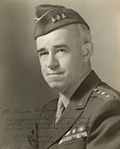
"Ours is a world of nuclear giants and ethical infants. We know more about war than we know about peace, more about killing than we know about living." –Omar N. Bradley

Who was Omar N. Bradley?

CLICK HERE.

A Radio Volunteer Request

You remember when we had the volunteer project going of listing the questions that appear on my Q & A shows on Catholic Answers Live?

(If you don’t, you can see examples of it HERE.)

I have been informed that the radio department at Catholic Answers is now interested in experimenting with something similar for the Q & A shows (not just mine, everybody’s).

There are details still to be worked out, but they’re interested in the basic concept. I gather that for now they’re trying to get just the new Q & As done this way to prove out the concept. What will be done with the past shows would be determined at a future date.

Currently they’re looking for volunteers to help with the initial effort by listening to the new shows, listing the questions, and e-mailing in the list.

If you would be interested in helping with the initial experiment to see if it can be something that the online archives can feature on a regular basis, please E-MAIL ME or let me know via the combox (leaving your e-mail address so we can contact you). I’ll make sure the info gets to the right people at Catholic Answers.

Yuggoth One Blasts Off!

Yuggoth_oneThe first space probe to visit the planet Yuggoth (a.k.a. "Pluto") has just blasted off from Cape Canaveral.

GET THE STORY.

The planet will not arrive until 2015, so we have at least nine years of safety before the Yuggoth-spawn, the dreaded "Mi-Go," are contacted by the space ship, risking an interplanetary and even interstellar incident that may threaten the sanity and survival of the human race!

Here is what NASA will find when its optimistically named "New Horizons" mission reaches Pluto:

There are mighty cities on Yuggoth – great tiers of terraced towers built of black stone like the specimen I tried to send you. That came from Yuggoth. The sun shines there no brighter than a star, but the beings need no light. They have other subtler senses, and put no windows in their great houses and temples. Light even hurts and hampers and confuses them, for it does not exist at all in the black cosmos outside time and space where they came from originally. To visit Yuggoth would drive any weak man mad – yet I am going there. The black rivers of pitch that flow under those mysterious cyclopean bridges – things built by some elder race extinct and forgotten before the beings came to Yuggoth from the ultimate voids – ought to be enough to make any man a Dante or Poe if he can keep sane long enough to tell what he has seen.

But remember – that dark world of fungoid gardens and windowless cities isn’t really terrible. It is only to us that it would seem so. Probably this world seemed just as terrible to the beings when they first explored it in the primal age. You know they were here long before the fabulous epoch of Cthulhu was over, and remember all about sunken R’lyeh when it was above the waters.

The Yuggoth spawn may already be aware of the New Horizons mission, for they may have directed their thought-currents toward Earth to induce our scientists to mount the mission in the first place, in hopes of making contact with mankind–on their own turf and on their own terms!

Indeed, it was through such a directed thought experiment that they first caused our scientists to discover their sinister planet!

Their main immediate abode is a still undiscovered and almost lightless planet at the very edge of our solar system – beyond Neptune, and the ninth in distance from the sun. It is, as we have inferred, the object mystically hinted at as "Yuggoth" in certain ancient and forbidden writings; and it will soon be the scene of a strange focussing of thought upon our world in an effort to facilitate mental rapport. I would not be surprised if astronomers become sufficiently sensitive to these thought-currents to discover Yuggoth when the Outer Ones wish them to do so.

It is a strange dark orb at the very rim of our solar system – unknown to earthly astronomers as yet. But I must have written you about this. At the proper time, you know, the beings there will direct thought-currents toward us and cause it to be discovered – or perhaps let one of their human allies give the scientists a hint.

Indeed, their thought-currents may have also induced H. P. Lovecraft to write his story "The Whisperer In Darkness," from which the above quotes are taken–for he was working on the story at the time that Pluto was discovered and he immediately realized it was the dark Yuggoth that had inspired his literary creation:

Those wild [Vermont] hills are surely the outpost of a frightful cosmic race – as I doubt all the less since reading that a new ninth planet has been glimpsed beyond Neptune, just as those influences had said it would be glimpsed. Astronomers, with a hideous appropriateness they little suspect, have named this thing "Pluto." I feel, beyond question, that it is nothing less than nighted Yuggoth – and I shiver when I try to figure out the real reason why its monstrous denizens wish it to be known in this way at this especial time. I vainly try to assure myself that these daemoniac creatures are not gradually leading up to some new policy hurtful to the earth and its normal inhabitants.

GET THE STORY.

What new policy do the Yuggoth spawn have in store for mankind?

We’ll find out in 2015!

Windows On The World

Stambrose

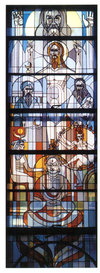
The parish church in the picture above may not be very awe-inspiring on the outside, but it does boast some interesting stained-glass windows on the inside, including one of Pope John Paul XXIII — which is either a misnamed tribute to Pope John XXIII or an imaginative portrait of a pope to be elected sometime in the fourth millennium of the Catholic Church. Noncatholicwindow Nonchristianwindow

Even more interesting are the windows dedicated to ecumenism and interreligious dialogue, one window being dedicated to non-Catholics and the other to non-Christians. The latter window, in addition to portraying historical figures such as Buddha and Mohammed, also pays tribute to the Egyptian mythological god Horus, son of Isis.

SEE MORE OF THE WINDOWS.

SEE THE PARISH.

This is the kind of thing that makes me ever more grateful for my own parish, built in the 1950s. The mission-style architecture, the cruciform layout of the interior, the stained-glass windows of the stations of the cross and of Catholic saints, the life-sized crucifix….. The interior is a bit stark when compared to how it might have looked a few decades ago, but it is still a lovely church. Compared to the Modern Office-Complex style of this parish that is decorated with stained-glass of questionable theological and artistic taste, my parish is heaven on earth.

(Nod to the friend who sent me the links.)

More Respect For The Blogosphere

It’s not secret that the blogosphere has been getting more respect from the MSM. Bloggers are now being used by MSM reporters as pundits to provide commentary on breaking events, and also as fodder for news stories. Blogs are also being cited as significant sources in some news stories.

What’s particularly interesting to me is watching this phenomena play out with JimmyAkin.Org. Over the last number of months I’ve been contacted by reporters who became aware of me through the blog rather than through Catholic Answers. I’ve been asked for comment and been invited on radio shows as an "interesting person" purely on the basis of the blog, by reporters and producers who aren’t even aware of Catholic Answers.

Not a lot has come of that yet, but I’ll let you know when it does. What’s interesting to me is that I’m even getting such queries. It shows how bloggers have crafted an identity for themselves and forced the MSM to respect it in a way that goes beyond being "some guy with a web page." If you’re some guy with a web page, you don’t get press inquiries in the same way, but if you’re "a blogger" then the MSM knows and respects (or fears) what you are enough that they take you more seriously. MSM reporters have learned (by the school of hard knocks) what a blogger is and what bloggers are capable of doing–and they (or some of them) have decided to start turning to bloggers for commentary and, in some cases, the facts they need to put together a story.

Something similar to that just happened in the Catholic press (not the American MSM, but significant nonetheless) with JimmyAkin.Org.

Y’all may recall the dustup that we had a bit ago with Mr. Giuseppe Gennarini of the Neocatechumenal Way. After I put up a blog post noting that he had severely misrepresented what was said in a letter from Cardinal Francis Arinze, he wrote a reply that he asked me to publish on the blog. I did (along with an accompanying critique of his reply).

Apparently all this got back to Italian journalist and vaticanista Sandro Magister, who just quoted from JimmyAkin.Org in his latest column.

Specifically: He quoted part of Gennarini’s reply in the documentation section at the bottom of his article.

HERE IT IS IN ENGLISH.

AND IN ITALIAN.
(CHT to the reader who e-mailed.)

It’s kinda cool seeing material from JimmyAkin.Org (a) being used as a source to document a news story by a well-known vaticanista and (b) seeing it done in Italian! (and [c] in a column that is read by folks in the Vatican!)

Incidentally, I’d like to chime in with Magister about one thing in particular that he says in the piece (though this is on a subject other than the Neocatechumenal Way):

During the first months of [B16’s] pontificate, the pope essentially concentrated upon the liturgical celebrations and upon the bare word: homilies, Angelus messages, catecheses, speeches, and now his encyclical. But in order for these words to be spread all over the world, they at least need to be translated and diffused in the main languages.

Well then, a speech of primary importance like the one Benedict XVI addressed to the Roman curia on December 22, two-thirds of which was dedicated to the interpretation of Vatican Council II and the relationship between the Church and the modern world, was for eight days available on the Vatican website only in its Italian version. It was then accompanied by the French, then a few days later by the Spanish, then the English, then by the German version. So, almost a month after the event, the last of the six versions into which papal documents are normally translated – the Portuguese version – is still missing (8). And the same thing has happened in the case of almost all the other texts.

And yet the Vatican is the most polyglot state in the world, brimming over with translators, and it has an overabundance of organs dedicated to social communications. They were useless, at least in this matter. Even more than that – they were harmful.

I AGREE! (And any Vatican folks who are browsing this blog in the wake of Magister’s mention, please take note!)

I don’t know if the recent slowness of translation is due to deliberate malfeasance–as Magister speculates–but I have noted that the Vatican web site has been EXTRAORDINARILY INEFFICIENT of late when it comes to translating and posting important documents.

I’ve been quite irked by the fact, and there seems to have been a marked degeneration in this respect since the end of JP2’s pontificate. I don’t know what the causes are, but this really is unacceptable, and I hope steps are taken to get things translated and posted in the timely manner that is needed to run a Church with a billion people in the Information Age.

Incidentally, I’m gratified that Magister would take note of and comment on the problem. As an Italian, it would have been easy for him to simply rejoice in having the Italian originals posted and to not have noticed that those of us in other language communities are being harmed by the tardiness of the translators and web-posters.

The fact that he’s noticed it as an Italian-speaker points to the seriousness of the problem.

Lego My Church!

Legochurch_1

… Well, not my church, the architecture of which I like just fine, but I can never resist the opportunity to make a bad pun.

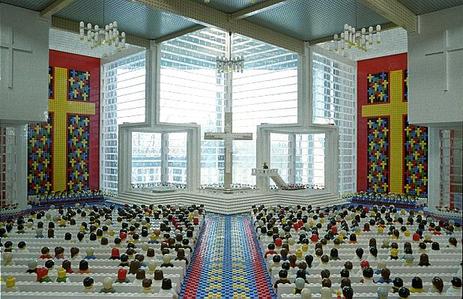
The church in the picture is a Lego church, built by a computer programmer, Amy Hughes, who once wanted to be an architect and who obviously had way too much time on her hands. Here are some quickie facts about the Lego church:

"How long to build it? It was about a year and a half of planning, building and photographing.

"How many pieces of Lego to build it? More than 75,000.

"How big is it? About 7 feet by 5 1/2 feet by 30 inches (2.2 m x 1.7m x .76m).

"How many Lego people does it seat? 1372.

"How many windows? 3976. It [also] features a balcony, a narthex, stairs to the balcony, restrooms, coat rooms, several mosaics, a nave, a baptistery, an alter, a crucifix, a pulpit and an elaborate pipe organ."

SEE MORE PICTURES.

It’s a cool toy project, but be sure not to forget Ms. Hughes’ name. In the event that your diocese decides to build a new parish and her name appears as on the project as an architect, start worrying.

JIMMY ADDS: I’m thinking that the Lego church needs to inaugurate a more effective outreach program. If it doesn’t get more Lego parishioners into the pews fast then its donations won’t be able to underwrite the payments it needs to make such an obviously elaborate structure. I hope the Lego church had a lot of money in its building fund before it started such an extensive construction project.