Michelle here.
As part of my reading on parenting, I get regular alerts from Mothering Magazine, a magazine that takes an … uhm … rather eco-friendly view of parenting. It’s got some good stuff in it, but basically it’s the parenting magazine on newsstands for the All-Natural Trail-Mix and Granola Crowd. I was amused by this notice of an upcoming chat channel guest at the magazine’s web site:
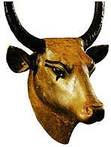
"Hathor the Cowgoddess lives in the middle of urban sprawl with her dearest super-husband and three wee and wise kids. She has had an unassisted birth in the middle of her 700 square foot apartment, she breastfeeds on demand and in public, she shares sleep, maintains constant contact and unschools. Not only does she do all of this, she does it with grand style and verve. With extravagant and outrageous behavior. And with her trusty sidekick baby in a sling.
"Hathor is the completely true product of the imagination of Heather Cushman-Dowdee, an outraged (because she might look distracted but she is paying attention!) mama who has done almost all of the above (that part is autobiography) … except for the part that she totally makes up (those parts are wishful thinking). The raucous exploits of Hathor and her family are produced in comic form on the web and printed in many, many zines and magazines and books, too."
So, who is Hathor the Cow Goddess really? (Not counting her Egyptian mythological namesake.)
And, for a bit of balance in the "lactivism" debate, see THIS COLUMN by Betsy Hart.
(JIMMY ADDS: You’d never guess that Hathor was a cow goddess from the way she appears on Stargate SG-1!)