Writing With Style

Here on the blog y’all get to see me writing with at least a measure of style. My editor and I have an understanding, and if I want to plot an "ain’t" or a "y’all" or a "YEE-HAW!" into a sentence, I can and he won’t "correct" me.

I occasionally cut loose with a full-blown fisk (though it requires me to have found a REALLY stupid story to use as a base for the fisk. If the story isn’t stupid enough, the fisk won’t be that funny.)

When I write for most publications, though, I have to write in a very SERIOUS manner.

That doesn’t stop me from appreciating those who write with a lot of style. I just don’t get a chance to put much stylish stuff in print, myself.

There are certain people who I’ve discovered on the Net who write in such an interesting manner that I’ll go out of my way to read their material, just to admire their creative use of language. Even if I don’t agree with what they’re saying, I still admire how they say it.

Peggy Noonan is one. Mickey Kaus is another. LILEKS HAD A REALLY GOOD ONE HERE.

And then there’s Mark Steyn. He’s always a treat in terms of how he uses words. For example, consider the following paragraph in which he describes listening to a National Public Radio story that talked about Muslim terrorists in Russia without identifying them–till the last word of the story–as Muslims:

When the NPR report started, I was driving on the vast open plains of I-91 in Vermont and reckoned, just to make things interesting, I’ll add another five miles to the speed for every minute that goes by without mentioning Islam. But I couldn’t get the needle to go above 130, and the vibrations caused the passenger-side wing-mirror to drop off. And then, right at the end, having conducted a perfect interview that managed to go into great depth about everything except who these guys were and what they were fighting over, the Russian academic dude had to go and spoil it all by saying somethin’ stupid like "republics which are mostly . . . Muslim." He mumbled the last word, but nevertheless the NPR gal leapt in to thank him and move smoothly on to some poll showing that the Dems are going to sweep the 2006 midterms because Bush has the worst numbers since numbers were invented.

Now see! That’s good writing! I’d love to do stuff like that, only people take you SO seriously when you’re an apologist and expect you to be SO prim and proper and "charitable" and literal all the time.

It’s enough to make you stamp your foot sometimes.

ANYWAY, READ THE REST OF STEYN’S PIECE TO SEE WHAT OTHER NIFTY WRITING TRICKS HE PULLS.

Imperial County Strikes Back!

I’ll tell you about my trip to Vasquez Rocks soon, but I realize that I need to finish telling you about the trip to the Salton Sea, so here’s some more on that. . . .

The counties in California are HUGE!

I mean, they’re larger than some STATES back east are!

San Diego County is so large that it contians FOUR mountain ranges! (As we saw in the last post in this series.)

When you hit the edge of San Diego County, you SUDDENLY plunge out of the mountains and into a huge flat, plane known as Imperial County, though.

Imperial County is one of the largest food producing centers in WORLD–with acre upon acre of capacity that hasn’t even been tapped yet! (Take THAT, over-population freakazoids!)

Imperial County needs water, though, and that water is chiefly supplied by the Colorado River. (DUM! DUM! DUM!) More about that later!

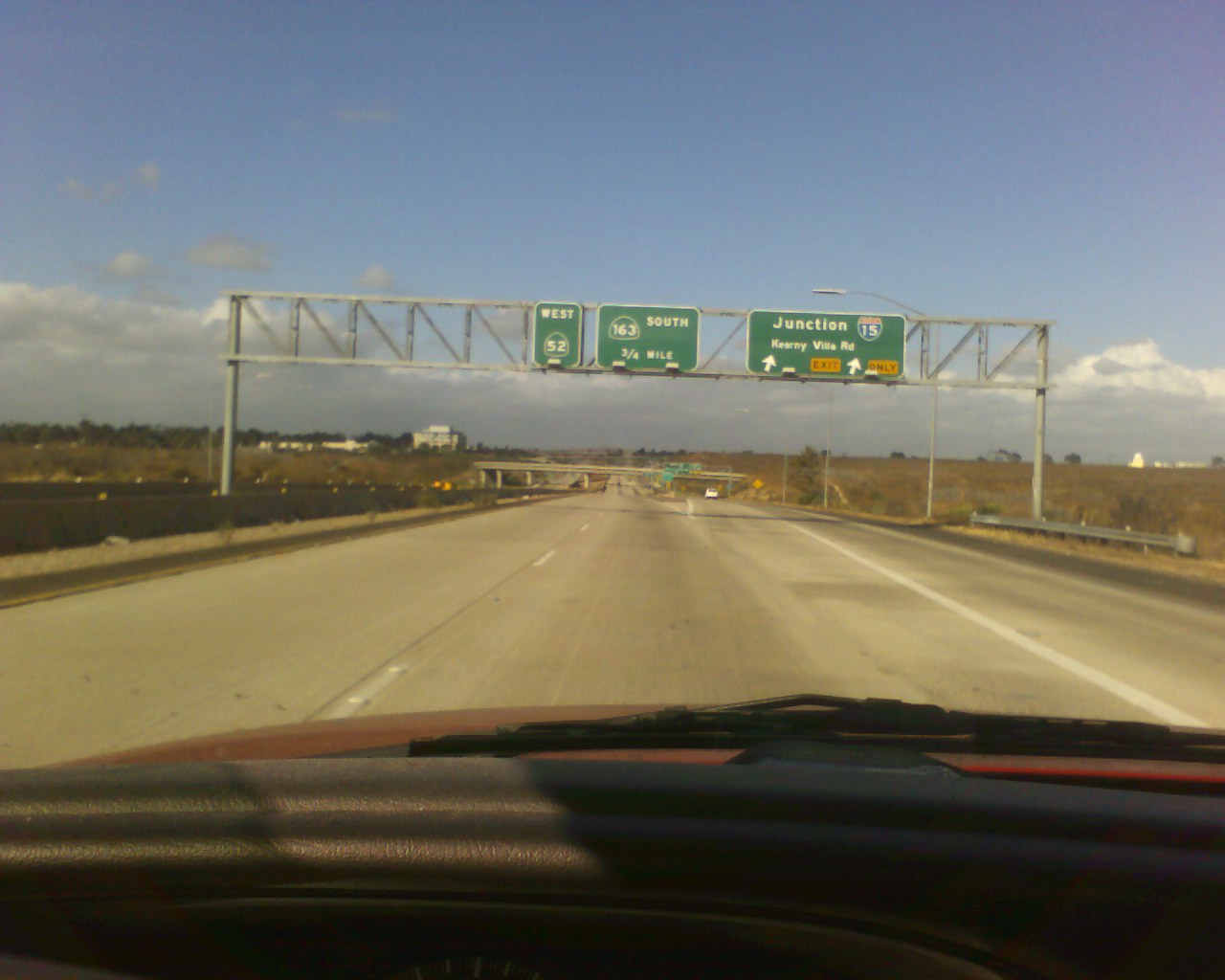
As you drive out into it, you can’t help noticing how FLAT Imperial County is compared to the mountains that are to be found in the eastern portion of San Diego County. Here’s what the flat plane looks like:

43287121_135350776_0

There are still many interesting desert treats that you’ll encounter. For example: lollipops that have SCORPIONS inside them!

Continue reading “Imperial County Strikes Back!”

Anathema Sit

A reader writes:

Hi Jimmy,

What is the difference between anathema & anathema "sit"?

Okay, before I answer, let me clear away something that is BOUND to come up if I don’t deal with it.

You heard about the apologist who named his dog "Anathema," so he could tell his dog "Anathema, sit"?

That was funny about the first thirty times I heard it.

Now here’s the deal: Anathema refers to a form of excommunication that used to exist under Church law. It no longer does exist, having been eliminated with the promulgation of the 1983 Code of Canon Law.

Sit is the Latin third person singular form of the verb "to be" when it’s in the subjunctive mood and the present tense. It means "Let him be" or "May he be." (You can also switch the gender to feminine or neutral in these translations."

So "Anathema sit" means "Let him (or her or it) be anathema."

This formula is a Latin translation of what Paul says in Galatians 1:8:

But even if we, or an angel from heaven, should preach to you a gospel
contrary to that which we preached to you, let him be anathema.

The Greek for that phrase is Anathema esto, and when you bring it across into Latin, it’s Anathema sit.

This phrase got picked up by the Church (either from Galatians or oral tradition) and used when excommunicating heretics. Ever since the first ecumenical council–the First Council of Nicaea (A.D. 325)–ecumenical councils used this formula to pass laws indicating who needed to be excommunicated.

Typically the formula went like this:

If anyone says . . . <INSERT SOME AWFUL HERESY HERE> . . . let him be anathema.

Only writing in Latin, they’d say . . . anathema sit at the end.

Some things that it’s important to note:

1) These anathemas were not thought of as damning a person to hell. That’s something only God can do. (Though the fact someone needed to be excommunicated was not considered a good sign for the state of his soul.)

2) The penalty of anathema did not take effect automatically. In fact, there was a special ceremony that the bishop had to perform, and the mere fact that someone in his diocese has uttered an awful heresy does not magically compel the bishop to get up and perform the ceremony.

3) The penalty of anathema, like all excommunications, was medicinal and meant to prompt the person to repent. Thus there was also a special ceremony for lifting the anathema and receiving him back into fellowship once he did.

4) The penalty was only applied to Catholics. If someone ain’t part of the Catholic Church then there’s no point excommunicating them. (Bishops got better things to do with their time than a bunch of ceremonies excommunicating folks who don’t make any pretense of being Catholic.)

5) The penalty was so infrequently used (typically for people like priests who had committed major crimes) that it was eventually abolished when the 1983 Code came out, so nobody today is under a sentence of anathema.

6) The canons from the ecumenical councils that use the formula "anathema sit" continue to express theological truths in an infallible manner, and you can still get excommunicated for teaching heresy. The special, ceremonial form of excommunication known as "anathema" is what’s gone.

Low-Carb Pizza

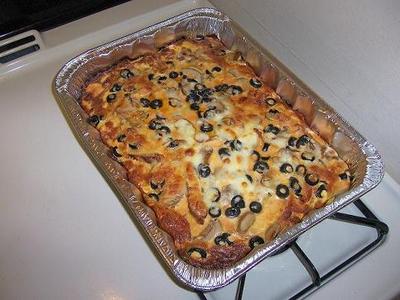
Lowcarbpizza

One of the challenges of low-carb dieting is figuring out how to come up with low-carb equivalents of foods that you’re used to eating.

Like pizza.

Many low-carb dieters have tried different ways of making low-carb pizza, and most of the home verisons aren’t that successful.

One of the most successful attempts was a Red Baron low-carb pizza that was marketed last year, but they stopped making it and you can’t buy it anymore. So now low-carb dieters are back to self-made efforts when it comes to pizza.

Fortunately, I’ve discovered an amazingly simple way to make low-carb pizza at home.

The result of my efforts is pictured above.

Now let me tell you how to make it.

Continue reading “Low-Carb Pizza”

Kecharitomene Questions

A reader writes:

I was watching EWTN earlier and it was mentioned that only two people in the New Testament are referred to as “full of grace” – Jesus (John 1:14) and Mary (Luke 1:28). Of course I thought this would be a really neat thing to mention to my Protestant friends (especially if we’re talking about Jesus and Mary being the New Adam and New Eve).

BUT I wanted to go beyond the English and examine the original Greek – but I don’t know a lot about Greek! So I have two twofold questions:

(1) does John 1:14 use kecharitomene as fully (pardon the pun) as Luke’s usage in 1:28 or does John 1:14 follow more closely to Acts 6:8 when Stephen is referred to as “full of grace and power”?

John 1:14 says that Jesus was plErEs charitos, which literally means "full of grace." (Those capital Es arepresent etas, so pronounce them like the e in "they"; the word is thus pronounced PLAY-RACE).

Luke 1:28 uses kecharitomene, which literally means "one who has been graced" or "woman who has been graced" (since the gender is female). It doesn’t literally mean "full of grace," though that is defensible as a free translation.

Acts 6:8 refers to Stephen as plErEs charitos, so again it’s literally "full of grace" and just the same as the description used of Jesus in John 1:14.

If it is the latter, (2) does that mean there really isn’t a literal “full of grace” parallel between Luke 1:28 and John 1:14 or can I find that literal parallel somewhere else in the New Testament?

Not that I’m aware of, and I’d almost certainly be aware of it if there were.

I’m afraid that in establishing Jesus and Mary as the New Adam and Eve, you’ll need to appeal to other considerations. You might try those mentioned HERE and HERE.


When The Real Presence Ceases

A reader writes:

Mr. Akin,

What’s the authority you had in mind when you said that the real presence ceases when the precious blood would "no longer would appear to be wine in the common estimation of men"? I’ve heard that before but can’t place it.

This is the standard test for whether Christ is really present or not. It’s common knowledge among theologians, though it is reflected in various authorities. To illustrate, though, I need to broaden the frame of reference a bit.

Christ willed that he would become present under the appearances of (wheat) bread and (grape) wine. Therefore you need wheat bread and grape wine in order to celebate the Eucharist and have valid matter for it.

Neither bread or wine, however, are natural categories (unlike, say, lamb flesh, grapes, or water, which all occur naturally). Bread and wine are prepared by human agency and thus are what one might say are "anthropological" categories rather than natural ones.

This makes us do a little more work in determining validity since anthropological kinds have (or can have) fuzzier boundaries than natural kinds, yet they are what Christ chose to employ in establishing this sacrament.

Since Christ spoke to men and instructed them to perform this sacrament, it follows that he expects men to be able to discern what falls into these categories–at least commonly. Some men might have bizarre expectations about what counts as bread and wine but one can’t rely on any bizarre opinions as a guide to what Christ intended. Therefore, a "common estimation of men" test has evolved. If something would be regarded as bread or wine in the common estimation of men then it will be valid. Otherwise, it won’t be. (Doubtful cases are doubtful matter.)

Because cultures vary, however, we have to throw in one extra qualifier: The common estimation of men has to be tied to the common estimation men in Jesus’ own day. The need for this qualifier is obvious when one considers the fact that to us–in 21st century America–"bread" tends to mean leavened bread while unleavened bread we refer to with a different term (e.g., "crackers"). That was not the case in first century Palestine, though, and to the apostles that Jesus was speaking to, "bread" (lekhem) could be either leavened or unleavened. We know that the latter was valid matter because it was the kind of bread that Jewish people were required to use during the Passover ceremony, which is when Jesus instituted the Eucharist.

So we have to adjust (make broader) what we in our culture would count as bread a little bit in order to take account of this fact.

Once we have the "Is it bread or wine in the common estimation of men?" test, two consequences fall out from that.

The first, which we have already mentioned, is that it isn’t (wheat) bread or (grape) wine then it can’t be used to confect the Eucharist. This is reflected, for example, in Redemptionis Sacramentum:

The bread used in the celebration of the Most Holy Eucharistic Sacrifice must be unleavened, purely of wheat, and recently made so that there is no danger of decomposition. It follows therefore that bread made from another substance, even if it is grain, or if it is mixed with another substance different from wheat to such an extent that it would not commonly be considered wheat bread, does not constitute valid matter for confecting the Sacrifice and the Eucharistic Sacrament [RS 48].

The second consequence gets to your question, which is what happens when the accidents no longer appear to be bread and wine. When that happens, standard Catholic theology holds, the Real Presence ceases because what Christ willed to be present under (the appearances of bread and wine) is no longer present.

Thus St. Thomas Aquinas notes:

[I]f the change [in the consecrated elements] be so great that the substance of the bread or wine would
have been corrupted, then Christ’s body and blood do not remain under
this sacrament
; and this either on the part of the qualities, as when
the color, savor, and other qualities of the bread and wine
are so
altered as to be incompatible with the nature of bread or of wine; or
else on the part of the quantity, as, for instance, if the bread be
reduced to fine particles, or the wine divided into such tiny drops
that the species of bread or wine no longer remain
[ST III:77:4].

The reader continues:

Is the real presence contingent on our subjective sensation, or on the reality of the sacred species themselves? For example, if you have bread or wine imperceptible to our senses, but chemically the same as a larger portion, does the real presence still remain?

Depending on what you mean, the answer may be neither. The Real Presence does not depend on anybody subjectively sensing the bread and wine. The consecrated elements could be reserved in the Tabernacle, with nobody sensing them. On the other hand, bread and wine are such that they can be sensed, and so the quantities do have to be sufficiently large that if someone were looking at them, they would say "That’s bread" or "That’s wine." It is not enough that a tiny particle be put under a microscope and have it be discovered to be chemically identical to bread or wine. We’re dealing with anthropological categories, and the elements have to be "anthropologically" bread and wine, not just chemically bread and wine.

Or is anything that no longer appears to us to be bread or wine necessarily chemically changed?

I couldn’t tell you for a fact with bread since I don’t know if the cell structure of the wheat typically remains in bread. However wine is not chemically changed by the mere fact of being reduced to such a small quantity that it no longer appears to be wine to the senses. I suspect that the same is true of bread as well, I just don’t know for a fact. The key, though, is not chemical composition but what they count as in the common estimation of men (with the needed cultural qualifier).


Or the crumbs on the paten, for instance. I wouldn’t call a crumb of crust "bread," but I still view that as having as much of the real presence as a larger host. Is that correct?

It depends on the size of the crumb. If it’s a particularly large crumb–something you would look at and think "That’s a piece of bread" then the Real Presence would remain. If it’s a particularly tiny crumb, something you would look at and think "That’s a speck of wheat dust" then the Real Presence does not remain. If it’s an ambiguously sized crumb then it is doubtful whether or not Christ is really present.

For safety’s sake, the Church tends to err ont the side of caution both before and after the consecration of the elements. Before the consecration if it is doubtful that the matter is valid then it cannot be used. After the consecration if it is doubtful whether the Real Presence remains then we are to assume that it does.

In obvious cases, though, (e.g., this is clearly cornbread or this clearly looks like a speck of wheat dust) then the Real Presence is not presumed and we are NOT TO SCRUPLE ABOUT THIS.

Hope this helps!

Abortion & Originalism

A reader writes:

Does it matter if the writers of the Constitution/Amendment define or understood the word "life" in "…right to life…" to mean from the moment of conception? That seems pretty likely to me, though I haven’t done any research. In such a case a Catholic (or merely "good") judge would be required to protect life from the moment of conception. I don’t think we *have* to play by their rules.

Perhaps in a generation we may have judges who will interpret the constitution in that way?

Perhaps, but it’s not a given that originalist judges would read the Constitution in this way.

While it’s true that the Fifth Amendment to the U. S. Constitution provides that no one shall "be
deprived of life, liberty, or property, without due process of
law," it is not a slam dunk that the framers or ratifiers of the amendment would have understood life as beginning at conception.

There was still a lot of overhang from the time when bad embryology thought that children were not alive until "quickening" (lit, "making alive" but interpreted as when the mother first feels the baby kick) or Aristotle’s 40/80 day business.

As a result, when the amendment was passed (1791) abortion was generally legal in the United States.

It wasn’t until the mid-1800s when better embryology revealed that children were definitively alive from conception, and American physicians began lobbying their state legislatures to make abortion illegal. That happened in every state of the union and stayed that way until the late 20th century, when certain legislatures began to loosen the requirements, just before The Evil Decision (1973) swept away all regulations and inaugurated an age of triumphal babykilling.

Since abortion was generally legal at the time of the Fifth Amendment’s passage and remained so–uncontested–for many years thereafter, an originalist justice might well look at it and say, "Well, that shows that the framers/ratifiers did not undrstand this amendment to prohibit abortion. Therefore it doesn’t. On the other hand, neither does the Constitution provide a right to abortion. It’s a matter for the legislatures, as it was at all times before Roe v. Wade, so you need a legislative solution if you want abortion banned."

Which is the most likely scenario for how abortion will be ended in this country: A judicial overturning of Roe on originalist grounds, followed by a long, bloody legislative fight to end abortion state-by-state, hopefully (a long way down the road, after the battle is mostly won) eventually resulting in a constitutional amendment protecting life from conception to patch up what the Fifth Amendment doesn’t do on an originalist reading.

That being said, it’s possible that an originalist with a sufficiently strong natural law orientation might look at the Fifth Amendment and say, "Okay. They didn’t understand it as prohibiting abortion, but that was because of the defective understanding of science they had in their day. They meant to protect the life of every human being under U.S. jurisdiction, and now we have a clearer undrstanding of the fact that the unborn are human beings. Therefore, the Fifth Amendment protects them."

That’s possible, but such five such justices aren’t likely to concurrently sit on the Court any time soon. The former reading is more likely to get Roe overturned in the short term.