Israel, Salvation, Election, and the Land

A reader writes:

As a person scheduled to start RCIA courses this Fall with my family, I approach this issue with fresh new eyes.  I’m interested in the Catholic perspective on the below issues, and there seems to be a wide variety of opinions on the topic.  We’ve got a pretty interesting thread going in your "What Is Happening In The Middle East" article

I’ll say! The thing is almost a month old and still going strong. It’s got almost 500 comments at the time of this writing, which as far as I know makes it the single most-commented on post we’ve ever had here at JA.O.

…a lot of interesting theories, but great need for sound scholarship in a few different areas…namely:

1. Is the redemptive process for Jewish folks the same as it is for Gentile folks? (both pre and post return of the Messiah); and

St. Paul is quite clear that the basis for salvation is the same for both Jews and Gentiles and that it is Jesus Christ. All are bound to accept the Christian faith for salvation. To culpably refuse to do so would be to reject salvation on the terms that God offers it. This is not to say that God cannot save those who inculpably do not accept the Christian faith. He can. It will still be Christ who saves them, even if they didn’t realize this in the present life.

The New Testament furher makes it clear that the covenants God established with Israel prior to the time of Christ–while they are of great value and enduring significance–do not provide salvation. Therefore it is not possible to hold that Jewish people are saved on the basis of covenants established prior to Christ.

The Old Law thus in some ways functioned for Israel the way that canon law tends to today. It was a body of legislation that made a particular application of the eternal law to a particular people living in a particular time and place–and failing to observe its grave provisions could be a mortal sin just as much as failing to observe grave obligations under canon law can be–but the Mosaic Law’s purpose–like canon law–was never to provide salvation itself:

"We ourselves, who are Jews by birth and not Gentile sinners, yet who know that a man is not justified by works of the law but through faith in Jesus Christ, even we have believed in Christ Jesus, in order to be justified by faith in Christ, and not by works of the law, because by works of the law shall no one be justified" (Gal. 2:15-16).

"If a Law had been given which could make alive, then righteousness would indeed be by the Law. But the scripture consigned all things to sin, that what was promised to faith in Jesus Christ might be given to those who believe" (Gal. 3:21-22).

"For it is impossible  that the blood of bulls and goats should take away sins. Consequently, when Christ came into the world, he said, "Sacrifices and
offerings thou hast not desired, but a body hast thou prepared for me; in burnt  offerings and sin offerings thou hast taken no pleasure.  Then I said, `Lo, I have come to do thy will, O God,’    as it is written of me in the roll of the book" (Heb. 10:4-7). 

Because the Mosaic Law never provided salvation (it dealt with ceremonial and temporal consequences of sin; see my book The Salvation Controversy for more on that), it cannot so provide salvation to anyone today.

This means that the basis for salvation for all human beings today is the same as it always has been: Jesus Christ. It’s just a question of how much knowledge a person in a particular situation has regarding God’s plan and whether he accepts it according to the understanding he has. If a person knows that God’s plan centers of Jesus of Nazareth then he is responsible for accepting that. If he does not (as is the case with many people–including Jewish individuals–in today’s world and as was the case with everybody prior to the First Coming of Christ) then he is responsible for accepting as much of God’s plan as he understands.

Thus the New Testament makes it clear that acceptance of the Christian faith is mandatory for both Jews and Gentiles today, and this will not change after the Second Coming. That will simply make it obvious to all that God’s plan centered on Jesus of Nazareth.

Just to clear away another possible misunderstanding: Having heard about Jesus is not sufficient to make one culpable for rejecting him. It is quite possible for a person to hear about Jesus without being presented with sufficient evidence for his role in God’s plan so that one is not under a moral obligation to accept this message. This is the same as it is with any truth claim: The mere fact that we hear it does not automatically mean we are responsible for believing it. We have to be given sufficient evidence for its truth before we are morally bound to accept it. (There are a few exceptions to this–in the case of statements that are self-validating like "You think, therefore you are [maybe]"–but even then one must think through the statement sufficiently well to realize that it is self-validating. Hearing it isn’t enough.)

2. Are the Jews still God’s chosen people (post-new covenant), with any right and entitlement to the land of Israel? (either exclusive of or with Gentile rights, etc.)

This is actually two questions.

First, yes, the Jewish people is still elect of God. St. Paul makes this very clear, particularly in Romans 11. Note in particular St. Paul’s statements about unbelieving Jews still being beloved on account of the Patriarchs and how they can and one day will be grafted back into "their own" tree (in contrast to us Gentiles, who have been grafted into it contrary to our nature since it is not "our" tree). This presupposes a continuing role for the Jewish people in God’s plan, and Paul could not be more explicit than saying that "as regards election they are beloved for the sake of their forefathers. For the gifts and the call of God are irrevocable" (Heb. 11:28-29).

The Jewish people is thus still elect, whether or not a particular Jewish individual has accepted the Christian faith.

The Church also acknowledges a continuing role for the Jewish people that is linked to the Second Coming of Christ:

CCC 674 The glorious Messiah’s coming is suspended at every moment of history until his recognition by "all Israel", for "a hardening has come upon part of Israel" in their "unbelief" toward Jesus. St. Peter says to the Jews of Jerusalem after Pentecost: "Repent therefore, and turn again, that your sins may be blotted out, that times of refreshing may come from the presence of the Lord, and that he may send the Christ appointed for you, Jesus, whom heaven must receive until the time for establishing all that God spoke by the mouth of his holy prophets from of old." St. Paul echoes him: "For if their rejection means the reconciliation of the world, what will their acceptance mean but life from the dead?" The "full inclusion" of the Jews in the Messiah’s salvation, in the wake of "the full number of the Gentiles", will enable the People of God to achieve "the measure of the stature of the fullness of Christ", in which "God may be all in all".

MORE HERE.

AND HERE.

As to the second question, whether the Jewish people still have a special title to the Holy Land, this is a theologically open question. Scripture certainly uses emphatic language about it being an everlasting possession of theirs, but Scriptural statements of this nature often have to be understood with some nuance and cannot always be applied in a straightforward fashion.

I’d also note that whether there is some kind of continuing title to the land is a separate question than whether the present state of Israel is a legitimate bearer of that title, which is a separate question than whether the present state of Israel was created in a moral means, which is a separate question than whether the present state of Israel–now created–has a right to defend itself vigorously. So there’s a bunch of separate questions there.

Depressed? Get Married! Happy? Stay Single!

Bridalcouple

Michelle here!

If you thought that marriage didn’t cure depression, think again! If you’re depressed, you should get married. If you thought that you should be reasonably content with yourself before getting married, think again! If you’re content with yourself, you should say single. If you believe The Latest Research anyway….

"’We actually found the opposite of what we expected,’ said Adrianne Frech, a PhD sociology student at Ohio State University who conducted the study with Kristi Williams, an assistant professor of sociology.

"They expected to find that one spouse’s depression weighed too much on the marriage, but ‘just mattering to someone else can help alleviate symptoms of depression,’ Frech said."

And on the flip side….

"On the other hand, if you’re not depressed, marriage could have the opposite effect, Frech said.

"People who were happy before getting married and end up in a marriage plagued by distance or conflict — qualities associated with a depressed spouse — might be better off single."

GET THE STORY.

So, the only people depressed people should marry are other depressed people? While I certainly can’t blame content people for shying away from marriage with a depressed person — something I think is best categorized as Common Sense — does it really make sense to imply that a depressed person should form an intimate relationship with someone else who is depressed? Might it not be better for both of them to receive the proper treatment before contemplating marriage to anybody?

But then what do I know? I don’t even play a doctor on TV.

Latin-Speaking Guy Or Gal Needed!

I’m seeking someone who speaks Latin well to help me out on something.

As part of an effort to be of service to the broader Catholic community, I’m trying to translate a number of documents that generally aren’t available in English and that aren’t likely to receive an official translation.

What I need, though, is someone to look over my shoulder and nitpick what I’m doing, because I want the translations to be as good as possible.

This AIN’T a secret project, though, so I can tell you exactly what I’m doing:

At the moment, I’ve got a translation I did of the old Rite of Excommunication and Absolution, by which a bishop would impose and rescind the sentence of anathema on a person.

It seemed to me that translating the rite would provide a tangible demonstration that a lot of what you hear about the meaning of anathemas is simply wrong. They aren’t sentences to hell. They aren’t things that take effect automatically. They were a special kind of excommunication that had to be applied with a special ceremony by the bishop and that were meant to prompt repentence (so they were lifted when the person repented). As a result, they almost never were applied to Protestants since Protestants made no pretense of being part of the Catholic community. When Trent said things like, "If anyone says X, let him be anathema" that meant basically "If anyone claiming to be Catholic says X then let him be ceremonially excommunicated" not "We hereby damn all Protestants to hell."

So it seems to me that this document would be a useful thing to have in English but, because it’s no longer used as the penalty of anathema has been abolished in canon law (Surprise! Anathemas also no longer exist!) it’s not likely to get officially translated by anybody.

So I did it.

It’s about 1400 words long in Latin and a similar (slightly longer) number of words in English. I’ve got it in a Word-readable document with the Latin and English in facing columns, lined up so that it’s easy to read one paragraph in Latin and then the same thing in English.

If you have significant Latin skills and would be willing to nitpick the translation for me, I’d really appreciate it!

Also, this is a one-time deal without a long-term commitment. I won’t come bugging you to nitpick future documents I translate.

Thanks much, and lemme know by combox or e-mail if you’d be willing to help!

The Case Of The Missing Shadows

CastrosI’m writing this Monday night so I won’t have to blog on Tuesday’s holy day, so this all may be moot now, but here goes . . .

What happens when tyrants die?

Well, being tyrants, they aren’t well liked by their people (however much their people have been forced to act otherwise) and so as soon as the guy who’s ruled the land with FEAR for so many years kicks the bucket there can be a . . . y’know . . . popular uprising. People go out and celebrate, drink too much, shoot guns up in the air (if they have them), kill all the former dictator’s family and friends. That kind of thing.

So what do you do if you’re one of the family and friends?

In fact, what if you’re the tyrant’s baby brother and heir apparent?

If there’s a popular uprising, you’re going to be Target #1 to bump off.

So what do you do?

Do you . . . y’know . . . try to keep the people from finding out that the tyrant is dead? At least until you can consolidate your control on power? Do you try to make it sound like your brother–who is actually dead–is really sick so that you kind of ease the populace into the idea of him not being here any more, while you visibly rule the country, smoothing the transition into your own reign so that they get used to being afraid of you the way they were afraid of your brother?

Sounds like something that belongs in the Evil Overlord Rules.

Of course, word will leak out that your brother is not just dead but really most sincerely dead, and so you’ll need to fabricate evidence that he’s alive, like photoshopped pictures of him recuperating in the hospital and notes written in his name talking about the fact that he’s not dead. But those are small things.

Which brings us to the picture above.

What’s up with those shadows coming off of Castro’s brotherHugo Chavez? Y’know . . . the shadows that ain’t coming off Castro himself.

Certain quarters in the blogosphere LIKE HERE and HERE have been speculating that the recent recuperative photos of Castro have been faked in some kind of photoshoppy Caribbean version of Weekend At Bernie’s.

I haven’t really been following that beat (in fact, I haven’t read the two sites I just linked with any thoroughness, so there may be bad words or something on them, so caveat lector), and I haven’t seen anything that’s knocked me out as proof that the recent Castro photos are fake, but . . . DUDE! Where’s your shadow!

We’ve got two strong light sources causing Chavez to throw some crisply defined shadows. . . . Why ain’t Castro doing the same thing?

Of course, even if evidence emerges of Photoshop fakery (BTW, let’s try to use the word "Photoshop" as a generic term as many times as possible just to annoy the Adobe corporation; it’d be good revenge for their evil file format, .pdf) it wouldn’t mean that Castro’s dead. It might just mean that he looks like hades and they’re trying to keep the populace from realizing what horrible shape he’s in.

But until we’ve got video of Castro that is of unambiguously recent vintage, I’m going to have a question in my mind about whether Fidel is really still among us.

BTW, credit where credit is due . . .

PEGGY NOONAN CALLED THE "CASTRO MAY BE DEAD" THING TWO WEEKS AGO–EARLIER THAN ANYBODY ELSE I KNOW.

Also,

WIKIPEDIA’S ON THE BEAT.

And

HOW ABOUT THIS ALLEGED AUGUST 13TH NOTE FROM CASTRO.

PRE-PUBLICATION UPDATE: Late Monday night Drudge reported that Cuban TV has aired video of Castro that at least seems to be of recent vintage. (Conclusive proof of that didn’t seem to be mentioned, though.) Best guess is that Castro is still alive as of Monday night. Thought I’d let this post go up, though, since (a) the new video doesn’t prove that the Castro photos aren’t Photoshopped (take that, Adobe!), (b) it shows that even tyrant kid brother wannabes are waking up to the fact that photos aren’t enough anymore (though single-source video won’t be for long; soon you’ll need multiple free-world-accredited cameras rolling due to the possibility of a Lucasfilm fake; take that, Lucasfilm!), and (c) it provides a run-through for what this dictatorship (or any other) might do when the time fore Fearless Leader’s passing finally comes.

MORE ON THE VIDEO.

Shulerkreis 2006!

No! It’s not the Bavarian equivalent of Woodstock!

Well, not totally.

It is a gathering of students, though. Specifically, it’s the gathering of the students that Herr Dr. Joseph Ratzinger had back in the day when he was a college prof. (Y’know, before that whole cardinal/pope gig came along.)

Every year the main man and his former students get together for several days of peace, love, and understanding–with the emphasis on the understanding part. Each year their gathering has a theme that is explored by different speakers (some invited from outside the group) so that the participants can chew over and learn more about the subject.

Last year’s theme for the Schulerkreis was Islam.

This year it’s a no less controversial subject: Evolution.

GET THE STORY.

Man, I’d love to have tickets to this event. If anybody is scalping, lemme know.

Uh . . . Mr. Protestant Bishop Sir?

A reader writes:

I’m curious how a Catholic should refer to protestant ‘bishops.’  In the course of day to day (non-religious) business I run across men who refer to themselves as "Bishop so and so" when we introduce ourselves  They are typically from small, local, apostolic-type of protestant sects . . . in other words, they are not priests, nor are they annointed by bishops in communion with the Church.

A Catholic would NEVER give the title of pope to somebody who introduced themselves as such (except the true Holy Father).  So, does the same reasoning follow for protestant bishops?  Shall I simply call him ‘reverend’?

I’ll be of what help I can, but first let me challenge one bit of what you said–the idea that a Catholic would never give the title pope to anyone except the holy father.

Actually, they would.

And you know who would? The pope himself!

The reason is that the term "pope" is not used exclusively of the bishop of Rome. It is also used of certain other religious leaders, including the head of the Coptic Church and the head of the Eastern Orthodox Church of Alexandria.

Thus the current head of the Coptic Church is His Holiness Pope Shenouda III (his website is copticpope.org) and the head of the Eastern Orthodox Church of Alexandria is Pope Theodoros II (though he seems to be more commonly called Patriarch Theodore II; and here’s his website).

The title "pope" is given to these individuals even by the pope. If you check the Vatican’s web site, you’ll find a common declaration between Pope Paul VI and Pope Shenouda III, and an address by John Paul II to delegates of Pope Shenouda, and a mention of Pope Shenouda in the encyclical Ut Unum Sint (see n. 62)–among other references to the Coptic pope, using the title "pope" for him.

These usages reflect the approach taken by the Holy See, which is generally to concede the religious titles that are customary in the community that a religious leader belongs to.

This is not to say that they would always grant a person his preferred title. For example, I can scarcely imagine that they would concede the title "pope" to an antipope (of which there are several at the moment, as there always are in every age of Church history since there are always kooks in every age of Church history). Doing that would be too confusing to the faithful, but when it is clear that the religious leader in question makes no pretense of being Catholic, the Holy See has judged the situation sufficiently clear to the faithful that it is willing to extend to a clergyman whatever his preferred title is, even if that title is "pope" (which, after all, just means "father").

This practice is also extended to Protestant bishops who are presumed to have been invalidly ordained, including the head of the Anglican communion. Thus on the Vatican’s web site you’ll find a common declaration between Pope John Paul II and the Archbishop of Canterbury, referring to the latter as "the Archbishop of Canterbury."

The reason they’re doing this, presumably, is the principle that you catch more flies with honey than vinegar, and refusing to use the preferred title for such individuals would be a distinctly vinegary thing to do.

On the other hand, we don’t all move in circles of high ecumenical figures, and there are times when a vinegary "tough love" approach is warranted. It is certainly understandable that you would feel uncomfortable conceding the title "bishop" to individuals who . . . aren’t. And, furthermore, who may not even be trinitarians, depending on what kind of "apostolic" church they are members of.

It’s understandable if they feel that they have this office and are thus entitled to be titled by the title with which it is titled, but it is also understandable if you don’t.

It therefore strikes me as a judgment call as to what you should call them in any particular circumstances. Depending on what will do the most good in a particular case, you might follow the Holy See’s general practice and concede a non-Catholic clergyman his title of preference or you might choose to call him something else. "Reverend" is a good backup term since it is generally used as a clergy honoriffic across confessional lines and doesn’t connote much more than that the person is a clergyman (more info on the title). Personally, I’d have a hard time using even this, though, for a person who is not a trinitarian minister.

As a Southerner, I’ve got something of an out on this one, though. Where I come from, the honoriffic "Sir" is so ingrained that it can be seamlessly used for any male, regardless of his job. In fact, Catholic priests are often reflexively called "Sir" by many Southern Catholics, without the Catholics even realizing that they’re doing it. (They’re not doing it to the exclusion of "Father"; it’s just that "Sir" slips out automatically.) This was particularly noted by one priest I came into contact with who moved to the South and was at first disoriented by his own congregants calling him "Sir" part of the time, until he realized that it was just the custom of the area.

(NOTE: I’m sure that there are Southern Catholics who would disapprove of this, but it’s a fact that it happens–particularly among those who have had the polite use of "Sir" ingrained in them from a very young age.)

Of course, this would leave me in a lurch for what to call a female clergyman, but then there’s that other reflexive regional usage: "Ma’am."

It is also worth observing that the dilemma posed in this post is not unique to Catholics. Non-Catholics also feel torn about what to call clergy from other groups. In particular, many Protestants feel reluctant to call Catholic priests "Father," for understandable (if ultimately unpersuasive) reasons.

I know that from my own time as a Protestant, and I was struck when, after becoming Catholic, I once was visting the Western Wall in Jerusalem with Fr. Mitch Pacwa and I looked over and saw–of all people–Jerry Falwell doing a videotaping a few feet away from me. I pointed him out and soon our two groups were talking. I was struck by how gracious Rev. Falwell was toward Fr. Pacwa, greeting him warmly as "Father" even though Falwell’s theological views have been quite opposed to Catholic principles.

The culture war in America, though, like the ecumenical effort in Rome, has led to a warming of relations between folks of different confessions and a corresponding willingness to grant each other their preferred titles.

Canonical Implications Of Simulated Ordination To The Priesthood and Diaconate

Many are aware of the recent attempt by a group of women in the United States to be ordained to the priesthood and the diaconate in a ceremony in Pennsylvania.

This is very unfortunate, and we may hope and pray that those involved will repent. In the meantime, there is the question of what is to be done and how the individuals in question are to be treated and regarded under canon law.

Unfortunately, there has been a lot of what seems to be misinformation floating around in the popular and Catholic press regarding this. Numerous individuals have been asserting that the women have automatically excommunicated themselves and/or removed themselves from the Church.

Neither of these claims appears to be true, canonically speaking.

While the actions of those involved in the ceremony are certainly very grave and a canonical response is called for, there does not appear to be a basis in canon law for the two claims.

Canon law does provide an automatic excommunication for the (valid) consecration of a bishop apart from a papal mandate:

Can. 1382 A
bishop who consecrates some one a bishop without a pontifical mandate and the
person who receives the consecration from him incur a latae sententiae
(automatic) excommunication reserved to the Apostolic See.

This applies to episcopal consecration, but canon law does not provide an automatic excommunication for valid but illicit ordinations to the priesthood or the diaconate or for invalid (simulated) ones.

What happened in the Pennsylvania ceremony was a simulation of the sacrament of ordination, for which the relevant canon appears to be this one:

Can. 1379 In addition to the cases mentioned in can. 1378, a person who simulates the administration of a sacrament is to be punished with a just penalty.

To my mind, a just penalty in this case would be excommunication. What the participants in the ceremony did is clearly grave enough to warrant excommunication. Canonically, however, the law does not provide for this penalty to take effect on them latae sententiae (automatically). That automatic triggering of the punishment does not take place for simulation of holy orders. It would have to be imposed by ecclesiastical authority, and canon 1379 provides the legal basis for its imposition.

There are, however, canonical effects that likely have taken place automatically regarding at least some of the women involved in the ceremony. Those who attempted ordination to the priesthood have presumably or are known to have subsequently attempted to celebrate Mass, and there is an automatic penalty for those who simulate the celebration of the Eucharist:

Can. 1378

§2. The following incur a latae sententiae penalty of interdict or, if a cleric, a latae sententiae penalty of suspension:

1/ a person who attempts the liturgical action of the Eucharistic sacrifice though not promoted to the sacerdotal order;

2/ apart from the case mentioned in §1, a person who, though unable to give sacramental absolution validly, attempts to impart it or who hears sacramental confession.

§3. In the cases mentioned in §2, other penalties, not excluding excommunication, can be added according to the gravity of the delict.

By attempting to celebrate Mass subsequent to their attempted ordinations, the women in question would have interdicted themselves (unless this was prevented by one of the provisions of canons 1323 or 1324). Interdiction has many of the same effects as excommunication but not all of them (see canon 1332 in comparison to 1331). Their action also (per section 3) would provide a basis for the imposition of additional penalties, including excommunication, though this would have to be imposed by ecclesiastical authority instead of taking effect automatically.

The canonical basis also is not clear for the claim that the women have removed themselves from the Church.

The individuals in question had committed an offence against the unity of the Church that disrupts their full communion with the Church, but it is not clear that this breach of unity is sufficient to sever their union with the Church and constitute a formal act of schism.

Canonically, schism is defined as follows:

Can. 751 . . . schism is the refusal of submission to the Supreme Pontiff or of communion with the members of the Church subject to him.

Since there is a canonical penalty of excommunication for schism (can. 1364), whether or not an act of schism has occurred must be judged strictly since "Laws which
establish a penalty, restrict the free exercise of rights, or contain an
exception from the law are subject to strict interpretation" (can. 18).

This means that a narrow construction is to be given to what constitutes "refusal of submission to the Supreme Pontiff" and "refusal . . . of communion with the members of the Church subject to him."

It does not appear that the individuals involved in the Pennsylvania ceremony are attempting to sever communion with other members of the Catholic Church (they still profess to be Catholics), and not every act of disobedience to the Roman Pontiff constitutes a refusal of submission to him (otherwise every knowing violation of canon law would be an act of schism). If the individuals involved in the ceremony said "We don’t believe that the pope has any authority over us" then they would have refused submission to him or–if the pope determined that a specific act constituted a refusal of submission (as John Paul II did in the case of the Lefebvrite episcopal consecrations)–then they could be judged to have committed schism.

Given the frequency with which such "women’s ordination" ceremonies are now occurring, the Church may in the future judge that they constitute schismatic acts or otherwise provide a latae sententiae excommunication for those participating in them, but it has not done so to date.

What is clear is that the individuals involved in this ceremony have committed a grave ecclesiastical offense with the exacerbating circumstances of scandal and sacrilege and they most assuredly deserve censure, including excommunication, even if it must be imposed rather than taking effect automatically.

ED PETERS HAS MORE ON THE SIMULATION OF MASS.

An Unexpected Candidate For 2008?

Feddie over at Southern Appeal writes:

I thought that you would like this. Bainbridge noted it on his blog:

http://tinyurl.com/o7q55

At the link one will find this bumper sticker:

Cthulhu_sticker1_1

Indeed. Sounds like there’s significant support for the Old Boy (I mean, the "Old One") making a presidential bid.

And that’s not the only Cthulhu presidential sticker I’ve run into! There’s also this one:

Cthulhu_sticker2

I even have a copy of the latter.

It came with my Call of Cthulhu DVD.

A Priest Forever

Jduryea_1

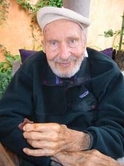
I had never heard of Fr. John Duryea but apparently he made quite a splash in the 1970s when he announced to a California congregation that he had committed the Intolerable Sin: he had fallen in love.

Well, that’s how he put it anyway. More to the point, he became involved in an illicit relationship with a woman twenty-four years his junior and eventually would be excommunicated, receiving the letter of excommunication on his wedding day.

On July 22, 2006, the feast of St. Mary Magdalene, John Duryea died.

"Over the past two years, Duryea suffered from deteriorating vision and hearing, although he was still able to walk daily until recently. He was suffering from a rare form of cancer, and family members said he chose a ‘self-directed death,’ [translation: suicide] which Eve DeBona [his wife] said should be legal and acceptable as a ‘much kinder’ way of passing. she was holding his hand when he died. He composed a letter/e-mail to friends the day prior to his death, in which he said, ‘I will go soon. Of all the images I take with me, the strongest are of my beloved mountains.’"

GET THE STORY.

The missive Duryea composed can be read in its entirety on his stepdaughter’s blog. Here is an excerpt:

"I wish to die now, because life is getting too painful for me. I have dermato-fibrosarcoma protuberante, a rare kind of cancer. In addition, my growing blindness and deafness and weakness give me the feeling of being in a fog all the time, and cut off from people, especially my family. This is so unlike my experience of life.

[…]

"From beyond death, I do not wish to reincarnate; I do not wish to return to this earth to face the tangled-up affairs of the world. But I do wish to remain a priest. In my experience, communication between the living and the dead has not been adequate. I would like to foster that communication, with my helping love.

"May God guide you as you have to deal with the present chaos of the world. May God bless Dr. Kevorkian who is suffering in prison because of his love and care for people who wanted to choose the time and means of their deaths. May God bless the state of Oregon, which now offers people this freedom."

GET THE POST.

AND A RELATED POST.

(Nod to Katie Allison Granju for the blog links.)

What struck me most — repulsed me, really — was how this former priest’s choice to do away with himself has been entirely whitewashed with terms like "self-directed death" and "a much kinder way of passing." While the family’s use of euphemisms is completely understandable and while my sympathies and prayers for comfort and healing go out to them during their time of grief, the news account of Duryea’s death does not even mention the word suicide. Just as abortion has been euphemized into social tolerability, so the reality of suicide is now being layered over with neologisms.

In the end though, John Duryea has received his wish "to remain a priest." He is indeed a priest forever. May God have mercy on his soul and may he rest in peace. Please keep him in your prayers. From the stories of his life and death, it sounds like he needs them.

St. Mary Magdalene, apostle to the apostles and patron of repentant sinners, pray for him.