Jimmy was born in Texas, grew up nominally Protestant, but at age 20 experienced a profound conversion to Christ. Planning on becoming a Protestant seminary professor, he started an intensive study of the Bible. But the more he immersed himself in Scripture the more he found to support the Catholic faith, and in 1992 he entered the Catholic Church. His conversion story, "A Triumph and a Tragedy," is published in Surprised by Truth. Besides being an author, Jimmy is the Senior Apologist at Catholic Answers, a contributing editor to Catholic Answers Magazine, and a weekly guest on "Catholic Answers Live."
I was a bit surprised that some commenters on the recent Harry Truman was a war criminal post thought that I was being vague in some of the things I said. I think a careful reading of the post would take care of the confusion, but I'm also aware that sometimes things need to be explained in more than one way for perfect clarity, so I'm happy to oblige.
In this post let me deal with the issue of the moral use of nukes.
First, let's look at something the Catechism says:
2314 "Every act of war directed to the indiscriminate destruction of whole cities or vast areas with their inhabitants is a crime against God and man, which merits firm and unequivocal condemnation." A danger of modern warfare is that it provides the opportunity to those who possess modern scientific weapons – especially atomic, biological, or chemical weapons – to commit such crimes.
This passage specifically has in mind the kind of actions that the U.S. committed in bombing Hiroshima and Nagasaki. Those events are specifically what informs this paragraph.
While this is true, I do think that there are situations in which the moral use of nuclear weapons is morally legitimate, even if it means that a city is destroyed as a result. Hiroshima and Nagasaki weren't such cases, but I can imagine scenarios in which this obtains.
How would I square that with the above passage from the Catechism?
They key, I think, is the phrase "indiscriminate destruction." So far as I can tell, this means one of two things.
First, it may refer to an indiscriminate intent on the part of those causing the destruction.That is, those causing the destruction intend to kill everybody in the city or area indiscriminately. They want everybody to die. Everybody is the target. In other words, on the level of intent they do not discriminate between combatants and noncombatants. That's why the destruction is indiscriminate.
In contrast to this there is the attitude of only intending the death of combatants. In this case it is combatants who are the targets, even though it may beforeseen that noncombatants will also die as collateral damage.
If we take this down from the level of destroying a city or a vast area to just a particular building, the difference in intent will be clear: There is a fundamental difference in intent between a person who wants to destroy a building so that everyone in it dies, combatant or not, and a person who wants to destroy a building in order to take out the combatants in it, even though noncombatants may also die.
In the one case the target is everybody in the building. In the other it is the combatants in the building.
This kind of analysis is what allows the moral legitimacy of bombing combat-related targets in wartime even knowing that a certain number of civilians will die also. The point is: You're not trying to kill the civilians.
How much collateral damage can be tolerated in a particular case will depend on the value of the military target that is being taken out. If the military target is a single, lonely private then less collateral damage can be tolerated than if it's the whole leadership of the opposing war machine.
In any event, on this reading of the text, trying to take out a military target with tolerable collateral damage would not constitute indiscriminate destruction because those carrying out the destruction do discriminate between combatants and noncombatants.
But there is another way in which the phrase can also be taken. Instead of referring to the level of intent, it might refer to the level of result. In this case "indiscriminate destruction" would refer to the killing of everybody in a city or area. Period.
A consequence of this interpretation would be that one could never destroy a city or a vast area as a matter of principle. It would be intrinsically evil to do so.
But this seems wrong because at this point we are dealing with matters of scale. What makes something a city rather than a village or a hamlet or just a shack? The number of people. (Not the buildings; the buildings are not in focus.)
But if some collateral damage is tolerable–ever–(e.g., you can blow up a shack containing a terrorist mastermind and his chief lieutenants even though there is a single civilian in there, too)–then reason indicates that a greater degree of collateral damage will be tolerable if the target to be taken out is more valuable.
If some degree of collateral damage is tolerable when the military target has one value then a greater degree of collateral damage will be tolerable when the military target has even greater value. In other words, the amount of collateral damage that can be tolerable is proportionate to the value of the target to be destroyed.
If this kind of situation obtains then it does not seem reasonable to say that, at some arbitrary level, the amount of collateral damage is such that the act suddenly becomes intrinsically immoral. Anyone advocating such a theory would need to say what this level is and why a mere increase in magnitude–leaving everything else the same–makes the act intrinsically evil regardless of the military value of the target.
Why is a collateral damage amount of X potentially justifiable whereas a collateral damage amount of X+1 is all of a sudden intrinsically unjustifiable?
This being the case, it would seem possible to construct scenarios in which there is a sufficiently high value target to justify the destruction of a whole city, and we will look at such a scenario in a moment.
I therefore would say that the passage from the Catechism and Vatican II that refers to "indiscriminate destruction" either should be taken as referring to an indiscriminate intent (i.e., an intent that does not discriminate between targets; it just wants to kill everybody) or, if it refers to indiscriminate results (i.e., everybody dies, regardless of combatant status) then the passage is simply not envisioning the kind of scenario I am about to postulate.
The latter wouldn't be surprising since the Catechism and Vatican II are pastoral documents that are meant to present Catholic principles in a pastoral manner and they are not always phrased in a rigorously technical fashion designed to cover all imaginable scenarios.
Like the following one (which I am very sure the fathers of Vatican II did not have in mind).
Suppose the following . . .
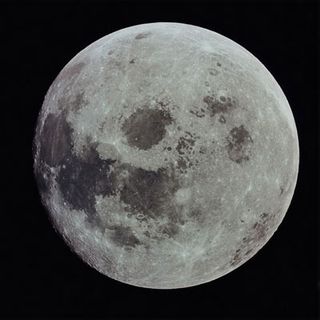
1) We have colonized Luna (or "the Moon," as everyone who lives there calls it) and have set up a city in the Sea of Tranquility consisting of five million people. We'll call it Sea of Tranquility City.
2) There is an evil alien race known as the Zergamoids. They are really evil. Even their name sounds evil (in a cheesy, 1930s-sci-fi way).
3) The Zergamoids have dropped a planetkiller in the middle of Sea of Tranquility City. This particular planetkiller converts zero point energy into gamma rays and, if activated, it will irradiate the entire surface of Earth with as much radiation as a moderately-nearby gamma-ray burster, totally killing all life.
4) There is a Zergamoid ship in orbit around Mars, and it sent the activation code to the planetkiller ten minutes ago.
5) We have no way to stop the planetkiller from receiving this transmission and, since Mars is at this hypothetical time only twenty light minutes from Earth (approximately on the other side of the Sun from Earth), we've got ten minutes until the go-code activates the planetkiller.
6) This is far too little time to evacuate either Earth or Sea of Tranquility City.
7) The planetkiller is sufficiently resistant to damage that the only way to take it out is to use a nuke sufficiently powerful to not only destroy the machine but also destroy Sea of Tranquility City.
In these circumstances, it would be morally legitimate to nuke the planetkiller even though it would mean that Sea of Tranquility City, with its five million inhabitants, would also be destroyed.
Therefore, there are at least hypothetical situations in which the use of nukes in urban areas is morally legitimate.
In such cases you aren't targeting the civilian population. You're targeting something else–a military target (in this case, a planetkiller) that has sufficient value to make the huge foreseen collateral damage tolerable.
Now, I can see some hands going up in the audience, and I can hear the objection being formulated: "But wait! Nothing like this is likely to happen in real life . . . anytime soon."
Quite true.
But the point of a thought experiment is to propose a test case which is clear, regardless of how probable it is. While this situation is quite unlikely to happen any time in the foreseeable future, it does reveal the moral principles needed to show that in some imaginable situations the use of nuclear weapons in urban areas is morally permissible.
That's not to say that we're at all likely to encounter such a situation, or that we ever have or even ever will, but it is to show that such use can be legitimate in a specific kind of situation.
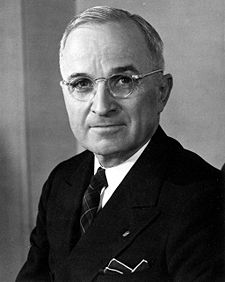
As a result of recent discussion of torture (which is not the subject of this post, so don't veer into that topic in the combox; I may do a post on the subject of torture soon), the question arose on The Daily Show of whether Harry Truman was a war criminal.
He should have stuck to his guns. He was right the first time.
At least, I'd say that with a few of words of clarification.
First, we have to be clear about what is meant by the term "war criminal." This term could be construed in terms of then-existing or current international law regarding war crimes. That is not my area of expertise, and I am not presently interested in whether Truman's actions violated human law.
I am interested in the question from a viewpoint of moral theology, and in that framework the question of what counts as a war criminal will not depend on whether one has violated human law but whether one has violated the fundamental moral jus in bello, or the moral law as it operates in wartime.
A person is a war criminal, as I am using the term, if he commits acts that objectively speaking violate the moral jus in bello.
2312 The Church and human reason both assert the permanent validity of the moral law during armed conflict. "The mere fact that war has regrettably broken out does not mean that everything becomes licit between the warring parties."
One of the things that is never licit is the direct and voluntary taking of innocent human life. John Paul II writes in Evangelium Vitae 57:
[B]y the authority which Christ conferred upon Peter and his Successors, and in communion with the Bishops of the Catholic Church, I confirm that the direct and voluntary killing of an innocent human being is always gravely immoral.
For purposes of our present discussion . . .
A person is killed directly if that person is the target or part of the target in the act of killing. That is, the person is not killed as "collateral damage" that results from the attempt to destroy a different target.
A person is killed voluntarily if his death is foreseen as a result of the contemplated action and it is carried out anyway.
A person is innocent if he is not a combatant or a person engaged in proximate material cooperation with combat activities (e.g., military officers who, while not directly in combat, do support work for the war machine; civilians working in munitions plants).
Remote material cooperation in combat activities (e.g., as in the case of farmers who grow food that soldiers eat) is not sufficient to deprive a person of the status of "innocent civilian," for in time of war virtually everyone in society has–at least through the payment of taxes–remote material cooperation in combat activities, which would obliterate the very distinction th
at the Church is at pains to draw in its teaching regarding not killing civilians during wartime.
If one accepts these premises then it follows that Harry Truman's bombing of Hiroshima and Nagasaki were war crimes–that is, they occurred during time of war and they violated the moral jus in bello.
This is because entire cities were targeted to produce the greatest psychological effect on the Japanese and these cities included innocent civilians who were part of the target.
Don't get me wrong. I'm not a prude about the use of lethal force or about the use of atomic weapons. I can envision hypothetical scenarios in which their use would be legitimate, but a set of rigorous conditions would have to be met. Specifically, there would have to be a sufficiently high value combat-related target to justify the collateral damage incurred from the use of the Bomb and there would have to be no cost-effective alternative that would result in less collateral damage.
Such conditions were not met in the case of the atomic bombings of Hiroshima and Nagasaki. The cities themselves were targets, including their innocent civilians.
Harry Truman was thus a war criminal in the sense I am using the term.
In saying this, I don't pass judgment on him. I don't know the state of his soul, and I have no idea whether he has the intellectual formation needed or–given the pressures of wartime–the psychological wherewithal to analyze the issue in the way just presented.
Maybe he did; maybe he didn't. That's between him and his Creator, and I'd be among the first in volunteering to pray for his soul.
But, objectively speaking, he was a war criminal in the sense described.
And I'll go you one better.
The bombings were also acts of terrorism.
While I can't point to an official definition of terrorism endorsed by the Magisterium, it seems to me that sufficient conditions are present for terrorism, morally speaking, if
1) The grave harm of innocents (as defined above) is directly and voluntarily threatened or inflicted and
2) The purpose of (1) is to generate a sense of fear (i.e., terror) in some party and
3) This fear is either an end in itself or a means to accomplishing another goal.
These conditions were present in the bombings of Hiroshima and Nagasaki. Grave harm was inflicted on innocents to generate fear in the Japanese leadership as a means of compelling them to surrender.
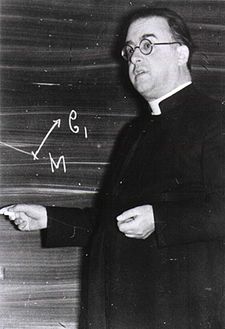
The gentleman on the left is Fr. Georges Lemaitre, a Belgian priest, physicist, and astronomer who happens to be "the father of the Big Bang." He was one of the first to publish in support of the idea of an expanding cosmos that took its start in a highly compressed state that Lemaitre referred to as a "primeval atom."
Einstein at first dismissed Lemaitre's hypothesis, which radically departed from the intuitions of physicists and cosmologists back then. But then Edwin Hubble's work backed up Lemaitre and Einstein reversed himself.
Partly just because I like science but also because there is an apologetic issue here.
Ever since the Big Bang theory has become widely accepted, it has been easy for Christians to point to the event as the start of everything and the moment of God's creation. It could be taken as a scientific validation of one part of the Kalaam cosmological argument for God's existence and thus as evidence for the Creator.
And maybe it is.
But maybe it's not.
For a time there was an alternative hypothesis that had a great deal of currency in scientific circles that maybe we lived in a gravitationally closed universe that oscillated between Big Bangs and Big Crunches and that the event that happened 13.5 billion years ago was just one of the cusps in an endless series of them, so that there was no ultimate beginning.
That view's stock fell precipitously a few years ago with the discovery that the universe is not just expanding but that it's expansion is accellerating due to what is now called dark energy, which actually makes up three quarters of all the mass-energy in the universe.
Because the universal rate of expansion is increasing, it does not appear that gravity can close our universe and cause a Big Crunch, without which one leg of the oscillation cycle wouldn't be there.
Since the discovery of dark energy, Christian apologists have felt on particularly safe ground pointing to the Big Bang as the plausible moment of creation.
And even in the decades before we knew about dark energy, the idea of the Big Bang had so permeated modern Christian thought that it became very easy to read Genesis 1 and identify the Big Bang with the moment that God said, "Fiat Lux"–"Let There Be Light."
Though that's not actually the way Genesis depicts the beginning.
Here's the way Genesis 1:1-3 reads:
1 In the beginning God created the heavens and the earth. 2 The earth was formless and void, and darkness was over the surface of the deep, and the Spirit of God was moving over the surface of the waters. 3 Then God said, "Let there be light"; and there was light.
See what I mean?
Light gets created in verse 3, but we already have a darkened universe–complete with waters–in verse 2. Then, as part of making the world a suitable place for habitation, God turns on the lights and starts making other changes, until everything is ready for man.
Either way, we shouldn't be too quick to try to fit the Big Bang into the framework of Genesis 1. As I've written before, Genesis 1 is best taken not as a chronological account of God's work but as a topical organization of God's work that structures the different categories of what God did around the framework of a week.
I think that's what the ancient author meant the original audience to understand by the text, as a careful reading of it shows.
But if we shouldn't try to fit the Big Bang into Genesis 1, can we at least point to it as the moment of creation from a scientific point of view?
T
here has certainly been a strong inclination on the part of many to do so. Pius XII had such an inclination, which caused Lemaitre to have kittens, afraid that the pontiff would try to do too much theologically with the concept. (HERE and HERE.)
Hypothetically, we could identify the Big Bang as the moment of creation.
But hypotheses can have rival hypotheses, and we should try to test to see which hypotheses are more likely correct.
That's what the folks behind LISA are planning to do.
LISA–the Laser Interferometer Space Antenna (INFO HERE)–is a set of satellites to be launched in the next decade or so. They will be placed in a massive triangular formation in space and connected by laser beams which will allow LISA to detect gravitational waves.
This will make LISA the largest gravitational wave detector in existence, powerful enough to detect events within a microscopically small fraction of a second after the Big Bang–far closer than we've been able to measure before.
In other words, LISA may allow us to "look" beyond the Big Bang and "see" something there. For example, LISA might detect signs that the Big Bang occurred when two of the branes postulated by brane cosmology collided with each other. Or it might reveal evidence of a parallel universe that our universe budded off of.
Or it might reveal nothing of the kind, leaving the appearance that the Big Bang was, itself, Event One.
If the latter is the case then the apologetic use of the Big Bang will be strengthened, just like it was strengthened when dark energy was discovered, as competing hypotheses will be made less likely.
But the opposite could happen, too. The apologetic value of the Big Bang would be diminished if evidence emerges of a pre-Big Bang universe.
That's no threat to the Christian faith. The faith holds that God created the universe in the past but it does not require that the Big Bang represent the moment of creation. Christians held that there was a moment of creation for ages before the Big Bang emerged as a scientific hypothesis, and if it is later shown that the Big Bang was not the moment of creation then we can simply infer that the moment of creation was father back in time than that.
Christian faith is more than capable of surviving any such discovery.
However, in the short run it would shake some people up, just as it shook people up when modern paleontology and biology started to provide support for the theory of evolution.
It certainly helped, at that time, to point out that some authors had been writing about the compatibility of evolution and the Christian faith for quite a while. This wasn't a threat to the faith because it didn't contradict the faith.
The same thing is true for the idea that the Big Bang is not the moment of creation.
So remember this post ten or so years from now when LISA gets launched.
For BSG fans going through withdrawal, the pilot movie for the prequel series Caprica is now out on DVD.
It hasn't aired on TV yet, and apparently won't for a while–and you'll have to wait till next year for the series itself to debut–but you can see the pilot on DVD.
Below are some thoughts on it. I'll keep the spoilers light, but just to protect those who don't want absolutely anything spoiled, I'll continue below the fold.
"We live in a land where you
can choose same-sex marriage or opposite. And you know what, I think in
my country, in my family, I think that I believe that a marriage should
be between a man and a woman. No offense to anybody out there, but
that's how I was raised." (FOX News)
This is the tepid and tentative endorsement of traditional marriage that, on the one hand, cost Carrie Prejean (Miss California USA and Miss USA finalist) the Miss USA
crown, and that on the other hand has caused her to be lionized in the
conservative press… neither of which makes any sense, based on what
she actually said. Presidential candidate Barack Obama said essentially
the same thing months ago.
This throws some light on the whole gay agenda and on politics in general here in the U.S..
Carrie
Prejean will be known henceforth in the public mind as "the girl who
would have been Miss USA", but for the presence of a flaming gay
activist judge, and the girl who actually won the competition (does
anyone know her name?) will be forever known as "the girl who beat
Carrie Prejean".
The gay judge, Perez Hilton, got his thong in a
twist because he wanted to hear Miss Prejean say, "Golly, I think
chocolate and vanilla are both just swell…" and she had the audacity
to say "I think… I prefer chocolate. No offense to vanilla people.".
As
Mark Shea has observed time and again, where the gay agenda is
concerned "Tolerance Is Not Enough! You Must Approve!". The message
(and this episode is only its latest incarnation) is very clear: "You
want to make it in the entertainment business? Then…" – I was going
to say, "learn to keep your mouth shut", but the real lesson is –
"learn to parrot the opinions we give you – with enthusiasm – or else".
That's
nothing new, it's just acquired the brashness that is the hallmak of a
bully who has grown accustomed to success. Their fear campaign has
worked, in large measure. "Agree with us, publicly, if you want to
work. Disagree and you will be passed over". It used to be that
aspiring entertainers were passed over in private meetings… now they
are passed over publicly, clapped in irons and pelted with fruit.
Pelted by fruits, you might say. What's troubling is that the same
thing is happening in corporate offices and boardrooms. Learn to say
the right thing, if you value your job.
But then, in the
hinterlands of the right, you have Fox News throwing Miss Prejean a
virtual ticker tape parade, treating her as if she had said, "Mr. Perez
Hilton, tear down this wall!!!", ignoring the fact that her answer was
in fact very meekly pro-marriage, and lacked any moral conviction, that
she took pains to emphasize that this was just her opinion… that she
is, in regard to gay marriage, "personally opposed, but…"
I
know she's young, and that she's no philosopher, and that she was on
the spot and under a great deal of pressure, and I suppose I should be
happy she was able to stammer her way through any kind of half-hearted
endorsement of real marriage at all… but it's not as if she didn't
know the question might come up. The contestants do see them in advance
(though they don't know which one they may be asked).
I'm appalled that she was set up,
basically, by a gossip Queen who (wrapping himself in the PFLAG) was
determined to deny the Miss USA title to anyone not solidly toeing the
line of the gay agenda, but I'm also appalled at the reaction to her
speech at both ends of the political spectrum.
Now, aren't you glad that the Obama administration is taking
politics out of science? That's what enables energy secretary
Steven Chu (nicknamed "Big League" by Obama) to make sober and coldly rational assessments like this;
"Lots of area in Florida will go under. New Orleans at three-meter
height is in great peril. If you look at, you know, the Bay Area, where
I came from, all three airports would be under water. So this is —
this is serious stuff. The impacts could be enormous,"
So,
everyone, run out and buy an electric car right now! Form a drumming
circle, ceremonially break all your conventional light bulbs and
replace them with fluorescents! Drink your own bathwater! Most
importantly, though, be sure not to do anything reckless and
irresponsible like having children, because they will suck up resources
that could be better spent on spotted owls and snail darters and such.
Now,
it's true that none of these actions will impact global warming at all,
but they will make you feel better – will give you a vague sense of
having contributed to something – and anyway, that's the way the herd
is going. Polls show that people are concerned about recent polling on
attitudes toward global warming. The voters have spoken!… and as we know, democracy is never wrong… just look at Palestine, and the Weimar Republic… and lemmings (an example from nature, which is also never wrong).
Unfortunately, while President Obama and his sycophantic minions
cabinet valiantly attempt to keep reason science and politics in completely
separate, hermetically sealed envelopes, there are still divisive and
radical voices trying to ruin everything;
"Secretary
Chu still seems to believe that computer model predictions decades or 100 years from now are some sort of 'evidence' of a
looming climate catastrophe, said Marc Morano, executive editor of ClimateDepot.com and former top aide to global warming
critic Sen. Jim Inhofe, R-Okla.
"Secretary Chu's assertions on sea level rise and hurricanes are quite simply
being proven wrong by the latest climate data. As the Royal Netherlands Meteorological Institute reported in December 12,
2008: There is 'no evidence for accelerated sea-level rise.'"
Morano
said hurricane activity levels in both hemispheres of the globe are at
30 years lows and hurricane experts like MIT's Kerry Emanuel and Tom
Knutson of the National Oceanic and Atmospheric Administration "are
now backing off their previous dire predictions."
He said Chu is out of date on
the science and is promoting unverified and alarming predictions that have already been proven contrary.
My eyes are bad–so much so that when I go into the optometrist's office and hand him my glasses at the beginning of the examination, he takes one look at the lenses and says, "Myyyyyy! You *are* nearsighted, *aren't* you!"
I'm also dyslexic.
And did I mention that my family gets cataracts really early?
So I like using audiobooks as much as possible. I'm a subscriber to Audible, and I've blogged before about making my own audiobooks with TextAloud and AT&T Natural Voices, but most books aren't available via Audible, and scanning a book so I can use TextAloud on it is a really time-consuming process.
I was very interested when Amazon announced the first version of its Kindle e-book reader, but it didn't have text-to-speech, so I didn't buy one.
The new Kindle 2, though, does have text-to-speech (even if the voice isn't that great). I almost ordered one, which would allow me to hear numerous books that aren't available in audiobook form.
Unfortunately, Amazon quickly announced–after pressure from publishers and authors–that they were giving publishers and authors the ability to turn off the Kind's text-to-speech function for particular books.
The theory was that this might violate copyrights (wrong!–for a whole host of reasons) and that it might cut into audiobook sales.
I don't buy that because the Kindle voice is pathetic compared to a professionally done audiobook, which you can get for almost the same price as a Kindle book from Audible. Given the choice of listening to an annoying voice reading a book and spending a couple of dollars more for a professional reading, I'd take the latter any day.
And–guess what–you can download Audible audiobooks right onto your Kindle.
So I think Amazon is being shortsighted, and so do a bunch of my fellow shortsighted people. In fact many blind, dyslexic, and other reading-impaired folks have been protesting about this and starting petitions.
I hope they succeed in getting Amazon to change its policy, but in the meantime I've still got a question: How useful would a Kindle 2 be to me with its publisher-controlled text-to-speech function?
If Amazon is going to allow this feature to be disabled then what they should do–but haven't so far as I can tell–is list on a book's page whether or not the text-to-speech feature is enabled. I'd be mighty honked off if I paid ten bucks for a Kindle book download and then discovered I couldn't listen to it.
As a fallback to being able to predict in an individual book's case whether it's listenable, it would at least help to have an idea of how many publishers are turning off the text-to-speech function. It would be one thing if only 5% of them do, but it'd be another thing entirely if 95% of them do.
So I'm hoping there are some Kindle 2 people–or others in the know–who can give me a sense of how widespread the "No speech for you!" problem is on the Kindle.
 I was a bit surprised that some commenters on the recent Harry Truman was a war criminal post thought that I was being vague in some of the things I said. I think a careful reading of the post would take care of the confusion, but I'm also aware that sometimes things need to be explained in more than one way for perfect clarity, so I'm happy to oblige.
 As a result of recent discussion of torture (which is not the subject of this post, so don't veer into that topic in the combox; I may do a post on the subject of torture soon), the question arose on The Daily Show of whether Harry Truman was a war criminal.
 It may come in handy.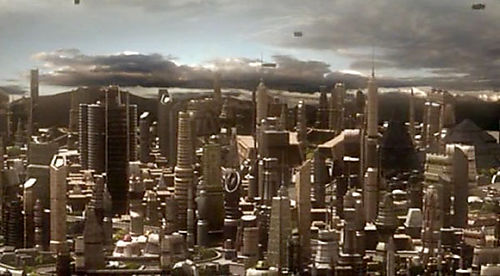
 My eyes are bad–so much so that when I go into the optometrist's office and hand him my glasses at the beginning of the examination, he takes one look at the lenses and says, "Myyyyyy! You *are* nearsighted, *aren't* you!"