Getting To Five

The way Supreme Court rules work, you need five of the nine justices to decide a matter.

We therefore need five justices willing to overturn The Evil Decision in order to allow the process of ending abortion in America to begin.

How many do we have now?

At least two (Scalia and Thomas). Possibly four (Roberts and Alito).

We need five.

Number five could arrive if Darth Kennedy flips back from the Dark Side, as some have suggested he might. (I’ve heard it rumored that he was unhappy with the way the Webster decision came out.) But I’m not holding my breath for that. He’s too enraptured of European liberal elites that he wants to read the American law in terms of what they do with their laws, which is as far as I am concerned an Impeachable Offense for a Supreme Court justice. (The Founders who had just fought and bled for American independence would have been aghast at the idea that European law should constrain American law in any way whatsoever.)

The most likely way to get five justices is through the retirement of John Paul Stevens (who’s eighty six) or Ruth Bader Ginsburgh (who has had health problems). One of these two retirements is probably probable in the next three years.

With the fifth anti-Evil Decision vote hanging in the balance, the forces of darkness will be doing all they can to MoveOn.Org their senatorial meat puppets into full obstruction mode, so we are likely to be looking at confirmation armageddon in the Senate.

Or not.

HERE’S A PIECE ARGUING THAT THE DEMS WILL HAVE TO GET A NEW STRATEGY BECAUSE THEIR CURRENT ONE OBVIOUSLY ISN’T WORKING.

What I find interesting is how really badly the Dems shot themselves in the foot with their current strategy, and I’m not just talking about the Roberts and Alito confirmations.

As soon as Bush got into office the Dems started stonewalling his judicial nominees, and they started doing the unprecedented thing of using the filibuster as part of their obstruction efforts.

They did this to send a warning shot across Bush’s bow and convince him not to nominate originalists when it came Supreme Court time, because they would fight tooth and claw if he did that, as shown by their willingness to go filibuster when the stakes were even smaller.

But in reality this was a HUGE strategic miscalculation.

What using the filibuster that early in the process did was blog off the Senate Republicans enough to make them willing to ELIMINATE the filibuster for judicial nominees.

Now, barring a truly Miers-level miscalculation on Bush’s part, any SCOTUS nominee he sends up to the hill is basically unfilibusterable, as shown by Kerry’s recent disgrace of himself on the Senate floor.

The thing is: The filibuster strategy COULD have worked–IF the Dems hadn’t sprung the trap too early. If they had waited until Bush’s first SCOTUS nominee to use it then the Republicans would have been caught off guard and would not already have had time to get angry enough to eliminate the judicial nominee filibuster.

Bush then might have been cowed into sending up judicial rag dolls like Harriet Miers.

But–thanks to the powers of goodness–this fact was hidden from their eyes, and they brought about the effective end of the filibuster strategy before it could be deployed when it would matter the most.

As a result, the Dems need a new strategy (like winning control of the Senate) if they want to ensure that the Evil Decision remains firmly in place.
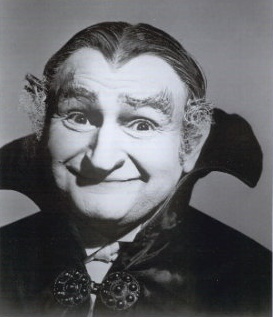
R.I.P, Grandpa Munster

Grandpa_munsterI always thought The Addams Family was more creative and less stereotypical, but it is with great sadness that I report that Al "Grandpa Munster" Lewis has died.

He was 95.

Maybe.

Actually, his age was unclear, which is as it should be with a member of the undead.

GET THE STORY.

BIO FROM WIKIPEDIA.

Rest in peace.

Until we see you again.

Which may be sooner rather than later given the whole undead thing.

In other vampire news,

FEMINIST AUTHOR BETTY FRIEDAN HAS DIED, TOO.

May she also rest in peace.

And may eternal light shine upon them.

Rules Of Engagement

Nojerksalute_1

Everything You Ever Wanted To Know About Picking A Marriage Partner But Were Afraid To Ask Of Your Commanding Officer — otherwise known as a U.S. Army chaplain program called "How to Avoid Marrying a Jerk."

"’Being in the military certainly raises the stakes when you choose a mate,’ said Lt. Col. Peter Frederich, head of family issues in the Pentagon’s chaplain office.

"The ‘no jerks’ program is also called ‘P.I.C.K. a Partner,’ for Premarital Interpersonal Choices and Knowledge.

"It advises the marriage-bound to study a partner’s F.A.C.E.S. — family background, attitudes, compatibility, experiences in previous relationships and skills they’d bring to the union.

"It teaches the lovestruck to pace themselves with a R.A.M. chart — the Relationship Attachment Model — which basically says don’t let your sexual involvement exceed your level of commitment or level of knowledge about the other person.

"Maj. John Kegley, a chaplain who teaches the program in Monterey, Calif., throws in the ‘no jerk salute’ for fun. One hand at the heart, two-fingers at the brow mean use your heart and brain when choosing."

GET THE STORY.

"Don’t let your sexual involvement exceed your level of commitment or level of knowledge about the other person."

Translation from Military-Speak: "Save sex for marriage."

The Muslim BrotherhoodKlan

Muslimyahoo2See this man?

He’s preaching a message of violence and hate.

He’s also doing something else: He’s wearing a mask.

This kind of thing is socially acceptable in many Muslim circles, as evidenced by the fact that it’s quite common. It happens all the time. Whenever there are protests in the Muslim world (or even Muslims protesting elsewhere; this gentleman was protesting in London) people wearing masks show up preaching messages of violence and hate.

Can you think of anyone else who would wear masks while preaching messages of violence and hate?

That’s right. The Ku Klux Klan.

They did this kind of thing all the time: Go out in public and preach a message of violence and hate while wearing masks.

And eighty years ago that kind of thing was socially acceptable in many American circles (and not just in the South).

But it doesn’t happen that much any more. The Klan still marches or has rallies on occasion, but nothing like the frequency with which it happened in the first half of the 20th century.

Why?

Because American society turned against the Klan. Originally, when the Klan got re-started in the early 20th century, membership in it was a means of social
advancement in many places, and many prominent citizens joined–including some who
went on to become Supreme Court justices and U.S. senators. (Just as in the Muslim world participating in violent, hate-filled
protests is a means of social advancement through proving one’s fervor.)

But non-racist Americans hardened American society against the Klan. They made it a shameful, socially-unacceptable thing to belong to or participate in. And eventually, the Klan dried up.

Good for us.

Now something similar needs to happen in the Muslim world.

Muslims who don’t support what Islamic Klansmen are doing at their rallies need to make it socially unacceptable in Muslim societies. So eventually, the Muslim Klan will dry up, too.

Muslims of good will must begin to shame their shameless brethren. They must do the same thing to the violent hate-mongers in their midst that Americans did to the violent hate-mongers here.

How might they do that?

Well, let’s consider the fellow above and the fact that he is wearing a mask. Why is he doing that?

Presumably for one of the same reasons that Klansmen in America did:

  1. He is afraid to take personal responsibility in public for the message of violence and hatred he is preaching.
  2. He’s connected with criminal activities and doesn’t want to be identified.
  3. He wants to intimidate those he is protesting.

Point #3 can be dealt with by merely standing up to this form of bullying and criticizing it. If people start mocking the mask-wearers, it kind of neutralizes the intimidation aspect.

Muslims (and others) should therefore begin mocking the mask-wearers by pointing out that donning a mask is an admission that you are either a coward (point #1) or a criminal (point #2). Either way, you should be ashamed of yourself.

Muslims and non-Muslims alike should stand forth and say, "There is no reason to wear a mask at a protest. If you wear one, you shame yourself. Why would you wear a mask if you didn’t have something to be ashamed of? What manly men you are, you mask-wearers. You’re hiding your faces like women in burkhas."

This kind of shaming will not of itself fix the problem, but starting to shame those who participate in these kind of rallies is a good start–and an essential piece of the solution.

Let the shaming begin.

(I’ll feature a Muslim group tomorrow who is helping to do this.)

Balancing The Scales

Wonderfullifedvd

A young man whose life was saved as a child has returned the favor by saving his rescuer’s life:

"Kevin Stephan always wanted to find the right way to thank the off-duty nurse who got his 11-year-old heart beating again after a baseball bat struck him in the chest in 1999. Nine days ago, the now-17-year-old Kevin found the perfect way to thank Penny Brown.

"He returned the life-saving favor, rushing out of a Depew restaurant kitchen to administer the Heimlich maneuver as Brown choked on her lunch.

"In a sense, Brown saved Kevin’s life — so he could help save hers."

GET THE STORY.

(Nod to the friend who sent me the link.)

The story is heartwarming indeed, but it reminded me of a passage in Randy Alcorn’s book ProLife Answers to ProChoice Arguments in which he describes the It’s A Wonderful Life-effect of abortion.

<SPOILER ALERT!>

In the movie, George Bailey falls into despair and wishes he had never been born, so God sends an angel to show him how much worse off his family and friends would have been if he had never existed. Perhaps the most haunting moment is when Bailey realizes that his having rescued his brother as a child meant that his brother would live to rescue the lives of a shipful of sailors during World War II. George’s life affected the destiny of strangers he would never meet. As Clarence the Angel tells George, every life touches every other life and the loss of one leaves a terrible hole.

</SPOILER ALERT!>

Alcorn cites this movie to make the point that those whose lives have been cut short by abortion may have grown up to affect the lives of countless others. We don’t know this side of eternity just what those children would have grown up to do, to be.

But we sometimes get hints in stories like that of Kevin Stephan. As a child of the Roe v. Wade era, Kevin had up to a one-in-three chance of not having made it to birth. Because his family chose life for him, Kevin could grow up to save the life of another woman who chose life for him.

"But [Kevin Stephan] thinks it’s more than a coincidence: ‘It’s one of those things you can’t explain. It was meant to happen. I’m Catholic, and I believe the Lord kind of set things up. They say things happen for a reason, and nothing is a coincidence.’

"[Kevin’s] mother added, ‘I believe both of these lives were touched by the hand of God.’"

Hysterectomy

A reader writes:

My wife is pregnant with our eighth child.
Pregnancy has been and is increasingly getting quite complicated and painful.
When not pregnant, my wife has a uterine condition that is very painful.

What does the church teach about a hysterectomy in this situation?
Are there documents that the church has in this regard?

Perhaps you can understand the moral and ethical questions that we as faithful Catholics are facing. We are not in a huge hurry to make a decision on this. We are simply trying to talk to the right people and read the correct recourses / documents about this matter. We are not sure where to start. Can you help us with some direction and point us in a direction that will lead us toward Gods will?

I’ll do what I can.

First, let’s look at the potential motives for getting a hysterectomy. One possible motive is to avoid the increasingly difficult pregnancies that you wife has been experiencing. This is not a permissible motive for a hysterectomy because it relies on the contraceptive effect of the hysterectomy as a means to the end of avoiding a difficult pregnancy. While it is licit to wish to avoid difficult pregnancies, doing so in a contraceptive manner (a manner that relies on the contraceptive effect of a thing or procedure) is not licit. So you could not get a hysterectomy for that reason. You could, however, use Natural Family Planning for that reason.

But that’s not the only reason that there seems to be in this case. Your wife also has a painful uterine condition when she is not pregnant. That can be a valid motive for a hysterectomy.

The U.S. bishops’ document Ethical And Religious Directives For Catholic Health Care Services (which is approved by the full body of bishops, not just a committee) states:

53. Direct sterilization of either men or women, whether permanent or temporary, is not permitted in a Catholic health care institution. Procedures that induce sterility are permitted when their direct effect is the cure or alleviation of a present and serious pathology and a simpler treatment is not available.

Whether your wife’s condition constitutes a valid reason in your particular case depends on how painful the condition is and whether there are better ways of treating it.

To explore that subject, you’ll need to talk both to doctors and–preferably–Catholic medical-moral experts.

In talking to doctors, be on your guard against possible contraceptive motives on the part of your doctor. Also, as with any major surgery, seek at least a second opinion, and be sure to ask about the downside of having the surgery as well as the downside of not having it.

If your doctor is older, try to find out if there are newer ways of treating the condition that he may not be aware of. (Also be aware that in former days doctors prescribed hysterectomies for all kinds of reasons that today would not be regarded as sufficient. This could also be a factor if your doctor is older.)

In talking to Catholic medical-moral experts, I would recommend the National Catholic Bioethics Center.

Ultimately, these things are judgment calls,  and your wife will be the one who needs to make the call. It is only she who knows what she is really experiencing as a result of her condition, and after she has all the relevant facts, her judgment in the matter should not be second guessed by others.

The thing to do in a situation like this is pray, research, make the best choice you can, and then leave it in God’s hands. God knows that we’re dealing with limited knowledge and must make the best decisions we can. Wrestling with that fact is part of the human condition, and the fact we wrestle with it brings glory to God.

God bless, and I hope this helps!

20

Tithing & Giving Recommends

A reader writes:

I have another question about tithing in the Catholic Church?  Is there any teaching of the Church or in Canon Law, that recommends how much Catholics are to give financially out of their income, to support the Church?  Take for example, if one makes 45,000/year, what would be a reasonable amount to give in terms of every Sunday at collection?

Okay, first let me clear away a potential linguistic issue.

Tithing is a word that many people abuse, using it to refer to regular giving to the Church in any amount. That’s not what tithing is. Tithing is giving ten percent of something. That’s what the word "tithe" means–a tenth. So if a person isn’t giving ten percent of something then he’s not tithing. He’s giving, but he’s not tithing.

Now, tithing was required under the Old Law, and the Old Testament laws regarding tithing were rather complex (and somewhat unclear, at least from our latter-day perspective).

We, however, are not under the Old Law, and Christ chose not to repeat the law of tithing as part of the New Law. Instead, we are simply encouraged to give according to our means.

How much we are to give is not something that canon law presently specifies. It’s very general on this question, saying:

Can. 1262 The
faithful are to give support to the Church by responding to appeals and
according to the norms issued by the conference of bishops.

The U.S. conference of bishops also didn’t get any more specific on this. This relevant complementary norm says:

The National Conference of Catholic Bishops authorizes diocesan bishops
to establish norms for Church support by the faithful for their own
dioceses [SOURCE].

And my impression is that most bishops leave it pretty general, too, though I have heard suggested guidelines like giving one or two percent of your annual income for most parishioners, perhaps in the form of one percent ot the Church and one percent to other charities.

That level is calibrated to be within the reach of almost everyone. Many people will be able to give much more than that.

It’s really hard to give a one-size-fits-all rule here, because the economic conditions of different people vary widely. A family with several children and medical bills is likely not as able to give the same percent of their income as a single person with no children, good health, and a good-paying job.

What God is ultimately concerned about is whether we are cultivating the virtue of generosity with our giving, and generosity involves some degree of going out of our way to do something to help others. This suggests that, whatever level is appropriate for us to give, it should be a level where we feel its financial impact in some way. We shouldn’t give so much that we harm our selves or those to whom we have obligations (e.g., by giving so much that we fail to provide a decent education for our children and a decent retirement for ourselves if we have the ability to afford these things), but it should be enough that we in some way feel the financial impact.

Another piece of advice here is to start small and ratchet up the amount you give. You might want to start with a one percent figure and then adjust it upward over time until you find a good level that fits your overall finances.

You may also wish to talk to your diocese’s stewardship office (every diocese has one, and there’s likely a stewardship page on your diocesan web site) to see if your bishop has further guidelines.

So: Wish I could give you a specific number, but I hope this helps!

The “Religion Of Peace” Gets Offended

MuslimyahooI’m going to have more to say about this over the next few days, but let’s get a few things down first.

In case you’ve not been following the news, a Danish newspaper published several cartoons of Muhammad that have enraged many in the Muslim world. Other European papers later reprinted the cartoons.

BASIC INFO HERE, WITH LINKS TO CARTOONS.

Now they are doing the usual protest thing, which in the Muslim context means flag and effigy burnings, hopping up and down and chanting, and violent threats being made. And not only threats. They’ve also taken to committing arson against various European embassies.

In other words, many Muslims acting so as to confirm every stereotype that’s out there to the effect that Muslim culture is a vicious, self-centered, savage culture that is incapable of controlling its emotions.

This is a bad thing, and I’m sure that there are many Muslims who are aghast at what the protestors are doing–at the same time that they are offended by the Muhammad cartoons.

I don’t have a problem with them being offended. Muslims consider Muhammad in some way sacred as a prophet of God, and Muslims hold depicting a prophet in art is a form of profanation. Anybody gets offended when what they hold sacred is profaned, especially if it is also held up to ridicule, as happened in the case of at least some of the Danish cartoons (such as depicting Muhammad with a bomb-shaped turban, though others cartoons did not depict him in a bad light, they just depicted him).

I don’t believe in giving unnecessary offense to others, particularly when the offense concerns something as deeply felt as the subject of a person’s religion. I know what that feels like, as I’ve had to bear countless insults to Christ and the Christian faith (and ones far worse than anything in the Danish cartoons, none of which depicted God Incarnate hanging in a jar of urine).

But when an offense is committed, I do believe in a proportionate response. Protesting is fine. Boycotting the people involved–like the paper and its advertisers–is fine.

But issuing death threats and destroying property is not.

That behavior is completely unacceptable, and this kind of bullying is the thing which one must stand up to.

After so many countless public angerfests in the Muslim world, it’s easy to dismiss these as just more of the same, but people need to recognize what is going on here, and not just in the Muslim world.

UPDATE: LINK FIXED. CHECK OUT THESE MUST-SEE PICTURES OF MUSLIM PROTESTS IN EUROPE.

AND THIS STORY ABOUT EMBASSY BURNINGS IN THE MUSLIM WORLD.

AND THIS VIDEO BY MICHELLE MALKIN.

YEE-HAW!!!

I had quite an accomplishment Friday night.

Here’s the story: A couple of years ago I went through a square dance class and made it through graduation, but work-related travel and other things made my attendance toward the end spotty. As a result, although I learned the moves at end of the program, I didn’t learn them well and did not feel comfortable going to ordinary dances.

I planned to start the class over the next fall, but didn’t know when the class was starting and missed it.

So this year I ran across a handbill at a western wear store saying when a class was starting and went.
In fact, I started attending several different clubs.

Many of the moves were familiar, of course, and for others my dim memories of them quickly began to reawaken, and soon I was able to dance along with the club (not just the class) at a couple of these groups.

But I couldn’t do that at one of them.

Y’see, different clubs have different preferences about how easy or challenging they like it when they dance.

The Friday night group has the toughest caller in the county (at least as far as I am aware). He’s a really good teacher, but for club dances he does the most challenging calling of anybody around these here parts. By that I mean that he calls the dance faster, uses more the more complex moves more often, and uses impromptu variants a lot. You really have to be good in order to dance in a club session that he calls.

As a result, after starting back to square dancing, it took the longest for my skills to get back to where they needed to be if I were to dance with the Friday night club.

I mean, there was no way that I’d be able to do the fearsome Load The Boat or the dreaded Teacup Chain or the sanity-shattering Relay The Deucey or the soul-destroying Spin Chain And Exchange The Gears.

Not without some review and practice.

I mean, compared to those moves of elder madness things like Dixie Style To An Ocean Wave are nothing.

But Friday night I made the breakthrough!

With the encouragement of some of the club members, I stayed after the class period and danced with the club.

I was able to keep up with the other dancers, even at the
high-challenge level that this club and caller enjoy. I even got
through Relay The Deucey and Spin Chain And Exchange The Gears.

I danced every single tip except for the first. (A tip is a unit of two dances, typically a patter call followed by a singing call.)

This means that, between the class and the club, I danced for THREE HOURS Friday night, and on Saturday I had the muscle strains and aches all over my body to prove it.

My dancing ability at this level is still shaky, but I expect that within a couple of months I’ll have it smoothed out, especially with the amount of practice I’m getting these days.

I also imagine that my body will adjust fairly quickly to the level of activity I’m putting it through in these dances.

Friday night isn’t even the longest dance night I’m doing.

At my Sunday night group I’m doing a two hour class of round dancing, followed by a two hour club of square dancing, for a total of FOUR hours.

Body aches are normal on Monday at this point.

More SSPX Rumors

Rumors have been going around about an effort to reconcile the SSPX (Society of St. Pius X) with the Catholic Church.

SEE HERE, FOR EXAMPLE.

JOHN ALLEN HAS MORE.

Ed Peters has the canonical angle on the story and considers what scenarios might be possible that would allow a reconciliation, along with some commentary on how likely they respectively are.

GET THE (CANONICAL) STORY.

I’d also add another scenario that strikes me as a possibility (at least hypothetically).

What we’re dealing with here is healing a schism, and the approach that has been taken in recent years in efforts to do that (i.e., in authentic ecumenism) has been to not worry about who was at fault in the past and instead make sure that we share those elements (or grow toward sharing those elements) that are needed for ecclesial communion.

Thus, for example, the joint declaration on Christology that was signed with the Assyrian Church of the East sidestepped the question of who was at fault back when the split occurred and instead said, in effect, "Look, regardless of what was said in the psat, we agree on this now, so this no longer a point that would bar us from ecclesial communion with each other."

A similar approach is used with the churches of the Reformation when it is possible to make common cause with them.

Since those in schism don’t like to admit that they’re in schism, this word also wouldn’t be used should we be able to reunite with the Assyrians. The Church would note the "separation" that existed historically between two groups but say that we now recognize that we share what is needed for full ecclesial communion, and so we’re announcing that fact.

(Forget being able to ever visibly reunite with any significant Protestant bodies–at least any time in this millennium. There’s just too much that’s not there at present.)

The thing that makes this "let’s not focus on the past" approach possible in a case like the Assyrian Church of the East or the Reformation churches is that the splits occurred so long ago that the original actors aren’t around any more.

That’s not the case with the SSPX. We’re talking about trying to heal this schism in its first generation, and that makes it a lot harder to take a "let’s not worry about who was at fault" approach.

Some version of this reasoning, though, could come into play if the SSPX schism is healed. It’ll certainly be a temptation since that’s the approach being used with others.

But it may not be prudent to proceed in that fashion with the SSPX.

A question that B16 should ask himself (and the SSPX bishops) is: "You guys disobeyed the direct orders of my predecessor in a grave matter pertaining to the structure of the Church, so what assurances do I have that you won’t do the same thing all over again?"

Only if B16 gets serious and credible assurances of fidelity should a face-saving method like the one mentioned above be considered.