R’lyeh RevealedRE-LOCATED!

I’ve been going back and re-reading some of H.P. Lovecraft’s horror stories–which I haven’t read in years, so long that I’ve forgotten almost everything about them except the shapes and names of some of the monsters in them.

One of the stories I reread is The Call of Cthulhu, which is a lynchpin of Lovecraft’s Cthulhu Mythos.

For those who may not know (and this is forbidden knowledge, remember), Cthulhu is an evil alien entity who is presently asleep in the sunken city of R’lyeh in the Pacific Ocean and who is destined to wake one day and basically kill everybody. Oh, and an evil cult worships him and is trying to wake him up again.

I was intrigued by the fact that The Call of Cthulhu gives the exact latitude and longitude of R’lyeh:

Latitude: S 47° 9 Min.
Longitude: W 123° 43 Min.

So–in an age of MapQuest–plunked the numbers into MapQuest, which promptly spit back the following map, revealing the exact location of the sunken city of R’lyeh where dead Cthulhu lies dreaming.

UPDATE: Down yonder an alert reader pointed out that the original map showed R’lyeh on the wrong side of the international date line. Turns out I had failed to enter a minus sign for the West longitude. Here’s the correct map:

Rlyeh2

BEWARE! HIC SUNT DRACONES!!!

Bad Law, Good Law

It’s obvious that what laws a country has have an impact on its economy. If you make it hard to get a business license, fewer people apply, there are fewer business licenses, less business, and thus the economy suffers.

Recent history also demonstrates that certain large-scale systems are better for the economy than others. Capitalism good. Communism bad. (Also, Fire bad!)

The logical thing to do, Mr. Spock would tell us, would be to plug as many legal and social variables as you can shake a stick at into a database and do regression analysis on them to find out which laws and social factors correlate with the success of an economy.

Who’s going to do that?

Not the politicians who make laws. They’re too busy selling economic snake oil to voters in the form of election promises.

Not lawyers. They’re too busy being lawyers to do economic analysis.

Economists? Yep. They’re the boys for the job.

And so that’s what’s happened.

Four economics sometimes referred to by their last name initials as LLSV (which sounds like a nucleotide base-pair sequences except for the fact that none of those letters represent nucleotides) have constructed such a database, regression analysis-ed it, written some papers, done further research, and in the process become the most-cited economists in the last decade (which is pretty great shakes for econmists).

Some of the things they have found seem obvious, like:

When shareholders have more rights, people are
more likely to invest in markets, because they have more protections
against dishonest executives. When creditors have more rights, they are
more likely to lend money, which spurs markets to grow. And when
countries are free from corruption, investors put more money into them.
The LLSV scholars weren’t the first to recognize that shareholder and
creditor rights spur economic growth, or that corruption stunts it, but
they were the first to connect these conditions to a country’s legal
system and to do so using cold, hard numbers.

But some of the things that they found went is rather surprising directions, like:

The regressions showed that the measures that
indicate high investor and creditor protection or low corruption
connect to common law origin. . . . The
measures that represent low protection and high corruption connect to
civil law origin.

"What does that mean?" you may be asking yourself.

It means:

[C]ountries that come from a French civil law
tradition struggle to create effective financial markets, while
countries with a British common law tradition succeed far more
frequently.

Now, that sounds like a nicely uncontroversial theory, right? Nobody’s going to be upset about a claim of this nature.

GET THE STORY.

Oh, and one post script:

[T]he French government, for obvious reasons [is] the
most elegant and persistent defender of civil law. Initially, the
French government ignored LLSV’s findings. Then it dismissed them.
Starting last summer, it began funding research through its Ministry of
Rights and Justice into what the country can learn from LLSV.

Latin Study Tool Creation?

A reader writes:

Hi Jimmy,

I’m a big fan of yours.  There are certainly a lot of vocabulary
resources for NT Greek, but I’ve never seen a Latin vocabulary
frequency list for the Vulgate (in book form, any way).  Do you know
of one?

I’m afraid I don’t, but would love to have one.

For those who may not know, a word frequency list is a list of which words are most common in a given text or language. These lists are invaluable study tools for people trying to learn a language because, by studying the most common words first, you will be able to speak or read the language much quicker.

For example, if you were learning English, you would be advised to start by learning words like "the," "is," "house," and "blue" rather than words like "triumphalistically," "absquatulate," "boll-weevil," and "chartreuse." If you focus on learning the latter kind of words first, it will be a looooong time before you start understanding ordinary sentences.

People in recent years have created word frequency lists for the Greek New Testament and the Hebrew Old Testament and the Aramaic part of the Old Testament and the Septuagint (if I am not mistaken) and a whole bunch of other texts. They have made learning these langauges much easier.

Unfortunatley, I don’t know of one for the Vulgate. If anyone out there does, please use the comments box to tell us!

Barring that, I should mention that a few years ago I took some steps toward creating such a word frequency list for the Neo-Vulgate (New Testament, if I recall correctly) but was unable to finish the project. I still have the files, and they could be converted into such a list (and into something even more useful), but I don’t have the time to complete it myself. I’d need help.

The problem is that Latin is a highly inflected language, meaning its words change form a lot. The frequency list that I have is of inflected forms, which is no good for learning–at least not the way traditional courses work. To convert it into a usable list, a person (or group of persons) or a computer program would have to go down the list and uninflect the words (that is, put them back into the dictionary form students need to memorize) and then combine the resulting word totals.

This is something that could be done by machine. In fact, I already know of a program that will parse Latin words for you, and part of that means giving the dictionary form of the word. It would be possible to largely automate the process–likely using the parsing program I already know about–but I don’t have the programming skills needed to pull the pieces together.

If someone (or someones) out there do and would like to take a crack at this, use the comments box or e-mail me.

Incidentaly, it would be possible to use the list to create something even more useful–a morphologically tagged Neo-Vulgate. This would assign a code to each word of the Vulgate New Testament that contains its parsing information. Such things already exist for the Greek New Testament and the Hebrew & Aramaic Old Testament, and they are useful for people trying to figure out hard word forms. Nothing like it exists for the Vulgate (so far as I know), but with the right programmer and a couple of people who speak Latin, it would be possible to construct one far more easily than in the past.

Either of these two projects could also lead to other helpful learning tools that exist for Greek and Hebrew but not for Latin.

If anyone out there would be able and interested in helping out with any of this, lemme know!


Killing Time

HERE’S AN INTERESTING PIECE ABOUT THE FRIENDSHIP BETWEEN ALBERT EINSTEIN AND KURT GODEL.

It starts as a rare look at the personalities and personal side of these two great thinkers–as well as many other names familiar from 20th century science.

Among the things it mentions, Einstein liked ice cream cones, Snow White and the Seven Dwarves was Godel’s favorite movie, and Alan Turing killed himself by eating a poisoned apple.

But the article moves into theoretical waters, noting the disagreement between Einstein and Godel on the one hand and Werner Heisenber on the other. The subject of dispute: quantum mechanics. (And, frankly, I’m with Einstein and Godel on this one: I’m very suspicious of a lot of the interpretations of reality that are alleged to fall out of quantum mechanics.)

Where the piece ends up, though, is with a long-forgotten piece of collaboration between Einstein and Godel. The author summarizes it this way:

Einstein saw at once that if Gödel was right, he had not merely
domesticated time: He had killed it. Time, "that mysterious and
seemingly self-contradictory being," as Gödel put it, "which, on the
other hand, seems to form the basis of the world’s and our own
existence," turned out in the end to be the world’s greatest illusion.
In a word, if Einstein’s relativity theory was real, time itself was
merely ideal. The father of relativity was shocked. Though he praised
Gödel for his great contribution to the theory of relativity, he was
fully aware that time, that elusive prey, had once again slipped his
net.

But now something truly amazing took place: nothing. Although in the
immediate aftermath of Gödel’s discoveries a few physicists bestirred
themselves to refute him and, when this failed, tried to generalize and
explore his results, this brief flurry of interest soon died down.
Within a few years the deep footprints in intellectual history traced
by Gödel and Einstein in their long walks home had disappeared,
dispersed by the harsh winds of fashion and philosophical prejudice. A
conspiracy of silence descended on the Einstein-Gödel friendship and
its scientific consequences.

Until Stephen Hawking took up the subject again.

GET THE STORY.

The Economics Of Illness

Recently I was around a bunch of people, several of whom were sick with colds and whatnot.

After getting home, I decided to look up the incubation period for the common cold to get an idea of when I might be in the clear.

Wikipedia says it’s 1-2 days.

Wikipedia goes on to say:

Common colds interfere with school attendance and can cause lost days on the job, resulting in considerable costs to the
economy. In addition, much money is spent on over-the-counter and
home remedies.

Suppose that Wikipedia had gone on to say:

The economic stimulus of these sales helps to offset the lost productivity of days at work.

QUESTION: Who can tell me why I would have had to delete that sentence?

FIND OUT MORE ABOUT THE COMMON COLD.

The Doctrine of Limbo . . . Is In Limbo

That is something that has been obvious for some time, particularly with the release of the Catechism of the Catholic Church in 1992, which says that we may hope for the salvation of infants dying without baptism.

Recently, Pope John Paul II asked the International Theological Commission (a body operating under the auspices of the Congregation for the Doctrine of the Faith) to study the question of the fate of such infants in more detail.

HERE’S AN INTERVIEW WITH A THEOLOGIAN WHO HAS STUDIED THE PROBLEM IN DEPTH.

(Cowboy hat tip: ExceptionalMarriages.Com.)

I don’t think the theologian in question explains himself as well as possible on all points, but it’s still a valuable overview.

Tuhan, Silahkan Tolong Orang Di Indonesia Dan Semua Di Situ!

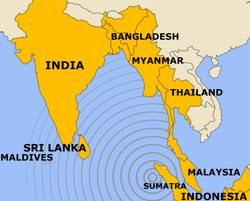
QuakeThe title of the post is my (probably not entirely grammatical, Beng can correct me) prayer for the victims of the 9.0 earthquake of the coast of Sumatra, which is part of Indonesia and just next to the Malay peninsula.

Tidal waves killed thousands in Indonesia, Malaysia, India, Sri Lanka, and surrounding areas.

The prayer is meant to say, "God, please help the people in Indonesia and all nearby!"

I invite you to join me in praying for the victims of the earthquake.

God have mercy.

University Of Late-Night Studies To Close?

Sometimes people ask me where I learned what I know about theology and apologetics.

"University of Late-Night Studies," I tell them.

But maybe that school is about to close.

For me and other sufferers of insomnia.

FIRST LONG-TERM INSOMNIA TREATMENT APPROVED.

The problem up to now has been that insomnia treatments have either had horrible side-effects (like grogginess during the day) or been ineffective for more than a few nights at a time (because your body gets used to them).

Long-term effects of the new treatment on apologetics are unknown.

Christmas Greetings From China

Christmas_hong_kong_1Down yonder, Francis DS writes:

Hi Jimmy,

I just want to make known a wonderful display in one of the big shopping malls in secular/Buddhist Hong Kong. 

They have constructed a large lifesize Nativity scene, and another
scene showing Mary, Joseph and Jesus looking for a place to stay. And
on the ceilings, you have angels carrying a banner saying ‘Glory to God
in the highest and goodwill toward men’

In addition, performances are definitely Christian in content, especially those on the 24th and 25th.

If you look beyond the veneer, it’s still commercially driven, and
one feels the ‘true spirit of Christmas’ is also lost on them, but it’s
still good enough!

http://www.cityplaza.com.hk/homepage.html

Amazing that they could get the true spirit of Christmas more right in a place that is part of China (which is officially atheist and often persecutes Christians) than malls can over here.