Terri Was Murdered

Apparently in regard to remarks I made on Catholic Answers Live, a reader writes:

I was deeply saddened to hear you adopt the terminology of the radical fundamentalists in the very tragic case of Terry Schiavo and refer to those who adopted a different position in this matter as murderers.

You apparently did not hear me correctly. I did not say that those who "adopt a different position in this matter" are murderers. I said that those who killed her committed an act whose moral character was murder.

This is in keeping with John Paul II’s encyclical Evangelium Vitae, where he writes:

[L]aws which legitimize the direct killing of innocent human beings through abortion or euthanasia are in complete opposition to the inviolable right to life proper to every individual; they thus deny the equality of everyone before the law. It might be objected that such is not the case in euthanasia, when it is requested with full awareness by the person involved. But any State which made such a request [i.e., to be killed] legitimate and authorized it to be carried out would be legalizing a case of suicide-murder, contrary to the fundamental principles of absolute respect for life and of the protection of every innocent life [EV 72].

The reader continues:

There are very sincere people on the other side of this case who believe that Mrs. Schiavo would not want to have lived in a vegatative state for 15 years.

True, but the sincerity of people regarding their belief in what Terri may or may not have wanted has absolute nothing to do with whether the moral character of the act was murder. People might sincerely believe that innocent Person X wishes to be killed, but even if that is true, it does absolutely nothing whatsoever to change the fact that innocent Person X is murdered if killed, as the pope indicated in Evangelium Vitae

Nearly two dozen court judgements, including independent doctors (not those hired by the family) and the guardian ad litem assigned to this case, all agreed that Mrs. Schiavo’s condition would not change, that her cerebral cortex was "jello."

This passes credibility. Nobody has two dozen court judgments (which are not the same things as testimony by doctors) saying that Terri’s cerebral cortex was "jello." If you’re going to argue this point, please do not make clearly false, over-the-top claims.

Further, the problem has been that after the initial finding of fact courts have not been revisiting the merits of the case in a generalized fashion and thus multiplying number of court rulings does absolutely nothing to broaden the scope of the medical evidence regarding Terri’s condition.

Further, it appears that only one independently-appointed doctor actually examined Terri.

Finally, despite the clearly false claim that Terri’s cerebral cortex was "jello" (look at videos of the woman and listen to recordings of her!) it makes absolutely no difference whether her condition would "change" (for the positive) in the future. The reason is that you simply cannot kill someone in Terri’s condition.

Whether you agree with that position or not, how can you honestly lump those who held the view that Mrs. Schiavo would not want to live in this state, in the same catorgory as someone who willfully murders?

I didn’t. As noted previously, you apparently misheard me. I said that the moral character of the act of taking Terri’s life was murder.

There is a difference, sir, and I think you know that difference.

I do, sir, and that’s why I didn’t say it. There is cearly a difference between the act of believing that Terri would not want to live in this condition and the act of deliberately taking the life of an innocent person. Indeed, a person could genuinely believe that Terri would not want to live in the condition she was in and say, "Despite Terri’s wishes, we cannot deliberately and voluntarily kill an innocent person." The question of what Terri may or may not have wanted is a matter of historical fact (and one that has been dramatically spun in the media; Michael "suddenly" remembering after 7 years that Terri wouldn’t want to live in this state passes credibility), but the question of whether one can deliberately and voluntarily kill an innocent person is a moral question. The two are incommensurate.

In regard to the latter, John Paul II writes in Evangelium Vitae:

[B]y the authority which Christ conferred upon Peter and his Successors, and in communion with the Bishops of the Catholic Church, I confirm that the direct and voluntary killing of an innocent human being is always gravely immoral [EV 57].

The reader continues:

Comments like these [i.e., that people who disagree are murderers] only add fuel to the fire and seek only to further polarize the sides in this very heart wrenching dispute.

I am not very much moved by lamentations regarding how "polarized" a situation has become when it involves a matter of fundamental moral principle. It is, of course, a bad thing when a situation involving moral principle becomes polarized, though the reason is not the polarization itself; the reason is that some people aren’t adhering to the correct moral principle.

I also have no sympathy for the proposition that we ought to compromise on moral principle for purposes of avoiding a "polarized" situation.

However, I can agree that individuals on the other side of this issue should not be called murderers, which is why I did not call them that. To do that would be to needlessly inflame the situation, and thus I confined myself to appraising the moral character of the act in line with the writings of John Paul II.

Have you read the guardian ad litem’s report? You can read it online.

Thank you, though you didn’t include a link to it. It is not going to have any bearing, though, on the question of whether one can deliberately and voluntarily starve an innocent person in order to cause the person to die.

Did you know that the parents, in court testimony, stated that if Terri’s limbs would have incurred gangrene that they supported amputation?

This has no bearing on whether you can deliberately and voluntarily starve an innocent person to death.

That if her heart failed, that they supported open-heart surgery?

Ditto.

That even if Terri had expressed a decision to die, they would still fight to keep her alive?

Ditto.

These are well-meaning parents whose love for their daughter, in my opinion, had reached a level of a selfish love.

It seems to me that they were simply clear on the principle that one cannot deliberately and voluntarily starve an innocent person to death. There’s nothing selfish about that. That’s simply a determination not to commit murder.

I am a Catholic. I believe removing the feeding tube was wrong.

In light of your previous remarks, these come as surprising revelations, particularly the latter.

However, I do not believe in calling people in this case murderers when I don’t know their hearts.

Ah. It again seems that you misheard me. I did not call people murderers. I said that the moral character of the act that they performed was one of murder. This means that, objectively speaking, what was done was murder–i.e., the deliberate and voluntary killing of an innocent human being.

This makes absolutely no determination regarding the hearts of others. For all I know, Michael Schiavo and Darth Greer and the whole gang of folks who participated in this murder may be such twisted individuals that they have absolutely no personal culpability for their actions in this matter, but that does not change the objective character of the act they performed.

I also don’t believe death is the worst thing in the world and that Terri is in a far better place today.

You are correct that death is not the worst thing in the world. It is, for example, better to die than to commit murder. As to whether Terri is in a far better place today, this may be the case and I certainly hope that it is the case. It is not, however, a thing on which we can be certain as we do not know with certainty the state of her soul. For one who was just a sentence previously advocating not presuming the state of others’ hearts, you should recognize that the same applies to Terri.

We should still pray for her.

This Week's Second Show (March 31, 2005)

LISTEN TO THE SHOW.

DOWNLOAD THE SHOW.

HIGHLIGHTS:

  • Three-way discussion of Terri’s death with Fr. Frank Pavone.
  • Does CCC 2278 allow people to starve people like Terri to death?
  • Will the pope rebound again healthwise?
  • What does the Church say about organ donation?
  • What is the purpose of a glass bowl with a gold cross on top that caller saw at Mass?
  • Who wrote Hebrews?
  • Will all folks be Catholic at the Chastisement or the end of the world?
  • How to talk with mother who thinks Terri should have been starved and who wants to be starved herself in similar situation?
  • What about priests who are saying that Catholic tradition allows one to discontinue treatment?
  • How to respond to the idea that Baptists can trace their lineage back to the time of Christ?
  • Can a priest ever marry two non-Catholics?

This Week’s Second Show (March 31, 2005)

LISTEN TO THE SHOW.

DOWNLOAD THE SHOW.

HIGHLIGHTS:

  • Three-way discussion of Terri’s death with Fr. Frank Pavone.
  • Does CCC 2278 allow people to starve people like Terri to death?
  • Will the pope rebound again healthwise?
  • What does the Church say about organ donation?
  • What is the purpose of a glass bowl with a gold cross on top that caller saw at Mass?
  • Who wrote Hebrews?
  • Will all folks be Catholic at the Chastisement or the end of the world?
  • How to talk with mother who thinks Terri should have been starved and who wants to be starved herself in similar situation?
  • What about priests who are saying that Catholic tradition allows one to discontinue treatment?
  • How to respond to the idea that Baptists can trace their lineage back to the time of Christ?
  • Can a priest ever marry two non-Catholics?

Child Of My Right Hand

Ever since I was a child I’ve been fascinated with dates.  Just ask my family.  I’m the go-to person for the birthdates of relations near and distant.  Since becoming a Catholic, this natural interest has developed into a love of the liturgical year.  Whenever something significant happens, I look up the date to see if there might be a hidden eternal significance.  I like to tell myself that because God sanctified created time by his Incarnation, so he can use created time to teach.

So, naturally, as we mourn today for Terri Schiavo, I wondered about the significance of the date of her death (March 31).  No particular saint’s day leaped to mind, but comments in the blogosphere reminded me that many in the Church are currently observing the novena of Divine Mercy in preparation for the Feast of Divine Mercy this Sunday.  Inspired, I looked up the novena to find out which souls are being prayed for today in the novena:

"The souls who especially venerate and glorify Jesus’ mercy."

Later, I had a bit more time to poke around to see if March 31 had any special significance.  Ordinarily, the date falls during Lent, so I was unsure I could find a particular commemoration for a saint.  But, with a bit of digging, I found that the day has been set aside (at least in some areas) in honor of St. Benjamin yes, the same Benjamin born to Jacob and Rachel.  Rachel originally named him Benoni, meaning "son of my sorrow," but after her death Jacob changed the name to Benjamin, which can mean "son of my right hand."

Benjamin’s mother Rachel is often invoked by pro-lifers because of this passage from Jeremiah:

"Thus says the LORD: ‘A voice is heard in Ramah, lamentation and bitter weeping. Rachel is weeping for her children; she refuses to be comforted for her children, because they are not’" (Jer. 31:15).

Today is a day of mourning because Terri Schiavo is no longer with us.  But just as Benjamin passed from being a "son of my sorrow" to a "son of my right hand," so we have Christian hope that Terri, who suffered much, is now a child at God’s right hand.  As for us, even in sorrow, we too should cling to hope:

"My soul continually thinks of it and is bowed down within me.  But this I call to mind, and therefore I have hope: The steadfast love of the LORD never ceases, his mercies never come to an end; they are new every morning; great is thy faithfulness. ‘The LORD is my portion,’ says my soul, ‘therefore I will hope in him’" (Lam. 3:20-24).

Food Tube Ethics

A reader writes:

The question most troubling me is whether the Pope’s statement also applies to terminally ill patient’s whose death is certain and imminent.

For example, someone who does not have a feeding tube and who has a terminal illness slips into a coma. My understanding of Church teaching is that use of a feeding tube is not mandated in this case.

The ability to significantly extend life through feeding tubes for a large number of people is something that is relatively new. Prior to the invention of plastic, antibiotics, and effective antiseptics, it would have been very difficult for technology like this to be used to extend the lives of large numbers of people. As a result, there are still aspects of this question that are being thought through by moral theologians. Eventually (within the next 20 years, in all likelihood, and definitely within the next 50 given the aging of the European population) these questions will be much more thoroughly explored and certain of the solutions proposed by moral theologians will be signed off on–or rejected–by the Magisterium.

Even though there are questions left to be definitively answered, the outlines of the correct answers are already becoming clear. Before getting into the substance of the matter, though, I’d like to put out a couple of warnings:

First, there are some ostensible experts in clerical collars making the rounds of the talk shows and editorial pages right now who are saying very dismissive things about recent Vatican interventions on this subject, accusing the Holy See, among other things, of upending centuries of Catholic moral theology.

This is simply not true.

The deliverances of these individuals are grossly defective and not to be trusted. Among other problems with what they have been saying, it simply is not possible to take statements made four or five hundred years ago regarding the moral obligations that pertain to feeding patients and plop them down in a twenty-first century context taking no account of the change in technology. Five hundred years ago it was much harder to deliver nutrition and hydration to an individual in a wide variety of medical situations than it is now. It is now much easier to do so, and that changes things.

Further, there is such a thing as doctrinal development, and hundreds of years ago we were less doctrinally developed in this area than we present are. The last fifty years have seen a dramatic stimulus to doctrinal development in this area due to the development of new medical technologies and the rise of the culture of death. One cannot appeal to things five hundred years ago to trump recent development, though that is a frequent tactic of dissenters on every part of the ecclesiastical spectrum.

The second warning is that not all prestigious or seemingly official statements on matters in this area are to be taken without nuance. Some seemingly official statements (e.g., documents ostensibly issued by national conferences) have been found problematic in light of later Vatican interventions, which have served as correctives to some of the things being said on lower levels.

The warnings being given, let’s look at the core of the matter.

As Evangelium Vitae made reaffirmed, euthanasia properly-so-called is an intrinsically evil act that can never be performed. EV provided the following definition of euthanasia:

Euthanasia in the strict sense is understood to be an action or
omission which of itself and by intention causes death, with the
purpose of eliminating all suffering [EV 65].

For euthanasia to occur, four conditions must thus be fulfilled:

  1. There must be an action or omission of action.
  2. This must cause death "of itself" (i.e., it is a sufficient condition to cause death).
  3. This must "by intention" cause death.
  4. The purpose must be to eliminate suffering.

In the case of failing to administer food and water through a feeding tube (either by not installing one or by removing or discontinuing the use of one), condition (1) is fulfilled as this is an act of omission.

Since food and water are necessary for life, condition (2) is also fulfilled if the person can only or will only eat through a food tube.

The question of whether failing to administer food and water through a feeding tube constitutes euthanasia is thus determined by whether conditions (3) and (4) are fulfilled.

It may be the case that one is fulfilled without the other. For example, if one withholds food and water from a spouse because one wants the spouse to die for reasons unrelated to ending suffering (e.g., because one is afraid of what the spouse might one day tell the police or because one wishes to inherit money or property) then condition (3) is fulfilled but condition (4) is not fulfilled. In these cases what occurs is not euthanasia but simply murder.

Similarly, one could intend condition (4) to be fulfilled without condition (3). This would happen, for example, if the insertion of the food tube would itself cause damage to the patient that would only exacerbate his suffering.

In an earlier post I mentioned what happens to many folks when their bodies stop manufacturing albumin. In those cases, continuing to administer food and water will actually harm the person. With a terminally ill person in that condition, one could omit the food tube in order to minimize pain (getting us at least in the direction of fulfilling condition 4) without thereby intending to cause the person’s death, so condition (3) is not satisfied. In that case there is no euthanasia.

In the case of a terminially ill person who has lost the ability to manufacture albumin (and everyone I’ve heard of who has lost the ability to manufacture albumin is terminally ill) continuing to administer food and water would not only not help the person live longer but could actually hasten the person’s death due to the damage it does to the body, meaning that the act would be morally licit.

This is what the 2004 PVS address is getting at when it states:

I should like particularly to underline how the administration of water
and food, even when provided by artificial means, always represents a natural means of preserving life, not a medical act. Its use, furthermore, should be considered, in principle, ordinary and proportionate,
and as such morally obligatory, insofar as and until it is seen to have
attained its proper finality, which in the present case consists in
providing nourishment to the patient and alleviation of his suffering.

While the administration of food and water is considetered "in principle ordinary and proportionate," this may not apply in particular cases, as with a person unable to process the food and water. In that case it is no longer ordinary and proportionate, in that it fails to attain its proper finality–nourishment and alleviation of the patient’s suffering. In such cases it ceases to be morally obligatory.

To focus this on the situation the reader asks about, let’s look again at the conditions he mentioned:

The question most troubling me is whether the Pope’s
statement also applies to terminally ill patient’s whose death is
certain and imminent.

For example, someone who does not have a feeding tube and who has a
terminal illness slips into a coma. My understanding of Church teaching
is that use of a feeding tube is not mandated in this case.

This situation seems to involve two conditions:

  • The patient’s death is certain to be imminent (all of our deaths are morally certain; the point is that imminent death is certain).
  • The patient has slipped into a coma.

The key factor here is the first. Whether the person has slipped into a coma is not really relevant. If someone has slipped into a coma and will remain in one for twenty years (i.e., death is not imminent) then you can’t starve them. The real issue is the imminence of the person’s death.

It seems to me that the first condition is significant for but not of itself sufficient for making the non-administration of food and water licit. Here’s why:

If a person’s death is extremely imminent (say, an hour from now) then there seems little point in putting in a food tube that will not buy the person any more life. In such a case it would not be morally obligatory.

On the other hand, if the person’s death is not that imminent (say, a month from now) then there would be a point in putting in a food tube since it would buy the person the extra life they would not otherwise have and so would be morally obligatory unless there is some other factor affecting the situation (e.g., the patient’s body no longer manufactures albumin, the food tube needs to be inserted through the stomach and would hurt a great deal or have a significant risk of infection due to a compromised immune system).

The nearness of death thus seems to be an important factor in determining whether it is morally required to administer food and water in these cases, but not the only factor to be taken into consideration:

  • If the administration of food and water would not buy the person any more life then it would not be necessary.
  • If it would buy the person more life but at a cost proportionate to the gain (e.g., the person will be in screaming agony in that additional time) then it may be forgone as it no longer achieves its principal finality, per the 2004 PVS address.
  • If it would buy the person more life and the cost is not proportionate to the gain (e.g., it involves only mild discomfort) then it is obligatory.

Unfortunately, the Church has not yet developed a system for weighing the relative proportions of costs and gains in this area, which to different individuals may seem incommensurate to each other. This part is where the individual’s conscience (the patient’s or the person who speaks for the patient) comes into play at present. Hopefully (and probably) we will have more guidance from the Magisterium on this point in the future.

Hope this helps!
Terri Dies

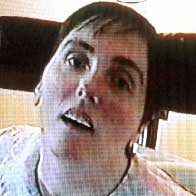
Terri_7 It’s official: Michael Schiavo has gotten away (so far) with murder.

Adding insult to injury, according to FoxNews.com, Terri’s parents were barred in their daughter’s final hours from being at her bedside, and had to beg Schiavo to let them be with her.

GET THE (TRAGIC) STORY.

UPDATE BY JIMMY: The murderers said that people being starved to death drift off into a "peaceful coma." Oh? As of yesterday, here is the state that that Fr. Frank Pavone of Priests for Life reported Terri being in:

Pavone, who accompanied him during the early morning visit, said Schiavo’s face was shrunken and her eyes were oscillating from side to side.

Decorum forbids me from using the language that I would like to at this juncture.

Priest From Famous Exorcism Passes

HalloranI missed this when it came out earlier this month, but . . .

The last surviving priest in the famous 1949 exorcism that sparked the idea for the novel The Exorcist has passed on at the age of 83.

Then a 27-year old Jesuit, Fr. Walter Halloran participated in the exorcism of a 14-year old Lutheran boy in a psychiatric institute in St. Louis. Fr. Halloran held down the boy to control his violent behavior while the expercism was performed. The boy was so violent that he broke Fr. Halloran’s nose.

The boy, known by the pseudonym "Doublas Deen," later went on to live a normal life, according to Fr. Halloran.

The incident became the basis of the much-fictionalized 1971 novel The Exorcist and the movies that followed.

GET THE STORY.

MORE.

Finis Valorum

ValorumOkay, remember that Valorum guy from the Star Wars films who was chancellor before Palpatine and who was "mired in baseless allegations" and was thus forced to resign, leading to the election of Palpatine as the new chancellor?

Yeah, him.

Okay, here’s the deal: His full name is allegedly Finis Valorum according to Star Wars gunk I was reading on the Web. (PRE-PUBLICATION UPDATE: Verified it from the official site.)

If so, tThat’s interesting. In the films he represents the last, virtuous leader of the Republic who is brought down through the machinations of evil, leading to the rise of the Empire.

So what’s his name’s connection with that?

In Latin finis valorum means "the End of the Valorous Ones."

Go fig.

Wonder how aware of that Lucas was.

This Week's First Show (March 30, 2005)

LISTEN TO THE SHOW.

DOWNLOAD THE SHOW.

HIGHLIGHTS:

  • Are all people in the world really one religion? Is the pope going to announce this?
  • Where does the Bible refer to the apostles baptizing whole households?
  • When should crucifixes and statues be covered?
  • Why shouldn’t one receive Communion in a Protestant church?
  • Does one have to do a Communion service when Communion is being distributed without priests present?
  • What does Jimmy know about post-modernism & what would one say to one who doesn’t feel doctrine is important.
  • How to regard The Purpose-Driven Life?
  • Which churches have which valid sacraments? Would a Lutheran need an annulment to marry in the Catholic Church?
  • More on The Purpose-Driven Life.
  • Should catechumens be baptized on Eastern morning?
  • Translation problems with the Breviary?
  • Non-Catholic caller is interested in learning more about the Catholic faith. Why should one confess to priests?
  • What are Jimmy & Jerry doing to save Terri’s life?
  • What does it mean when Jesus says that the kingdom of God is "in you"?
  • When you die, where does your soul go after you meet Jesus?
  • Is adultery a forgiveable sin?