"Standing Up" For An Invalid Wedding

A reader writes:

My brother  was raised catholic and has received 4 sacraments. He is now a non practicing catholic, but has not left the Church by any formal decree. he is getting married in a month in a protestant church and has asked me, my wife and our 3 children to stand up for him in the wedding. His future wife was baptized in the catholic church, but was raised in a somewhat anti-catholic family. I know his wedding is invalid. What does the Church say or teach on family members participating in an invalid wedding?

Present ecclesiastical law does not specifically address the situation, which means that we have to fall back on the principles of moral theology to help us settle the question.

It seems to me that "standing up for" someone at a wedding involves one in the ceremony in a formal way that goes beyond merely attending the wedding.

I cannot recommend attending a wedding that is known to be invalid. To do so lends one’s presence to a false union and thus constitutes an offense against the truth. It sends the message to the couple that either their union is valid, when it is not, or that what they are doing doesn’t really matter–otherwise you wouldn’t be there.

Since I can’t recommend attending an invalid wedding, I also cannot recommend becoming formally involved in it, as standing up for a member of the couple would imply.

Involving one’s children in such a situation also could send them a very bad message since, even though they may not understand about valid or invalid marriages right now, they will come to understand them with time (if they are properly educated in the faith, at any rate), and at that point they will remember that their parents involved them in such a ceremony.

You say that your brother has not "left the Church by any formal decree." I should point out that a decree is not necessary. For the wedding to be valid, your brother and his fiancee would have had to defect from the Church by a formal act (such as formally joining another church with the intent of no longer being Catholic), but it doesn’t have to be by the issuing of a decree. I’d therefore ask them more about their current religious status before concluding for certain that the marriage is invalid.

However, if the circumstances of the wedding are as you describe, I could not recommend that you or your family participate in it. I know that it would be hard to refuse your brother’s request, and I would explain to him as gently and lovingly as possible that you can’t do it because you care about him and need to be honest with him about the situation.

Wish I had better news, but I hope this helps.

20
“Standing Up” For An Invalid Wedding

A reader writes:

My brother  was raised catholic and has received 4 sacraments. He is now a non practicing catholic, but has not left the Church by any formal decree. he is getting married in a month in a protestant church and has asked me, my wife and our 3 children to stand up for him in the wedding. His future wife was baptized in the catholic church, but was raised in a somewhat anti-catholic family. I know his wedding is invalid. What does the Church say or teach on family members participating in an invalid wedding?

Present ecclesiastical law does not specifically address the situation, which means that we have to fall back on the principles of moral theology to help us settle the question.

It seems to me that "standing up for" someone at a wedding involves one in the ceremony in a formal way that goes beyond merely attending the wedding.

I cannot recommend attending a wedding that is known to be invalid. To do so lends one’s presence to a false union and thus constitutes an offense against the truth. It sends the message to the couple that either their union is valid, when it is not, or that what they are doing doesn’t really matter–otherwise you wouldn’t be there.

Since I can’t recommend attending an invalid wedding, I also cannot recommend becoming formally involved in it, as standing up for a member of the couple would imply.

Involving one’s children in such a situation also could send them a very bad message since, even though they may not understand about valid or invalid marriages right now, they will come to understand them with time (if they are properly educated in the faith, at any rate), and at that point they will remember that their parents involved them in such a ceremony.

You say that your brother has not "left the Church by any formal decree." I should point out that a decree is not necessary. For the wedding to be valid, your brother and his fiancee would have had to defect from the Church by a formal act (such as formally joining another church with the intent of no longer being Catholic), but it doesn’t have to be by the issuing of a decree. I’d therefore ask them more about their current religious status before concluding for certain that the marriage is invalid.

However, if the circumstances of the wedding are as you describe, I could not recommend that you or your family participate in it. I know that it would be hard to refuse your brother’s request, and I would explain to him as gently and lovingly as possible that you can’t do it because you care about him and need to be honest with him about the situation.

Wish I had better news, but I hope this helps.

20
Cannon Fires Cultural Shot Across the Bow

Ncannon_1Plato said "Let me write the music for the country, and I care not who writes the laws.".

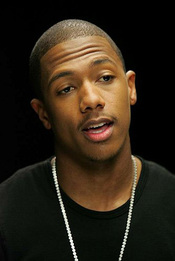
Musician Nick Cannon has written a song and made a video that is not just open to a pro-life interpretation, but is unmistakeably, powerfully and movingly pro-life. It is called Can I Live?. In the song and the video, his spirit travels back in time to the day his mother went to an abortion mill and almost took his life. He pleads with her to think about what she is doing, and she literally RUNS out of the clinic and into a new life as a mother.

It is a stunning accomplishment, and not just in a spiritual and artistic sense; the video is ranked #2 on BET (Black Entertainment Television). Given the kind of amoral stuff I often see on BET, this is a very good thing.

Catholic Exchange has an article on the song, with lyrics and a link to go and watch the video.

I don’t know much about Mr. Cannon’s music outside of  Can I Live?, but he has clearly set the bar very high now, both for himself and other artists. I’m going to buy the song, and possibly the album, after I check out the rest of the material.

Happy Rosetta Stone Day!

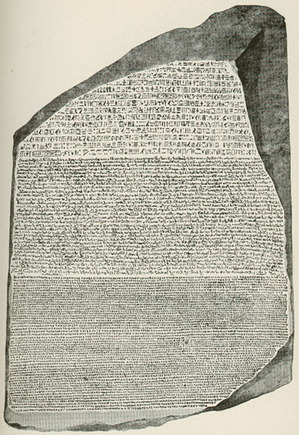
Rosetta1The chunk o’rock to the left is The Rosetta Stone (Dum! Dum! Dum!).

It was found today–July 15–back yonder in the year 1799 by Napoleon DynamiteBonaparte–well, actually by one of his men.

Now, thing is: The Rosetta Stone was instrumental in helping us figure out how to read Egyptian. Jean-Francois Champollion (an old, dead French dude who was then a young, alive French dude) deciphered hieroglyphics using help from the stone.

He was able to do this because the rock contains engravings of the same text in Greek, demotic script (the kind of script used by ordinary Egyptian folks in ancient times), and hieroglyphics (the more sacred way the Egyptian language was written). Since Greek was a known language, it was possible to figure out what the text as a whole said in the other two scripts.

YEE-HAW!

Ain’t linguistic discovery a hoot!

So anyway, now that the Rosetta Stone has been cracked (no pun intended, though look at the edges), if you want to learn hieroglyphics yourself, SEE HERE.

Also, GET THE STORY.

Sprechen Sie Deutsch?

One of the TWO SLEEPY MOMMIES writes:

Thank you for clarifying the Pope v. Potter mess.

You had expressed concern about the translations of the letters:

[Me writing:] You’ll note that there is a grammatical mistake in this sentence. We have a noun-pronoun agreement problem, because the apparent subject of "those" is "Harry Potter," but "Harry Potter" is singular, not plural as the word "those" would suggest.

It’s been a while since my two semesters of college German, but for what it’s worth, I don’t think the LifeSite translation is very good.

I tend to agree. I have spotted several issues with the translations, though my knowledge is too rudimentary at this point to assert them with confidence.

The original sentence is:

Es is gut, dass Sie in Sachen Harry Potter aufklaren, denn dies sind subtile Verfuhrungen….

My clumsy translation of this idiomatic sentence might run something like,

"It’s good that you clarify/explain these things/matters (Sachen) in Harry Potter, since these (diese) are subtle temptations…."

I just don’t know exactly how to read the expression in Sachen Harry Potter — whether it’s mean to mean "these matters [in] Harry Potter" or "these Harry Potter matters"

Thanks for the info! Perhaps other German-speakers, or even some of the readers from Germany (I know there are a few) could shed additional light on the matter.

This Week's Show (July 14, 2005)

LISTEN TO THE SHOW.

DOWNLOAD THE SHOW.

HIGHLIGHTS:

  • Why do people complain that Catholics pray to "dead people" when the saints are "alive"?
  • Did Jesus’ bestowal of the keys on Peter do away with Old Testament passages dealing with the requirement of rest?
  • What does "several" mean in the Church’s norms on indulgences?
  • Where did Cain get his wife?
  • How to pick a new parish.
  • How to resist temptation.
  • Do priests carry documentation that prove that they’re priests? What about priests of the Old Catholic Church of Antioch?
  • Is it licit to use glass for chalices and ciboria?
  • Shouldn’t Jesus have original sin if he was fully human and, as Paul says, "All have sinned"?
  • Son is moving into an apartment with both male and female roommates. Can he help his son move in?
  • How was the Bible put together, and how to defend its accuracy against those who point to the non-canonical "gospels"?
  • Can Catholics join Scientology?
  • Catholic told Protestant friend to pray that his late mother "accepted Jesus Christ" before she died. Was this okay?

This Week’s Show (July 14, 2005)

LISTEN TO THE SHOW.

DOWNLOAD THE SHOW.

HIGHLIGHTS:

  • Why do people complain that Catholics pray to "dead people" when the saints are "alive"?
  • Did Jesus’ bestowal of the keys on Peter do away with Old Testament passages dealing with the requirement of rest?
  • What does "several" mean in the Church’s norms on indulgences?
  • Where did Cain get his wife?
  • How to pick a new parish.
  • How to resist temptation.
  • Do priests carry documentation that prove that they’re priests? What about priests of the Old Catholic Church of Antioch?
  • Is it licit to use glass for chalices and ciboria?
  • Shouldn’t Jesus have original sin if he was fully human and, as Paul says, "All have sinned"?
  • Son is moving into an apartment with both male and female roommates. Can he help his son move in?
  • How was the Bible put together, and how to defend its accuracy against those who point to the non-canonical "gospels"?
  • Can Catholics join Scientology?
  • Catholic told Protestant friend to pray that his late mother "accepted Jesus Christ" before she died. Was this okay?

Save The Environment For Unborn Babies!

In our ever-continuing national schizophrenia, our government is now worried that unborn babies are being exposed to pollutants while in their mothers’ wombs:

"Unborn U.S. babies are soaking in a stew of chemicals, including mercury, gasoline byproducts and pesticides, according to a report released on Thursday.

"Although the effects on the babies are not clear, the survey prompted several members of Congress to press for legislation that would strengthen controls on chemicals in the environment.

[…]

"’Today, chemicals are being used to make baby bottles, food packaging and other products that have never been fully evaluated for their health effects on children — and some of these chemicals are turning up in our blood,’ said New Jersey Democrat Sen. Frank Lautenberg, who plans to co-sponsor a bill to require chemical manufacturers to provide data to the EPA on the health affects of their products."

GET THE STORY.

In other news, The Daily Planet was unable to obtain a comment from Senator Frank Lautenberg on the remarkable disconnect between his concern for the environmental safety of unborn children and his 100-percent voting-record rating by the National Abortion and Reproductive Rights Action League (NARAL).

Vatican Radio On Pre-16 Potter Brouhaha

Fr. Roderick Vonhögen of CATHOLIC INSIDER has just kindly e-mailed me a transcript he made of a recent broadcast of Vatican Radio dealing with the alleged remarks of then-Cardinal Ratzinger on the Harry Potter books.

The piece was an interview with Msgr. Peter Fleedwood, the Vatican official who initially made (what turn out to be) moderately pro-Potter comments when asked a question about the books at a press conference.

I’ve put the entire text of the interview in the extended body of this post (click below to read it). I should say that I don’t agree with everything Msgr. Fleedwood says (e.g., I don’t think that the Harry Potter books are any great shakes as literature), but reading his side of the story sheds interesting light on the events in question.

In particular, let me call attention to a couple of things he said. First, he mentions something that I thought was likely the case, though I didn’t want to conjecture it without evidence. Msgr. Fleedwood, though, knows the workings of Vatican offices better than I and has more of a basis to say it, so here goes:

I was sent a letter from a lady in Germany who claimed to have
written to the then-Cardinal Ratzinger, saying that she thought Harry
Potter was a bad thing. And the letter back, which I suspect was
written by an assistant of the then-Cardinal Ratzinger in his office,
the Congregation for the Doctrine of the Faith, suggested that there
was a subtle seduction in the books. What that subtle seduction was,
was not specified, which makes me think it was a generic answer. And
she had written a book on these subjects and so the Cardinal’s
signature was at the bottom of the letter, suggesting she should send
me the book.

It wouldn’t surprise me at all if Msgr. Fleedwood were correct on this point. Folks in important positions–including those in the Vatican–often use ghostwriters, and it would not be surprising at all to learn that routine correspondence such as thank you notes like the one in question were handled by assistants and then presented for the boss’s signature.

Fr. Fleedwood continues:

She sent me the book, and I found it a very unsatisfactory book. I
don’t think she understands English humour. For example, she said: one
sign that these books are making fun of Judaism and Christianity is
that Voldemort, the wicked magician, who is the great evil power
against whom Harry Potter has to fight, is referred to often as ‘he who
must not be named’, and she takes this as an insult to the name of God
in a similar way that Adonai, which is often written as Yahweh, is the
name that should not be said in Jewish religion. Well I replied to her:
don’t you know that even within English families, men who make fun of
their relationship with women in a nice, lighthearted way say: "Oh, she
who should not be named," meaning the power in the house, their wife.
You know, I think it was meant on that kind of level.

This comment also rings true for me, and for several reasons. First, I’ve seen my share of anti-New Age books that go paranoid in finding connections between things that aren’t there. (I wish people would write more serious and sober anti-New Age books, because the paranoid ones give the whole genre a bad name.)

Second, if you read the Potter books or watch the movies, it’s clear that the people in the stories are themselves being paranoid by not saying the name "Voldemort." As Msgr. Fleedwood points out, Harry Potter has the courage to say the name of his enemy and isn’t cowed by the mere mention of the name, like the others are. Thus Rowling isn’t presenting Voldemort’s name as too sacred to mention, she’s presenting everybody but Harry as being too easily spooked. You may or may not like that literarily, but it isn’t a diss at God.

Third, I have my own experience with circumlocutions of this nature. A few years ago I was dating a woman who turned out to be from the planet Yuggoth (the only one of all the women I’ve ever dated). The experience was so surreal (the phrase "Did not know what men are for" comes to mind) that, among the circle of my friends who were aware of the experience at the time, she has become known as "She Who Is Not To Be Named."

Anyway, click below for Msgr. Fleedwood’s comments, courtesy of Fr. Roderick Vonhögen.

Continue reading “Vatican Radio On Pre-16 Potter Brouhaha”