Disaster Ethics 1: Price Gouging

A reader writes:

I’ve really been enjoying your series on money and Star Trek, I’m hoping that in the wake of the disaster in LA that you might also touch on the issue of "price gouging" (which I don’t think is going on).

Which comes to my question.  Is there such a thing as price gouging from the standpoint of Catholic ethics?  People think that hotel rooms going from $75 to $200 overnight is wrong, but I don’t think they know the point behind prices.  But are there instances where there could be genuine "gouging?"

First, let me say that the following is NOT an analysis of how things are right now in the areas ravaged by Hurricane Katrina. What I’m about to sketch are some principles, but I am NOT saying that these do or don’t apply to the situation in the Gulf states. What the situation is on the ground there is still unclear. We still don’t even know how many people have been killed, much less could I say anything about the economics of the area–besides urging people to SEND AID (see the bottom of this post for into on how to help the disaster victims).

At the moment there are reports that there is a generalized law and order breakdown that call into question the degree to which the local economy is functioning. We can only do what we can to help and pray that stability will be restored soon.

I am not aware of any magisterial documents that use the term "price gouging." (Googling the Vatican web site doesn’t turn up any.) However, here’s what the Catechism of the Catholic Church has to say:

2409 Even if it does not contradict the provisions of civil law, any form of unjustly taking and keeping the property of others is against the seventh commandment: thus, deliberate retention of goods lent or of objects lost; business fraud; paying unjust wages; forcing up prices by taking advantage of the ignorance or hardship of another.

Though the term "price gouging" is not used here, the same basic idea seems to be present.

Note one element of what the Catechism says, though. It speaks of "forcing up prices." I’m not sure of all the different kinds of circustances that might happen. I suppose that it happens if a manufacturer were to start deliberately making less of something that was in demand due to a hardship. For example, if in a middle of a famine, a farmer decided to grow less food in order to drive up prices then that would be "forcing up prices by taking advantage of the . . . hardship of another."

But that’s not what we’re talking about in the case of a hurricane and hotel rooms. In that case, a hotel owner isn’t forcing up prices. The natural price point for the hotel rooms changes due to factors beyond the hotel owner’s control (i.e., the fact that a hurricane has rendered many homes unusable).

He would be forcing up prices if he decided, for some reason, not to rent all of the rooms he had in order to make more per room. For example, if he said: "Well, I’ve got 200 units I could rent, but I’ll close up 100 of them so that only 100 will be available for rent. Then I’ll make more on those 100 rooms." And he likely would be right: He’s make more per room with only a hundred rooms available for rent since the overall number of rooms available for rent in the city would be less.

It seems to me, though, that what such a manager did would be rather short sighted. First, while he would make more per room by doing this, it is not at all clear that he would make more money overall. In general, the market functions most efficiently and people will make the most money if they don’t do things like this. They may mistakenly think that cutting back production (or refusing to rent certain rooms) in order to cause a price spike will make them more money, but this may not be true.

For example, if the natural price point is $100 per room if the owner has 200 rooms to rent, he would make $20,000 a night for those 200 rooms. But if he closes half his rooms and that pushes the price point up to $120 per room (there still being a lot of other hotels that aren’t arbitrarily closing their rooms, so the natural price point doesn’t rise that much) then he’ll only make $12,000 a night for his 100 rooms in rent. He thus actually stands to make less money by forcing up prices.

Second, the motel owner who refuses to rent half his rooms in the wake of a hurricane is taking an awful risk that people will realize what he is doing. If they find out (and they are quite likely to find out; hotel staff know what rooms they’re not renting or cleaning, and they’re likely to talk) then at a minimum he will earn the severe displeasure of everyone who learns of this. He may find his business harmed for years afterward. He may find it harmed even sooner. He may have people simply force their way into his units and refuse to pay anything for them (and police are not likely to evict them given all the other pressing needs of the crisis). If he handles that situation badly, he may even find himself lynched.

So it seems remarkably foolhardy for someone to try this, but he would at least be trying to force up prices in order to take advantage of the hardship of others, and thus he would be sinning.

Let’s consider the more common situation, though: A hurricane rips through an area causing untold human suffering and in the process it wipes out or otherwise makes temporarily unusable many of the homes in the area. In this circumstances, people have several options: (a) sleep outdoors, (b) sleep in an emergency shelter like a sports stadium or school gym or homeless shelter, (c) stay with friends or relatives, or (e) rent a hotel room.

Obviously having a hotel room is preferable to options (a) and (b), and for many it is also preferable to (c). There is thus increased demand for hotel rooms. But since hotel rooms can’t be built overnight, the increased demand is met with a constant supply. When that happens, prices rise.

But in this case it’s not the hotel owner that is forcing up prices. The hurricane did that by destroying a bunch of homes. It was the hurricane, not the hotel owner, that changed the natural price point for a hotel room.

Could the hotel owner–out of the generosity of his heart–charge less than the new natural price for a room? Sure he could! But note two things:

1) At this point the hotel owner is being generous. It isn’t greed to charge the natural price for something in current market conditions. It’s generosity to charge less than the natural price of a thing. He thus might be generous in order to help out folks who would otherwise have difficulty paying for rooms.

2) It’s not clear that this generosity of the hotel owner would actually help that many people. It might even cause overall harm. Why’s that? Thomas Sowell explains:

Those who got to the hotel first would fill up the rooms and those who got there later would be out of luck — and perhaps out of doors or out of the community. At higher prices, a family that might have rented one room for the parents and another for the children will now double up in just one room because of the "exorbitant" prices. That leaves another room for someone else.

Someone whose home was damaged, but not destroyed, may decide to stay home and make do in less than ideal conditions, rather than pay the higher prices at the local hotel. That too will leave another room for someone whose home was damaged worse or destroyed.

In short, the new prices make as much economic sense under the new conditions as the old prices made under the old conditions.

It is essentially the same story when stores are selling ice, plywood, gasoline, or other things for prices that reflect today’s supply and demand, rather than yesterday’s supply and demand [SOURCE].

This is a situation that I may one day face, personally. California doesn’t have hurricanes, but it does have other disasters (earthquakes, fires, mud slides). A couple of years ago, the fires were closing in on the area where I live, and I came within minutes of evacuating. I had my pickup packed and everything.

At that time, QualComm Stadium was being used as an emergency shelter, and I might well have gone there. It would have been better to sleep on a mat in the stadium than in a building that was burning down around me, but it would have been better yet to sleep in one of the hotels down the road from the stadium. (The stadium is right next to "Hotel Circle" in San Diego.) If I learned that the rooms in Hotel Circle that normally go for $100 a night were now going for $300 dollars a night, I’d have to ask myself: "Is it really worth it to me to pay the money to sleep in one of those rooms, or would I rather keep my money and sleep here in the stadium for a few nights?"

Personally, I’d probably have chosen the latter and roughed it in the stadium, but there are many people who might have special needs that I don’t have (e.g., a person in frail health who needs a room and bed more than me) and who would be willing to pay for it. The jump in prices that deterred me from renting the room thereby opened it up for someone who felt they needed it more than I did and who was willing to pay the price to get it.

Of course, rich people are more able to pay for such rooms than poor people, but then the rich aren’t likely to stay in an area being devastated by fire or hurricane or what have you. If I were rich, I’d probably try to get transport out of the area altogether and stay in a hotel where the prices were lower rather than pay for an expensive one in the city center.

Further, imposing price caps (voluntarily or by government mandate) so that people who aren’t rich can more easily afford the rooms also will prevent people who really need the rooms (as opposed to those who could sleep in the stadium or with friends and family or even out of doors) from being able to get them since they’ll just fill up quicker with people who don’t have that high a need for them.

The market mechanism in most situations is thus still the best method for determining the allocation of goods and resources. It’s not perfect, and in fact the market can break down so much that the ordinary rules regarding property rights are morally suspended. The Catechism notes:

2408 The seventh commandment forbids theft, that is, usurping another’s property against the reasonable will of the owner. There
is no theft if consent can be presumed or if refusal is contrary to
reason and the universal destination of goods.
This is the case in
obvious and urgent necessity when the only way to provide for
immediate, essential needs (food, shelter, clothing . . .) is to put at
one’s disposal and use the property of others.

In sufficiently extreme circumstances, the government might even step in and declare marital law and commandeer hotels, prioritizing who gets the rooms on a needs basis. The Catechism also acknowledges:

2406 Political authority has the right and duty to regulate the legitimate exercise of the right to ownership for the sake of the common good.

But much of the time it would be hard for the government to do as good a job as the market in determining the most efficient use of resources. That’s why Communism failed.

One therefore shouldn’t be too quick to seek a government remedy to a difficult situation. It is possible that the government solution may be better than what the market would produce, but usually this is not the case. The market tends to be more efficient than the government.

To sum up:

  • While the Church doesn’t seem to use the term "price gouging," it does recognize that one can immorally force up prices to take advantage of others’ hardship.
  • This is not the same thing, though, as having the natural price point of a resource change due to a disaster.
  • It is not greedy to charge the new natural price of a thing, but it is generous to charge less.
  • Doing so may help some but may not help the right ones since it may prevent those who need the resource more from getting it since others may fail to conserve the resource if prices are kept artifically low.
  • In certain and extreme circumstances (which we haven’t fully explored) one can simply take what one needs without it being stealing.
  • The government has a right to regulate the exercise of private property rights, but there must be caution in this area because the government usually isn’t as efficient as the market.

All that being said, I have no idea what the economic situation is at present in the areas hit by Katrina. I simply hope that people will continue to pray for those harmed by the hurricane and that they will do what they can to help them directly.
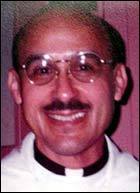
SEE HERE FOR INFO ON HOW TO DO THAT!

British Teachers Tolerate The Other F-Word

Some f-words are nicer than others, according to one British school. While it is terrible to use the word failure because such a dirty word may sting youthful egos, damaging them irreparably, The Other F-Word is A-OK… unless you use it more than five times in a single class, that is. Perhaps tired of being disciplinarians, the instructors at this British school will themselves bite the soap and "tolerate (although not condone)" a "limited" use of the f-word that your mama would have, or should have, cleaned your clock for using in her presence:

"A secondary school is to allow pupils to swear at teachers — as long as they don’t do so more than five times in a lesson. A running tally of how many times the f-word has been used will be kept on the board. If a class goes over the limit, they will be ‘spoken’ to at the end of the lesson.

[…]

"’Within each lesson the teacher will initially tolerate (although not condone) the use of the f-word (or derivatives) five times and these will be tallied on the board so all students can see the running score,’ [assistant headmaster Richard White] wrote in the letter [explaining the policy].

"’Over this number the class will be spoken to by the teacher at the end of the lesson.’"

On the bright side, some Brits do see a problem with the policy:

"Tory MP Ann Widdecombe said the policy was based on ‘Alice in Wonderland reasoning.’

"’What next?’ she asked. ‘Do we allow people to speed five times or burgle five times? You don’t improve something by allowing it, you improve something by discouraging it.’"

GET THE STORY.

And the education establishment wonders why homeschooling is so popular.

The Magisterium

A reader writes:

Hello, I hate to be so ignorant, but what exactly is the magisterium?  I hear about it all the time and have run search engines on it, but the articles just refer to it, without an explanation.  Is it a group of writings?

First, no need to be embarrassed about the question. Asking questions is how we learn.

Second, the Magisterium is not a collecting of writings, but it’s quite understandable why you might think that. The Magisterium tends to express itself through writings much of the time, and that’s what you’re running into.

In actuality, the Magisterium is the teaching authority of the Church. It’s name comes from the Latin word magister, which means "teacher."

The Magisterium is composed of the bishops of the Church teaching in union with the pope. The pope can himself exercise the teaching authority of the Church, or the bishops can do it when they teach in union with him.

If a bishop goes rogue, though, and starts teaching contrary to the pope then he isn’t exercising the Church’s teaching authority. He’s speaking on his own and not in his capacity to represent the Magisterium.

Ordinary theologians (unless they are also bishops) are not members of the Magisterium.

Neither are apologists (again, unless they are also bishops).

Not even the ones who write blogs.


Double-X Marks THe Spot

A number of years ago I got a book called Revising Fiction. The book was about how to revise . . . well, fiction.

One of the author’s big points was that the revision process is very distinct from the writing process. (It had better be, or he’d have no reason to write his book.)

He therefore stressed to writers that they should not try to revise while they are writing. Write when you write; revise when you revise. Don’t mix the two or you’ll get into trouble.

And you will.

If you let your inner critic drive you to start editing what you’ve just written, you’ll fiddle with it forever. You’ll get bogged down–repeatedly–as you write, and you may never finish your manuscript.

Revision is incredibly important. It’s how you get all the bad stuff out of your writing. But it’s a separate process, and a very important one. This led the author to an interesting perspective: Why do writers write? Frequently, so they can have something to revise. That’s not true all the time (certainly, it’s not true of me when I’m writing an article or a special report on deadline), but at times in a writer’s experience–particularly in the beginning–it may well be true.

His overall point about keeping editing separate from writing is extremely important, however. When one writes, one frequently should get the words down as fast as one can, without worrying about how good they are. You can fix them later, but finishing that first draft is vitally important.

In my own writing, I try whenever possible to follow the advice, "Write in a fury!" Do whatever it takes to bang out that first draft. Fix it later.

One of the things that means is that I don’t stop to look up citations. If I stopped to look up every Bible verse I need to quote, or type in all the bibliographic info for a book I want to cite, it’d break the flow of my writing and I’d lose precious time by getting sidetracked to look stuff up. As a result, I don’t (when I can avoid it).

Instead, I drop unique strings into my writing at points I know I need to revisit. For example, if I know that I need to insert a Bible verse, I frequently will write "(xx)" for the citation. Then, after I’m done with the first draft and am in the revision stage, I’ll go back and do an electronic search for all the "xx"es and replace them with the missing citations.

If the needs of the manuscript are more complex and I need to mark different kinds of places to revisit in the revision process, I’ll use other unique strings. I don’t want a combination of letters that will likely appear in the text, though, so I’ll use something uncommon, like "jj" or "qq" or "xjxj." It’s then a snap to look these up electronically.

Using the word processor’s highlight feature also can help. I may put a yellow highlight on the whole first draft and then go through it, turning the yellow highlight off as I revise individual sections. (That way if I need to skip a section for some reason, it’ll still be yellow and thus obvious that I need to go back and finish fixing it.)

I understand that for some in the publishing industry, typing "00" has been an equivalent of my "xx." I don’t like that as much, though, because (a) "00" can look too much like "oo" or "OO" (making it hard if you’re visually scanning a secion) and (b) the zero keys require one to take one’s fingers off the letter-keys and hit the less-familiar number-keys. "xx" doesn’t require that.

So for me, any way, double-X marks the spot.

Fr. Flimflam

Imposter Now here’s a Catholic horror story, all the more horrible because it really happened: A con man forges documents to allow him to pose as a validly ordained priest and, in that capacity, conducts Masses, baptisms, and weddings at parishes in Arizona:

"Fred Brito believes that his true calling is as a Catholic priest. But he also makes quite a good psychiatrist. Most recently he has been earning £55,000 as a university fund-raiser.

"The only problem is that Brito, 50, an accomplished con artist, held none of these positions legitimately, having spent nearly 30 years bluffing his way into a string of white-collar jobs.

[…]

"One of his most stunning deceptions was as Father Federico B. Gomez de Esparza, a Norbertine priest ordained in Mexico, at a number of parishes in Arizona.

"He forged the necessary documents and studied liturgy, conducted weddings and baptisms and held mass up to four times a day until he was exposed.

"’By pretending to be a priest, Fred Brito played with the souls of people who trusted him,’ said Father Thomas Zurcher, vicar for priests in the diocese of Phoenix.

"’In doing so he compounded their hurt and shrivelled their spirit. He fakes being nice when in fact he is a mean-spirited person who lives without regard for others.’

"Brito disagreed. ‘I do feel bad because I was not actually a priest, but on the other hand no priest had ever connected to the Latino community there as I did. Yes, it was a mistake, but I also changed lives. I loved that work.’"

GET THE (HORROR) STORY.

Note Fr. Flimflam’s emphasis on how he "connected" to the Latino community and claims that he "changed" lives. But, objectively speaking, by his "celebration" of the sacraments, he has left a huge sacramental mess behind for the Diocese of Phoenix to clean up.

Why is it, that in the realm of religion, "feelings" and "connectedness" are all that matter? Mr. Brito won’t be able to easily dismiss charges of posing as a medical doctor with claims that he "connected" with those who believed him a doctor and "changed lives." If he practiced medicine without a license, he could be in for stiff legal penalties. Given the sacramental havoc he’s wrought in Arizona, I almost wish similar legal penalties were in place for impersonating a priest.

The Economics of Star Trek 2: Ferenginomics!

A piece back I reviewed the book Freakonomics, which is quite an enjoyable read. Today I’d like to talk about Ferengi-nomics, though–the economics that exist (or could exist) on the world of Ferenginar.

There’s an episode very late in DS9 (in fact, it’s the next to last episode, if memory serves) in which taxes have been introduced on Feriginar as part of Grand Nagus Zek’s left-leaning societal reforms.

Quark is horrified when he learns of this, saying that taxes run contrary to the spirit of the free market. “That’s why it’s called free,” he says.

Actually, that’s not why it’s called “free,” at least not on Earth, but it’s a good line, and you can’t expect the Hollywood lefties who write the show to understand economics.

What’s worse (from Quark’s perspective) is that not only have taxes been introduced, a progressive income tax has been created.

For those who may not be aware, a progressive income tax is one in which people who make more money are charged a higher tax rate. They not only pay more tax total, they pay taxes at a higher rate. Thus if a person in a lower income bracket pays 20% of his income in income tax, a person in a higher income range might pay 40% of his income.

The theory behind progressive income taxes is that the more money you have, the more you can afford to pay a higher percentage of your income in taxes.

The problem with progressive income taxes is that they serve as a dis-incentive to make more money. If you have to work harder for each new dollar of (after tax) take-home pay then that unmotivates you to do the work needed to get that dollar, and so at some point you say, “Eh. I’ve got enough. Why should I work harder to get more when the government will only take more of it.”

And thus economic development caps out. That means that there are fewer jobs that exist than would exist if the income tax rate weren’t progressive. The progressiveness of the tax rate serves as a drag on the economy that ends up keeping people jobless and harms them in bunches of different ways related to an absence of money in the economy that would otherwise be there.

What happens if you make the tax rate less progressive? People in the top tax bracket (i.e., the ones with the money) get more motivated to make money since they can now keep more of it. Economic growth is stimulated. Jobs are created. And, in many circumstances, the tax revenue that the government collects actually goes up since the economic stimulus provided by the lower rate more than offsets the fact that the rate has itself gone down.

Which raises a question.

Think for a minute about Ferenginar.

Assuming that they did have taxes there, and assuming that we set aside the Hollywood writers’ progressive income tax on Ferenginar idea, what kind of tax rate would they have there?

Ferengi place a value on economic development above all else. If having a highly progressive tax rate highly hampers the economy, and if a less progressive tax rate hampers the economy less, then I bet on Ferenginar they’d have a negatively progressive tax rate.

In other words, they wouldn’t have a progressive tax rate, they’d have a regressive one.

On this scheme, your tax rate would be higher if you make less money and lower if you make more money. Someone in a lower income range would be paying the 40% (or whatever) and someone in the higher range would be paying 20% (or whatever).

You can just imagine how they’d justify it, too. I can see Quark giving a speech in which he says, “This way it gives the poor an incentive to not be poor any more, to work hard and look for economic opportunities that will let them make enough money that they can get into that next tax bracket. That makes them richer. It makes society richer. It stimulates economic development. It’s better for everybody. Don’t give me your silly Federation ‘morality.’ A progressive income tax rate is positively immoral! How can you be so cruel to your poor as to subsidize their poverty and keep them trapped in it?”

It’s too bad that there aren’t any Trek TV-writing jobs available at the moment. I could probably work a pretty good episode out of that idea, or at least the B story of an episode.

SURPRISINGLY, SOME HU-MONS HAVE EXPERIMENTED WITH REGRESSIVE INCOME TAXES.

They apparently have one in Taiwan.

Covering My Tracks

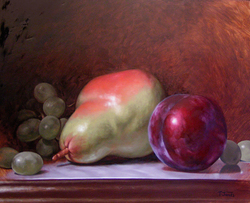
Pearplum2_1I have an art dilemma.

Fortunately, my development as an artist over the last year or so has taken a positive turn. I have been blessed to get to know some professional artists whose work I admire, and who have been generous with time and advice. I have also found the style that I think suits me best (classical realism) and returned to the medium I have always had the most affection for, oils. Slowly, I am recovering from my Masters Degree, and I feel I am beginning to produce some art that I will not be embarrassed to leave behind when I die.

Here is the dilemma; I have too much old art. I have art that I have been dragging around with me from my earliest days in college. Lots of it. So much that I have been giving serious thought to burning most of it.

There are several good reasons to burn most of my old art, two of which are most relevant:

  1. It’s really awful
  2. It’s taking up lots of storage space and is deteriorating anyway.

Now, as soon as I thought of burning all this old art, I thought that a bonfire like this calls for inviting some friends over and hoisting a few brews. Kind of like a viking funeral, without the water.

So here is the dilemma; alot of my artist friends don’t think I should burn my old art at all. Some were SHOCKED that I would want to destroy evidencehistory in this way.

In deference to their concerns, I reassured them that I will be keeping enough old pieces to make plain to any future historian precisely how crappy my work was was at each stage of my early artistic development. I plan on keeping anything that I think is of genuine worth, along with one or two pieces typical of each period, no matter how horrendous.

Surely you writers out there have happily (with some relief?) round-filed old efforts, simply out of fear, that by some wicked twist of fate, they might end up associated with your name for all of history.

Do creative professionals have the freedom to put their name to what they like, and deep-six everything else? Isn’t that part of the creative process?

The Human Zoo

From the U.K. Yahoos Department:

Have you ever wandered through a zoo and wondered why only animals are caged there? Did you ever wonder why there were no human beings on display, since humans are animals, too? If so, I hate to break it to you, but you’re not unique after all. The London Zoo now has people on exhibit in an attempt to display homo sapiens as a "plague species":

"The ‘Human Zoo’ is intended to show the basic nature of human beings, reported Agence France-Presse.

"’We have set up this exhibit to highlight the spread of man as a plague species and to communicate the importance of man’s place in the planet’s ecosystem,’ a statement from London Zoo said.

"According to the report, the scantily clad volunteers will be treated as animals and kept amused at the central London zoo facility with games and music. They will go home each night after the zoo closes during Britain’s bank holiday weekend.

"Dozens of hopeful volunteers applied to be part of the eight-person team through an Internet competition."

GET THE STORY.

I don’t know who to pity more: The officials who dreamed up this idea; the volunteers who debased their human dignity by applying to become a zoo exhibit; or the British public who might well be funding this travesty, at least in part, through their tax dollars pounds.

The Lawrence Chickens Are Coming Home To Roost

You may remember the not-so-long-ago Supreme Court decision Lawrence v. Texas, in which Darth Kennedy, leading a gang of fellow Sith lords, struck down a Texas anti-sodomy statue.

Lawrence v. Texas [is] the Supreme Court’s decision in 2003 that the Constitution protects the freedom of Americans to engage in ”the most private human conduct, sexual behavior," when it is part of a willing relationship between adults.

”The petitioners are entitled to respect for their private lives," Justice Anthony Kennedy wrote in striking down the Texas law under which John Lawrence and Tyron Garner had been convicted of homosexual sodomy. ”The state cannot demean their existence or control their destiny by making their private sexual conduct a crime. Their right to liberty under the Due Process Clause gives them the full right to engage in their conduct without intervention of the government."

All of that is complete horse manure, of course. The Constitution does no such thing. Darth Kennedy and his co-conspirators are simply agenda-driven evilfolk out to impose their will on the American people by subverting the democratic process required to enact the laws that they’d like enacted.

At the time Lawrence was issued, people pointed out that its logic would allow all kinds of immoral sexual relationships.

And now the chickens are coming home to roost.

GET THE STORY. (Which is not actually about chickens.)

(CHT to the reader who e-mailed.)