Okay, I don’t get it.
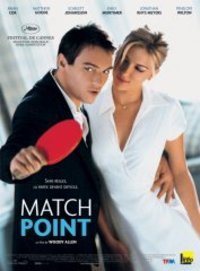
Harry Forbes has a review up of Woody Allen’s latest movie, Match Point, that displays a level of moral incoherence that rivals what was displayed in his original review of Brokeback Mountain.
First, a couple of disclaimers:
1) I’m not criticizing Match Point because I haven’t seen it. At present, it’s only playing in a few cities.
2) I like Woody Allen films–or at least I’m favorably disposed to them. I own many of them on DVD. They aren’t all equally good (Curse of the Jade Scorpion is nowhere near as funny as Small Time Crooks, for example), but many are very entertaining and insightful.
3) Many of Woody Allen’s films contain morally offensive elements, but this does not of itself make a film morally offensive. It’s the overall worldview of a film that makes it offensive, and I’ve been surprised by how firm Allen can be in giving his films a fundamentally moral worldview.
This is particularly notable in films like Crimes and Misdemeanors, which is a meditation on the idea that the universe has "moral structure" in the terms of the film, and also Alice, which involves Mother Theresa and ends with such a strong pro-Catholic statement that it made me wonder if Woody had secretly converted.
I was disappointed, therefore to read
THIS PIECE ON JEFFREY OVERSTREET’S BLOG.
For those who may not be aware, Jeffrey Overstreet is one of the more perceptive Protestant film critics, who is able to do nuanced, balanced Christian film criticism without veering either into the "Nothing immoral must ever be shown on screen" school of Fundamentalist film criticism nor into the "Everything’s okay as long as it’s done artfully" school.
Overstreet also works for Christianity Today, where he does a film roundup that exposes him to the view of many other critics, including those of the U. S. bishops’ Office of Film and Broadcasting, of which Harry Forbes is the head.
Overstreet previously commented on the problems with Forbes’ tenure as head of the OFB, writing:
Since Harry Forbes took over as head of the film review responsibilities for the USCCB, the reviews have indeed declined in quality, depth, and insight.
Now he points out the moral incoherence of Forbes’ review of Woody Allen’s Match Point. To give you a sample, here are some of the things that Forbes says:
- [L]ike its protagonist, the film delineates a universe governed not by God but by pure chance — a theme that has permeated some of Allen’s other films.
- The film contains several discreetly filmed sexual encounters but no overt nudity, some innuendo, an adultery theme, scattered profanity and crass words, a couple of violent episodes discreetly filmed, an abortion discussion, and a nihilistic worldview.
Okay. So Forbes says that the film has a nihilistic worldview of a universe not governed by God but by chance.
Overstreet is even more explicit (EXCERPTS):
Match Point is the darkest, most amoral film of his career, basically laughing at anyone who values their conscience.
[I]t has been carefully crafted to recommend a lifestyle that runs directly counter to any kind of ethical worldview.
Yes, Match Point is dripping with style. But its “cautionary points” have to do with how to avoid the consequences of your sins… in fact, it seems to disregard the idea of sin completely, showing us how to live deviously, taking risky gambles and reveling in our exploits.
[I]t seems to exist precisely for that purpose — to contradict any story that suggests there is any God, or any reason not to embrace evil as a method for getting what you want.
A friend of mine who saw the film was taken aback when she heard a line in it in which the adulterer hero says something to the effect of "It would be fitting if I were caught and punished. . . . It would be some small indication of real justice." But the film ultimately makes it clear that, as Larry Niven would say, "There Ain’t No Justice."
That’s the "nihilistic worldview" Forbes says the film has.
So it sounds like Allen has lost the "moral structure" that embued his previous films. We’ve got three different individuals–two of them professional movie critics–attesting to the film’s nihilistic, amoral worldview.
As a Woody Allen fan, that’s disappointing to me, but I assume that’s the way this film is (at least until I see it for myself).
How to explain, then, Harry Forbes also saying:
- This outlook does not, however, preclude the story being told with a strong moral perspective.
Huh?
How can a film have a "nihilistic worldview" in which the "a universe governed not by God but by pure chance" and yet the film has "a strong moral perspective"?
This is simply incoherent.
A film cannot have both a strong moral perspective and a nihilistic one that specifically repudiates the foundation of the moral order.
Can’t be done.
I’m thus at a loss to explain the moral incoherence of this review. If it were an isolated case, I could chalk it up to simple mistake or miscommunication, but this is on the heels of the Brokeback Mountain fiasco, in which someone at the OFB (presumably Forbes) demonstrated an inability to understand the structure of its own ratings system and only on the third try kinda got it right.
It may simply be that Forbes has no background in moral theology and is not capable of correctly analyzing or articulating the fundamental moral perspectives of films. This Catholic News Service piece on Forbes lists his qualifications as follows:
He came to OFB after a successful career at the New York affiliates of NBC, CBS, and PBS, and most extensively, for PBS itself. Besides a lifetime of movie and TV consumption as a viewer, he brings experience as a theater reviewer for NYC public access TV, Time Out New York and Manhattan Spirit, which is the largest circulation weekly in the city.
There’s on indication in that that he has a background–academic or otherwise–in moral theology, and it may be this lack that is responsible for such incoherence when it comes to his reviews of morally problematic films.
Either Match Point has a nihilistic worldview in which there is no justice and the universe is governed by chance or it has one in which the universe has a fundamental moral structure (whether that structure is seen as rooted in God or not).
If it has the former worldview then the film is saying that there is nothing ultimately wrong with the movie’s central theme–an adulterous relationship (coupled with murder and theft)–and that’s morally offensive. Since this is the core theme of the movie (just as an approved homosexual relationship was the core theme of Brokeback Mountain) then the film deserves an O rating.
In fact, in the third iteration of the Brokeback Mountain review, the film’s approval of adultery–not just homosexuality–was cited as equal reason for giving it an O.
On the other hand, if the film’s worldview isn’t nihilistic but has "a strong moral perspective" (like Alice, where adultery is presented and ultimately rejected in favor of moral redemption) then Forbes shouldn’t be telling us things that imply otherwise.
Forbes can’t have it both ways. That’s just incoherent.
Ultimately–as you might expect–Forbes doesn’t give it an O. He doesn’t even give it an L. Instead,
The USCCB Office for Film & Broadcasting classification is A-III — adults.
He also turns in yet another gushy rave review about a film that seems to endorse a fundamentally immoral central theme, saying:
- After a slew of disappointing efforts, Allen is at the top of his form in a superbly acted psychological drama. . . .
- Working in England for the first time, with a largely English cast, has resulted in Allen’s finest work in years. Meyers, who played Elvis Presley in a 2005 CBS made-for-TV movie, gives a well-delineated portrayal resembling, in many respects, Montgomery Clift’s character in "A Place in the Sun." Mortimer is quite believable as the clueless wife, and Johannson impresses anew in one of her most mature outings to date.
- Other roles are well played by Wilton, Cox, Goode and Margaret Tyzack as Nola’s kindly neighbor, who proves pivotal to the plot.
- Because of some surprising plot developments, the less you know about the story before going in, the better. But suffice it to say, this hypnotically compelling drama is among the very best of the year.
To be honest, my first thought after encountering the last comment was "Is Harry Forbes just hypnotized by evil?" Further thought suggested that no, it’s more likely that he’s hypnotized by art.
Anything that’s done in an artistic manner tends to get a pass from him when it comes to moral issues.
This strongly suggests that Forbes has not assimilated Vatican II’s statement that
[A]ll must hold to the absolute primacy of the objective moral order, that is, this order by itself surpasses and fittingly coordinates all other spheres of human affairs-the arts not excepted-even though they be endowed with notable dignity [Inter mirifica 6].
Not having seen Match Point yet, I don’t know if it ultimately has a nihilistic or a moral worldview.
I do know that the level of incoherence displayed in Forbes’ review is not what people expect when visiting the U. S. bishops’ website for guidance on the moral character of movies.
I especially know that people expect better moral guidance from the U. S. bishops’ web site than giving movies with nihilistic, amoral worldviews gushy recommendations to go see them like saying "this hypnotically compelling drama is among the very best of the year"!
As Jeffrey Overstreet’s remarks illustrate, even those in the non-Catholic community are starting to take note of the problem at the OFB. Playing on JP2’s reported comment upon seeing The Passion of the Christ ("It is as it was"), he writes:
[I]s it now the perspective of the U.S. Council of Catholic Bishops that a movie’s perspective — whether moral or nihilistic — is something worth noting, but really not all that important? If a film that tells us there is no God, that if we should take a gamble and seize all the pleasure we can grab… should we go around recommending this title to our friends and neighbors?
I have a feeling that if Pope Benedict were to see this film, he would reject its presentation of reality, saying, “It is as it most certainly isn’t.”