Of Universes, Tables, and Toenails

A reader writes:

How can it be said that God created the universe if the universe already had an existence in the Mind of God before "creation?" Isn’t the universe therefore an emanation of God?

Let’s deal with the first question first.

The answer is that the universe DIDN’T exist prior to its creation by God. When we speak analogically of the universe "existing" in God’s mind apart from creation (I prefer "apart from" to "before" since God is outside of time) we are speaking analogically. We aren’t speaking of the same thing as existence but only something analogous to existence.

Specifically: There is a difference between something existing in the exterior world and a mind knowing that it could be created.

Consider: Suppose I think about building a table. Before I do so, there is an idea in my head of the table that I want to build. It has certain characteristics. Let’s say that it’s made of oak, is two feet high, five feet long, three feet wide, and has four legs.

Just to be unnecessarily mathematical, we’ll call these properties T1, T2, T3, T4, and T5 (figure out which correspond to which if you’re really interested).

So before I build the table, we can say that

There is an entity, J, who knows that he could build a table, T, with properties T1-T5.

Where J is your humble author.

Now at this point (before I build the table, you’ll remember) the table does not exist. I just happen to know that I COULD build it.

In fact, we’re at that moment RIGHT NOW, because I COULD build the table.

I just haven’t.

So right now the table does not exist. What does exist is ME, who has a particular piece of knowledge concerning my table-buliding abilities.

If you want to speak analogically of the table existing "in my mind," okay, but you’re using an analogy. What really exists is me. Not the table. To exist in the sense that counts (i.e., the sense in which I could stack coasters and coffetable books and assorted knicknacks on it) the table needs to exist OBJECTIVELY or OUTSIDE OF MY MIND. That kind of existence it AIN’T GOT as long as I haven’t built it.

In the same way, apart from creation (you’ll notice that I switched from "before" to "apart from" since I switched from talking about me–who exists IN time–to talking about God–who exists OUTSIDE OF time), God knows that he could create the universe. The difference he is omniscient and so can specify the universe he might create in infinite detail (whereas I got bored after only five characteristics). He also will come up with the universe ex nihilo (from nothing), where as I would have to go down to Dixieline to buy the lumber.

So, to be unnecessarily mathematical again, we can say that apart from creation,

There is an entity, G, who knows that he could create a universe, U, with characteristics U1-U(infinity).

Where G is God rather than me. (Please bear that last point in mind.)

Unless G chooses to act on his knowledge that he could create U and actually creates it then U does not exist.

You might be able to speak ANALOGICALLY of it existing "in God’s mind," but the universe doesn’t exist in the sense that counts (i.e., the sense in which God could stack coasters and coffetable books and assorted knicknacks on it). In other words, it doesn’t exist OBJECTIVELY or OUTSIDE GOD’S MIND.

If God doesn’t choose to create an objective universe then the only thing that exists (in the objective sense) is God himself, who happens to know that he could create the universe but didn’t do so.

In fact, since God is omniscient and knows everything, he also knows EVERY POSSIBLE universe that he could create–and in infinite detail.

We know (or seem to know) that he did create THIS universe. Whether he created any other universes, we don’t know. Maybe we’ll find out someday.

So, to sum up: Coffee tables don’t exist until you build them, and neither do universes.

(Also, in case you’re wondering, you can’t get what you need to build a universe at Dixieline, though they might be able to give you what you need to build a coffeetable.)

Now for the second question:

I’m afraid that the question is a little vague, but I’ll try to answer it as best I can.

Something would be an emanation from God if he took something out of himself and used that to fashion the thing that he made.

For example, suppose that I decided that I wanted to start a toenail clipping collection composed entirely out of MY toenails. (In point of fact, I DON’T want to start such a collection–my toenail clippings go into the trash as soon as they’re severed from my toes–but it’s a relevant example.)

If–instead of throwing my toenail clippings into the trash–I started collecting them then my toenail clipping collection might in some sense be said to be an emanation from me in some sense.

But notice how this is different than the case of the table.

For the table, characteristic T1 was that it be made out of oak, and since my body is not composed of oak (though some of it is composed of toenails), the table would NOT BE an emanation from me because it was not made from me.

In the same way, the universe was created ex nihilo (out of nothing–God didn’t go down to Dixieline, remember? I can’t stress that enough that they just don’t have what you need to build a universe down at Dixieline) and thus was NOT created out of God, meaning that it was not an emanation from him.

So: To sum up again: Toenail clipping collections might be emanations from you, but tables and universes are not.

(Also: Don’t expect Dixieline to have toenail clippings that you can buy, either.)

Hope this helps!

Feel free to e-mail Plotinus a link to all this if Gmail has added a temporal addressing function yet!

P.S.

Here’s another disproof of the idea that the universe is an emanation from God:

  1. The universe has rocks in it.
  2. God has never had rocks in his head.
  3. Therefore, the universe is not an emanation from God. QED.

Take it for what it’s worth.
In Search Of The Historical Mozart

Mozart_6

Catholicism is probably the only religion that so perfectly fits human nature. You might say that if God hadn’t given it to us, we might have had to invent it. I say this because so much of Catholic sensibilities and customs are mirrored in secular life, often by those who would be horrified to be considered crypto-Catholics.

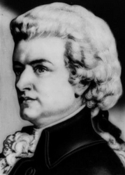
For example, there are rumors that relic-hunting scientists in Austria have found the skull of Wolfgang Amadeus Mozart and will reveal the results of DNA testing in an Austrian television documentary commemorating Mozart’s 250th birthday:

"In a documentary entitled Mozart: The Search for Evidence, researchers will reveal the conclusions of tests carried out on the skull at the Institute for Forensic Medicine in Innsbruck last year. DNA from shavings from the skull was compared with genetic material from the thigh bones of Mozart’s maternal grandmother and niece.

"Until now, tests on the skull, which belongs to the International Mozarteum Foundation in Salzburg, have proved inconclusive, but today Dr. Walther Parson, the forensic pathologist who led the analysis said his team had ‘succeeded in getting a clear result.’

"Dr. Parson said the result had been ‘100 percent verified’ by a US Army laboratory but declined to elaborate."

GET THE STORY.

By the way, anyone planning a birthday party for Mozart should consider sending an invitation to Pope Benedict, who is known to be a great admirer of the composer and once said of Mozart’s music, "His music is by no means just entertainment; it contains the whole tragedy of human existence."

Bibles For People With Reading Disabilities

A reader writes:

I’m sorry to bug you.  I have been reading your blog for over a year now and have enjoyed it very much.  I know your busy but I have a problem I can’t seen to fix and you have that nice button on your site inviting people to email you.  😉   

My son who is 12 years old has a pretty severe learning disability.  He also has Asberger’s (a mild form of autism).  I am trying to find a very simple translation of the Bible he can use when he is at Sunday school.  Do you know any way to find out the reading level of different Bible translations or what would be a good translation for someone with learning disabilities.  Any help would be appreciated.

There are a number of guides to the reading difficulty of different Bible translations, but I’ve been out of that loop for a few years and can’t recommend such a guide of the top of my head.

What I can do is give you the names of a number of very easy to read translations, some of which were specifically done for children or people with restricted vocabularies (e.g., non-native English speakers).

So here goes:

  • The New International Version. This is a fairly simple translation that you may wish to check out, though it is a bit above some of the others in reading level. There is an advantage with this one in that there is a Catholic youth version of the New Testament available in it.
  • The New International Readers Version is a simplified form of the previous translation. It is meant for people who have difficulty reading.
  • Today’s English Version A.K.A. The Good News Bible is one of the easiest to read that I have personal experience with. It also has a Catholic edition available. The deuterocanonicals are available in this translation.
  • The Living Bible is a paraphrase that was done specifically for children. There are also a Catholic edition of this. The deuterocanonicals are available. There is also a revision of this one known as The New Living Translation, though I haven’t read that one.
  • The EasyEnglish Bible has about a 1200 word vocabulary and is designed for those with trouble reading.
  • The Contemporary English Version is another meant for easy reading. It also has the deuterocanonicals available in this translation.
  • The Worldwide English New Testament was written for students in other countries whose grasp of English is limited.
  • The Bible in Basic English has about a 1000 word vocabulary.

MORE VERSION INFO HERE.

Having metioned these, I need to give a couple of caveats. First, these versions (even ones for which there are Catholic editions) are Protestant and have a number of limitations. Some do not have all the books of the Catholic Bible. Others have theological bias in some passages and may in some editions have problematic footnotes.

Second, the fact that these versions are dynamic equivalence or paraphrases–plus the fact that many have restricted vocabularies–mean that they often flatten out the theology of the text and risk introducing more of the biases of the translators.

I say that not to discourage you from using them with your son, but just to say that you should check them out first and are likely to need to help your son with troublesome aspects of the texts. (I’d get a version without footnotes if possible to help avoid problems.)

More information is available about all of them online, and the links above will help point you to it. The complete text of some of these versions is also available online (check out Bible Gateway among other sites).

I don’t know how significant the reading problem that your son has is, but these could help him learn more about the Bible. He may eventually be able to graduate to reading more advanced versions of the Bible that will help him learn even more.

I’d like to be encouraging in this regard because I have a reading disability. I’m dyslexic. I had a lot of trouble learning to read as a kid, and I had to have special training. Eventually, though, I was reading above my grade level, and today I’m interacting with Bible versions that aren’t even in English, so I’d like to encourage you about what can happen in situations like this.

To that end, let me give another suggestion: Consider using audio versions of the Bible with your son.

One of the ways that they helped me with reading when I was a boy is they sat me down with a machine called a Reader Hoffman, which played a record and a filmstrip at the same time and read to me as I read along with the text.

There are a lot of audio versions of the Bible out there already, and if you use computer tech like what I recommend here (and here) you can produce audio versions of any Bible for which you can get an electronic text.

At least it’s something to consider and maybe experiment with.

Hope this helps, and God bless!

Real Cowboys Steamed Over Brokeback Mountain

The fiasco over the "gay cowboy movie" Brokeback Mountain had me wondering what real cowboys thought about the film. As I suspected, the common answer is "Not much."

"Jim-Bob Zimmerschied is not a happy cowboy. ‘They’ve gone and killed John Wayne with this movie,’ he says angrily, beer in hand. ‘I’ve been doing this job all my life and I ain’t never met no gay cowboy. It wouldn’t be right.’

[…]

"But away from the bellicose posturing, a more subtle view emerged. Dave Miller, 48, a rancher in regulation black cowboy hat, leather waistcoat, blue jeans and boots, said: ‘It’s not the sort of movie that I’d go to see, but this is America and people can watch whatever they want.’ Nonetheless, he repeated the common refrain that he had never encountered a gay cowboy. ‘Well, not that I knew,’ he added. ‘I just don’t think our way of life is conducive to them.’ And like many others, his concern was that the film would give the wrong impression of life in the West."

My favorite reaction:

"Lee Hagel, 47, who was herding cattle there last week, had his own objections to the film. ‘They aren’t even cowboys — they’re sheep herders,’ he said witheringly. ‘You can’t just put a hat on someone and say they’re a cowboy.’"

GET THE STORY.

(NOTE: The article, although written for a mainstream newspaper, contains some crude language that may not be suitable for all readers.)

(JIMMY ADDS: JimmyAkin.Org rates the newspaper piece L for limited adult audience, articles whose problematic content many adults would find troubling.)

Why Does The Pope Need A Theologian?

Cardinal Georges Cottier recently retired as the theologian of the papal household.

But why would the pope need a theologian? I mean, isn’t it the pope’s job to be a theologian–a top theologian?

Well, yes. But there’s something a lot of folks don’t realize:

The papal theologian’s main task is to vet the many thousands of words prepared by Vatican aides for the pope to speak or publish. He checks for statements of dubious theology and otherwise hazardous phrases that could come back to haunt the pope.

"People have to understand that nowadays the pope is obliged to make so many speeches and send so many messages that he needs a lot of collaborators to prepare them," Cardinal Cottier said. "The theologian of the papal household is charged with reading all these texts and give(s) a theological opinion on them."

Cardinal Cottier said that given the number of papal speeches, sermons, messages, prayers, telegrams and other documents it would be impossible for the pope to write them all. The cardinal said he worked daily with the Vatican’s Secretariat of State, going over the papal texts prepared by others.

The fact that many papal addresses are written by others is something that many people don’t realize, and it’s one of the reasons that they don’t have as much weight as documents prepared in a more careful and deliberate manner–like encyclicals and apostolic constitutions. Even the latter are often ghosted in whole or in part by others, but in their cases the pope and his advisors spend a lot of time going over them meticulously before they are issued. In the case of things like Wednesday audiences and speeches to particular groups, the process is much more informal–hence the need for the papal theologian to serve as censor.

LEARN MORE.

Scrupulosity

A reader writes:

Thanks for your work at Catholic Answers.

I have one question.

The question is, could you recommend any books/websites/groups that help with scrupulosity?  One of the most helpful things that I’ve ever come across is the Ten Commandments for the Scrupulous:

http://mission.liguori.org/newsletters/scrupulosity.htm

Numbers 1,2,8,9, and 10 are particularly helpful.

I’m afraid that you’ve already struck upon the main website/group that I would have recommended. The group is called Scrupulous Anonyomus, and they have a monthly newsletter of the same name.

BASIC INFO ON THE GROUP & LINKS HERE.

CURRENT ISSUE OF THE NEWSLETTER. (WARNING: Evil file format! [.pdf])

NEWSLETTER ARCHIVES. (Ditto).

Despite its name, Scrupulous Anonymous (from what I can tell) is NOT a 12-step program. It’s simply a support group for Catholics who have scrupulosity–particularly the chronic scrupulosity that is caused in religious people who have Obsessive-Compulsive Disorder (that’s the disorder that the TV detective Monk has).

For this I have to give them credit. OCD is a recently classified disorder that plays a huge role in chronic scrupulosity, but since it has only recently been identified as a psychological condition, it has not been possible up to now to recognize its role in generating scrupulosity–or use any of the means for treating OCD as a means for treating scrupulosity.

Many priests were educated before OCD was classified and are unware of its existence, meaning that they are handicapped when it comes to serving those who have chronic scrupulosity.

Scrupulous Anonymous recognizes the role of OCD, which puts them significantly ahead of the curve compared to many.

I haven’t read much that S.A. has done, but from what I have read, I’ve been quite impressed.

In particular, I had not read the Ten Commandments for the Scrupulous that you linked, but it’s very good and in definite agreement with traditional Catholic pastoral practice.

I’d make a couple of tiny tweaks, but I was very impressed by the piece overall.

There’s also

THIS BOOK BY FR. THOMAS SANTA, FORMER EDITOR OF THE S.A. NEWSLETTER.

We published a piece by him

SOME TIME AGO IN THIS ROCK.

I’ve also dealt with the subject a few times here on the blog, such as HERE and HERE.

I wish I had other groups/sites/books to recommend, but this is about the limit of what I’m aware of on the subject at present. I know that there are a lot of secular OCD support groups out there, but I don’t have specific knowledge of them or of other Catholic support groups, which I also suspect are out there.

Perhaps folks who are aware of other good ones can give some additional leads in the combox.

The Saints Go Marchin’ In Driven By Purpose

Purposedrivenfield

LarkNews.com, a Christian satirical news site, has released it latest issue. My favorite bit of "virtual news" was notice that Rick Warren, author of The Purpose-Driven Life has bought the New Orleans Saints and will build for them a football stadium to be dubbed the Purpose-Driven Field.

"The centerpiece of Warren’s purchase will be Purpose-Driven Field, to be located just north of New Orleans. Stadium construction will create thousands of jobs for the local economy, and will give Warren’s ministry a foothold in the South, where he hopes to gain greater influence. During the week, Purpose-Driven Field will host conferences, outreaches and short-term missions groups stopping over on their way to Central America, or helping to rebuild New Orleans. Warren already refers to the New Orleans location as Saddleback South, friends say.

"The Saints will now operate differently than most NFL teams. Players will be required to go through the 40 Days of Purpose program. Alcohol will not be served in the stadium, and every attendee will receive a copy of the Purpose-Driven Life. Halftime shows will offer ‘edgy, cool’ evangelism and worship concerts, says a spokesman. Warren intends to be as visible as Dallas Cowboys owner Jerry Jones, who often walks the sidelines during games.

"’We’re marching into New Orleans,’ Warren told partner churches recently to rousing applause."

GET THE STORY.

(Nod to Mark Shea for the link.)

For a St. Blog’s parody of The Purpose-Driven Life, check out The Porpoise-Driven Life by the Curt Jester.

How To Build Bridges?

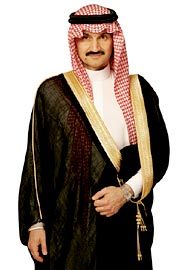
TalalThe New York Times Magazine recently ran an interview with Saudi royal prince Alwaleed bin Talal that was remarkable in a number of respects (CHT: PowerLine). The interview concerned a $20 million donation that bin Talal has recently given to be used for Islamic studies at Harvard.

EXCERPTS:

Since you’re said to be worth more than $20 billion, with major holdings in Four Seasons Hotels, Saks Fifth Avenue and Murdoch’s News Corporation, why not give an unrestricted gift instead of such a narrowly focused one?

The gift is unrestricted!

No, it’s not. It has to be spent on Islamic studies. Georgetown is renaming a center after you, and Harvard is naming a program after you.

Well, sure! The studies that concern me and fit my overall global vision – they’re Islamic studies. As you know, ever since 9/11, we have been trying to bridge the gap between West and East.

Which has backfired at least once. You became notorious in New York when Mayor Giuliani declined to accept a $10 million donation from you to victims’ families after you suggested that the U.S. was too friendly with Israel.

By the way, my check was taken to the bank and cashed. The problem was with my statement. I accepted that. Subject closed.

Subject reopened. The money was returned to you. Have you told Harvard, as you told the City of New York, that the U.S. needs to "adopt a more balanced stance toward the Palestinian cause"?

Let me tell you my position. We need to have good relations between the Arab world and Israel. When I sold my Plaza Hotel in New York, it was sold to Elad, which is an Israeli company.

Doing business with the citizens of a country is not the same thing as believing in that country’s right to exist.

We are doing so many things to bridge the gap between Christianity and Islam and Judaism. For example, at my hotel in Paris, George V, you are going to find the Christian Bible, the Jewish Bible and the Islamic Koran in each single room.

That’s a wonderful idea, but a luxury hotel in Paris is a long way from Saudi Arabia, where you could surely spend more money on Judeo-Christian studies.

Look. You have to understand that the population of Saudi Arabia has zero Christians.

That’s the point. Why shouldn’t you should spend your millions educating your own students before you educate kids at Harvard?

Obviously, it could be something we are contemplating.

[ . . . ]

You find the situation [in Iraq] very volatile still?

You have not done a very good job there. After 9/11, the U.S. needed to have a big revenge, and Saddam Hussein was a sitting duck. The U.S., with its huge ego, needed to have something big and dramatic.

That’s not what I would call a bridge-building sentiment.

You have to understand. I am a friend of the United States, and these days to be in the Arab world and to be a friend of the United States is a liability. But nevertheless I say it. I am a great friend.

READ THE INTERVIEW. (Registration requirement)

King Of The Box Office

Aslan_1

King Kong may have thrashed Aslan in a Google Fight, but at the box office, where it really counts, Aslan proves that he remains the King of the Beasts:

"The Chronicles of Narnia: The Lion, the Witch and the Wardrobe snatched the box office crown from King Kong during another fierce four-day holiday battle for the top spot.

"Old acquaintances met again: Less than $2 million has separated Kong and Narnia the past two weekends.

"’We edged out Kong. It’s been neck-and-neck,’" Buena Vista’s Dennis Rice said Monday. "’These are two great movies in the marketplace that are doing great business.’"

"Narnia took in an estimated $32.8 million during the Friday-through-Monday period, nudging Universal’s King Kong out of the No. 1 spot and into second with a New Year’s weekend take of $31.6 million."

GET THE STORY.

Neocatechumenal Spin

You may have heard rumblings in recent times about changes regarding an ecclesial movement known as The Neocatechumenal Way (a.k.a., the Neocatechumenate).

This is a movement that goes back several decades and that has a relationship with the Church that has been mixed. While Church leaders, including the previous and current popes, have said positive things about the NW, they have also insisted on changes in the way that the movement operates.

BASIC INFO ON THE MOVEMENT HERE.

Most recently B16 issued a series of decisions designed to pull back the NW from a number of liturgical abuses that have routinely characterized Masses celebrated under its auspices.

Journalist Sandro Magister gives a basic explanation (excerpts):

In the Neocatechumenal Way, communion is taken while seated around a large square table, with a large loaf of bread that is divided among the participants and wine that is passes from hand to hand and is taken in large swallows.

But communion is not the only area in which there is a departure from the traditional liturgy. There are significant innovations in other parts of the Mass.

For example, the readings from the liturgy of the Word are commented upon by the catechists of the group, who make lengthy “admonitions” followed by “resonances” from many of those present. The priest’s homily is hardly distinguished, or not distinguished at all, from the rest of the comments.

The times and places for the Mass are also unusual.

The Neocatechumenals do not celebrate their Masses on Sunday, but on Saturday evening, in small groups and separate from the parish communities to which they belong.

Each Neocatechumenal group corresponds to a different stage of the Way, so each group of 20-30 persons has its own Mass. If there are ten groups of Neocatechumenals in a parish, there will be ten different Masses on Saturday evening, in ten separate locations.

Until recently, the founders and directors of the Way had shielded
these practices by claiming they had received verbal authorization from
John Paul II. But with Benedict XVI, playtime is over.

In mid-December, the founders and directors of the Neocatechumenal Way – Spaniards Kiko Argüello and Carmen Hernandez, and the Italian priest Mario Pezzi – received a two-page letter from cardinal Francis Arinze, prefect of the Congregation for Divine Worship and the Discipline of the Sacraments, with a list of “decisions of the Holy Father” which they must obey.

Of the six points detailing the pope’s directives, only one permits the Neocatechumenals to continue what they are doing. This regards placing the exchange of peace before the offertory, a traditional practice in the Christian liturgy which is still in use today, for example, in the Ambrosian Rite celebrated in the archdiocese of Milan.

All the other points require the Neocatechumenal Way to eliminate a large portion of its liturgical innovations.

In the wake of this, Zenit ran an interview with "Giuseppe Gennarini, a spokesman who is in charge of the Way in the United States."

I was interested to read the interview because I wanted to see what kind of response the NW was making regarding the changes the pope has mandated. (I’ve read the letter from Cardinal Arinze containing them. It’s linked below.)

I figured that Gennarini would most likely put a positive face on the matter and express the NW’s intent to comply with the mandates–the same way that Life Teen did following a similar letter mandating that they eliminate prominent liturgical abuses in their Masses.

But I had NO IDEA.

The interview was PURE SPIN on Gennarini’s part. I mean, it goes beyond putting a positive face on the matter. The man is either grossly misinformed about what the letter says or he is in denial.

He represent the letter as fully vindicating and approving multiple things that the NW does in its Masses (not just the one cited–correctly–by Magister) and totally ignores the numerous requirements and cautions expressed in the letter regarding how things are to be done. He conveys the impression that the Vatican has simply rubber stamped current practice when the tone taken in the letter is very different, often saying–in essence–"Look, if you want to do something like this then you can ONLY do it if you start observing the following conditions."

The height of misrepresentation occurs when Gennarini addresses the manner in which the NW distributes Communion:

Finally, the way of distributing Communion as it currently takes place, is allowed for a long period of time, if only "ad experimentum." Such a grant shows that this practice is not irreverent, but fully legitimate, as can be attested by anyone who participates in a Eucharist of the communities.

This concession is written within the context of the final approval of the statutes of the Neocatechumenal Way, which are right now approved also "ad experimentum." When this period "ad experimentum" ends, the interdicasterial commission of the five congregations which approved the statutes … will verify the necessary adaptations.

This not only states that the NW manner of distributing Communion is "fully legitimate" and allowed "ad experimentum" (i.e., for purposes of experiment to see if the arrangement should be made permanent), it also seems to suggest that at the end of the approval process for the NW’s statutes that the Vatican may permanently allow this manner of distributing Communion.

Now here’s what the letter from Cardinal Arinze actually says:

5. On the manner of receiving Holy Communion, a period of transition (not exceeding two years) is granted to the Neocatechumenal Way to pass from the widespread manner of receiving Holy Communion in its communities (seated, with a cloth-covered table placed at the center of the church instead of the dedicated altar in the sanctuary) to the normal way in which the entire Church receives Holy Communion. This means that the Neocatechumenal Way must begin to adopt the manner of distributing the Body and Blood of Christ that is provided in the liturgical books.

There is no "ad experimentum" approval given in there for how the NW distributes Communion. Quite the opposite. They’ve been given two years to clean up their act.

Gennarni is also exceptionally disingenuous when he says:

Without the intervention of the Holy Father, the approval of these liturgical variations would have never taken place. We feel fully confirmed by Peter. Those who are trying to oppose Benedict XVI and John Paul II are altering the reality.

Judge for yourself who is altering reality, here.

READ THE LETTER.