“You Are Getting Very Sleepy . . . “

A reader writes:

I was wondering if you have any information about hypnosis and Catholics.  As a fairly recent convert, I have areas of my faith that are still informed by my protestant background, and I like to shine the light of Catholic truth upon them when possible.  It has been my belief that participating in hypnosis, by opening up the subconcious mind, may allow demons access to the soul that our concious mind would otherwise suppress.  What do you think?

The Church does not have an official position on this matter, so what follows represents my personal opinion. I  have done quite a bit of thinking about hypnosis from a scientific and moral perspective over the years, so I hope you will find what follows to be an informed opinion.

Unfortunately, there’s no standard answer to what hypnosis even is. If you read the American Psychological Association’s "definition and description" of hypnosis, you’ll find that it’s all description and no definition because people in the field can’t even agree on basic questions like whether hypnosis represents an altered state of consciousness or not.

Let’s suppose, though, that something like what might be called the "classic" model is correct. According to this model, hypnosis is an altered state of consciousness ("a trance") in which a person is relaxed, mentally focused on certain things (either the hypnotist’s voice or what the hypnotist tells the patient to focus on), and has a heightened suggestibility (i.e., they’re more willing to follow the hypnotist’s instructions than they would be if not hypnotized).

On it’s face, there’s nothing supernatural about any of this, and that would make me wary of claims that one is opening oneself to the demonic.

I tend to take whether someone is open or closed to the demonic at face value: You’re not inviting demons to influence you unless you’re inviting demons to influence you. Since there is nothing overtly demonic about hypnosis (e.g., each hypnotic session does not begin with a prayer to a demon) there is no overt invitation to demons to influence you through it.

What about covert demonic influence? Demons do sometimes play unseen roles in influencing things around us, but when they do so it is in order to corrupt faith or morals or at least to cause suffering. Could a demon be involved in a particular case of hypnosis?

Well, if the hypnotist is trying to induce beliefs in you that are contrary to the faith, like the idea that you have lived past lives, then I suppose that the answer is yes. But then you don’t have to posit the existence of a demon to explain that. There are all kinds of evils in the world that aren’t directly produced by the activity of a demon. The hypnotist may just believe in reincarnation and use his role as a hypnotist to foist this belief on others.

And there’s nothing unique about hypnosis here. There’s nothing intrinsically occult about hypnosis in the classical model described above, and demons can have unseen involvement (or non-involvement) in all kinds of evils in the world, not just hypnosis.

There is a tendency in many Christian circles (both Protestant and Catholic) to give too much credit to demons in my opinion. While the devil was responsible for unleashing evil in the human community, this does not mean that one of his agents is involved in every particular evil that we encounter.

The classical model of hypnosis is not supernatural, it does not address supernatural forces, and it does not attribute supernatural powers to the hypnotist.

Neither do the individual components of the classical model have obvious supernatural significance: You may relax in hypnosis but you do not thereby open yourself to demons. Relaxing is a normal thing that humans do all the time.

As part of hypnosis, you may focus your attention on the hypnotist’s voice or the fact that your legs feel limp and heavy (because you just relaxed them! duh!), but we focus our attention on our bodily states and on other people’s voices all the time (ever try listening to someone in a crowded, noisy environment?). Focusing your attention is a normal human activity that does not open us to the demonic as long as what we’re focusing on isn’t demonic in nature.

Then there’s the heightened suggestibility, and here’s where we hit a significant problem–not in regard to the demonic but in regard to hypnosis in general.

To explain, I’m afraid that I’m going to have to say what I personally believe–or at least suspect–about hypnosis.

I don’t subscribe to the classical model. I don’t think that a person is really going into "a trance" in hypnosis. I don’t think that the state of consciousness a person is in during hypnosis is substantially different from any other relaxed, focused state of consciousness we experience.

I think that hypnosis is–or is likely to be–a social construct.

In other words, I think that there is a certain social role that people are expected to play when they are "hypnotized" and that they adjust their behavior to play this role. They know from film and TV and books that a hypnotized person is supposed to relax and act sleepy and then do or imagine what the hypnotist tells them, and that’s exactly what happens: They relax, they act sleepy, and they do or imagine what the hypnotist tells them.

Or at least the "hypnotizable" people do (the ones willing to play the role and then attribute their actions to the hypnosis).

Other people either don’t play the role or, if they play it, they are aware that they’re just playing a role and that "I’m realling doing all this myself" and so they are considered poor subjects for hypnotism or even "unhypnotizable."

MORE ON THE SOCIAL CONSTRUCT THEORY OF HYPNOTISM HERE.

So there is a big question in my mind about whether there is any "heightened suggestibility" in hypnosis or whether it’s just a person’s willingness to go along with the hypnotist because he’s playing an expected social role.

The fact that you supposedly can’t get a hypnotized person to do anything fundamentally contrary to his will would suggest the latter.

However that may be, the fact is that people who are hypnotized or who are playing the social role of a hypnotized person do respond to the suggestions of their hypnotists.

The moral evaluation of their actions would depend on the moral content of the suggestion they have been given. The suggestions "Cluck like a chicken" or "Raise your left arm" would seem to be morally neutral. "Stop smoking" or "Don’t eat so much" would be positive for a person who has been smoking or eating in excess. "Tell me about your past life" or "Try to remember who it was that sexually abused you (when in fact you were sexually abused by no one)" would be evil.

In none of these cases, though, do I see any opening of oneself to demons–unless the hypnotist directly suggests that you do so.

What we are "open" to is determined by our wills. If our wills are closed to the devil then we are closed to the devil.

A person undergoing hypnosis could thus say, "When I get hypnotized, I’m opening myself up to what the hypnotist wants me to do, but opening myself up to the hypnotist is simply not the same thing as opening myself to the devil. My will still remains firmly against what the devil wants me to do. I’m just letting the hypnotist give me a sleepy pep talk to help me stop smoking or something."

Even when the hypnotist does do evil, as with encouraging people to believe in past lives, that’s still him abusing his role as a moral agent and it does not involve inviting the devil to influence you.

You’re inviting the hypnotist to influence you, but since the hypnotist is an external natural influence any evil that the hypnotist does would be ascribed to "the world" rather than "the devil."

Scripture speaks of evils being produced by "the world, the flesh, and
the devil," and the devil is only one of three sources of evil in that
reckoning. Much of the time we are dealing with evils whose immediate
cause is external natural influence ("the world") or internal natural temptation ("the flesh"). It is only on occasion that we encounter an evil whose immediate cause is supernatural ("the devil").

I therefore don’t think that we should rush to attribute evils that we
encounter to the agency of demons. Sometimes they are caused by that,
but only sometimes. If we have evidence in a particular case (as in the
case of a possession) that evils are being caused by demons then it is
reasonable to attribute that case to a demonic cause, but if we don’t
have such evidence (as in the vast majority of cases) then I think we
do better not assigning a demonic cause to it.

If we allow ourselves to go too far in labelling things "demonic" that
do not have any obvious connection to a demon then we induce a kind of
paranoia that will lead to a cultural scrupulosity and personal
paralysis that is morally and psychologically unhealthy.

We should live life positively, trusting in God and his victory in
Christ, not looking over our shoulders (or under rocks) worrying about
demons. God is stronger than the devil, and we can trust him to take
care of us without having to worry about whether every little evil we
encounter had a supernatural cause or not.

This hesitancy to ascribe things to supernaturally evil causes seems to
be reflected in the Church’s policy of only performing exorcisms in
cases where other causes (like mental illness) have been ruled out first and there is no remaining natural explanation for the events that are transpiring.

We’ll simply be healthier and happier if we keep our focus on God and
trying to please him and only attribute things to the agency of the devil when his
involvement is undeniable.
Sen. Reid’s “Racism”

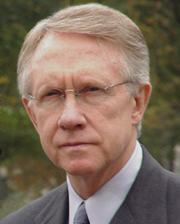
Harry_reidAccording to the Washington Times:

Senate Minority Leader Harry Reid called a proposal to make English the official language "racist" on the Senate floor [Thursday].

"This amendment is racist. I think it’s directed basically to people who speak Spanish," the Democrat said during the already tense debate over immigration reform.

Moments later, the Senate approved the measure on a 63-34 vote. Virtually all Republicans were joined by 11 Democrats to approve the largely symbolic amendment. Immediately following that vote, the Senate approved a second amendment, declaring on a 58-39 vote that English is the "common and unifying language."

It comes as little surprise that as the Senate head of a party specializing in identity politics, Senator Reid would attempt to play the race card to get his way in Congress, but isn’t this particular card getting rather worn?

There was a time–in the wake of the Civil Rights Movement and the numerous injustices that it served to correct–that the accusation of racism was a potent thing, and playing the race card could be a powerful instrument for altering the state of a discussion.

But the race card has been played so often–and so inaccurately–that it’s getting rather worn and easy to spot as part of a political bluff (to keep with the card playing metaphor for a moment).

False accusations of racism have been made so frequently (as, for example, by Congresswoman Cynthia McKinney) that the potency of the racism charge is diluting. People no longer reflexivly assume that when the charge is made that it must be based on truth because those making the allegation have so over-used it that the situation has begun to resemble "The Boy Who Cried ‘Wolf!’"

Particularly noteworthy is Sen. Reid’s accusation that a move to declare English the official language of the nation to be "racist" on the grounds that it is "directed basically to people who speak Spanish."

For a speaker of contemporary, 21st century English, this may leave one scratching one’s head: "What does race have to do with language? They’re completely separate. People of any race can speak any language that they choose to learn. This charge makes no sense."

It would have made a little more sense in the 18th century, when the term "race" still had more of its original meaning, which was to refer to a family, tribe, culture, or nation, such that one could speak of "the English race" or "the French race" or "the German race" or "the Spanish [meaning: ‘from Spain’] race," but that usage has been virtually lost from contemporary English.

As a result of the history of racism in the English-speaking world, the term "race" has changed to refer in normal speech to particular genetic backgrounds associated principally with skin color.

Given that change in meaning, language simply has nothing to do with race because people of every genetic background have the same basic language genes and can speak any language they choose to learn. Saying, "In this country the official language is English (or Spanish or Mandarin or Swahili or Arabic or Hebrew or Russian or what have you)" has nothing to do with a person’s genes and thus has nothing to do with race. 

People of every race can speak every language, as illustrated by the fact that there are already millions of Americans of every race who are native English speakers.

Now, you’ll note something interesting about the 18th century use of the word "race": in examples like "the English race," "the French race," "the German race," and so on the distinguishing terms ("English," "French," "German") are also the names of languages.

There’s a very good reason for that: Language is one of the most fundamental aspects of culture–arguably the most fundamental aspect of culture–and so people who are members of a common nation and its culture tend to share a common language.

It is not easy to maintain a nation that does not share a common language. If you don’t believe that, look at Canada.

If people don’t share a common language then from an important perspective they simply aren’t part of the same culture because they can’t talk to each other and thus can’t participate to any significant degree in common cultural life.

Nations that don’t have a common language thus fail to have a common culture. What they have instead are different, sharply-defined cultures within them which are separated by linguistic barriers. This leads to friction between the language communities and to identity politics.

Sen. Reid’s refusal to endorse the idea of English as the common language in America thus would have the tendency to foster more identity politics and more friction between groups in American society.

Whether you want to call that "racism" or not, it’s something that we don’t need.

SDG On DVC

Steven Greydanus’s review of The Da Vinci Code is up at DecentFilms.com. It has a lot of insightful stuff on it. Here’s a bit I find particularly so:

Ever since the book came out, members of the Catholic prelature Opus Dei — dismayed by Brown’s portrayal of the group as a fanatical, shadowy “sect” or “congregation” characterized by brainwashing, coercion, and self-mutilation — have been trying to get the word out that the book’s lurid fantasies have no basis in reality.

Insidiously, the film absorbs this message into the Da Vinci Worldview. In an early scene, when we meet Opus Dei Bishop Aringarosa (Alfred Molina, Spider‑Man 2), he’s on a plane rehearsing talking points intended to defend Opus Dei against critics. Opus Dei simply rejects “cafeteria Catholicism,” he says benignly, while his aide recommends he avoid sounding defensive. It sounds precisely like the message the real Opus Dei has been trying to put across — or for that matter what any serious Catholic would say about his faith. You see, that’s what they want you to think.

In a similar vein, protagonist Langdon has been subtly reworked from an outspoken proponent of Da Vinci esoterica into a more skeptical, ostensibly neutral scholar who mouths many of the objections Brown’s critics have been making, putting the burden of the Da Vinci worldview onto Teabing. Now we have Langdon arguing that the Priory of Sion is “a myth” and “a hoax,” while Teabing retorts, “That’s what they want you to think.”

A few critics have interpreted this as a concession to Christian concerns, but the actual effect is precisely the reverse: It essentially undermines critical objections by incorporating them into the film’s overall picture and then seeming to rebut them as Langdon is gradually converted to Teabing’s point of view.

Some Christians have optimistically hoped that The Da Vinci Code might provide a potential opportunity for dialogue and discussion about Jesus with people who might not otherwise be open to such discussions. Yet if anything the film seems calibrated precisely to inoculate viewers against any such discussion — to leave viewers with a skeptical agnosticism about efforts to set the record straight as all part of the conspiracy, “what they want you to think” (or “we can’t be sure”).

GET THE STORY.

Thanks, Professor Bainbridge!

Tech Central Station is not often devoted to matters of theology, but Professor Bainbridge has offered

THIS NICE POST

on the subject of The Da Vinci Code and the theological issues that it involves.

I was gratified to see that he quoted from the Catholic.Com web site and–in particular–a page from it that offers a tract of the early Church Fathers that I edited, demonstrating the early belief in Christ’s divinity.

How often do you get the early Church Fathers being quoted in a Tech Central Station blog entry?

Cool!

In the end, Prof. Bainbridge concludes:

All Dan Brown, Ron Howard, Tom Hanks, and that whole crew have
accomplished is getting richer by saying that "really foolish thing."

GET THE STORY.

The Fr. Maciel Matter

Pope Benedict has approved actions that appear to bring to a close the matter concerning Fr. Marcial Maciel, founder of the Legionnaries of Christ.

For some time Fr. Maciel has been the subject of sexual abuse allegations, which he has strongly denied.

The Congregation for the Doctrine of the Faith, with the approval of Pope Benedict, has now done two things:

1) It has suspended further canonical investigation into the allegations in view of Fr. Maciel’s advanced age and precarious health and

2) It has invited Fr. Maciel to retire from public life, giving up all public ministry and retiring to a life of prayer and penance.

Put together, these two actions indicate that the Congregation found that there was at least some substance to at least some of the allegations but they did not want to publicly humiliate Fr. Maciel by allowing the canonical process to reach its conclusion and have him defrocked at the end of his life.

That the Congregation found that at least some substance to the allegations is indicated by the fact that the Congregation invited him to give up public ministry and lead a life of prayer and penance. You don’t do that to people against whom baseless charges have been made, particularly at the ends of their lives. One does not lightly ask the enormity of asking a priest to have to give up public ministry, particularly if he is aged and infirm and has spent his career building an organization with a reputation for faithfulness.

This is an attempt to find a graceful way out of a difficult situation and achieve the good of redressing the wrongs that Fr. Maciel apparently committed while sparing him and the organization he founded as much humiliation as possible.

That being said, the fact that the judicial process was not allowed to reach its conclusion means that there is still a question mark over the allegations. There was enough substance to them that the Congregation for the Doctrine of the Faith was willing to take very grave action, but a formal finding of guilt still has not been made.

For his part, Fr. Maciel appears willing to comply with the Holy See’s invitation to retire from public ministry.

OFFICIAL VATICAN COMMUNIQUE.

RESPONSE FROM THE LEGIONNARIES [.pdf].

ADDITIONAL BACKGROUND.

MORE FROM ED PETERS.

“Good Riddance”

I really, really do not like Pennsylvania Senator Arlen Specter. I mean REALLY. (Did I say "really"?)

But in THIS CASE he may have been Arlen the Semi-Friendly Specter.

The issue at hand was whether a constitutional amendment banning homosexual "marriage" in the United States should receive a floor vote in the Senate.

Specter–and the majority–voted that it should, though he seems opposed to the amendment himself.

He was–at least–willing to let the measure be considered by the broader senate.

Which is what prompted a shouting match between him and Democratic Senator Russ Feingold.

After shouting with Specter, Feingold left the meeting in a huff and Specter pronounced "Good riddance!" on him.

By signalling his opposition to true (i.e., heterosexual) marriage, I can only conclude that Feingold doesn’t want to be president of the United States in 2008.

Despite rumors of his current plans to run.

There is no way in hades that the nation will be willing to elect a president who is openly pro-homosexual "marriage" in 2008.

In fact, the nation will say "Good riddance!" to any such candidate.

It’s nice to have these things pointed out early.

The Albino

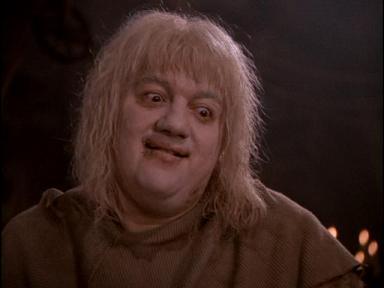
Y’know . . . every time I hear about Silas, the albino monk assassin in The Da Vinci Code, I can’t help but thinking about  . . . this guy . . .

The_albino

That’s my mental image of Silas, but could he be the guy I’ll see in The Da Vinci Code on Monday?

Incontheivable!

Talking With Your New Financial Advisor

Puttynosed_monkey_1Earlier today I posted some advice from John Stossel saying that when it comes to investing in the market you should forget what the experts say and either invest in an index fund or get a monkey to pick your stocks for you.

This, of course, leads to the question of how you will be able to communicate with your new financial advisor.

Fortunately, there is progress that is being made on that front!

Of course, there are some apes that have been able to
learn at least some sign language or other symbolic communications
systems designed by humans, but that’s apes. I am not aware of the extent to which
humans have been able to teach monkeys ways to communicate.

We are, however, starting to gain new insights into the ways that monkeys themselves communication.

FOR EXAMPLE, THE PUTTY-NOSED MONKEY (PICTURED) APPEARS TO HAVE SYNTAX.

This is the ability to combine linguistic elements–like words–into more complex wholes–like phrases or sentences.

The putty-nosed monkey, for example, has the ability to sequence is /pyow/ call and its /hack/ call in a way that means something other than what /pyow/ or /hack/ would mean on their own:

A sound known onomatopoeically as the “pyow” warns other animals against a lurking leopard, and a cough-like sound that scientists call a “hack” is used when an eagle is hovering near by.

The monkeys live in groups consisting of a single adult male accompanied by several adult females and their young. When the male utters this “sentence”, consisting of up to three pyows followed by up to four hacks, it seems to be a command telling others to move,generally to find safer, less exposed terrain.

[Dr. Arnold said:] “Observationally and experimentally we have demonstrated that this sequence serves to elicit group movement in both predatory contexts and during normal day-to-day activities such as finding food sources and sleeping sites.

“The pyow-hack sequence means something like ‘let’s go’ whereas the pyows by themselves have multiple functions and the hacks are generally used as alarm calls.”

So . . . if you’re consulting with your new financial advisor about the state of the stock market and he says something like /pyow! pyow! pyow! hack! hack! hack! hack!/ then it’s probably time to see about putting your money into bonds.

Rotten Tomatoes For The Da Vinci Code

Tomatometer_1
There’s a movie review site/portal called RottenTomatoes.Com that (among other things) gathers up snippets from and links to reviews of different movies.

One of the unique features of this site is its ratings system, which judges films "fresh" or "rotten" based on how many reviews of them are positive or negative. If a review of the film is generally positive, it will have a fresh tomato next to it, and if the review is generally negative, it will have a rotten tomato next to it.

These results are then aggregated together into something known as "the Tomatometer" (pictured above) that shows you what percentage of reviews are positive vs. negative. If a movie gets a minimum of 60% positive reviews then it’s judged a "fresh" film; otherwise it’s a "rotten" film.

Why 60% instead of 50%? (Everyone asks that.) In the words of the guys who run the site, "We feel that 60% is a comfortable minimum for a movie to be recommended."

Those critics who get their reviews counted toward the Tomatometer are
known, appropriately enough, as "Tomatometer critics." (And our own SDG
is one of them.)

The above is an image capture of where the Tomatometer was for The Da Vinci Code last night when I was writting this post: Only 6% positive, making the film rotten. There were sixteen Tomatometer reviews posted, only one of which (from the New York Post) was positive.

But the Tomatometer won’t stay that way.

Yesterday, when the first Tomatometer reviews were posted, the film was 100% rotten. Now it’s only 94% rotten. As more critics post their reviews, the percentage will further change.

HERE’S THE LINK SO YOU CAN CHECK WHERE THE TOMATOMETER IS NOW.

I’ll be interested over the next few days to see what the Tomatometer does regarding this film. I’m sure that the percentage of freshness will increase, but I’m dubious that it will get over the magic 60% to turn The Da Vinci Code into a fresh film.

My money would be that it’ll stay rotten, though by how much I can’t say.

I saw that in the message board on RottenTomatoes they were having a discussion of what the final freshness figure for the movie would be, with people betting (not for money) where they thought the meter would end up.

Anyone care to take a guess?

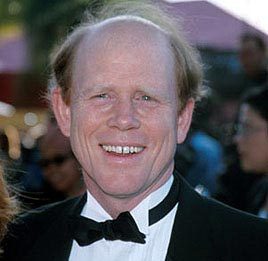
Ron Howard Endorses Boycott Of Da Vinci Code!

Ron_howardHe also encouraged outraged Christians to pre-judge his movie without seeing it first!

Yes! It’s true!

According to the Associated Press:

"There’s no question that the film is likely to be upsetting to some people," Howard told reporters. "My advice, since virtually no one has really seen the movie yet, is to not go see the movie if you think you’re going to be upset. Wait. Talk to somebody who has seen it. Discuss it. And then arrive at an opinion about the movie itself" [SOURCE].

So there you have it!

Ron Howard encourages people who might be upset to "not go see the movie" and, instead, wait and rely on the opinions of others to "arrive at an opinion about the movie itself" without seeing it first!

You really have to hand it to him for throwing in his lot with the boycotters and those who want to pre-judge his movie like that.

I mean, it would have been so easy for Howard to do what most directors would do and say something like, "These people calling for boycotts are absurd. They haven’t even seen the movie. How can they know whether it’s offensive or not? I’d encourage everyone to go out and see the movie and then decide for themselves what they think about it. I think they’ll like what they see!"

Yessirree, Bob! No typical Hollywood spin from Mr. Ron Howard on this one! He’s encouraging people to boycott his film and to form opinions about it without seeing it!

Maybe there’s a little Mayberry left in him after all.