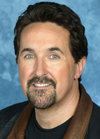
Finding God In The Human Genome

The scientist who led the team that cracked the human genome is set to publish a book detailing an even more shocking discovery:

The existence of God.

Francis Collins was an atheist until he was 27.  He became a believer, in part, due to the influence of C. S. Lewis’s Mere Christianity.


"[Collins’] book, The Language of God, to be published in September, will reopen the age-old debate about the relationship between science and faith. ‘One of the great tragedies of our time is this impression that has been created that science and religion have to be at war,’ said Collins, 56.

"’I don’t see that as necessary at all and I think it is deeply disappointing that the shrill voices that occupy the extremes of this spectrum have dominated the stage for the past 20 years.’

"For Collins, unravelling the human genome did not create a conflict in his mind. Instead, it allowed him to ‘glimpse at the workings of God.’"

GET THE STORY.

Soak The Vatican?

Following the sex abuse scandal here in the U.S., there has been an attempt by civil lawyers prosecuting sex abuse cases to try to name the Vatican as a defendant in these cases, which would mean that it could be slapped with millions and millions of dollars in special, general, and punitive damages.

There are a number of legal barriers that have thus far prevented this from happening to the Holy See, but recently a judge in Oregon expressed openness to naming the Vatican as a defendant.

Other legal barriers could still prevent that from happening, though the fact that Oregon is located in the ever-crazy 9th Circuit could help facilitate the matter.

My guess is that one or another factor will intervene to prevent the Holy See from being soaked in this case, but only time will tell.

In the meanwhile,

JOHN ALLEN HAS A GOOD GUIDE TO THE INS-AND-OUTS OF THE SITUATION.

Quote Of The Day

Jmbarrie

After once again riffling through the Great Quote Files, I pulled up the following:

Dreams do come true, if we only wish hard enough. You can have anything in life if you will sacrifice everything else for it. –James M. Barrie

Who was James M. Barrie?

CLICK HERE.

As a side note, I loved the recent movie about Barrie, titled Finding Neverland, but don’t recommend it to anyone who thinks crying over movies is a weakness.

GET THE MOVIE.

GET THE REVIEW by co-blogger Steven Greydanus.

More On The Schiavo-Centzone Marriage

Ed Peters has a new piece up about the canonical implications of the marriage of Terri Schiavo’s husband Michael to his live-in girlfriend after he bumped off Terri.

For those who may not be familiar with the issue, canon law provides an impediment known as crimen (Latin, "crime") that provides that "Anyone who, with a view to entering marriage with a certain person, has brought about the death of that person’s spouse or of one’s own spouse invalidly attempts this marriage."

How, then, could the Diocese of St. Petersburgh allow Michael Schiavo (a Lutheran) to marry his mistress (a Catholic) in a Catholic ceremony after Schiavo brought about Terri’s death?

Good question. Let’s hope it gets answered.

In the meantime,

GET THE STORY.

Crashing The Party

Giannajessen

When the Colorado House of Representatives decided to honor the ninetieth anniversary of Planned Parenthood’s presence in the Rocky Mountains, one pro-life representative decided to bring along a special guest for the occasion. State Representative Ted Harvey asked Gianna Jessen (pictured at left), a singer, pro-life activist, advocate for those with cerebral palsy, and — oh, yes — an abortion survivor, to help him mark the event. Harvey first introduced Ms. Jessen, told the House of her victory over her disability, had her sing, then lowered the boom by telling "the rest of the story":

[Harvey said to the House]: "The cause of Gianna’s cerebral palsy is not because of some biological freak of nature, but rather the choice of her mother.

"You see when her biological mother was 17-years-old and 7-and-a-half months pregnant, she went to a Planned Parenthood clinic to seek a late-term abortion. The abortionist performed a saline abortion on this 17-year-old girl. This procedure requires the injection of a high concentration of saline into the mother’s womb, which the fetus is then bathed in and swallows, which results in the fetus being burned to death, inside and out. Within 24 hours the results are normally an induced, still-born abortion.

"As Gianna can testify, the procedure is not always 100 percent effective. Gianna is an aborted late-term fetus who was born alive. The high concentration of saline in the womb for 24 hours resulted in a lack of oxygen to her brain and is the cause of her cerebral palsy.

"Members, today, we are going to recognize the 90th anniversary of Rocky Mountain Planned Parenthood…"

BANG! The gavel came down.

GET THE STORY.

(In the Giving-Credit-Where-Credit-Is-Due Department, nod to The Sacred Weblog of the Universal Inquisition for the link.)

For more information about Gianna Jessen, CLICK HERE.

The Continental Divides

ContinentaldivideWhenever I drive across New Mexico, I’m on the lookout for a little sign by the side of the road unceremoniously announcing "Continental Divide"–a sign like the one on the left (only that one’s actually in North Dakota rather than New Mexico).

Growing up, I had the idea that the continental divide was a the highest mountain ridge on the continent so that it divided the continent into two sides that sloped away to the ocean.

Well, that and it was a John Belushi movie.

But if you go and see the continental divide, you may find that you’re not at a mountain ridge at all. There may not even be a mountain ridge in sight. Where you are may be flat.

That’s the way it looks at the continental divide in New Mexico, and it looks pretty similar at the location in North Dakota.

Even more confusingly, when you’re at the continental divide there can be higher points of land on either side of it, within sight.

What’s the explanation?

The explanation is that the continental divide isn’t a ridge made out of the highest land on the continent. It’s an elevation of land that separates two watersheds, so that rain falling on one side of it will tend to find its way toward one ocean and rain falling on the other side will tend to find its way to another.

That means that the continental divide will tend to be high ground, but it doesn’t all have to be mountainous (it can be in relatiely flat countryside) and it doesn’t have to be the highest thing in the area. There can be higher points on both sides, there just has to be a depression between the higher point and the continental divide so that the flow of water toward the ocean isn’t thwarted.

Now here’s a new twist: There isn’t just one continental divide in North America. There are four (click to enlarge).

NorthamericadividesThe one everybody thinks of as "the Continental Divide" is actually the Great Continental Divide, but there are three others, depending on what body of water a watershed is sloping toward–whether it’s the Pacific Ocean, the Arctic Ocean, the Labrador Sea, the Atlantic Ocean, or the Gulf of Mexico.

I was surprised at how much of the United States is in the watershed leading to the Gulf of Mexico. I’d kind of assumed that water on the east sid of the Great Divide would flow toward the Atlantic, but oh yeah, there’s another bunch of mountains in the way, so it’s going to go down into the Gulf.

Other continents also have continental divides, though they’re not always as clearly demarkable as they are in North America, so GO NORTH AMERICA! We’ve got FOUR, CLEARLY DEMARKABLE divides!

LEARN MORE.

AND MORE.

Blog Operations Note

I’m going to be largely offline this week as I’m putting my computer back into the shop. (They didn’t fix the problem last time, unfortunately).

In anticipation of the new repair effort, I do, however, have material scheduled to go up each day until the computer should be repaired, so the blog won’t be inactive in the interim.

My co-bloggers are, of course, welcome to toss in anything they may have on their minds to make up the difference.

Thanks, folks, and have a great rest of the week!

Seeking The Kingdom Vs. Seeking A Wife

A reader writes:

A Baptist friend told me it is wrong for a Christian to actively seek a wife.  He says the Bible teaches this when Jesus says, "Seek first His Kingdom, and all these things will be added unto you as well," and in the verse where Paul says that if a man is single, he shouldn’t desire to get married…"

Jimmy, is it true that the Bible teaches this?  My friend said we should only be concerned about the Kingdom, not getting a wife, and God might give one to us.  I feel it is my vocation to marry.  Would it be wrong to join an internet dating service?  Or place myself in situations where I can easily meet a woman (like a line-dancing club?)

First let’s deal with what St. Paul said.

He indicated that he felt it would be better for people not to marry because "those  who marry will have worldly troubles, and I would spare you that" (1 Cor. 7:28b). The fact that he was living in an age when Christians would be persecuted may play a role in that judgment.

Nevertheless, it is not an absolute judgment, for he had just said, "if you marry,  you do not sin, and if a girl marries she does not sin" (1 Cor. 7:28a). He also said: "I wish that all  were as I myself am. But each has his own special gift from God,  one of one kind and one of another. To the unmarried and  the widows I say that it is well for them to remain single as I do.  But if they cannot exercise self-control, they should  marry. For it is better to marry than to be aflame with passion" (1 Cor. 7:7-9).

It therefore is not wrong for a person to want to get married or to take steps toward finding a spouse.

Now regarding what Jesus said, let’s look at the "seek first the kingdom" passage with a bit more context:

[D]o not be anxious,  saying, `What shall we eat?’ or `What shall we drink?’ or `What  shall we wear?’ For the Gentiles seek all these things;  and your heavenly Father knows that you need them all. But seek first his kingdom and his righteousness, and all  these things shall be yours as well [Matt. 6:31-33].

By telling people to seek the kingdom first (having it as your highest priority) instead of being anxious about what we will eat or drink or wear, does Jesus mean that we should not take active steps to get food and drink and clothes for ourselves?

No, of course not.

Jesus is not saying that we should refuse to work or make money or buy, grow, or raise food and drink and clothes.

So he’s not saying that we shouldn’t take active steps toward procuring such things, he’s simply saying that we shouldn’t stress over them to the point that it takes our focus off of God.

The same thing thus applies to getting a wife: There is nothing wrong with desiring one or taking steps to find one as long as one is not led away from God and into sin in the process.

New Mass Translation Approved

At their meeting last week, the U.S. bishops approved the new draft translation of the Order of the Mass (that’s the prayers you hear every week, not the ones that change based on what liturgical day it is).

The translation now goes to Rome to receive Rome’s approval.

Apparently there were a few changes that the bishops asked to make, but these are characterized as minor (e.g., optional alternative prayers that we already have in the U.S. that are being proposed for inclusion in the new Order of Mass, e.g., using certain memorial acclamations at the Mystery of Faith that are in the U.S. Sacramentary but aren’t in the Latin original).

GET THE STORY.

MORE HERE.

AND HERE.

Convalidation When One Spouse Returns To The Church

A reader writes:

I am a recent revert back to the Catholic Church. My wife and I (both born, baptized, confimed Catholic) were married in a Protestant church. Now that I have recently come "Home", its obviously important to me to have the Church validate our marriage. Until then, I know, I am unable to receive the Eucharist. The problem is, my wife, unfortuanetly, does not share the same passion about the Catholic faith and continues to attend a protestant church. How does the church handle my situation where 2 Catholics, who were married outside the church, wish to have the church recognize my marriage where only one desires to come back in full communion with the Church. Its obviously important for me to be in full communion again and receive the Eucharist but can not untill 1) Confession and 2) this marriage issue. I recently spoke with my parish priest and he stated he would have to look into it. Jimmy, can you provide me with an answer.

There actually is a little ambiguity in the law regarding how such situations are to be handled–at least now that the Holy See has tightened up its understanding of what constitutes formal defection from the Church, and different dioceses might wish to handle the mechanics of the situation in slightly different ways, so it is prudent of your priest to check. However, the core of the solution to your situation is clear (as is the fact that it is resolvable).

The standard way of handling a situation like this would be for you and your wife to have a convalidation ceremony where you both renew your consent to the marriage. That’s the main thing that needs to happen.

Hopefully, your wife will not object to renewing her consent in this ceremony, though if she were to then there is another potential way to handle the situation. There is no need to go into detail on that, though, as long as the normal way of handling the situation can be pursued.

Once you have heard back from the priest, I would talk to your wife and explain that this is one of your religious obligations as a Catholic and that it means a lot to you to be able to do this. You might also point out–if you think it appropriate–that many couples treat renewals of their wedding vows as an occasion to celebrate their continued love and commitment to each other. The convalidation service can be that for both of you, though for you it also has an additional dimension of fulfilling a religious obligation. If it were me, I’d try as much as possible to put this in a positive light: I need to do this, but I also want to do this, because it will allow me to publicly reaffirm my love and commitment to you before God and my Church. It is a way I can say, "You are the one I love, you are the one I am committed to" before my Church.

There will be some additional canonical details that will also have to be handled as part of the process, but a convalidation is the normal way that such things are handled, and the fact that your wife does not presently consider herself Catholic will not pose an insuperable barrier. Your parish priest can help you work through the details of the process (once he’s checked on exactly how your diocese wants to handle this).

20