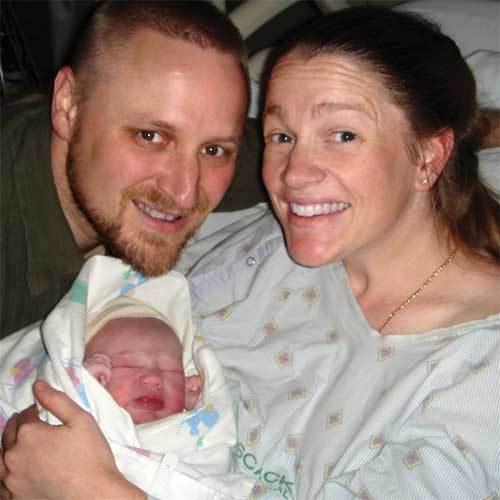
Mother and baby both doing fine!
Clerical Garb
A reader writes:
I’ve recently been wondering about what kinds of clothes priests should wear according to the letter of the law. specifically, I know that one of my parish priests likes to sit in the back of other parishes and observe mass when he goes on vacation. Now I know that is not what he is supposed to do, and he knows it too, so I’m not looking to concern you with the fine points of whether he should be in choir dress, cassock+surplice or vested and exercising his priestly faculties at those masses. I am however interested in what kinds of clothes priests can and should wear day to day. This is particularly of interest to me as I have recently been
accepted to the seminary for pre-theology studies in my home diocese.Anyhow, some specifics might include:
- when is it appropriate/allowable for priests not to wear the roman collar but to dress in purely secular clothing?
- is it permissible for a priest to wear the Roman cassock outside of church grounds, e.g. out to dinner or shopping?
- who is responsible for setting these norms – national conferences, individual bishops, the Code of Canon Law?
For priests belonging to the Latin Church, the universal law regarding this matter is found in the Code of Canon Law, which states:
Can. 284
Clerics
are to wear suitable ecclesiastical garb according to the norms issued by the
conference of bishops and according to legitimate local customs.
As you can see, the Code simply states that they are to wear some kind of distinctive garb and authorizes the authorizes the conference of bishops (as well as local custom) to determine this more precisely, which answers the third of your bulleted questions.
Before we look at the complimentary norm for this canon here in the United States, though, let’s look at a passage from the 1994 Directory for the Life and Ministry of Priests, which goes into the matter in more depth and says:
66. Obligation of Ecclesiastical Attire.
In a secularised and materialistic society, where the external signs of sacred and supernatural realities tend to disappear, it is particularly important that the community be able to recognise the priest, man of God and dispenser of his mysteries, by his attire as well, which is an unequivocal sign of his dedication and his identity as a public minister. The priest should be identifiable primarily through his conduct, but also by his manner of dressing, which makes visible to all the faithful, indeed and to all men, his identity and his belonging to God and the Church.
For this reason, the clergy should wear "suitable ecclesiastical dress, in accordance with the norms established by the Episcopal Conference and the legitimate local custom”. This means that the attire, when it is not the cassock, must be different from the manner in which the laity dress, and conform to the dignity and sacredness of his ministry. The style and colour should be established by the Episcopal Conference, always in agreement with the dispositions of the universal law.
Because of their incoherence with the spirit of this discipline, contrary practices cannot be considered legitimate customs; and should be removed by the competent authority.
Outside of entirely exceptional cases, a cleric’s failure to use this proper ecclesiastical attire could manifest a weak sense of his identity as one consecrated to God.
Now, here’s the U.S. complimentary norm:
The National Conference of Catholic Bishops, in accord with the
prescriptions of canon 284, hereby decrees that without prejudice to
the provisions of canon 288 [which exempts deacons from the clerical dress requirement], clerics are to dress in conformity with
their sacred calling.In liturgical rites, clerics shall wear the vesture prescribed in the
proper liturgical books. Outside liturgical functions, a black suit and
Roman collar are the usual attire for priests. The use of the cassock
is at the discretion of the cleric.In the case of religious clerics, the determinations of their proper
institutes or societies are to be observed with regard to wearing the
religious habit [SOURCE].
As you can see from this, "the use of the cassock is at the discretion of the cleric," which means that it would be permitted outside church grounds, answering the second of your bulleted questions.
This leaves your first bulleted question, which is in what circumstances they can simply go about in civvies, without the black suit and Roman collar that this norm requires.
The answer is . . . the law doesn’t say.
We know that there are exceptions, because the Directory for the Life and Ministry of Priests alludes to "entirely exceptional cases" being sufficient to excuse a priest from wearing clerical garb, but it doesn’t say what those might be.
This therefore strikes me as an area of the law that could stand further clarification.
One note about the phrase "entirely exceptional cases": That’s a pretty strong phrase and it might be taken to mean that you need an awful strong reason not to wear clericals in a particular situation. But this might misread the intent of the Directory. It could easily be argued that the Directory is concerned with getting priests to wear clerical garb in general and thus it reqiures an "entirely exceptional case" to justify not wearing ecclesiastical garb in general. In other words: a priest needs a powerful reason–like government prohibition or the possibility of violence against him–in order to justify never wearing clerical garb.
That being said, given the pastoral reasons behind the law as articulated by the Directory and the fact that the law assumes that he will be wearing clerical garb as a general matter, a conscientious priest will not lightly excuse himself from wearing it in public.
And if I may add an additional pastoral reason why he should not do so: It will confuse the faithful if they see him sometimes in clerical dress and sometimes not and undermine his ability to minister to them effectively as doubts are sewn in their minds about whether his "failure to use this proper ecclesiastical attire could manifest a weak sense of his identity as one consecrated to God."
Incidentally, for readers overseas, I did a quick check of the complimentary norms for canon 284 a number of other countries in the English-speaking world (England, Ireland, Canada, Australia, New Zealand) and was mildly surprised to discover that the U.S. is far more specific in spelling out the requirements for clerical dress. England’s complimentary norm simply says that existing customs regarding clerical dress are to be observed (thus devolving the matter to existing custom). Ireland and Canada’s norms say that a priest is to be recognizable by his dress as a priest (thus implicitly devolving the matter to custom). And Australia and New Zealand say that the dress needs to identify him as a priest but then says the diocesan bishop will make further determination of the matter (thus devolving it on the local bishop). Some of these countries also add that the garb must be suitable to the occasion.
Prayer Requests
I haven’t decided how often to have prayer request posts here on the blog (probably not every week as was suggested, but once in a while).
I’d like to begin one today, though, and with a special prayer request of my own: SDG and his wife are expecting a new baby and, since the little one is significantly overdue, they are finally having labor induced today. I’d like to ask folks to pray for the safe delivery of mother and baby.
So that’s my prayer intention.
Please use the combox to add your own prayer intentions.
Superheroes Go Postal
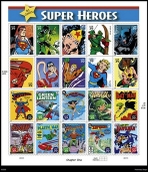
Just in case anyone here at JA.org happens to like superheroes, y’all may be interested to know that your favorite caped crusaders are coming soon to a postage stamp near you.
"Faster than a speeding bullet, comic book superheroes are coming to a post office near you. Batman and Superman, Wonder Woman, Supergirl and a half dozen other superheroes will star on new postage stamps being released Thursday.
"The new 39-cent stamps and 24-cent postal cards will be made public at a comic book show in San Diego, and will go on sale nationwide Friday.
"The stamps are sold in a sheet of 20, half featuring the individual superheroes and half showing covers of comic books starring them.
"The Postal Service reports this is its first set of super hero stamps, indicating more are likely to follow."
The super stamp models are slated to include, among others, Batman, Wonder Woman, The Green Lantern, and Supergirl. No word yet on whether letters posted with the superhero stamps will arrive at their destination faster than a speeding bullet.
The Baby Harvesters Vs. The Baby Heroes
The following is a list of U.S. Senators who voted in favor of harvesting babies currently frozen in order to get at their stem cells:
Now here is a list of those senators who voted to defend the babies against being harvested in order to steal their stem cells:
Kindly remember which individuals stood up for the babies and which voted to kill them for medical experimentation.
(CHT: Southern Appeal)
If you’d like to look up how your state’s two U.S. senators voted, CLICK HERE.
Rendering Unto Caesar
 A reader writes:
It is my understanding that the Church tells us to pay taxes and obey our
civil government EXCEPT when the civil government is asking its citizens
to sin. I base this off CCC 2242:
"The citizen is obliged in conscience not to follow the directives of
civil authorities when they are contrary to the demands of the moral
order, to the fundamental rights of persons or the teachings of the
Gospel. Refusing obedience to civil authorities, when their demands are
contrary to those of an upright conscience, finds its justification in the
distinction between serving God and serving the political community.
"Render therefore to Caesar the things that are Caesar’s, and to God the
things that are God’s." "We must obey God rather than men":
When citizens are under the oppression of a public authority which
oversteps its competence, they should still not refuse to give or to do
what is objectively demanded of them by the common good; but it is
legitimate for them to defend their own rights and those of their fellow
citizens against the abuse of this authority within the limits of the
natural law and the Law of the Gospel."
Now, with that stated, if I know that my money I pay to taxes is
supporting mass murder of innocent humans, should I pay taxes? By paying
taxes I am indirectly supporting the actions of the government in this
injustice. For example, I know that taxpayer money is supporting the
blood thirsty abortion mill Planned Parenthood:
"Finally, the Planned Parenthood empire has been built and sustained in
large part by money from the U.S. taxpayers. Planned Parenthood’s own
annual reports indicate that it received $2.2 billion of taxpayer money
between 1987 and 2001. Thirty percent ($202.7 million) of Planned
Parenthood’s income ($672.6 million) in its 2000/01 fiscal year came from
government grants or contracts. Incredibly, PPFA made $454 million of
profit from 1987 to 2001!" – American Life League
Thus, should I continue to pay taxes? Thanks.
The argument that you are making faces several hurdles.
The first is that the passage in the Catechism that you cite involves disobedience in matters in which you are directly being commanded to do evil (e.g., if you were being ordered to perform an abortion or abort one of your own children).
Catholic moral theology recognizes a distinction between different forms of cooperation with evil, ranging from immediate, personal action to what is known as remote material cooperation. This passage is dealing with things toward the former end of the spectrum: Things you are being personally ordered to do that are evil.
Giving money to the government is not evil. If the government then takes it–against your wishes–and does something evil with it then your cooperation is both material and–given the way the government works–remote. Thus if you pay taxes and your taxes go into a government fund and then the government takes some of the money from that fund and gives it to Planned Parenthood then your cooperation with the evil that Planned Parenthood does is (extremely) remote material cooperation.
Catholic moral theology acknowledges that remote material cooperation is morally justifiable when there is a proportionate reason. So: Is there a proportionate reason to pay your taxes, knowing that a tiny fraction of them may go toward Planned Parenthood?
It would seem that there is, and it may be articulated as follows:
1) The government will ruin your life if you don’t pay your taxes.
2) By ruining your life, the government will also gravely harm the lives of any who are financially dependent on you (e.g., your children).
3) You have a duty to protect yourself and those who are dependent on you from being needlessly ruined.
4) Failure to pay your taxes will not materially decrease the money that is given to Planned Parenthood. They’ll get their money anyway.
5) If you are convicted of a felony you may lose your right to vote, which is a tool you possess to bring about change within the system.
6) By refusing to pay your taxes, you deprive the government of money that would be used for good as well as evil, including the basic good of maintaining civil order that is the foundation of civic and economic life for the populace.
It thus seems to me that, in the American setting, the kind of tax protesting you are talking about would not be authorized by Catholic moral theology.
If we had an "opt-out" box on our tax forms that let us withold money from Planned Parenthood (or any other evil thing that is receiving government money) then we would be morally obliged to use it, but since we do not have such a box then–given our inability to disentangle money from going to bad as well as good causes and given the fact our cooperation would be (extremely) remote and material and given the existence of a proportionate reason (having our lives ruined, if nothing else) then it seems to me that Catholic moral theology requires the payment of taxes in the American context.
The Church acknowledges that there are situations in which governments may be so horrible that they may be legitimately overthrown, and if you’re in a situation like that (e.g., Nazi Germany, Pol Pot’s Cambodia ,the Taliban’s Afghanistan) then it seems that you would be warranted in withholding taxes from the government as well as taking up arms against it. However, the conditions that have to be met for that are exceedingly high. The Catechism explains:
CCC 2243 Armed resistance to oppression by political authority is not legitimate, unless all the following conditions are met: 1) there is certain, grave, and prolonged violation of fundamental rights; 2) all other means of redress have been exhausted; 3) such resistance will not provoke worse disorders; 4) there is well-founded hope of success; and 5) it is impossible reasonably to foresee any better solution.
Here in the United States those conditions are simply not jointly fulfilled. Certainly the pope isn’t going to agree that they are.
Therefore, I would say that you are morally obliged to pay your taxes and do what you can within the democratic process to end government funding for evil programs and organizations.
You’ve got a vote and the ability to make your voice heard in the public square. Make the most of them.
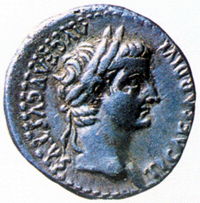
Note for purposes of historical comparison: The basis of the "Render unto Caesar" passage was the question of tax protesting against the Roman Empire, which Jesus’ questioners recognized as an evil abomination (see Revelation chapter 13 if you’d like heaven’s perspective on it). Yet Jesus said that one should "render [taxes] unto Caesar"–despite the horrendous evil that the Roman Empire represented and inflicted on its subject nations.
Kudos To Mr. Siegel
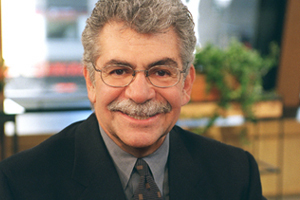 Why?
Why?
Because he walked out of a disgusting Kevin Smith film in protest.
EXCERPTS:
DON’T joke about women, donkeys and bestiality if you expect Joel Siegel to watch your movie. That’s what director Kevin Smith found out when the pun-loving "Good Morning America" film critic stormed out of a press screening of Smith’s "Clerks II," which opens Friday – an act that’s sparked a vicious war of words between the two.
"Time to go!" roared Siegel to his fellow critics. "First movie I’ve walked out of in 30 [bleeping] years!" His tirade came 40 minutes into the long-awaited Weinstein Company sequel to Smith’s 1994 cult classic about two foul-mouthed Long Island convenience store clerks who razz customers and goof off.
GET THE STORY (WARNING: Disgusting subject matter clinically discussed.)
Shame on Kevin Smith, too, for his disgraceful and BLEEP-filled response to Mr. Siegel.
And for making such disgusting trash to begin with.
Credit Where Credit Is Due
President Bush has used the first veto of his presidency to kill a stem cell bill that would have led to the death of many children.
EXCERPTS:
"It crosses a moral boundary that our decent
society needs to respect, so I vetoed it," Bush said at the White House.
"We must also remember that embryonic stem cells come from human embryos that are destroyed for their cells. Each of these human embryos is a unique human life with inherent dignity and matchless value," Bush said in his comments to specially invited families at the White House.
"Some people argue that finding new cures for disease requires the destruction of human embryos," Bush said, before adding: "I disagree.
"I believe that with the right techniques and the right policies we can achieve scientific progress while living up to our ethical responsibilities."
Shame on all those in the House and Senate–including members of the Republican majority in both houses–who voted in favor of the bill.
YEE-HAW!!!
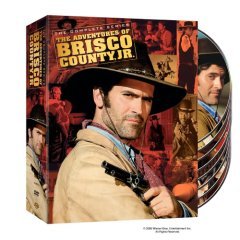 Just got these in the mail, and I can’t wait to watch them (though at the moment I’m still making my way through the new Doctor Who season that was just released).
For those of you who missed it, The Adventures of Brisco County Jr. was a 1993 TV series that blended two of my favorite things . . . the Old West and science-fiction. Two great things that go great together (sometimes . . . like this time . . . or Firefly).
(It also blended in some of my other favorite things, like humor and action and romance and whiskers on kittens and brown paper packages tied up with string . . . well, maybe not the last couple.)
I didn’t see the series when it was on the air (because Fox’s advertisements for it make it look a lot more salacious than it actually is), but I discovered it in reruns on TNT and really enjoyed it.
Unlike many of the series on the air back then, it had a definite story arc spanning the entire season (I just love big story arcs) with significant character evolution a surprises as the story evolves. In fact, the main character, Brisco County Jr. (played by Bruce Campbell) starts the series as an ex-Harvard law professor turned bounty hunter to being the agent of 19th century robber barons who want him to track down the gang that killed his father to being a secret agent for the government.
Along the way we run across mysterious orbs from the future that give people superpowers (or kill them), evil robots, neurotic outlaws, a 19th century version of Elvis, Comet the Wonder Horse, and a bunch of anachronistic humor (before Hercules and Xena made it popular)–all of it fitting into a single, overarching Wild West saga.
And then there’s the show’s great theme music, which just makes you feel like it’s a warm, hopeful new day on the range, where anything can happen . . . and will.
Unfortunately, Fox aired the show in the Friday Night Death Slot and it didn’t get picked up for a second season.
Fortunately, the show’s creators did a rousing two-part season finale that tied up all the outstanding plot threads, so it works well as a season-long miniseries.
It took Warner Brothers FOREVER (13 years!) to release it on DVD, but now that it’s out you can
JP2 Intercession Pack

Sometimes I don’t know whether to smile or wince over the huckstering spirit of many American Christians. I used to think it was a mainly Evangelical thing, but I’ve had second thoughts lately. Exhibit A: The John Paul II Intercession Package. Yours today for the low, low price donation of $29.95 (not counting shipping and handling or applicable sales tax, no doubt):
"Financial needs, Health needs, Family needs … let us invoke Pope John Paul the Great!
"Claims of JP II"s interecession have poured in. As an article on www.Spiritdaily[.com] noted: ‘From lost son to cancer to headaches … claims of JP II’s intercession keep pouring in!’
"We can not ignore JP II as a POWERFUL intecessor for our needs!
"We believe he will prove to be one of the most powerful intercessors of this century!
"Let us INVOKE him to intercede for our needs … no matter if they be big or small! Financial needs, Health needs, Family needs … We all have something in our lives that we could use a little help with! I know I do!"
It looks like the vendors of the John Paul II Intercession Package "could use a little help with" rounding up some exclamation marks. They seem to have used up their supply in this ad. Perhaps JPII will put in a good word for them for that need.
What exactly do you get in your Intercession Pack? Let’s see. Among other things there’s a "New, Exclusive John Paul II Intercession Prayercloth"; a "Special St. Peter (the first Pope!) oxidized silver medal from Italy"; and "Exclusive ‘Pope John Paul II Intercession Chaplet Beads’ with Special OFFICIAL Prayer for His Intercession!" And much, much more!
As someone with a special devotion to John Paul the Great — in part because of his providential passing on the same day as my natural dad — this kind of crass exploitation of a saintly man’s intercession annoys me. Although American Evangelicals are no slouches when it comes to turning a buck on the gospel message, this is just the kind of thing that raises specters in non-Catholic minds of Johann Tetzel‘s "peddling" of indulgences.