The Hello Kitty AR-15 Rifle (Legal in California!)

 I’m well known for holding the position that abortion is the black hole political issue of our time. Given the number of people it kills every year, it outmasses virtually every other issue in play.
But it’s possible that other, equally important issues can arise.
One of those, for me, is the core doctrine of the Christian faith: the nature of God.
Don’t want to take my word for that? How about the Catechism of the Catholic Church’s:
Christians are baptized in the name of the Father and of the Son and of the Holy Spirit: not in their names,55 for there is only one God, the almighty Father, his only Son and the Holy Spirit: the Most Holy Trinity.
The mystery of the Most Holy Trinity is the central mystery of Christian faith and life. It is the mystery of God in himself. It is therefore the source of all the other mysteries of faith, the light that enlightens them. It is the most fundamental and essential teaching in the “hierarchy of the truths of faith”.56 The whole history of salvation is identical with the history of the way and the means by which the one true God, Father, Son and Holy Spirit, reveals himself to men “and reconciles and unites with himself those who turn away from sin” [CCC 233-234].
How might this doctrine become a political issue?
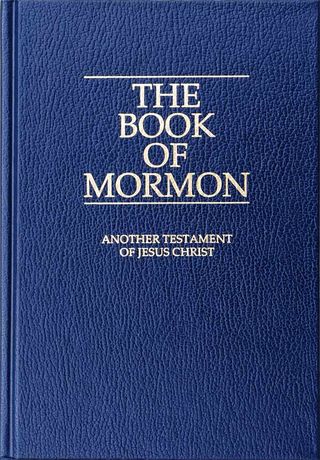
In various races, we might be asked to vote for candidates who are Mormon.
While they may be very nice people and may even share many values with Christians, Mormons are not Christians. They do not have valid baptism because they are polytheists. That is, they believe in multiple gods. This so affects their understanding of the baptismal formula that it renders their administration of baptism invalid and prevents them from becoming Christians when they attempt to administer the sacrament.
Unlike other polytheists (e.g., Hindus, Shintoists), Mormons claim to be Christian.
Casting a vote for a Mormon candidate thus means casting one’s vote for a polytheist who present himself to the world as a Christian.
I can see situations in which that might be a morally legitimate option. For example, if one lived in Utah, where the only viable candidates in many races are Mormon, it could be morally legitimate to vote for a pro-life Mormon over a pro-abortion Mormon.
But matters seem different when we are talking about national races, such as the presidency.
To elect a Mormon to the American presidency would, to my mind, be a disaster.
It would not only spur Mormon recruitment efforts in numerous ways, it would mainstreamize the religion in a way that would deeply confuse the American public about the central doctrine of the Christian faith. It would give the public the idea that Mormons are Christian (an all-too-frequent misunderstanding as it is) and that polytheism is somehow compatible with Christianity.
In other words, it would deal a huge blow to the American public’s already shaky understanding of what Christianity is.
That means it would massively compromise a fundamental value on the scale of the abortion issue.
Faced with the choice of voting for a pro-life polytheist-claiming-to-be-Christian or a pro-abortion whatever, I might well choose to simply sit out that race and refrain from voting for either candidate, because voting either way would mean doing massive damage to America.
Note that I’m not in principle opposed to voting for polytheists. I could see, for example, voting for a pro-life Hindu over a pro-abortion monotheist. But a Hindu does not claim to be a Christian and thus does not risk confusing people about the core doctrine of Christianity the way Mormonism does.
I am also aware that the U.S. Constitution says that there shall not be religious tests for public office. Specifically, Article VI:3 of the document says:
The Senators and Representatives before mentioned, and the Members of the several State Legislatures, and all executive and judicial Officers, both of the United States and of the several States, shall be bound by Oath or Affirmation, to support this Constitution; but no religious test shall ever be required as a qualification to any office or public trust under the United States.
This has nothing to do with what I’m talking about.
What the passage means is that the government cannot bar a candidate for running from office based on his religion. I’m not proposing that it do so. It in no way means that the voters must disregard a candidate’s religion when deciding how to cast their votes. Voters are free to decide how they will vote based on any criteria they like, and they can and at times should take the religious beliefs of a candidate into account.
When a candidate’s election (or even nomination) would do grave damage to the American public’s understanding of what Christianity is, a value so important is in play that I personally don’t see how I could vote for such a person.
What do you think?
Not so much.
Just one more reminder that most diet advice is wrong.
I've been aware of this evidence for some time, but it's nice to see Scientific American publicizing and editorializing on the issue.
And in other news?
Hmmm. Let's see if we can think this through:
1) Government ends subsidization of student loans.
2) Students have to pay more per loan.
3) Students have to think more seriously about taking out a loan.
4) Students take out fewer loans.
5) Colleges have more pressure on them financially.
6) Colleges are forced to make prices more attractive to students
since they can't count on government subsidies on loans.
7) College rates go down.
8) Useless college programs and administrative bloat gets cut.
9) Some students decide not to go to college.
10) These students go to work instead.
11) Work helps economy.
12) These students also not saddled with enormous amounts of debt from
bloated college costs.
13) Colleges don't have as much pressure to dumb-down degrees to the
point anybody can pass since everybody is expected to go to college.
14) Quality of education goes up.
15) Devaluation of college degrees from the fact everyone has them
stops and college degrees improve in value.
16) Government pulls back ever so slightly from an area of the economy
and allows natural market forces to sort things out (to a degree).
17) One less reason for the government to keep more of our money as taxpayers.
What's not to like here?
GET THE STORY.

Click Play to listen . . .
or you can . . .
 CLICK HERE! |
|---|
. . . or subscribe another way (one of many ways!) at jimmyakinpodcast.com
SHOW NOTES:
JIMMY AKIN PODCAST 007: Is Michael Voris Right About Kneeling? (8/2/11)
Here is Voris's original video on YouTube:
http://www.youtube.com/watch?v=i8Qr36uGCQQ
And the original CNA interview with Cardinal Canizares Llovera:
And here's GIRM 160 (2011 ed.):
160. The Priest then takes the paten or ciborium and approaches the communicants, who usually come up in procession.
It is not permitted for the faithful to take the consecrated Bread or the sacred chalice by themselves and, still less, to hand them on from one to another among themselves. The norm established for the Dioceses of the United States of America is that Holy Communion is to be received standing, unless an individual member of the faithful wishes to receive Communion while kneeling (Congregation for Divine Worship and the Discipline of the Sacraments, Instruction Redemptionis Sacramentum, 25 March 2004, no. 91).
When receiving Holy Communion, the communicant bows his or her head before the Sacrament as a gesture of reverence and receives the Body of the Lord from the minister. The consecrated host may be received either on the tongue or in the hand, at the discretion of each communicant. When Holy Communion is received under both kinds, the sign of reverence is also made before receiving the Precious Blood.
Podcast: Play in new window | Download
The Nook upload of Mass Revision is now complete also. Barnes & Noble says it will be live in 24-72 hours. Will post again when that happens.