Getting a thumbs up from Usama bin Laden probably didn’t help the film’s chances at the Oscars, either.
Category: Culture
Wormhole Physics
A reader writes:
I have a question that popped into my head while watching the Sci-Fi Monday marathon.
If all energy/data is one-way in a worm hole, how is it possible for an off-world team to communicate with the SGC?
Please don’t underestimate that a reasonably mature ____ year old man, who evidently doesn’t have enough things on his mind, is asking. Please don’t tell my wife!
Will do! (Or perhaps that should be, “Won’t do!”)
Happy to oblige on this question. Here’s the answer:
When a body made of matter approaches the event horizon of an active wormhole, it is instantaneously translated into patterns of energy that can only travel one way (whichever way the wormhole is flowing, to or from a particular stargate). Trying to force matter through a wormhole the wrong way results in it being disintegrated (as normal) but the resulting patterned energy stream can’t flow backwards through the wormhole and so it is never reintegrated.
(Also, wormholes normally only transmit bodies in their entirety, not parts of them, so you can pull a partially-disintegrated object back out of a stargate and have it reintegrated. It’s only when the object wholly goes within the event horizon that it is transmitted along the wormhole–assuming that it has entered the “transmitting” end of the wormhole.)
This is what happens with matter, but ordinary energy (i.e., not energy that is matter patterend by the stargate for transmission) isn’t affected by the one-way rule that applies to converted matter. As a result, normal E/M energy can travel two-ways through a wormhole, as when the M.A.L.P. communicates with Stargate Command by radio.
Got it?
Are Ya Ready, Kids???
 SPONGEBOB SQUAREPANTS SEASON 2 IS OUT!!!
YEE-HAW!!!
BUY IT WITH SPONGEBOB SQUAREPANTS SEASON 1!!!
Ahh . . . can nautical nonsense be more sublime?
Maj. Samantha Carter (a.k.a. actress Amanda Tapping)

The cutest part of the Stargate universe.
(Sigh.)
(And smart too!)
(Sighhhhh.)
(Where do I enlist?)
(Sorry. Couldn’t resist.)
Jesus vs. Michael Moore
Your DVDs Are Obsolete!
. . . or they will be . . . sooner than you imagine.
Here’s the deal:
You know how George Lucas announced at first that he wouldn’t release the original Star Wars trilogy on DVD until after Episode 3 comes out in 2005–then he released it suddenly last month?
You know how they are currently releasing Star Trek: Voyager season-by-season on DVD and then decided to release the original Star Trek series on DVD at the same time–instead of maximizing their profits by getting one series completely out and then releasing the next so that it doesn’t overtax the Trekkies’ pocketbooks?
You know how they are currently talking about releasing Star Trek: Enterprise on DVD next year even though the series isn’t even complete yet (contrary to the normal way Star Trek series are released)?
You didn’t know that? Well, now you do.
There’s a reason for all this sudden releasing of DVDs.
The reason is called Blu-Ray.
Blu-Ray is widely viewed as the REPLACEMENT for DVDs. It is expected to make DVDs obsolete.
The Blu-Ray format uses disks the size of CDs/DVDs but packs 25-50 gigs of data onto them (that’s 13-26 hours of programming, compared to 2-4 hours of programming in the DVD format). One Blu-Ray disk could hold a whole season of a TV program.
And if you want video quality rather than quantity, Blu-Ray beats DVD by similar margins. It can pack far more HDTV onto a disk than something in DVD format could.
As a result, Blu-Ray is expected to be the hot new format that will make DVD obsolete. It has the major industry players behind it, who are currently developing commercial versions of their Blu-Ray players/recorders.
These are expected to hit the market in 2005-2006.
That’s why we’re getting all these sooner-than-expected DVD releases right now.
The companies are afraid that Blu-Ray will roll right over DVD and quickly make it obsolete, depriving the companies of their chance to make money off the DVD format. So they’re rushing DVD releases of their programs out in anticipation of Blu-Ray bursting onto the market.
Is this a sound marketing strategy?
Well . . . I’m glad to be able to get DVDs of favored stuff sooner-than-expected. But I doubt the release of Blu-Ray will change things too much. I’ve already got Bablyon 5 on DVD, so I’m not inclined to buy it on Blu-Ray just so I can reduce the number of disks I have to put into the player in order to watch the whole thing in one run.
You’ll have to decide for yourself whether you want to buy DVDs now or wait for Blu-Ray versions of your favorite programs to start to be released (probably several years from now).
Papal Cab

The Facade
 This summer when I was doing my 4000 mile road trip through the South and Southwest, I visited Roswell, New Mexico–y’know, the site of the famous “UFO crash.”
While there gawking at all the alien stuff on Main Street, I looked up and saw a building with a sign saying “Alien Resistance HQ.” It turned out to be a kind of Christian coffeeshop (“Defending the Planet, One Tasty Beverage at a Time”) using the “alien resistance” schtick to draw in New Agers visiting Roswell.
I had a talk with the gentleman who owns it. He’s very nice. From Detroit. An ordained Protestant minister. He founded a Christian motorcycle club. And now he spends his days evangelizing New Agers at Alien Resistance HQ. He also believes that the earth is hollow and that that’s where UFOs come from.
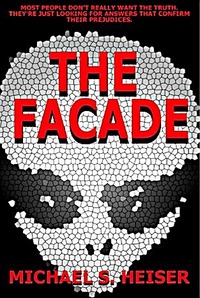
While at Alien Resistance HQ, I looked over the books and DVDs he had for sale. One was the book on the left. At the time, I didn’t buy it, but I did buy a DVD of a lecture by the book’s author, Michael Heiser (not the same as the guy who runs the coffee shop).
In the lecture Heiser–who is a scholar of ancient near eastern languages–critiques Zechariah Sitchin–who is a fake scholar of ancient near eastern languages.
In case you aren’t aware, Sitchen has published a number of books that are all the rage in the UFO community. In these books, he claims to have deciphered ancient texts that show that there is a planet in the outer solar system that swings into the inner solar system in a multi-thousand-year orbit. This planet is, according to the ancient texts, the home of an advanced race that gave rise to humanity and that is the basis of various world religions. He also claims they’re mentioned in the Bible.
This is, of course, pure bunkum.
Sitchen’s claims are absurd. They are not based on textual scholarship, because Sitchen has no scholarship. He is a fraud, pure and simple.
I’ve thought about critiquing Sitchen at some point, but haven’t had the occasion yet, so I was interested to see Heiser’s lecture. Got the DVD. Watched it. And it was good! I was quite pleased. Heiser takes Sitchen to task in a very gentlemanly but very devastating manner.
The lecture was so good that I decided I wanted to read Heiser’s work, including his novel, so I ordered it and read it while I was on the way to this year’s Catholic Answers Cruise. I’d like to recommend it to those who would be interested. Here’s the scoop . . .
The Facade is a novel in which Heiser explores the modern UFO phenomenon and ideas he has been pondering about aliens and how they might be related to the Bible. At the center of the novel is a character who is basically a knock-off of the author: a (then) still-in-school scholar of ancient near eastern languages who happens to have a strong interest in UFOs and something called “the divine council” (more on that in a minute).
A lot of this character’s biography seems to overlap (or at least reasonate) with Heiser’s at the start of the novel, but then the character’s biography takes a sharp turn. He is abducted by government agents who take him to a secret base where various experts have been gathered to try to help figure out how to break the news to the public of a crisis that proves the existence of extraterrestrial life. But, the reader quickly finds out, the agents running the discussion group are lying to the experts about the situation. The questions are: What is really happening here, and what–if anything–can be done about the true crisis?
The novel starts slowly. At first the experts do what experts typically do: Sit around in conference rooms and argue with each other. These discussions perform the function of getting the reader up to speed on the concepts that the novel will involve (which many readers will find fascinating), but the first part of the novel could really use some action. There’s too much “tell” and not enough “show.”
This changes, and the plot kicks into high gear. By the end of the book dramatic reversal is piling on top of dramatic reversal in a way that keeps the reader guessing until not just the book’s final pages but–for many readers–its final sentence.
I have to commend the author on several points for which he deserves a lot of credit:
1) He has written a book that attempts to seriously grapple with the question of extraterrestrial life from a conservative Christian perspective. There are hardly any books out there that do this, particularly in the direct way that this one does. It forces the reader to think through several different scenarios about what it would mean for Christians if extraterrestrial life was discovered in our day.
2) Though the main character (representing conservative Evangelicalism) does get the best and most crucial insights, the author makes a real effort to spread the credit around to characters with different viewpoints. It isn’t as if everyone else is a bumbler who has to be corrected by the Evangelical. Characters from other perspectives–including unsympathetic characters–get to contribute important insights. The author could have gone even farther in this direction–for example by having the Evangelical only know about the Bible and ancient languages and have the UFO insights all contributed by others–but Heiser deserves credit for not having the novel simply involve a set of lectures by a know-it-all representative of his position.
3) In fact, the main character has significant flaws. He’s not in constant mortal sin or anything like that, but the effects of the Fall are clear in him. He isn’t a macho, athletic, self-confident, Doc Savage kind of scholar-hero. He’s more of an ordinary, nerdy, sincere Christian guy thrust into extraordinary circumstances.
4) The author also gives sympathetic treatment to Catholic characters. The chief ally of the Evangelical expert is a Catholic expert who happens to be a Jesuit. This character is portrayed quite sympathetically and he gets to contribute important insights (including a major one that escaped the Evangelical hero, even though it was in his own field). The author doesn’t get all of the Catholic stuff in the novel a hundred percent right (in fact, a couple of things are silly), but he’s making a serious and respectful attempt to incorporate Catholic Christians into the novel. (Also, though John Paul II doesn’t appear and is dead by the time the novel begins, he is spoken of in glowing terms.)
5) There is a conversion of sorts that occurs during the course of the novel, and it is handled far, far better than conversions typically are in novels (of this or any sort). There is no “praying the sinner’s prayer” moment, and the author shows an awareness that serious conversions usually take time and are not complete all at once. In fact, this conversion isn’t quite complete by the end of the novel, but the character in question is far down the road to redemption.
6) The author is willing to deal with subjects that would be utterly taboo in many Evangelical novels. This means, in part, that some of the subjects discussed in the novel make it not suitable for children, though that material is slight. (Also, in case you’re wondering, nobody “does it” in this novel; it wasn’t written by Andrew Greeley, after all.) It also means that he does some really cool dramatic moves. Some of these pertain to the climax of the novel, and I was delighted to see them. The last sentence, in particular, does something few Evangelical authors would have the guts to do. (It also sets up a potential sequel.)
7) The author also explores modern UFO mythology from a sympathetic but skeptical perspective. He offers conjectures about the Roswell crash, for example, that you don’t hear very often.
One of the centerpieces of the novel is the idea of “the divine council.” Before the novel began the author’s character got himself into trouble by discussing this concept in an injudicious manner among Evangelicals, and I suspect that the author has done the same thing in real life. There are a few techniques the author could use to neutralize potential criticism on this point, but he’s onto something real here.
The basic idea is that in the ancient near eastern cultures–including Israelite culture–heaven was envisioned as a divine royal court with God (or the chief god) as the king. In addition to the king, the court also contained princes, counselors, military figures, and even a prosecutor (i.e., Satan). At the bottom of the heavenly court or “divine council” were the messengers, who we know as angels (since that’s what the word angelos originally *meant* in Greek: “messenger”; the same was true of the equivalent Hebrew and Aramaic terms). Over the course of time much of this imagery faded from popular consciousness and everybody in the divine council tended to be referred to as just angels, but the traces of the original divine council metaphor are still there in the Old Testament. (This is something I wrote about a number of years ago, though I could do a better job of it now.)
The author uses the novel to introduce the concept of the divine council to his readers, and although some things in the resulting angelology he offers are quite questionable (e.g., the degree to which members of the divine council might be able to assume biological form), it is still nice to get an obscure concept being introduced to a wider audience. Up till now, it’s tended to be just scholars who have been aware of it.
All told, The Facade is a fascinating exploration of how the idea of extraterrestrial life might square with the Christian faith, and I would recommend it to anyone who would like to see this question wrestled with in fictional form.
P.S. *DO NOT* spoil the last sentence for yourself!
TV Shows I Want To See
The other day I was watching an interview program on TV, and the discussion went something like this:
INTERVIEWER: Do you feel ashamed of what your political party did the other day?
GUEST: I think that what they were really trying to do was signal their concern about this urgent problem.
INTERVIEWER: You didn’t answer my question: Do you feel ashamed of what your party did?
GUEST: I’ll tell you who should feel ashamed of what they’ve done. It’s the other party!
INTERVIEWER: Again, you didn’t answer my question: Do you feel ashamed of what your party did?
GUEST: I’m telling you that the other party need to be thoroughly ashamed of its actions!
At this point, the interviewer gave up and moved on to a new question. I must admit that what he had done thus far was pretty gutsy. He was asking a very pointed, “hardball” question of the guest, and stuck it to him three times. But ultimately, he folded and let the guest have his way in dodging the question.
So I want to give the interviewer credit for that. But by the third non-answer I was so frustrated with the guest that what I wanted the interviewer to say was: “Okay, you’re out of here. Persistent refusal to answer the question.”
That’s at the core of a TV show I would like to see on the air. I know, Bill O’Reilly has his “No Spin Zone,” in which he will reject answers that aren’t directed to the questions he’s asked, but he doesn’t eject guests who persistently refuse to cough up some kind of answer.
That’s what I’d like to see.
I’m so sick of watching political hacks (from *both* parties, though one seems to be worse than the other these days) dodge questions and refuse to give serious answers. This is something I feel particularly strongly about as someone who is called upon to give serious answers to people’s questions every week. Even when the answer is uncomfortable to give, I want to give it as a matter of principle.
But the political hacks who appear on TV these days don’t. In fact, for them doding questions is a studied art form. The better at it they are, the more they are admired in hack circles. But as Scripture says, what is praiseworthy in the eyes of men is abominable in the eyes of God. What they ware doing is a form of dehumanizing manipulation that treats the viewer as an animal to be tricked rather than a person to be persuaded. It does not elevate the discussion and deserves thoroughgoing condemnation.
Thus the idea for my show: People come on. The interviewer asks them a question, and they get three chances to give a straight answer. If they do give a straight answer (and, “I don’t know” is a straight answer) then they get a new question, up to the length of the interview segment. But if they don’t give one then the interviewer declares “You’re out of here. Persistent refusal to answer the question,” and the host brings in a new guest.
Of course, you’d need items lined up to fill the rest of the show in case of guest ejection, but I suspect there would need to be fewer filler-interviews (including pre-taped segements kept in reserve and rotated through so they stay fresh) than you might expect. If the rules are consistently enforced then guests will not make the mistake of refusing to answer. Those guests who are not prepaired to give straight answers will not come on the show, meaning that the show will have almost all quality guests who will raise rather than lower the standard of discussion and will treat the audience like people to be reasoned with instead of animals to be herded.
John Kerry’s Extra-Terrestrial Test!
SDG here with a startling clarification from John Kerry about his “global test” debate reference. As quoted in this CNN.com story, Kerry would seem to have a HIGHER authority in mind:
Asked during a town hall meeting in Hampton to explain what he meant, the Massachusetts senator said, “It’s almost sad; it’s certainly pathetic, because all they can do is grab a little phrase and try to play a game and scare Americans…
“And if they were honest enough to give America the full quote, which America heard, they would know that I’m never going to allow America’s security to be outsourced. That’s the job of the president.
“But I can do a better job of protecting America’s security because the test that I was talking about was a test of legitimacy, not just in the globe, but elsewhere.
“If you do things that are illegitimate in the eyes of the other people, it’s very hard to get them to share the burden and risk with you.”
WOW!
John Kerry’s got a way to test the legitimacy of military action against EXTRA-GLOBAL standards?!
Do you suppose he intends to appeal all the way to the United Federation of Planets?!
If so, how much difference does he really think this will make? I hate to say it, but the Klingons have been quietly downsizing their military for decades now.
The Vulcans were in on the kickbacks for the oil-for-food program, and they automatically oppose whatever the Terrans do. They don’t care who is President of one measly super-power.
Heck, the Andorians were actively arming Saddam in the months before the war. And the Kardassians, who actually have the military capacity to make a difference, aren’t even Federation members.
So that doesn’t make sense. Hm, could Kerry possibly have an even HIGHER Court in mind…??!!!