. . . why shouldn't a blog series have a teaser trailer?
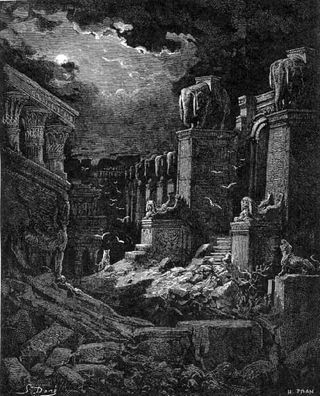 And after these things I saw another angel come down from heaven, having great power; and the earth was lightened with his glory.
And he cried mightily with a strong voice, saying, Babylon the great is fallen, is fallen, and is become the habitation of devils, and the hold of every foul spirit, and a cage of every unclean and hateful bird.
For all nations have drunk of the wine of the wrath of her fornication, and the kings of the earth have committed fornication with her, and the merchants of the earth are waxed rich through the abundance of her delicacies.
Or . . . perhaps in this case I ought to say "Sodom is risen" rather than "Babylon is fallen."
Either way.
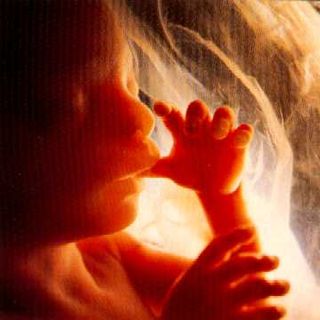 . . . that when I first read about "abortion doulas," I wasn't sure about the meaning of the word "doula."
Well, I recognized the origin of the term. It was clearly derived from the Greek word "doula," which means "female slave" or "female servant" or "handmaiden" or things like that.
But I wasn't aware of what it meant in a twenty-first century, English-speaking context.
It turns out that doulas are women who aren't midwives but who assist pregnant mothers during the act of giving birth and/or after the child has been born.
Unfortunately, I'm not a father. My wife died before we were able to have children, so I'm not up on some of the terminology . . . at least in the home-birth movement.
I suppose my recognition of the origin of the term reveals me as a nerd, while my failure to know its current meaning reveals me as a n00b.
Still . . .
I CAN SPOT A BIOMEDICAL HORROR WHEN I SEE ONE.
Your thoughts?
Okay, I’ve been writing all day on deadline, and it’s late Saturday night, but in fulfillment of my resolution to blog at least something every day in Lent (except Sundays), I hereby present the following video from the International Space Station.
As Dr. Erhardt would say . . . Enjoy!
 So there's a news story from across the pond explaining how Parliament has just inserted a provision in a sex-ed bill that allows "faith schools" (i.e., Catholic ones, etc.) to tell their students that things like contraception are wrong.
Terribly nice of them, isn't it?
Mind you, they're not letting the schools refuse to teach how to contracept. Oh, no. Children must still have to have a full, robust course of the how-to's.
So the message that "faith schools" will be required to give is, "Contraception is wrong according to our faith. Now here's how you do it anyway . . . "
Satisfying compromise, eh wot?
Tea and scones, anybody?
Oh, and homosexuality apparently gets similar treatment.
 A reader writes:
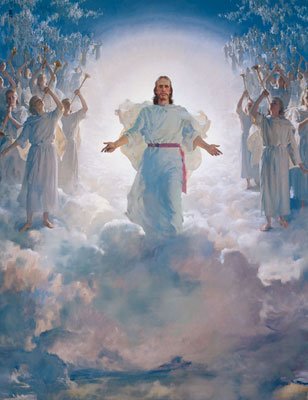
Could you recommend some good materials on understanding prophecy in Scripture? I found myself in a discussion with a Seventh-Day Adventist who is delving into how Daniel and Revelation are both meant clearly for today.
I'm familiar enough with SDA and their narrative in National Sunday Law to know that they're laser-focused on the Second Coming, but they weave the prophets together in such a complex narrative that it's tough to unweave for them despite the rhetorical errors.
I pointed out that it's contrived and perhaps egocentric to think the Spirit would give prophecies to 3rd century BC Jews that would only become relevant for 19th century Americans, but he just throws more Scripture at me and then links to yet another retelling of the National Sunday Law. So I need to speak in their language in order to proceed.
The point you make contains a great deal of validity regarding when in history most biblical prophecy refers to. Though there certainly are parts that refer to the distant future from the viewpoint of the original audience, most of it–at least on the literal level–was meant to have its primary application either to their own day or within a generation or two of their own day. Unless the nature of a particular passage shows otherwise, the default assumption should be that the primary fulfillment was ancient.
This is not to say that prophecies can't have secondary fulfillments. They can, and many may have secondary fulfillments close to the end of time, but normally the primary fulfillment happened near the time of the ancient audience–because that was usually the driving force in biblical prophecy: Helping people know how to live in their own day (turn away from those idols! stop oppressing the poor and the widow and the orphan!) and how to deal with calamities that could result (the Babylonians are going to kick your behinds if you fight them! here's how you should do instead!).
In terms of where to read more, I can suggest several things I've written: HERE, HERE, HERE, and HERE.
Though not dealing with Adventism specifically, these do offer the framework of a Catholic way of viewing the issue (there is lots of room for other opinion, though).
Regarding Seventh-Day Adventism and how to respond to it, you can find more information HERE.
Hope this helps!
(NOTE: Image Source.)
 POSSESSION IS NINE TENTHS OF THE LAW.
And . . . er . . . what kind of possession are we talking about?
 One of the interesting phrases in Paenitemini occurs in this norm:
II. 1. The time of Lent preserves its penitential character. The days of penitence to be observed under obligation throughout the Church are all Fridays and Ash Wednesday, that is to say the first days of "Grande Quaresima" (Great Lent), according to the diversity of the rites. Their substantial observance binds gravely.
So the substantial observance of the days of penitence binds gravely. What does that mean?
Clearly the inclusion of the word "substantial" is meant to qualify what is being said. (The word "substantial" is a qualifier. Duh!) Pope Paul VI could have simply said "Their observance binds gravely." But he didn't. He included the word "substantial."
This suggests that it would be possible to fail to observe the days of penitence in some lesser degree and it would not result in a grave sin.
This would not be worth pointing out if we were talking about people who forgot it was Friday and ordered a hamburger for lunch and ate it without realizing. In that case we have innocent ignorance preventing the commission of a mortal sin.
It also would not be worth pointing out in the case of someone who forgot it was Friday, ordered a hamburger, and realized it was Friday only after having taken a bite out of it and then quickly swallowing the bite, not knowing what else to do. In that case we would have lack of full consent preventing the commission of a mortal sin.
Finally, it would not be worth talking about this in the case of necessity–e.g., someone with a medical condition–because the necessity would excuse from the obligation to observe the elements of penitential law they impinge on.
In the first two cases we would have mortal sin averted because one of the conditions needed for mortal sin (knowledge or deliberate consent) would be lacking. In the third case the obligation itself would cease.
So Paul VI could have simply said, "Their observance binds gravely," and the ordinary application of the principles of moral and pastoral theology would have allowed for inadvertent, non-deliberate, or necessary failures to observe the law to be non-grave.
But he included the word "substantial," suggesting that there could be some degree of knowing, deliberate, non-necessary failure to observe the penitential days and yet it would not result in mortal sin.
Only "substantial" failure to observe them would be grave matter and thus potentially mortally sinful.
Then there would be the question of whether substantial failure of a single day of penance or of the whole complex of penitential days would be gravely sinful.
So it's understandable that people would wonder exactly what Paul VI meant here. I haven't tried to determine the answer in detail, but I have noted that the inclusion of the word "substantial" is meant to have a softening effect, in keeping with Paul VI's overall relaxation of penitential discipline. I don't see how it could be otherwise since he could have just said, "Their observance binds gravely," and left it at that.
Oh, and here's . . .
THE BIG RED DISCLAIMER: I'm just trying to explain the law here. That doesn't mean I personally favor the content of the law. I'm just trying to be clear and honest about what the law is. If you think my understanding of the law is wrong, fine. Feel free to show evidence to the contrary. If you don't like the law itself, feel free to say so, but bear in mind that I'm not the one who made the law.
Recently I was reading in Canon Law Digest, and in the volume (vol. 6) that covers the year Paenitemini was released (1966), I found a couple of items of interest.
The first is that, at the front of CLD's presentation of the norms of Paenitemini, there is a footnote which says,
A notable commentary by Bertrams on what constitutes substantial observance was published in L'Osservatore Romano of 20 Feb, 1966. See Note following the reference at the end of this document.
"Bertrams"–who is not otherwise identified except as a priest–I believe to be Wilhelm Bertrams, S.J., a noted canonist who taught for many years at the Greg and who was active in this period.
L'Osservatore Romano, at the time, was much more of a house organ than it is today. If something was printed in it, you could treat it as a significant indicator of the Holy See's thought.
Now they'll take anything. Reviews of The Simpsons, top ten lists of rock albums, kissy-kissy pieces for President Obama, anything! They're so into being "hip" and "relevant" now that they've jettisoned their gravitas and converted from being a reliable indicator of Vatican thought to just an orthodox Catholic publication that the Vatican happens to own.
But back in 1966, publishing a commentary on a papal document in L'OR meant something–and it especially meant something if it appeared February 20th, just three days after Paenitemini was signed on February 17th. Given the lag between signing and publication, it very well may have appeared in the same issue of L'OR as a companion commentary on the main document (something the Holy See often does).
So let's look at what Fr. Bertrams said in his note:
We think that the word "substantial" was chosen designedly, especially in order the better to show the personal responsibility of each one before God, so that every one may practice penance in spirit and in truth, without insisting too much on the traditional distinctions of casuistry between grave and light matter in the violation of the law. Consequently, a single violation could not be considered a grave sin, but the repeated and habitual violation would certainly be grave.
Hence the more serious and sincere is the will to practice penance on the days and in the manner prescribed by the church, the less inclined one should be to consider a partial violation as grave. The more serious the reason which prevents the observance of the law, the less grave will be the transgression. If the reason is really proportionately grave, it is certain that all obligation ceases. This may occur in case of illness, where one cannot take other food because of infirmity, where meals must be taken in common, in travelling when there is no choice, and so on. but when these excuses occur, there remains the obligation of divine law to practice penance in some other way according to the particular condition of the person.
It is clear that Fr. Bertrams, and thus L'OR before it decided to try to be hip, sees Paenitemini as trying to get away from the traditional manual theology way of (e.g., "This particular violation would be light matter and so a venial sin; this other violation would be grave matter and thus could be a mortal sin"). Rather than having people try to cut the pie that way, the message is: Just be serious and sincere in your intent to observe the laws regarding penance and don't worry so much about an individual infraction. As long as you mean to do what the Church does, an individual infraction won't be mortal.
In the second paragraph, though, Bertrams starts talking about cases where there would be partially or fully excusing reasons, which would have applied even before Paenitemini, so this introduces an element of confusion.
Perhaps not surprisingly, a year later the Sacred Congregation for the Council (predecessor of the modern Congregation for Clergy) published a dubium on this issue, which is found in the same volume of Canon Law Digest:
Questions: I. Whether the substantial observance of days of penance, which is declared to be of grave obligation in the dispositive part of the Constitution Paenitemini, II, § 2, of 17 February, 1966, refers to the individual days of penance which are to be observed as a matter of obligation in the whole Church;
II. Or does it refer rather to the whole complexus of penitential days to be observed with the penances attached to them.
Replies: The S. C. of the council replied, with the approval of the Supreme Pontiff Paul VI:
I. In the negative.
II. In the affirmative; that is, one sins gravely against the law, who, without an excusing cause, omits a notable part, quantitative or qualitative, of the penitential observance which is prescribed as a whole.
Given at Rome 24 February 1967.
I find this less helpful than it could be, but it again seems to be backing off the idea of focusing attention away from the individual penitential day to the observance of penitential discipline as a whole. So if, "without an excusing cause, one omits a notable part . . . of the penitential observance which is prescribed as a whole"–not apparently on a individual day per Fr. Bertram and the answer to question I–then one sins gravely.
There is still a lot that is obscure here, but it does seem that by the inclusion of the word "substantial" before "observance," Paul VI was trying to do something encouraging people not to focus so much on the scrupulous fulfillment of particulars and more on the overall spirit of doing penance.