I’ve been thinking about writing a book to help people dealing with end-of-life situations. Between the deaths of my wife and my parents and other family members, I’ve been through enough of them that I’ve had to think hard about the spiritual, moral, and evangelistic aspects of these situations.
If I am able to write such a book, one aspect that I will definitely cover is the need for humility and caution in assessing the sick person’s will to live.
Very frequently these days people end up in situations where they cannot speak for themselves and clearly communicate what kind of care they want or whether they even want care. In such situations, family members are typically consulted, and this can cause a rift inside the family as they try to figure out what their loved one would want.
This is one of the most painful kinds of conversations for family members to have, and it if goes the wrong way, it can permanently injure relations in the family. “You killed Dad!” or “You wouldn’t let Mom die with dignity!” are things that can haunt families for years after the event, permanently turning people against each other. (I am very thankful to say, however, that my own family was able to get through the difficult days without such damage being done—and in spite of the fact that I’m the only Catholic in my immediate family.)
Sooner or later the “Do you want to pull the plug?” question is going to be presented to virtually every family, and it’s good to be prepared for it.
In some cases the patient may have left explicit instructions, but often not. Sometimes family members will remember (or think they remember) things the patient said in conversation about what they would want if something terrible happened. Other times they won’t have such memories and will simply rely on their feeling of what the loved one would want.
Regardless of which of these is the case, there is reason for great caution here. The stakes are, after all, life and death.
But there is another reason for caution: None of these things—from explicit written instructions to the vague feeling of what someone would want—is a good indicator of what they actually would want now that they are in the situation.
Certainly, pre-written instructions are a better indicator than a gut feeling assessed in a moment of crisis. If someone has taken the trouble to write instructions in advance then those instructions are more likely to reflect the settled views of person in question. But the thing is . . . views change. Particularly when we’re put in a dramatically different life situation.
There is also a danger of the loved ones, without fully realizing it, simply taking the easy way out—regardless of what that easy way is for them.
For some people the easy way would be for the loved one not to want to continue treatment. Under the pressure of watching a loved one dying they are emotionally worn out and in pain and they are ready for it to be over. It’s not that they want their loved one to die. But they can’t stand seeing the loved one suffer and want the mutual agony to be done with.
This is a human response.
But it poses a danger of leading the relative to believe what is convenient rather than what is true. In this case what is convenient would be for the loved one to want to discontinue treatment, and so the relative starts feeling certain that the loved one would never want to live this way. That would be preposterous. Of course they would just want to let go and die in peace.
And if there are a few dimly-remembered conversations that might support this view then they will be taken as proof positive. There even might be a little exaggeration used to help convince doubtful relatives who are also being consulted.
But even if that isn’t the case. Even if the person clearly expressed a preference, that preference may no longer apply.
A good illustration of that is the case of the British man in this news story from July:
Richard Rudd was paralyzed and brain damaged after being injured in a motorcycle accident last October and suffering subsequent medical complications. Treated in Addenbrooke’s Hospital in Cambridge, England his family thought they knew he would not want to live.
“We said that knowing Richard, there was no way in a million years that he would want to live with his injuries,” his father told the Daily Telegraph. Rudd had told his daughter that if he suffered a severe injury in an accident like a car crash, he “wouldn’t want to go on,” Rudd’s father reported.
Rudd’s father gave permission for treatment to be withdrawn. As hospital staff gathered around Rudd’s bed, they noticed he was able to blink his eyes for the first time in several weeks.
The doctors asked Rudd three times whether he wanted to continue to live. He blinked “yes” in reply to each of their three questions.
Rudd was lucky, to say the least. No doubt there are vast numbers of people who aren’t.
But his case is illustrative of the fact that someone—when feeling able and healthy—could decide that they don’t want to live if it means the kind of existence Rudd is facing, yet when they’re actually in that situation they decide that they do want to live after all.
Rudd’s case is thus a valuable cautionary tale: We must recognize that past statements are not a good guide to what someone would actually want in this kind of situation. And especially we must not allow ourselves to believe what is convenient for us—the relatives— and what will help ease our own suffering.
This goes both ways, though.
Just as a person can change his mind about wanting to die, so he can change his mind about wanting to live.
There may be—and no doubt are—many people who when healthy and active think, “I’d want them to do everything to keep me alive, no matter what shape I’m in.” Yet, when they get down to the end of live, they may change their mind and say, “You know, I’m ready to go. I’m ready for this suffering to be over.”
In the same way, if they can’t speak for themselves, their relatives may make the same mistake of believing what is convenient rather than what is true. There are people—not as many as their used to be given our society’s growing death ethic—for whom the easy thing would be to keep the loved one alive as long as possible, for any number of reasons. They may find themselves thinking, “Of course this person would want to live! They would want everything done to keep them alive!” And perhaps the person even said this in the past, though now the person would say differently.
The point is that people’s minds can change and that we must cross examine our feelings when we are being asked these questions. We must make sure we are not just choosing what is easy and convenient for us to believer rather than focusing on what is true.
I’m afraid that I don’t have a magic solution, here. I wish I did!
Obviously, committing an immoral procedure—such as deliberately killing the patient or withholding nutrition and hydration that they would be capable of assimilating—is off the table. And, if the patient can’t speak for himself then previously written instructions are the best available guide, followed by clear memories of what the patient said, followed by fuzzy ones, followed by gut instincts. And the default should be in favor of preserving life.
But there is no one-size-fits-all solution to the question of when to end treatment. All too often a judgment call is involved.
The case of Mr. Rudd from England highlights the fact that people’s opinions can change and that we need to be cautious—and prayerful—in making these decisions.
What are your thoughts?


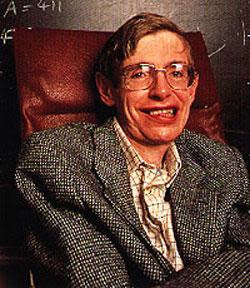 In their new book,
  , co-authors and physicists Stephen Hawking (pictured) and Leonard Mlodinow argue that God is not necessary to explain the existence of the universe as we experience it.
 Al Gore Lied, James J. Lee Died.