The Immortality Of The Soul

A reader writes:

Being starved for Catholic radio out here in the Bay Area, I find myself turning to an Evangelical radio station during my commute. Today, I heard a commenter saying something like this: that it was clear that the old testament writers didn’t believe in an immortal soul. The bible teaches we will be raised from the dead to everlasting life, but it doesn’t mean that our souls are immortal, that is, that our souls are alive while our body is dead.  This is an idea that is more common in Greek philosophy, he explains, but is not biblical.

Have you ever heard this theory bandied about? How would you respond to that?

There are a number of different groups that have variations on this idea. The Jehovah’s Witnesses (who are not Protestant or even Christian), for example, hold a physicalistic understanding of the spirit that basically precludes its existence between death and resurrection (meaning that there are serious questions about wheter you are still you at the resurrection). That view is not common in Protestant circles, however.

More common in Protestant circles is the idea of "soul sleep," which is that you do have a soul that continues to exist between death and resurrection but that it does not have conscious experience in the interim and is thus "asleep." Luther seems to have held this view, as do Seventh-Day Adventists and a few other groups, but it has been quite uncommon.

MORE INFO ON THESE TWO VIEWS HERE.

I can’t tell from what you said whether the gentleman you heard on the radio was saying that the Old Testament writers didn’t believe in an immortal soul or whether he was saying that it is untrue that there is an immortal soul.

These two positions are not the same. One could hold that the Old Testament authors did not believe in the immortality of the soul because this doctrine had not yet been revealed but–since it has been revealed in the New Testament–we now know what they didn’t.

If he meant this latter position then I would say he at least has part of a leg to stand on. The idea of the afterlife is not sharply defined in the Old Testament, and it is not clear what most Jews believed about the afterlife at this time. Indeed, they may not all have believed the same thing. The Old Testament spends very little time discussing the afterlife; it is focused primarily on salvation from dangers in this life rather than salvation from hell after this life, so we don’t have enough data to draw firm conclusions about the particulars of how the afterlife was conceived in this period.

We do have enough data, however, to establish that at least some Jews (and almost certainly the great majority) did at least acknowledge the existence of the afterlife.

For example, the fact that, when various patriarchs die, they are regularly said to be "gathered to their people" suggests a reunion with those who have died. That phrase is a little ambiguous, though, but here is something that is not: If belief in an afterlife was not common among the Jewish people then God wouldn’t have had to warn them against using mediums and spiritists to call up the dead.

There also is at least one passage in which the fate of a particular figure is prophecied and it describes the descent of his soul and its encounter with other souls, who recognize who it, is described. That occurs in the prophets, so one could interpret it non-literally, but one passage that is not vulnerable to this objection is the situation in which Saul has the witch of Endor summon up the spirit of the departed Samuel.

I know that there have been some (more out of a desire to say you can’t call up the dead than anything else) who have speculated that it was a demon impersonating Samuel, but this is not the way the text depicts the situation. The text presents it straightforwardly, as if the witch really did call up Samuel’s spirit (presumably by a kind of divine dispensation, since Samuel immediately prophesies Saul’s doom, which then comes to pass).

Whether or not it really was Samuel’s spirit, the passage attests to Israelite belief in the afterlife–and not just any kind of afterlife, but on in which the soul continues to exist between death and resurrection. If that’s not what you believe then there’s not point in trying to contact a dead guy.

So if the gentleman you heard on the radio was saying denying the presence in the Old Testament of belief in this kind of afterlife then he was overstating matters. It would be more defensible to say that the concept of the afterlife was not clearly defined in this age and that there may have been some Jews who did not accept it (just as some Jews did not accept the exclusive worship of God), but to say that the idea is foreign to the Old Testament is simply inaccurate.

If the gentleman was going further and saying that we do not have souls that exist between death and resurrection then he will have insuperable problems when it comes to the New Testament, because Jesus’ parable of Lazarus and the rich man clearly envisions conscious human souls in the intermediate state. The fact that this is a parable also is not an issue, for even if there was not a specific Lazarus and a specific rich man who had this experience (something that is likely), Jesus’ parables nevertheless are populated by things from the real world. They are about kings and merchants and fields and farmers and servants and sums of money and other things–like conscious, departed human souls–that really exist.

Even if he wanted to be truculent on this one, he’d also have to face the book of Revelation, which unambiguously depicts departed human souls, before the resurrection, worshipping God and talking with him in the intermediate state.

The idea that we don’t exist or are not conscious between death and resurrection simply is not tenable.

By the way, since the gentleman was Protestant he wouldn’t accept this, but it’s worth pointing out that the second book of Maccabees also has a very explicit passage on the reality and consciousness of departed souls, for Judah Maccabee receives a vision in which he learns that the departed (and unresurrected) prophet Jeremiah prays for the people of Israel. Judah also sees the soul of a departed priest in this vision.

Korban & Sola Scriptura

A reader writes:

Dear Sir,

What is the Korban Rule, and why does James White make such a big deal about it when he speaks of sola scriptura?


A korban (or, more properly, qurban) was an offering made to God and thus consecrated. There were a wide variety of these in the Old Testament.

By the first century, a custom had arisen among Pharisees whereby sons would circumvent their obligation to care for their parents’ financial needs by consecrating to God the financial support that their parents otherwise would have received.

This came up in Mark chapter 7 when some Pharisees attacked the fact that Jesus’ disciples at with unwashed hands, contrary to the tradition of the Jewish elders.

Their having made tradition an issue, Jesus turned the subject around on them by pointing to their own misuse of tradition, and he cited the korban custom just mentioned, stating that it violated the Ten Commandments, which require us to honor our parents and, by implication, support them in their old age so that they do not become financially destitude (which was the fate of almost anybody back then whose children didn’t care for them once they could no longer work).

He therefore concluded that they were "making void the word of God through your tradition" (Mark 7:13) and stated "You leave the commandment of God, and hold  fast the tradition of men" (Mark 7:8).

I haven’t read or heard specifically what James White may have been doing with this passage, but it is a staple of Protestant anti-Catholic apologetics.

The reason is that in this passage Jesus sets the korban tradition in opposition to the word of God and this is frequently taken as an indicator that all tradition is opposed to the word of God or that there is a fundamental opposition between tradition and Scripture.

It is thus common to hear Protestant ministers and apologists waxing eloquent on this passage–and even getting emotionally worked up from the pulpit or behind the microphone about how horrible a thing it is to set tradition above the word of God–and how we must therefore cling to the precious principle of sola scriptura or "by Scripture only."

The problem, of course, is that this argument commits the logical fallacy of hasty generalization.

The fact that in this passage Jesus says that particular aspects of Pharisaical tradition are contrary to God’s word does not mean that all traditions are contrary to God’s word. Nor does it say that we must use Scripture only and not Tradition. The fact that one tradition or one set of traditions must be excluded does not mean that all traditions must be excluded.

This conclusion is made even more clear when one realizes that the New Testament praises other traditions, which are in harmony with God’s word.

Thus Paul tells the Corinthians, "I commend you because you remember me in everything and maintain the traditions even as I have delivered them to you" (1 Cor. 11:2), and he commands the Thessalonians, "So then, brethren, stand firm and hold to the traditions which you were taught by us, either by word of mouth or by letter" (2 Thess. 2:15). He even goes so far as to order, "Now we command you, brethren, in the name of our Lord Jesus Christ, that you keep away from any brother who is living in idleness and not in accord with the tradition that you received from us" (2 Thess. 3:6).

Paul also seeks to ensure that the apostolic traditions would be passed down after the deaths of the apostles, and he tells Timothy, "[W]hat you have heard from me before many witnesses entrust to faithful men who will be able to teach others also" (2 Tim. 2:2). In this passage he refers to the first four generations of apostolic succession—his own generation, Timothy’s generation, the generation Timothy will teach, and the generation they in turn will teach.

So from the perspective of the New Testament, Pharisaical tradition was unreliable and could be contrary to the word of God (not that it always was), while apostolic Tradition was normative and binding for Christians.

By the way, you may have some difficulty making some of these points to a Protestant who is using the New International Version. That translation displays a prominent bit of translator bias when it comes to rendering the term for "tradition" in the Greek text (paradosis). Whenever the term is used in conjunction with Jewish traditions, it renders the word "tradition(s)", but when it is used in connection with apostolic tradition (as in the passages above), it mistranslates the word as "teaching(s)." The net effect is to make tradition sound bad by hiding the positive references to it and using the word in passages where it is subject to critique.

Pop-Up Priests & Fireman Priests

A reader writes:

I’ve been looking for canonical or magisterial information on the practice of some priests (who are not presiding) who exit the sanctuary once they’re finished with the homily only to pop-in later to give communion to the faithful.

I argue that it shouldn’t be done because of the unity and continuity between the Liturgy of the Word and the Liturgy of the Bread.

They started this practice so they could have a single priest give the
homily for all the weekend Masses (5 in total at our parish).

You’ve got at least some traction here in the law, if they’re doing it on a weekly basis. According to the General Instruction of the Roman Missal:

66. The Homily should ordinarily be given by the priest celebrant himself. He may entrust it to a concelebrating priest or occasionally, according to circumstances, to the deacon, but never to a lay person.   In particular cases and for a just cause, the homily may even be given by a Bishop or a priest who is present at the celebration but cannot concelebrate.

The phrase "in particular cases" indicates that this should not be a habitual thing.

The reader also writes:

Related to this question, is a "fireman" priest who comes in to distribute communion always preferable to an extraordinary minister of communion?

Rome would have much less problem with this, because they really, really, really do not want extraordinary ministers being used unless they have to be.

This is indicated by the tenor of the way the issue is handled in the instruction Redemptionis Sacramentum:

[157.] If there is usually present a sufficient number of sacred ministers for the distribution of Holy Communion, extraordinary ministers of Holy Communion may not be appointed. Indeed, in such circumstances, those who may have already been appointed to this ministry should not exercise it. The practice of those Priests is reprobated who, even though present at the celebration, abstain from distributing Communion and hand this function over to laypersons.

[158.] Indeed, the extraordinary minister of Holy Communion may administer Communion only when the Priest and Deacon are lacking, when the Priest is prevented by weakness or advanced age or some other genuine reason, or when the number of faithful coming to Communion is so great that the very celebration of Mass would be unduly prolonged. This, however, is to be understood in such a way that a brief prolongation, considering the circumstances and culture of the place, is not at all a sufficient reason.

While this doesn’t explicitly say "priests who aren’t present can come in to distribute Communion," it establishes such a strong preference for ordinary ministers over extraordinary ones that Rome not only wouldn’t have a problem with this but might regard it as preferable.

The Dork Knight of Gotham

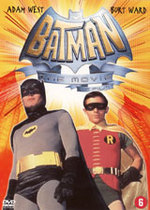
Batman_1
Being that two of my JA.O blogmates have posted recently on the topic of super-heroes, I had to throw in my two pfennigs.

A few weeks ago our family acquired (cheap) a copy of the original (Adam West) Batman movie (1966).

Okay, I admit it… I have no taste. I like this movie better than any of the darker, more recent Batman films (except Batman Forever) and it is a guilty pleasure that I have passed on to my kids. They have really enjoyed it. One measure of the success of a film in our house is when we go around for weeks afterward inserting bits of the dialogue into our everyday speech. Batman 1966 qualifies in spades.

The movie is campy, fun, clean, goofy, brimming with Bat-gadgets and fisticuffs, and boasts the greatest cast of Bat-villains ever. Like the classic Looney Toons, the humor of the movie (as well as the series) operates on different levels. As a kid I missed a lot of the grown-up jokes and sexual innuendo, but had a blast, anyway.

For the record, in this film Batman is intensely heterosexual.

The main reason I’m posting on Batman, though, is a scene toward the end of the film, where the President of the United States makes an appearance (more or less… we see his chair and one arm from behind). He sports a generic Texas twang and, though it isn’t really a straight impersonation, it is obviously meant to represent then President Lyndon Johnson.

What’s weird is that, though it doesn’t sound like Johnson, the voice sounds remarkably, uncannily like George W. Bush.

SEE IF IT DOESN’T!

[JIMMY ADDS: If you watch this movie, don’t miss the MUST SEE (!) "Some days you just can’t get rid of a bomb!’ scene. It’s hilarious!]

[JIMMY ALSO ADDS: There’s an interesting episode of the Batman TV series in which they play off Lyndon Johnson’s political misfortunes and the fact that due to his unpopularity he didn’t run for re-election when he legally could have. In this episode, Batman is running for mayor of Gotham City in order to stop a villain from getting the post, and the episode is transparently meant to be a "Batman runs for president" episode under the surface (e.g., they mention the cowboys and indians voting in the western precincts of Gotham City). At the end of the episode, after Batman has won and turned the mayorship over the the guy who really should be mayor, he is in Commissioner Gordon’s office when he receives a phone call from a major, unnamed political party asking him to be their presidential candidate. He politely declines, but he and the commissioner comment on how nice it was of "them" to ask. At this point, we have no idea which party it was that asked, but then Batman gets another call, from the other political party, asking him the same thing, and he replies, "I . . . thought your party already had a presidential candidate for 1968." ZING!]

La Invasora

Invasora

(NOTE: FWIW, this post was written several days ago, before the question arose about how often I say nice things about Latin Americans.)

When I moved to San Diego thirteen years ago, one of the things that I liked about the area was the ability it offered to listen to Spanish-language radio stations.

Faced with a lot of the junk on regular American radio, Spanish-language radio offered songs that were interesting musically and that featured lyrics that were often considerably more wholesome than what would be found on some English-language stations. (How many English-language songs have you heard about wearing a white shirt?)

But disturbing themes are present in the local Spanish-language radio market–like the image being projected by one of the most popular stations.

It’s call letters are XHTY (Mexican radio stations commonly begin with X instead of K or W) and its broadcast frequency is 99.7 FM, but it goes by the name "La Invasora."

What does "La Invasora" mean in Spanish?

"The Invader."

Here’s what the station’s web page says about it:

La Invasora is the fastest growing Spanish language radio station in San Diego. It’s the #1 Spanish language station in North County and #2 in the San Diego Metro area. *

San Diegans wake-up to El Levanton, one the best morning shows in town, which delivers humor, news, sports, great music and the hottest topics within the Hispanic Community with our popular personalities El Chon and La Chula.

La Invasora has high visibility in the market, obtained thru on going advertising campaigns on the top Hispanic television stations, print publications, billboards and community and grass roots events.

One of La Invasora’s specialties is producing high attendance events, such as Descarga Invasora Summer music festival in Tijuana had a crowd of over 45,000 in 2003 and our 4th of July music fest in San Diego drew over 25,000.

Station Profile:

La Invasora has a booming 60,000 watt Signal that reaches the greater San Diego/Tijuana area, the 3rd largest Hispanic market in the Country. Its format is the widely popular “Mexican regional” that plays a variety of today’s top Hispanic hits like Banda and Norteño collections.

Audience profile:

XHTY reaches a broad demographical and geographical are mainly composed 18-49 male and female demographic.

Now, the reason that radio stations adopt identities other than their call letters is because they think that the identity they craft for themselves will appeal to their target audience. For example, another local radio station (KPRI) has dubbed itself "Rock Without Rules," and it’s not hard to guess from its name that it wants to appeal to a younger, more rebellious audience than does station KMYT, which calls itself "Smooth Jazz."

Taking station marketing identities as a clue to who the station is trying to appeal to, what does it say when a local station starts calling itself "The Invader"?

In an English-speaking community in a radio market in the American Midwest, it might mean that the station is going after the same kind of young, rebellious market that "Rock Without Rules" is.

But when the language is Spanish and the market is mere minutes from the Mexican border and there are numerous people in the market who have crossed the border illegally, it takes on a different cast.

The cast is further affected when one realizes that there is an irredentist movement in the area in which some radical activists are advocating the idea that "Aztlan" (the American Southwest from California to Texas) should be flooded with illegal aliens who can one day gain sufficient strength to reclaim it for Mexico.

The fact that the station would conduct a massive marketing campaign for this identity, with logos like the one above put on busses, billboards, and auto decals, adds a rather brazen quality as well.

And the fact that the station is ranked as #1 or #2 in different regions of San Diego County in the Spanish-language radio market suggests that there are a significant number of individuals for whom the station and presumably  its identity are appealing.

Now, I have to issue

THE BIG RED DISCLAIMER: The identity a station crafts for itself is only a part of its success or lack of success. Not everybody who listens to La Invasora views himself or herself as an invader. There are undoubtedly many listeners who just like the music mix or the on-air personalities. Not all listeners are illegal aliens or even aliens at all. And not all listeners are supporters of the radical Aztlan irredentist movement; many are also undoubtedly patriotic Americans. So the mere fact that someone listens to and likes this station is NOT an indictment of that person.

But the fact that a station would choose a marketing identity of "The Invader" and be highly successful with it against a background of massive illegal immigration including radical activists who want to remove territory from the United States and add it to Mexico is at least disturbing.

It also, frankly, does not serve to foster good community relations between English-speakers and Spanish-speakers. Like the counterproductive wearing and waving of Mexican flags at the recent anti-immigration control rallies, having "Invader" logos all over busses and billboards and automobiles is more likely to inflame community relations than calm them.

Too much should not be made of the station and its chosen identity. It’s just a radio station and a marketing campaign. But it’s a straw in the wind that reflects a disturbing underlying situation.

G.I. Joe, Call Your Office!

Battle_wingsMan, if the guy in the photo on the left only existed in the real world, with real, functional flying wings like the ones he’s got on, that would be WICKED COOL, wouldn’t it?

Well, he does! And it is!

It turns out that

Elite special forces troops being dropped behind enemy lines on covert missions are to ditch their traditional parachutes in favour of strap-on stealth wings.

The lightweight carbon fibre mono-wings will allow them to jump from high altitudes and then glide 120 miles or more before landing – making them almost impossible to spot, as their aircraft can avoid flying anywhere near the target.

GET THE STORY.

Secret Project #4

A reader writes:

Jimmy,

Any updates on your secret projects?  I’m sure your readers would love to hear what’s going on . . .

I’m afraid that I really haven’t been able to push forward the three previously-mentioned secret projects of late. My schedule has just been too busy. (And is especially so now, which is fiscal year end for Catholic Answers, so I’ve had tons of administrative stuff to do, like budgets and planning meetings and such. The budgeting for next fiscal year has been particularly tricky since there is now the parallel organization Catholic Answers Action to take into account.)

I can, however, announce a new secret project–Secret Project #4–which has been green-lit and is going forward at a rapid pace.

This secret project is one that I have wanted to do for years, but the technology hasn’t been available and readily usable until now. It finally occurred to me, "This is what we need to pull this off!" So I went to Karl, proposed the project, and he enthusiastically approved it.

Soon we had the needed things set up, and now I and other apologists at Catholic Answers are working to get it to the point where we will be able to publicly launch it.

At which point I’ll be able to say definitely what it is.

That should be sometime this summer. 1-2 months from now would be my guess.

Once launched, Secret Project #4 will require some ongoing management, and we’ll have to refine the methodology as we go, but it has the potential to . . . what’s the right word? . . . "revolutionize"? (is that it?)  . . . the field of apologetics.

After I got the idea for it, I discovered that others have been attempting similar things, but unfortunately nobody has yet been able to bring to bear the kind of organizational muscle needed to allow this kind of project to fulfill its potential.

Catholic Answers has the muscle needed so . . . this’ll be big. (And controversial in some quarters.)

“I Do Not Expect To See You Or Your Father In Heaven”

A reader writes:

I was raised in a Protestant family, but I never really felt "at home" in the church in which I was raised, preferring instead the Catholic Church introduced to me by my best friend.  Not until  years later, however, did I finally feel ready to make the move and become an actual member of the Roman Catholic Church.

My relatives freaked out over my decision, and the years have not calmed them down.  I don’t argue with them, I certainly don’t try to convert.  I try, instead, to live by that little rule of St. Francis:  "Preach always, and sometimes use words".

Just last week, however, I received a letter from my mother.  She has always had a problem with the Catholic Church, and especially with my being part of it.  Here is part of what she said: "…I do not expect to see either you or your father in Heaven, where I know there is a place now ready for me…"  This letter came from her out of the clear blue sky, and I don’t know what to think about it.

I gather she subscribes to the "once saved, always saved" doctrine, and I am writing you to ask if I should try to address this with her.  It greatly saddens me that she would write such a thing, but I am not sure if I should say something in return, or just let it go.

As with any situation like this, there is no unambiguously right or wrong answer. It involves a judgment call based on your knowledge of your mother and what good could be done by addressing the subject with her.

It is understandable that you would feel sad and hurt by what she said to you. Sadness and hurt are the things that this statement would typically produce (along with anger) if something like this is said to a person.

I would try to understand what your mother said from her perspective, which is likely to be that she was trying to do you good.

At least, I assume that this is what she’s trying to do. (There are
emotionally abusive parents out there who simply want to hurt their
children, but I assume that your mother is not one of these.)

She believes that a certain set of requirements must be met for salvation, and she believes that you do not meet those. It therefore pains her to think that you will not be in heaven, and she is trying to spark your conscience in a way that could lead you to re-evaluate your spiritual life and end up being saved.

I would therefore try to look past the sadness and hurt (and, if needed, anger) that your mother’s comment caused and focus on the underlying fact that she was trying to help you.

It must be admitted that, if one thinks a relative’s salvation is in jeopardy, that there are better ways to help them than saying "I don’t expect to see you in heaven." For example, "I really want to see you in heaven, and here’s what I am convinced you need to do to get there." But however inelegant her attempt to help you was, I presume that her fundamental motive was good.

And that’s important. Focusing on it can help one get past the pain and disappointment such comments can cause.

As far as how to respond, there are a large number of options, but here are some that occur to me as potentially plausible ones:

1) Talk to your mother about how what she wrote made you feel.

This one has the potential to clear some emotional air between you, but it won’t address the underlying theological problem. Do it only if you feel it would have a reasonable chance of success. Otherwise, move on to the other options.

2) Do something to educate your mother about the Catholic faith in general.

Like giving her a book or some tapes that may clear away some of the misconceptions she is likely to have that may lead her to think that Catholics aren’t saved or aren’t Christians.

3) Do something to help alleviate her concerns regarding your salvation in particular.

For this I would talk or write to her directly, rather than giving her books or tapes. I would simply assure her that you love Jesus and that you are trusting in him and his grace for your salvation. I would point out that you can’t do anything good without God’s grace, that you cannot save yourself no matter what you do, and that your salvation is entirely due to God’s grace. Tell her that you love Jesus and you know he died to save you from your sins, and that’s exactly what you are trusting him to do.

This strikes me as a response that has one of the better chances of success, but if you feel it would be too direct for your mother you might . . .

4) Simply call her and tell her how much you love her.

Don’t mention the letter. Just shower her with love and try to shine the light of Christ in her life.

Or you could . . .

5) Simply pass over the letter without taking any special action.

In this case you should just try to be a good person and a good daughter, but not go out of your way, as in the previous response.

My own instincts would be to do something like #3, possibly in combination with some of the other options, but I don’t know your mom. I don’t know how she would respond to any of these. You know her and how she responds far better than I do, so you are in a better position than I to decide what the appropriate course of action is.

As with many interpersonal situations, there is no single obvious answer, and when confronted with an ambiguous situation, you just have to make the best choice you can and entrust the results to God.

Doing the best you can and then stepping out in faith this way honors him, and he will bless you for it.

I hope this helps, and I encourage my readers to pray for your situation!

20

Into The Lion’s Den…

Lions_1

An agnostic has learned the hard way that thou shalt not tempt the Lord thy God (Matt. 4:5-7).

"A man shouting that God would keep him safe was mauled to death by a lioness in Kiev zoo after he crept into the animal’s enclosure, a zoo official said on Monday.

"’The man shouted "God will save me, if he exists," lowered himself by a rope into the enclosure, took his shoes off and went up to the lions,’ the official said.

"’A lioness went straight for him, knocked him down and severed his carotid artery.’"

GET THE STORY.

Eternal rest grant unto him, O Lord. May his soul, and the souls of all the faithful departed, through the mercy of God, rest in peace.

Now….

Anyone know how I can nominate this guy for a Darwin Award?

The Nameless Fear

No, that’s not the title of a Lovecaft story. It’s something that you yourself may suffer from. Many people have fears of things–phobias–that they don’t know the clinical names for. Any such fear is, for that person, a nameless fear.

It sometimes happens that a person has a fear of something very, very specific, and they may thing "There can’t be a special name for this phobia," but you might be surprised.

Let’s give a name to a fear that many people have but don’t know the name of.

Yesterday was June 6, 2006, or 6/6/06.

I did a blog post about it.

The post was titled 666.

Did you find yourself scrolling down past that post quickly? Avoiding looking at it? Did it make you feel nervous?

If so, then you have

HEXAKOSIOIHEXEKONTAHEXAPHOBIA.

If you need that syllabificated, it’s

Hex-a-ko-si-oi-hex-e-kon-ta-hex-a-pho-bi-a.

And now that fear ain’t nameless anymore.