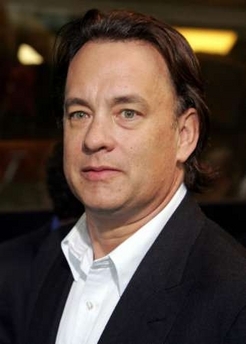
Maybe Ron Howard Should Have Made This Movie

This isn’t a meeting of the JA.O Literary Club, but Spencer Allen sent me the following short story he wrote. (I especially like the way Soapy’s voice works.) Enjoy!

The Dan-Brown-Wants-Your-Money Code

By Spencer Allen


FACT:

All imitations of tacky prose, corny dialogue, and Christian-bashing bigotry in this parody are accurate.


      In possession of the shocking and suppressed truth about The Da Vinci Code, our hero Rupert Handsome evades the relentless pursuit of psuedo-intellectual conspiracy theorists and anti-Christian zealots.  Finally, accompanied by the naïve, yet beautiful Soapy Neauclieu, he seeks refuge at the home of his close friend, Sir Steve Teapot.   

      As Handsome tore through the night, a thick wall of quiet elms eventually gave way to a sprawling estate, within which a massive two-story house sat a safe distance back from an impregnable black gate.

      “My goodness,” Soapy said, her voice trembling with ecstasy. “Is that where Teapot lives?”

      “Hardly.”  Handsome smiled.  “That’s the house Dan Brown built after the con job he pulled on Christians.  Teapot lives a few miles down the road.”

      They raced into the night until finally pulling into the driveway of a small white house, where a single light shined from an upstairs bedroom.

Continue reading “Maybe Ron Howard Should Have Made This Movie”

VARIETY SLICKS NIX PIC!

HanksYEE-HAW!!! That magisterial mag of movie magic, Variety, has done the dishes on The Da Vinci Code and dished the pic a turkey-sized pan!

Here are some blurbs SONY probably won’t be using from their review:

"A stodgy, grim thing"–Variety

"Perhaps the best thing the project’s critics could have hoped for"–Variety

"Exceedingly literal-minded"–Variety

"Ron Howard and screenwriter Akiva Goldsman have conspired to drain any sense of fun out of the melodrama"–Variety

"An oppressively talky film"–Variety

"It is impossible to believe that, had the novel never existed, such a script would ever have been considered by a Hollywood studio"–Variety

"The irony in the film’s inadequacy is that the novel was widely found to be so cinematic"–Variety

"What went down easily on the page becomes laborious onscreen"–Variety

"High-minded lurid material sucked dry by a desperately solemn approach"–Variety

"A palpable lack of chemistry between Hanks and Tautou"–Variety

"Howard . . . makes them both look stiff, pasty and inexpressive"–Variety

"A film so overloaded with plot that there’s no room for anything else, from emotion to stylistic grace notes"–Variety

"Hans Zimmer’s ever-present score is dramatic to the point of over-insistence"–Variety

"Missed opportunities"–Variety

"The final dramatic revelations . . . come off as particularly flat"–Variety

READ THE WHOLE THING!

CANNES AIN’T CONNED, NEITHER.

BUT WAIT, THERE’S MORE!

A Da Vinci Flameout?

If I were Ron Howard and the folks at SONY, I’d be nervous right now.

Why?

Because we just witnessed the underperformance of Mission Impossible III, which is a summer-release movie that is build on a popular, pre-existing franchise. If that’s a signal for what the rest of the summer holds (and it goes along with the trend of underperforming blockbusters that we’ve been having the last few years) then it may speak ill for The Da Vinci Code movie.

Also, there as been a chorus of cardinals at the Vatican dissing the film. Sure, controversy sells, but there is such a thing as too much controversy.

Also, the studio has been WAY cagey with advance screenings–which is a sign of lack of confidence in a film since holding more screenings and having them earlier would let more negative word about a film get out there. (It’s not like this is Episode III, where Lucas was trying to keep spoilers from getting out. Everyone already knows what the spoilers for The Da Vinci Code are.)

And then there’s this Barbara Nicolosi comment over at Amy’s, which one reader helpfully pointed out down yonder:

The buzz on the streets here in Hollywood is that the film is embarrassingly bad. The studio has stirctly limied the MPAA screening – usually about 500-800 people – to only 100 people. No one is getting in to advance screenings which has everybody saying things like, "The only time studios act this way is when they have a Class A Dud on their hands."

The script is a dud. The ultra-weird transitions from people running from long-winded seminars on ecclesiastical history to murderous Opus Dei assassins to Biblical period flashbacks of Jesus and Mary Magdalen looking tenderly at each other made me laugh at loud.

Sony knows they will only have devastating word of mouth on this one. So they have to get everybody in the first weekend.

On her own blog, Barbara says that

RON HOWARD SURE LOOKS NERVOUS.

Sounds like it’s with good reason.

There are few things I’d like more going into Memorial Day Weekend (a traditional blockbuster time) than a flameout at the box office for The Da Vinci Code.

Masses In China

A reader writes:

I recently came across your blog and had a couple questions about China and Catholicism. Before coming to China (I just arrived recently), I tried to go to Mass a few times each week. I wonder what sacraments are valid and what Masses are actually available to me in Beijing. Do you know whether the Chinese Patriotic Church Mass is valid, or how to find those "underground" Masses?

Okay, first things first: Your name (which I withhold per my usual policy of anonymity) indicates that you are clearly of European background.

As a result, whatever you do do not attempt to go to Masses of the undreground Church in China.

DO NOT MAKE INQUIRIES ABOUT THE UNDERGROUND CHURCH. DO NOT GO TO THEIR MASSES. DO NOT HAVE ANY DEALINGS WHATSOEVER WITH THE UNDERGROUND CHURCH.

The fact that you have white skin means that you will draw the attention of the Communist authorities to any members of the underground Church that you attempt to contact, so stay away for the sake of your fellow Chinese Catholics. If you draw attention to them, they could land in prison or worse.

As a result of the foregoing considerations, you are excused from your Sunday obligation as long as you are in China. You do not have to go to Mass on Sundays or any other holy days of obligation.

This does not mean that you cannot go to Mass. You can, but it will need to be with the Patriotic Church or (if you can find one) a state-approved Easter Orthodox Church.

The Code of Canon Law provides:

Canon 844

§2. Whenever necessity requires it or true spiritual advantage suggests it, and provided that danger of error or of indifferentism is avoided, the [Catholic] Christian faithful for whom it is physically or morally impossible to approach a Catholic minister are permitted to receive the sacraments of penance, Eucharist, and anointing of the sick from non-Catholic ministers in whose Churches these sacraments are valid.

There is some ambiguity about the canonical status of ministers of the Chinese Patriotic Church, but no matter what this canon would allow you to attend Masses (and go to confession and receive the anointing of the sick) in their churches, since they have valid sacraments (as the Vatican acknowledges).

Therefore, you can go to Patriotic Church Masses–even several times a week if you wish–just DO NOT attempt to make contact with the underground church while you are there.

I have this on good authority from underground evangelists in China. As a white person, it simply is not safe for our brothers who are members of the underground church for you to attempt to contact their communities!

20

Too Little, Too Late

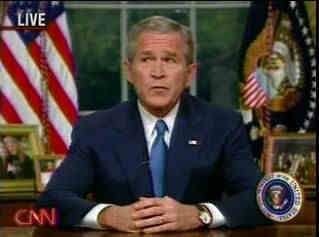
Immigration_speechWell, I was underwhelmed with the president’s speech last night.

One of the most appropriate headlines for the speech might be "President Attempts To Deceive Base With Tough Talk On Border Enforcement & Miscellaneous Canards."

Much of what he said was fine, but what he didn’t say was the problem. The main thing that he didn’t say was that we would build a wall to prevent future illegal immigration. Instead, he said:

Tonight I am calling on Congress to provide funding for dramatic improvements in manpower and technology at the border. By the end of 2008, we will increase the number of Border Patrol officers by an additional 6,000. When these new agents are deployed, we will have more than doubled the size of the Border Patrol during my Presidency.

At the same time, we are launching the most technologically advanced border security initiative in American history. We will construct high-tech fences in urban corridors, and build new patrol roads and barriers in rural areas. We will employ motion sensors … infrared cameras … and unmanned aerial vehicles to prevent illegal crossings. America has the best technology in the world – and we will ensure that the Border Patrol has the technology they need to do their job and secure our border.

Here the president calls for SOME new fences and "barriers" (what are those? trenches that you have to climb down one side of and up the other? mounds that you have to climb up one side of and down the other?) but not enough to actually seal the border.

Then there are the widgets that the president wants to use. I’m sorry, but high-tech gadgets aren’t going to secure our borders as well as a fence. They may help (and would be needed even with a wall), but they’re not enough. Even if a motion detector or an infrared camera sees someone coming across the border, that doesn’t physically stop the person from doing so and doesn’t magically transport border patrol agents to the site so that they can do the job. They’ll still let people into the country in a way that a wall would not.

These methods also are susceptible to policy changes and covertly looking the other way ways that a wall is not.

And adding 6000 border patrol agents only adds one person per shift per mile of the border. That’s not as effective as a wall, either.

THE MOST COMPASSIONATE SOLUTION TO STOPPING ILLEGAL BORDER CROSSING STILL SEEMS TO BE BUILDING A WALL.

I also wasn’t impressed with the president’s shift from the mantra about "Jobs Americans won’t do" to "Jobs Americans aren’t doing." His spinmeisters have apparently caught on to the fact that the first of these is in-your-face offensive, but the second isn’t much of an improvement.

It still insults our intelligence, since the only reason that Americans aren’t doing these jobs is that they are currently occupied by illegal aliens who have depressed the wages that would be paid for these jobs if the illegal aliens weren’t here.

There was more linguistic smoke and mirrors with the president’s equation of "amnesty" with "an automatic path to citizenship" and then denying that he’s for amnesty on this basis.

I’m sorry, but "automatic path to citizenship" is not the meaning of the word "amnesty," and even if we adopt this test then it will turn out that there has never been an amnesty for illegal aliens in American history, not even in 1986, when the word was being openly used.

Incidentally, the meaning of "amnesty" (in English, not Latin, folks) is:

the act of an authority (as a government) by which pardon is granted to a large group of individuals [SOURCE].

Seems to me that’s what’s being talked about: the granting of pardon (instead of deportation or prosecution) to individuals who have broken the law, even if they are made to jump through certain hoops in order to obtain this.

THE "BACK OF THE LINE" ARGUMENT IS ALSO A SCAM.

And then there were the bits of the speech aimed directly at El Presidente Vicente Fox about not "militarizing" the U.S. border.

Seeing the U.S. president pandering to a malefactor like Fox, who is openly contemptuous of the U.S.’s rights to enforce its borders and who is a prime facilitator of illegal immigration so that he can export his country’s poverty problem rather than clean up the corrupt system that prevents economic development in Mexico was postively disgusting.

There was also the canard about illegal aliens wanting to "build a better life" by coming to America. Yes, and while that is an understandable human desire, it is not a sufficient reason to let a person into this country. If it were then there would be about 5 billion people who would be entitled to enter America, many of whom would be even more impoverished and thus even more entitled than those who happen to conveniently share a border with us.

The president did get points from me for saying that

We must always remember that real lives will be affected by our debates and decisions, and that every human being has dignity and value no matter what their citizenship papers say.

That is absolutely, 100% true, and must never be forgotten.

Illegal aliens must be treated with dignity, even if that dignity does not entitle them to residency in the United States.

BTW, before going nuts in the combox, please note that I haven’t said one word about what should be done about the 11 million aliens who are illegally present in this country at the moment. The only opinions I have expressed in this post are that a wall seems to be a crucial and compassionate way to stop the flow and that I am unimpressed with various things the president said.

The JA.O Literary Club

I just wanted to thank everyone who participated in the discussion of "Through and Through" for the JimmyAkin.Org Literary Club.

I also want to thank Tim Powers once again for granting permission for the story to be reprinted on the blog.

Though I labelled the meeting #1 in case I do it in the future, I wasn’t sure about whether there would be future meetings, but after seeing the level of interest that was displayed in continuing the venture, I’ll see what I can do about securing reprint rights to other stories that the group might be interested in.

These may not all have Catholic themes. I don’t know that there are enough obtainable stories out there that are Catholic themed–certainly not as much so as "Through and Through." Some future offerings may simply be stories that I find entertaining or interesting. We’ll have to see.

Also, as one perceptive person noted in the combox, I likely don’t have time to deal with unsolicited manuscripts, so the stories that get considered will tend to be already-published things (some published long enough ago to be public domain) that I run across and think might be worthwhile for the group.

I also wouldn’t want to commit to doing this "regularly," since that would put pressure on me to come up with stories on a particular schedule, and that pressure would tend to lower the quality of the stories offered for discussion. I’d rather keep the quality of the stories higher (according to my own, subjective determination) and have meetings on an irregular basis–just as pleasant surprises that show up as part of the mix.

So thanks once again to one and all for making the first meeting of the JA.OLC a success!

The Burden Of History

What happens at the beginning of a religion is important ot its later history. The path that the founder of a religion places it on is the path it will have a tendency to stick to–or return to–in at least a general way.

This is not to say that religions cannot become detached from their historical foundation. Much of modern Buddhism has very little relationship to the teachings of the historical Buddha (Siddhartha Gautama), and much of liberal Christianity has little relationship to the teachings of Jesus and the apostles.

But religions–or notable parts of them–tend to stay at least in the ballpark of what their founder intended.

This bodes ill for the future of Islam and its relationship to the rest of the world. If you want to explain much about the current state of the Muslim world, including its propensity toward jihadist violence, you need look no further than the fact that Muhammad was an Arabian warlord. The mindset of an Arabian warlord was stamped on Islam at its inception, and it has shaped the subsequent history of Islam in ways too numerous to count (at least in a blog post).

In an ideal future, a way will be found to wean Islam away from its violent impulses, but even if that proves to be possible, it will not be easy. The stamp of the Arabian warlord will be hard to erase, and not just regarding the use of violence, but in related areas, such as the way a warlord uses money.

HERE’S AN INTERESTING ARTICLE CONTRASTING MUHAMMAD AND JESUS ON THE USE OF MONEY, VIOLENCE, AND POWER.

(CHT: Southern Appeal.)

The Da Vinci Movie: WORSE Than The Book?

The movie version of The Da Vinci Code is scheduled to be released this Friday and, though I’m not at all happy about it, I’ll need to go see the thing for professional reasons. (I expect that I may come out of the theater so mad I could spit.)

One of the questions I have about the movie is whether the filmmakers will have done anything to ameliorate the anti-Christian elements in the book. For a while, some have been hopeful that they would do so–perhaps even changing central elements of the book in the way that Hollywood films often do.

But if a (non-committal) review carried in The Telegraph is accurate, not only does the film closely follow the book but it may actually be worse than the book:

Although the movie closely follows the book’s storyline, Howard delivers something Dan Brown doesn’t – dramatic recreations of events relating to the book’s central inflammatory theory that for 2,000 years the Catholic Church has been covering up the fact that Jesus was married to Mary Magdalene and fathered a daughter, whose bloodline has survived into present-day Europe.

As well as scenes of the Inquisition and of women being tortured, burned and drowned, Howard shows Mary Magdalene fleeing the Holy Land for France and giving birth there.

GET THE STORY.
(CHT to the reader who e-mailed.)

How To Judge A Book By Its Cover

Perhaps you have heard the old adage that you should never judge a book by its cover. Nonsense! … At least when we’re speaking literally, anyway.

The apologists here at Catholic Answers often get calls from inquirers asking whether we have read such-and-so book and, if so, what do we think about it. Unless the book happens to generate a lot of inquiries — on the order of, say, The DaVinci Code — the answers are often “No” and “We don’t have an opinion on it.”

Don’t despair. There are ways to glean a lot of information about a book without having to read the thing. Here are some tips:

Title: What does the title say about the author’s approach to the subject? If you were wandering through the parenting section of your local bookstore, a quick scan of the titles can give you insight into the approaches taken to parenting. The Strong-Willed Child may suggest a more combative approach to childrearing than Raising Your Spirited Child. If you have a gentler parenting philosophy, you’re more likely to be drawn to Unconditional Parenting than to Laying Down the Law.

Author: What else has this person written? What are his credentials in the field? These answers to these questions and many more can be found by plugging the author’s name into Google. These days, when many authors maintain personal web sites as marketing tools, you’re likely to find out a great deal about an author from the Internet.

Cover blurbs: Who is endorsing this book? Have you heard of them before? Do you know their reputation? If we move back to the parenting section example, if names like James Dobson or Dr. William Sears appear on the dustjacket, you’ve found an important clue about the author’s parenting philosophy. In the Catholicism section of the store, an endorsement of a book by Fr. Richard McBrien will suggest one thing, while an endorsement by George Weigel will suggest something else.

Publisher: What other titles has this company published? What is the company’s target audience? What does its web site reveal about the company? If the book is on Catholicism, is the publisher a Catholic company? If so, is the Catholic publisher orthodox, heterodox, or is it a mixed bag? Is the company secular? If so, what other religious titles has the company produced?

Copyright: If the copyright date is old, will there be current information missing? A book on nutrition from decades ago might still talk about the four food groups rather than the newer food pyramid. A Catholic book written before 1983 might reflect the 1917 Code of Canon Law and thus be out of date in some matters of ecclesiastical law.

Notes: If the book is non-fiction, does the author cite sources? Does he cite sources in a uniform manner, or is his citation haphazard? Are the bulk of the sources primary (e.g., studies, academic papers) or does he rely on general information books in his field in which the authors agree with his thesis? (You’d be surprised at how sloppy some researchers can be.)

Bibliography: What titles did the author use for research? Does the author recommend certain titles? If so, do you know anything about these titles or authors?

Acknowledgements: Who does the author thank? Thanks to experts in the field is helpful and the names can be plugged into Internet search engines for information about credentials and philosophy.

Foreword and Afterword: Who wrote introductory and/or summary matter? What is that person’s experience in the field? A book on the liturgy with an introduction by the former Joseph Cardinal Ratzinger would suggest that the book would be orthodox, while an introduction by Sr. Joan Chittister, OSB, would suggest something quite different.

After your gleaning, take stock. Are there red flags flying? If so, the book may not be worth your time. If you do have time to spare and your curiosity continues to be piqued, you may still want to read the book but you’ll know to rev up your Purity Filter before reading. In any case, you’ll have a pretty good gauge of the book before diving in. So, yes, you can judge a book by its cover!

Discernment

A reader writes:

I have a friend who is not happy in her current job.  She has received a good offer from another company but in a different state.  She wants to do the Lord’s will.  In discerning his will would it be appropriate 1) to lay out the pros and cons of the choices?  2) The choice that leaves her at peace would most likely be his will?  What are good sign posts for determining his will in prayer?  As always, thanks!

This is a difficult question to answer, because I suspect that God works with different people in different ways on subjects like this. However, I can tell you how I would tend to approach the question, and I suspect that the way God works with me on such matters is not that different than how he works with most folks.

There are three general things that God gives us in order to guide us in making decisions:

1) Our instincts

2) Our reason

3) His revelation

The first includes our wants and desires–our emotions and basic physical and psychological drives. This is the most fundamental guide we have. It’s what motivates us to do things rather than just sit passively and do nothing.

The way God has designed us, our instincts provide the basis of human action, and we are to go with this guide unless it is overruled by one of the two higher guides.

Reason includes both moral reasoning and practical reasoning. Moral reasoning includes conscience (Is what I want just or unjust?) and practical reasoning (What are the pros and cons of this? If I go down this path will I really get what I want or will it cost me more than I think it will?)

If making the best application of reason we can to a situation tells us that we should not pursue our desires then we should not pursue them. In man, reason is meant to govern instinct.

But there is a danger here: overthinking. One of the things people often do–especially people of conscience–is to try and overthink decisions, which can lead to paralysis and missed opportunities. While we have an obligation to use reason as a check on any decision of major consequence, if we find ourselves being paralyzed and unable to make decisions then–at some point–we simply have to assume the risk inherent in the decision and "go with our instincts."

These two guides that God has given us–instinct and reason–are gifts of nature. They are things that he has bulit into human nature itself. But human nature is limited and, especially in its fallen condition, it often is not enough. Thus God also gives us a third guide, which belongs to the realm of grace rather than nature: his revelation.

This comes in two forms: the public revelation that he has given to all mankind through his word and through the created order (the laws of God written on the hearts of men) and the private revelation that he makes available as guidance for particular individuals.

The public revelation that he has given takes priority. Private revelation is meant to help implement the principles of public revelation but cannot overrule it (e.g., God will never via private revelation give you permission to sleep with someone other than your spouse; public revelation’s "Thou Shalt Not Commit Adultery" is a moral absolute).

Public revelation interfaces with the two gifts of nature God has given us. We are meant to appropriate public revelation and make it part of our reason and instincts through the education of our conscience. It’s already there to some degree, for the laws of God are written on the hearts of men, but in our fallen condition our consciences and instincts require special training in moral reasoning.

If, in making a particular decision, we’ve done all we can to educate our consciences about what God has said in public revelation, though, that still leaves private revelation.

As the term is commonly used, private revelation refers to extraordinary mystical phenomena like visions that some individuals have (e.g., the children of Fatima), but as I am using the term here it refers to any information that God gives an individual in addition to public revelation.

In the case of extraordinary mystical phenomena, this may take the form of a vision or a voice or sudden, infused knowledge, but this type of private revelation is uncommon, and there is a risk associated with the assumption that God will provide it if asked. The risk is that we will generate a false mystical experience by our own imaginations if we operate on the assumption that God will provide this kind of guidance virtually on demand.

In the case of ordinary experience, many people report experiencing God’s guidance in the form of feelings of confidence or peace or in small coincidences that happen to them in conjunction with prayer.

I know for a fact that God does often give guidance in these manners, but there is a danger here as well of imagining things or fooling ourselves (e.g., rationalizing our desires as a "sense of peace" or seeing coincidences as signs of divine guidance when in reality they’re just coincidences and we’re reading tea leaves).

There is also a danger of overthinking in this area and ending up more confused than we started out.

I think part of the issue can be addressed by keeping the way that this form of guidance works in perspective: Because it is a gift of grace rather than of nature, God means for it to be exceptional. He expects us to make most of our decisions on the basis of the gifts he built into our nature, together with public revelation, and to rely on private revelation only when these prove inadequate.

In other words: Don’t expect God to give you private revelation about which kind of bread to buy at the supermarket. Ordinary decisions like that are meant to be handled by the gifts of nature he has given us, and bad consequences will ensure (like paralysis, confusion, and self-deception) if we expect him to give us supernatural guidance on such matters.

In general, we should use the gifts of nature that God has given us–our instincts and our reason–together with his public revelation–to make most decisions in life.

We should prayerfully ask him to superintend the process of decision-making as we work through it (changing our desires where they need to be changed, guiding us to information resources that can inform our reason, helping us to better understand how principles from public revelation may or may not apply to the question in front of us) and we should ask him to make it clear to us if we are going wrong in our thinking, including via private revelation if necessary.

This much applies to all human beings, but here we come to a point where there seems to be a difference in how God works with certain individuals.

Some individuals report–and I have no reason to challenge their statements–that God gives them many small signs in the form of feelings and coincidences and similar things. Other individuals do not report this.

Myself, I have had a handful of really startling coincidences–usually in conjunction with major life events (like the death of my wife)–that I attribute to unambiguous divine intervention, but most of the time God does not give me the little nudges in prayer that some individuals report (or if he does, I’m too thickheaded to perceive them).

In fact, knowing myself and how introspective I can be, I find it better for me not to try to focus on or hunt for such nudges. At least for me, the way I am psychologically configured, doing so would result in paralysis and endless introspection and the reading of tea-leave.

So I try to make my decisions based on my instincts, reason, and what God has said in public revelation, trusting that he will guide the process and that he’ll hit me over the head (with private revelation if necessary) if I get too far off the path.

I also try to do two other things:

1) Experiment. Whenever possible I try to get more data by experimentation–trying something out to the extent I can and seeing if I meet with success. If I do, it may be a sign that this is the way God wants me to go. If I meet with failure, it may be a sign that he wants me to do something else.

2) Keep in perspective the way God’s will often applies to our lives. Very often people think that–on a particular question–there is only one right answer and that God wills one particular thing for us. If we miss finding that one particular thing, then we’ve missed God’s will, and this thought can generate a lot of anxiety individuals, who naturally don’t want to fail to do God’s will.

But in reality God’s will often does not apply in this manner. There are often a number of options, each of which have good and bad points, that God would be perfectly happy for us to choose. Some options might be better than others, and of course he would like to see us chose from among the best options, but as long as we do not choose an evil option, God is not displeased.

He’s pleased if we choose a good option, and he’s very pleased if we choose a very good option, but he isn’t displeased unless we actually choose evil.

Much of the time we thus don’t need to shoulder the burden of finding the right option or risk God’s displeasure.

This realization can be a liberating experience for many people, and it may help your friend as she makes a decision about what to do regarding the job offer she has.

While taking or not taking a job is a significant decision and the consequences should be carefully thought through, this isn’t likely to be a situation in which God expects your friend to make the right decision or incur his displeasure.

So to sum up, if I were in your friend’s position, I’d try to relax, ask myself what I want (instinct), try to figure out the pros and cons (reason), and then make the best decision I can, while all the while asking God to superintend my thoughts as I work through the decision and asking him to let me know if I’m going wrong.

Hope this helps!