Convalidation Questions

A reader writes:

I am a Catholic was married in a civil ceremony several years ago. I have
since realized that I needed to be married in the
Catholic Church in order to receive Communion. My wife agreed that we
would get our marriage blessed even though she is not Catholic.

We asked the priest about having
sexual relations and he told us that since we weren’t going to get it
blessed for another year (gave ourselves plenty of time to plan) that
it is not expeced that we hold off for that long.

Okay, what the priest told you on this point is wrong. He was trying to make things easier on the two of you, but he was wrong. If two people are not validly married then they should not be having sexual relations until such time as they are.

My wife and I agreed
on several months but overstepped it ….on the last time
however she has gotten pregnant.

At the wedding she will probably
not be showing yet.
Is there any issues with going ahead with the wedding. Do we tell the
priest that she is pregnant?

You should go to confession about this, but I’m not seeing any other issues. I also don’t see any need to tell the priest about the pregnancy at this time since it is not relevant to the wedding. You will want at some point talk to the parish about making arrangements for the child’s baptism, though.

I want to be able to receive our Lord in Communion but I want to do it
the right way and not be in mortal sin.

The way to do this is to resolve to live continently until the wedding and go to confession. Then you’ll be able to receive Communion immediately, even before the wedding.

Just a curious question…..is masturbation or contraception still a
mortal sin when ones wife is already pregnant??

Masturbation is always gravely sinful, and the fact that one has a pregnant wife does not change this. I don’t understand why one would want to use contraception with a pregnant spouse since the purpose of contraception is to prevent conception, and this is not at issue while she is pregnant. Some forms of contraception (e.g., condoms) also damage the unitive aspect of the sexual act and so couldn’t be used for that reason. Others might pose a danger to the child.

In your case, though, since the two of you are not yet validly married, you shouldn’t be engaging in sexual relations until the wedding. Once that happens, though, you’d be able to engage in them the same as any other married couple during pregnancy, provided it isn’t posing a danger to the child.

MORE INFO HERE.

I know that this may not all be what you were hoping to hear, but you deserve the truth, and I want to be straight with you. You also should be commended for your willingness to do what is needed to follow Christ and rectify your marital situation. You wife also is to be commended for her willingness to help you follow your conscience even though she is not Catholic. God will bless you both for your efforts.

Hope this helps!

20

Happy Summer Solstice Day

Today, June 21, is the summer solstice, which in the northern hemisphere means a really, really long day (and, in the southern hemisphere, a really, really short one)–your latitude may vary.

Pagans often make a big, sacrilegious deal out of the summer solstice, but I don’t think that ought to stop Christians from taking note of the day. After all, God set up the Earth to have a summer solstice, and it’s a day of note in the planet’s annual cycle. We just don’t have to attribute any magical significance to the day.

The day is also known as Midsummer, which is totally kitty-corner to the way we in the U.S. commonly reckon summer as beginning on the day.

Maybe I’ll listen to an audio book of Shakespeare’s A MIDSUMMER NIGHT’S DREAM tonight.

Pleasant dreams.

Requirements For Baptism

A reader sends in an e-mail from someone who says:

My friend has some questions about baptizing his
new baby girl.  He wants to know can you have
your baby baptized at a Catholic church if:

  1. Dad is a lapsed Catholic
  2. Mom is a lapsed Presbyterian
  3. The parents don’t belong to a local church
  4. The parents want to get his baby baptized at a Catholic
    church on vacation in Oregon

I think my friend is at a cross-roads in his faith and I’m
trying to encourage him to get back to his Catholic
roots.  What do you think??

Okay! Let’s whip out our little friend, the Code of Canon Law. It provides:

Can.  868 §1. For an infant to be baptized licitly:

1/ the parents or at least one of them or the person
who legitimately takes their place must consent;

2/ there must be a founded hope that the infant will
be brought up in the Catholic religion; if such hope is altogether lacking, the
baptism is to be delayed according to the prescripts of particular law after
the parents have been advised about the reason [SOURCE].

As you can see, there is nothing in the requirements that, strictly speaking, rejects any of the four things in the fact pattern named by the e-mailer.

The fact that neither of the parents is an active Catholic at the moment is not per se an obstacle since what is strictly speaking required is their consent, not their own religious status.

HOWEVER, there is also the requirement of a founded hope (not a pie-in-the-sky hope) that the child will be raised as a Catholic, and this is where we run into a problem. Parishes will definitely want to know how founded the hope is of the child being raised Catholic if neither of the parents are practicing Catholics. Will they take the child to Mass? How do we know this if neither of them goes to Mass? Will they make sure that the child is catechized in the faith? Will they make sure that the child is confirmed and makes her first confession and first Communion at the proper times? If they’re both completely disconnected from parish life, how are they going to fulfill these responsibilities? Will they even know when it’s time for them? What will the practical arrangements be for fulfilling them? Just how strong is their commitment on these points?

As a result, though there is no absolute requirement that one of the parents be Catholic, the fact that neither is an active Catholic is likely to pose a practical barrier to their providing the kind of founded hope that the parish needs for the child’s Catholic rearing.

The logical solution is for the parents to examine their hearts and recommit themselves to the practice of the Christian faith. In particular, the husband should take the child’s need for baptism as a sign that God is calling him back to his faith. He should go to confession and resume life as an active Catholic. It would also be ideal if the wife were to investigate the possibility of becoming Catholic, primarily for her own sake but also to present the child with parents who are united in faith.

I hope they’ll giv prayerful consideration to these things.

As to getting the child baptized while on vacation. I assume that the reason they wish to do this is because they will be vacationing near family and it would make it easier for family members to attend the baptism. (There may be "destination weddings" these days, but I’ve never heard of a "destination baptism," so I assume that family is the reason.)

Again, strictly speaking there is no prohibition on this. However, there may be practical obstacles. Normally baptisms are performed in the parish to which the parents (or the Catholic parent) belongs. There are also typically preliminary sessions that the parents need to attend to help them understand and prepare for the event of baptism.

All I can recommend is that the parents explain the situation and ask what kind of arrangement may be possible. I don’t know that there is one, but then the most important thing is that the child get baptized, not where this occurs or who can more easily attend. The baptism is for the sake of the child, not anybody else, so the parents should be flexible on this point if no solution emerges that would allow the baptism to take place where and when they would like.

Hope this helps, and God bless!

Let’s pray that God will shower his blessings on the child and her family!

20

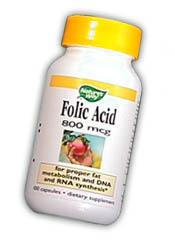
Now . . . What Was The Nutritional Supplement I Was Going To Buy?

This just in: 800 micrograms of folic acid (a B-vitamin) appears to help memory and may prevent age-related decline in mental function.

GET THE STORY.

This isn’t the only benefit of folic acid, though. It also helps prevent heart attacks and treat depression, epilepsy, and a variety of other conditions.

It’s also known that women who take folic acid have fewer children with spina bifida and related birth defects. The method of action that produces this is not known, however. (It may help the child develop so that it doesn’t get the defect–or it may increase the miscarriage rate for children with the defect. Nobody knows for sure.) And so (unlike the U.S. government) I can’t recommend that all women of childbearing age simply take it.

If you’re a guy, though, or a woman not likely to become pregnant, folic acid may be a useful nutritional tool.

LEARN MORE ABOUT IT.

GET MY FAVORITE NUTRITIONAL THERAPY BOOK.

Now . . . What Was The Nutritional Supplement I Was Going To Buy?

Folic_acidThis just in: 800 micrograms of folic acid (a B-vitamin) appears to help memory and may prevent age-related decline in mental function.

GET THE STORY.

This isn’t the only benefit of folic acid, though. It also helps prevent heart attacks and treat depression, epilepsy, and a variety of other conditions.

It’s also known that women who take folic acid have fewer children with spina bifida and related birth defects. The method of action that produces this is not known, however. (It may help the child develop so that it doesn’t get the defect–or it may increase the miscarriage rate for children with the defect. Nobody knows for sure.) And so (unlike the U.S. government) I can’t recommend that all women of childbearing age simply take it.

If you’re a guy, though, or a woman not likely to become pregnant, folic acid may be a useful nutritional tool.

LEARN MORE ABOUT IT.

GET MY FAVORITE NUTRITIONAL THERAPY BOOK.

Fear Of All Error?

A reader of my post The Purity Tests raises a good question:

"What you say about the ‘purity filters’ may be true, but how many people are at the stage where they can effectively sift the orthodox from the cleverly disguised heretical?"

This question actually raises another concern that has bothered me for some time now:

Many orthodox Catholics are afraid of error, to such an extent that the avoidance of error can seem to become the driving force in their spiritual lives.

Please understand me: This isn’t a bad impulse. Wanting to avoid error because one wishes to remain faithful to the Church’s magisterium is a good thing. When used in a prudent manner, such an impulse can be self-protection against false teaching. The problem arises when the person is so afraid of error that it prevents him from taking reasonable chances. The often-unspoken fear appears to be that the person is afraid that error is, in itself, sinful, and that a person who is in error in not just wrong on some point but heading toward hell.

Error is not a sin. The only time it can become a sinful situation to be in error is when one is so set in one’s erroneous opinions that the person is not open to correction from properly-constituted authority, such as the Church. For example, a person who innocently believes that Jesus did not found the Catholic Church does not sin by such a belief. Only if that person has reason to believe he should investigate the claims of the Catholic Church to be founded by Christ and refuses to do so does the possibility for culpability for error develop. If he does investigate the claims to the best of his ability, and cannot in good conscience understand those claims to be true, he does not sin even though he is objectively mistaken. But if he comes to the conclusion that the claims are true and refuses to act on those beliefs in the manner to which they should call him, then he may be culpable for his decision not to become Catholic.

You see, the problem is not innocent ignorance or even innocently accepting something as true that is objectively incorrect. The problem is refusing to act upon the knowledge that we have in a manner that is faithful to God. We are not judged on what we know, but on how well we have remained faithful to God through the knowledge we’ve been given. We should seek not to be know-it-alls, but faithful to what we know.

So, to answer the original question. In the words of Christ and the late John Paul II: Be not afraid! In your reading, you may come across ideas that are not entirely orthodox. Your "purity filter" may not catch everything that should be filtered out. You may, in the short term, not have an entirely correct understanding of a particular issue. And that’s okay! So long as you remain open to correction from those you know can provide you with Christian orthodoxy, you need not fear. God will not abandon you and he will bring forth good from the true knowledge that you have. What matters to God is not your expertise but your obedience.

To close, remember the Great Western Schism. There were saints on both sides of the divide who stumped for the various papal contenders. One famous example was St. Vincent Ferrer who supported one of the antipopes. Even when St. Vincent was in error over who was the true pope, he worked miracles and was not directly told by God the identity of the true pope. For many years, St. Vincent’s reputation was bound up with his support of an antipope. The heroic virtue of St. Vincent was that when he realized his error he immediately stopped his support for the antipope and pledged his allegiance to the true pope. He did not seek to justify his past support or rationalize away his knowledge of who the true pope was out of fear for his reputation. He sought only to be faithful. And God rewarded that faithfulness with sanctity even though St. Vincent was not a know-it-all.

St. Vincent Ferrer, pray for us.

In Memoriam: Cardinal Sin

Cardinal_sinThe man with the best name in the college of cardinals (or the worst name, depending on how you look at it) has passed: Cardinal Sin has died. He was 76 years old.

Though under the age 80 cutoff for voting in conclaves, Cardinal Sin was too ill to make the ourney to Rome to participate in the election of Benedict XVI last April. Now he has followed John Paul II into the Great Beyond.

Cardinal Sin was an important figure in the effort to cultivate democracy and better government in the Philippines, though the road was rough.

After the fall of the dictator Marcos, government corruption remained high. "We got rid of Ali Baba, but the forty thieves remained," Cardinal Sin commented.

Requiescat in pacem.

GET THE STORY.

MORE.

The Da Vinci Hunt

The hunt is on for a long-lost masterpiece by the Renaissance master Leonardo DaVinci:

"’Cerca, trova’ — seek and you shall find — says a tantalizing five-century-old message painted on a fresco in the council hall of Florence’s Palazzo Vecchio.

"Researchers now believe these cryptic words could be a clue to the location of a long-lost Leonardo Da Vinci painting and are pressing local authorities to allow them to search for the masterpiece of Renaissance art.

"Maurizio Seracini, an Italian art researcher, first noticed the message during a survey of the hall 30 years ago, but his team lacked the technology then to see what lay behind Giorgio Vasari’s 16th-century fresco, ‘Battle of Marciano in the Chiana Valley.’

"However, radar and X-ray scans conducted between 2002 and 2003 have detected a cavity behind the section of wall the message was painted on, which Seracini believes may conceal Leonardo’s unfinished mural painting, the ‘Battle of Anghiari.’"

GET THE STORY.

No word yet on whether Dan Brown’s intrepid symbologist and code-cracker Robert Langdon will be called in to consult on the case. But given the confidence put into Langdon’s expertise by the mainstream media, such as Primetime Live and Good Morning America, I’m sure it’s only a matter of time before the professor will be tapped.

</Irony>

St. Catherine's Library

St. Catherine’s Monastery (left), also known as the Monastery of the Transfiguration,  is the world’s oldest monastery.

Built in the 6th century at the foot of Mt. Sinai in Egypt (or at least the traditional location of Mt. Sinai, since we’re not sure of its exact location), the monastery houses the largest collection of ancient Christian manuscripts besides the collection belonging to the Vatican.

Now the monks there are using hi-tech means to try to read some of the more faded manuscripts in its collection.

The monastery’s librarian, Fr. Jusin (a fellow Texan! Yee-haw!) has been digitizing manuscripts with a camera capable of 72 megapixel resolution. Many will be online later this year.

The process holds out the prospects of helping us better understand the history of the text of the Bible (including potential new evidence regarding the original reading of uncertain passages) and may even turn up previously unknown texts, as at Oxyrhynchus.

GET THE STORY.

MORE ON ST. CATHERINE’S MONASTERY.