Catholic Blog Awards Update

It has come to my attention that, although JimmyAkin.Org had a very substantial lead in the Best Apologetics Blog category, this lead is now gone and another blog is not ahead.

Although I was nominated for a bunch of categories, this is the one I care about most, as it is what I do professionally.

I would therefore invite folks to go vote–whether your have voted before or not.

The way the rules of this work, one can vote once per day, so people are not limited to voting a single time.

I haven’t mentioned that point up to now, though I have seen other blogmasters do so–inlcuding the blogmaster who is currently ahead in the apologetics category, who just yesterday  urged his readers to "vote early and often," quoting Al Capone.

I’ve tried to avoid that kind of thing, but with the category of Best Apologetics in question, I thought that I’d better mention this aspect of the rules, and I’d ask you to vote for JA.O, even if you have already done so. I’d love votes in any category for which the blogis nominated, but I’m particularly interested in the Best Apologetics category.

Incidentally, you do not need to be Catholic to vote in these awards.

Thanks for your consideration.

GO HERE TO VOTE.

An Anglican Rite?

A reader writes:

What do you think of the rumors of an autonomous rite for Anglicans who wish to be in communion with the Holy See? As a former Episcopal priest who came into the church, I have mixed feelings about such an arrangement. I miss some of the accidents of Anglicanism, e.g., the hymnody and the quasi-Tridentine precision of a solemn high Mass the way we did it, but I do not miss the culture of dissent that is so much more prevalent in Anglicanism or the devaluation of theology in practical terms. I am very interested in what you think.

I don’t know that I personally have a lot to say. I’m in support, in principle, of the restoration of other bodies of Christians to full communion with the Catholic Church, and historically this has often been accomplished through the creation of a new "rite" in the Church–or what would more properly be called a new church sui iuris (Latin, "with it’s own law").

If that’s the best way to faciliate the reunion of (some) Anglicans, then I’m for it.

Such matters have to be handled very carefully, though, to ensure that it is a true restoration of full communion and not a papering over of differences.

There are also other risks as well. I was aware of it when a similar effort in the 1990s was underway (claims vary about whether was to be a new church sui iuris or some other kind of canonical structure), and it all fell apart when the former Anglican bishop who would have been the head of the new rite defected from the Church.

"Once burned, twice shy," as they say. The Vatican will need to make very sure of the leadership of the body coming into union. You don’t want to have the spectacle of a grand reunion followed by a new schism of the same people hot on its heels.

It is my understanding that the Anglicans involved in this process may not have the dissident ethos that you mention, though I don’t know if that applies to these bodies as a whole. My
familiarity with the precise theological tenor of these circles is quite limited.

So I don’t know whether the time is right for this, though I hope so. I’d like to see a new church sui iuris added to the Church in my lifetime, but it needs to be done the right way, and there are a number of significant issues to be solved.

For more on all this,

SEE THIS POST OVER AT PONTIFICATIONS, which links to a number of things, including

THIS VERY INFORMATIVE POST AT THE CONTINUUM.

The Canon Of The Sacraments?

A reader writes:

I have recently heard a Catholic priest state that the number of sacraments was not always seven, and in fact was not defined until the 11th or 12th century.  My understanding on this is that the term sacraments at one point had a broader meaning. 

Correct.

For instance, Christ Himself may be considered a sacrament. 

Well, that’s not the example I would cite. People can still refer to Christ or to the Church as sacraments in an extended sense. In the sense of the term that we’re after, a sacrament is a sacred rite of some kind that is performed by Christians. Jesus and the Church don’t qualify under that meaning of the term.

Some believed that funerals are sacraments.

Yes, this is a good example. Also blessings, foot washing, and the anointing of kings have been cited as sacraments.

How would you respond to the contention that the number of sacraments varied in the earlier Church (pre 11th century), yet the Catholic Church has the fullness of the Faith and has never erred in matters of faith and morals?

I would point out that the term sacramentum is not found in the Bible (its Greek equivalent–musterion–is found in the Bible, but does not seemed to be used in the sense that we are investigating). It is therefore a theological term that the Church has come to use to describe certain biblical realities.

Because it is a theological term, its boundaries are what the Church says its boundaries are. These boundaries changed over time. Originally, it was applied to various sacred rites, but as theology progressed, the Church began to make a distinction between those sacred rites that were given to us by Jesus himself to convey grace sacramentally and those that were not.

Other, similar rites that either didn’t come from Jesus (like the anointing of kings) or that don’t convey grace sacramentally (like footwashing) therefore became known as sacramentals–things that were like sacraments in some ways but not in others.

As it reflected on these matters, the Church eventually discerned that that there were seven biblical realities that count as sacraments in the modern sense. There had always been those seven–and only those seven–that were sacraments in this sense, but this fact previously masked by the lack of precision with which the word sacrament was being used. When it’s used in the precise sense, it picks out these seven things and only these seven things, which have always been sacraments in this sense.

This kind of parallels the formation of the canon of Scripture. Originally there were a bunch of religious writings circulating in Jewish and Christian communities, and it took time for the Church to discern which of these were inspired and which were not. (E.g., yesterday we talked about two first century documents: 1 Corinthians, which is inspired, and the Didache, which is not inspired.)

The inspired books had always been inspired. It just took time for the canon of scripture to be discerned by the Church, but eventually the Church signed off on it infallibly. The same thing happened to what we might call "the canon of the sacraments."

That’s why this doesn’t conflict with the Church’s infallibility: Because before a certain point in time the Church had not addressed the matter infallibly.

If you want to show this to the priest, you might want to point to what the Catechism of the Catholic Church has to say on the matter:

1114 "Adhering to the teaching of the Holy Scriptures, to the apostolic traditions, and to the consensus . . . of the Fathers," we profess that "the sacraments of the new law were . . . all instituted by Jesus Christ our Lord."

1117 As she has done for the canon of Sacred Scripture and for the doctrine of the faith, the Church, by the power of the Spirit who guides her "into all truth," has gradually recognized this treasure received from Christ and, as the faithful steward of God’s mysteries, has determined its "dispensation." Thus the Church has discerned over the centuries that among liturgical celebrations there are seven that are, in the strict sense of the term, sacraments instituted by the Lord.

Maranatha

For those who may ont be aware, maranatha is a word based on what Paul wrote in 1 Corinthians 16:11:

If any man love not the Lord Jesus Christ, let him be Anathema Maranatha (KJV).

Unfortunately, maranatha is not a single word in Aramaic. It’s a combination of two words, and the correct division of them here is not clear.

This has not stopped countless Evangelical ministries from slapping Maranatha on all kinds of things, though.

Now, with that as introduction, a reader writes:

How does not pronounce:  Marana tha and Maran atha?

And am I correct that it was used as a short prayer?

I assume that the first question is "how does one pronounce" these two phrases.

The easies way to answer that is to simply show you how they’re pronounced, so I did a quick audiopost over on my audio blog.

LISTEN TO IT HERE.

As to its use as a prayer, we need to go into what it means. 

The early manuscripts that we have do not have spaces between the words, and so we have to guess at word division.

It’s clear that the first word of the phrase means "Our Lord," rendered here as Mar (the ordinary Aramaic word for "Lord"), with the possessive suffix "our" tacked on to it. The question is: What is the suffix? Is it -an or -ana? This is what causes the two word divisions as marana tha and maran atha.

The first of these is commonly understood to mean "Our Lord, come!" and the second clearly means "Our Lord comes" (or "Our Lord has come.")

My Aramaic instructor (who is a native speaker of modern Aramaic and who uses classical Aramaic professionally) is utterly convinced that the first division of the word is wrong. In fact, he is contemptuous of those who use the first division as know-nothings on Aramaic.

If I recall correctly, he has three arguments for this:

  1. -ana simply is not a pronoun suffix in Aramaic.
  2. Putting the verb atheh into the imperative form would not cause the first letter (which is a consonant in Aramaic) to drop off.
  3. Even if the first letter did drop off, the pronunciation rules of Aramaic would require the resulting word to be pronounced ta, not tha.

Normally I generally defer to my instructor on such matters, but let’s look briefly at his arguments.

1. I do have at least a couple of grammars of early Aramaic on my shelves listing -ana as the suffix meaning "our," so there may have been some dialects of Aramaic where "our" was -ana rather than just -an.

2. This seems to be the weightiest argument. I’ve consulted multiple grammars and lexicons, and unless the verb atheh had a really, really irregular imperative form in Paul’s dialect, it just should not become tha (or ta). It should be atha, and I can find no indication in any of the lexicons that it had an irregular form in in the imperative. Some lexicons explicitly list atha as the imperative form.

3. This argument also has weight, though it could be gotten around if marana ta had already become perceived as one word, in which case the usual pronunciation rules would change it to maranatha. The problem is that this seems to be a distinctively Christian phrase (applying specifically to Jesus and not to God as "Our Lord"), and there just weren’t that many years between Jesus’ ministry and Paul’s first letter to the Corinthians. It’s hard to imagine marana ta becoming one word that fast.

I think there’s also exegetical evidence that points to the correct reading being Maran atha. Paul has just issued a "Let him be anathema." It seems to me that it makes more sense to say "Let him be anathema [because] Our Lord comes" than "Let him be anathema. Come, Our Lord!"

The first would make Maran atha an affirmation of the Lord’s future coming, when those who have become anathema will be judged. The second would be a vengeful calling down of divine judgment upon them.

As to its use in prayer, if Maranatha is understood as "Our Lord, Come!" then it’s a prayer on its face.

Even if not, it still became part of Christian prayer via the liturgy. In the Didache ("did-ah-khay") the instructions regarding the Eucharist include what seems to be a part of a prayer which reads in part:

10:12 Hosanna to the God of David.
10:13 If any man is holy, let him come;
10:14 If any man is not, let him repent. Maranatha. Amen [SOURCE].

In this case Maran atha isn’t a term addressed directly to God but is an affirmation term, like Amen, which functions at the end of a prayer to mean (roughly) "So may it be" or "It is so." This also is not a word addressed directly to God on its face, but is an affirmation that one has confidence in what God will do. Maran atha, like Amen, thus may be a prayer affirmation addressed indirectly to God.

The Didache is a first century Christian document that may not have been written very long after Paul lived. Some even argue that it was contemporary with Paul’s letters. However that may be, neither Paul nor the Didache are the likely source of the phrase. They are both probably drawn on an earlier source, possibly the first liturgies celebrated in the Aramaic-speaking Christian community.

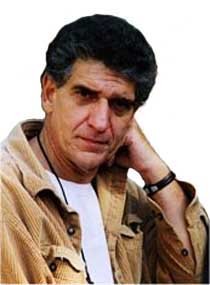
Andreas Katsulas Passes

Gkar1Andreas Katsulas, best known for his depiction of the character G’Kar on Babylon 5, has died.

He was 59.

The cause of death was lung cancer.

MORE HERE.

May he rest in peace, and may perpetual light shine upon him.

(Katsulas is the second member of the Babylon 5 family to die. The first was Richard Biggs, who played Dr. Franklin and who died unexpectedly from a tear in his aorta.)

I must say that my views on Katsulas changed over the course of time. Originally, I didn’t like him. I first became aware of him when he was playing the Romulan character Tomalak on Star Trek: The Next Generation, and I thought he played the part in an unpleasing, cartoon-of-a-villain way.

When B5 started, this view was confirmed, because originally G’Kar was an even more over-the-top cartoon of a villain than Tomalak ever dreamed of being.

But this was a fakeout on JMS’s part, and he always meant G’Kar to evolve from villain to spiritual leader, and Andreas Katsulas has the range as an actor to be able to make that amazing transformation.

I know that Joe must have told him to play G’Kar in the pilot and much of the first season as a swaggering stereotype, and knowledge of his true range leads me to think that maybe as Tomalak he just got bad direction. Star Trek has always had a lot of wooden, cartoonish acting, and maybe that just what the directors told him to give them.

I’m glad I got a chance to see what he was really capable of.

Katsulas also was one of the few actors in Hollywood to regularly work under massive amounts of prosthetic make-up. (And one of the few willing to do so.) Though he did have parts in which he didn’t have latex glued all over his face, most fans know him only through his sci-fi appearances, and his true visage is not often seen.

So in honor of his passing, let’s look at the man without the make-up.

Andreas_katsulas

Red States Of Beatitude

The vast majority of us–even those who don’t take the longevity test discussed in the last post–are going to be around for the next four years.

How do we want to spend them?

Being very happy, of course!

So how do we do that?

In comes this year’s annual Pew Research Center’s happiness study, which surveys the population to find out who describes themselves as being "very happy," "pretty happy," or "not too happy" on most days.

It turns out that, overall, the population is 34% very happy, 50% pretty happy, and 15% not too happy (with 1% saying they couldn’t tell).

That’s good news in itself, but where the story gets interesting is looking at which groups within the populace are the most happy.

For example, Republicans are more happy than Democrats. (Big surprise, right?) But this isn’t just because there is a Republican administration right now. Republicans have had a happiness gap over Democrats ever since the annual survey was started back in 1972.

Conservatives (of either party) are happier than liberals (of either party).

People who go to church weekly are happier than people who don’t.

Married people are happier than single people.

People who live in the southern part of the United States are happier than those who live in the northern part.

And people also get happier as household income rises.

There are things that one can’t control that have bearings on reported happiness (health, age, sex, race, etc.), but within what one can control, it seems that the way to best fit the profile of the "very happy" people would be to adapt one’s lifestyle so that you become a married Southern conservative Republican church-goer who has done what is needed to ensure a good household income.

Of course, merely adapting your lifestyle to fit this profile may not make you happy. It may be that people who are natively happy are attracted to these things, rather than these things making people happy.

Or (more likely) it may be some of both. (For example, marriage might be a cause of happiness, while native unhappiness might be a cause of voting for a party that focuses heavily on grievances).

Just food for thought as you spend your next four years.

GET THE STORY.

Four More Years?

No, this isn’t about a presidential election. It’s about something else: Longevity. As you may know, there are people who think that if we can live just a few years longer then developments in medicine and nanotechnology will enable us to live much, much longer than we do today.

But what are the odds that we’ll live through the gap? In fact, what are the odds that we’ll make it through just the next four years?

I’ve known for a while that it would be possible to go consult actuarial tables–the kind that insurance companies use–to get estimates of this kind of thing, but I’ve never done that.

Now someone has come up with a simple test in which you get points based on various factors, and the lower the number of points you get, the lower the chance of you dying in the next four years.

For example, being a man gets you two points right off the bat. Having diabetes gets you one point. Having cancer gets you two points. If you’re sixty to sixty four years of age you get one point (more points with more age). And so on.

The test has some limitations. It really isn’t designed for populations undre fifty years of age, for example, and the population that the study is based on may not be fully representative. The authors of the relevant paper–which appears in the Journal of the American Medical Association–also warn that you shouldn’t try to self-diagnose with this thing because there may be mitigating factors in your case that a doctor could point out to you.

Of course, by announcing the existence of this test publicly, many people will ignore this and do it anyway.

So,

GET THE STORY

and

TAKE THE TEST (IF YOU DARE).

Backwards Learning

I read an interesting article about a theory that holds that when we learn things our brains subconsciously replay these events in reverse order as part of assimilating the new information.

They’ve done studies that have shown that the hippocampus in mice brains does this when the mice are being taught something–like how to run a maze–and the mouse hippocampus apparently works similarly to the human hippocampus, so they suspect the same thing is going on in us.

If I understand it correctly, the theory is that the final moves of a sequence are often the most important for getting a reward (or avoiding a punishment) and so our brains place the most emphasis on those, rather than earlier moves we may do before we get to crunch time.

As a result, our brains focus first on the moves we must perform last.

The article doesn’t mention this, but this may explain why the Pimsleur Method works for learning languages.

Paul Pimsleur discovered that his language students learned better if they memorized words syllable by syllable–backwards.

For example, the Hebrew word for "four" is arba. The way you’d memorize that via Pimsleur is you’d have the syllable –ba repeated for you several times, followed by the syllable ar- repeated for you. Then you’d have the whole arba repeated.

I’ve found in my own language study that doing this seems to help. If I memorize words from the front to the back, I often can’t remember how the word is supposed to end. But if I memorize the word from the back to the front, I don’t have as much trouble.

Like I’m doing with that nice Croatian couple in my Friday night square dance group, whom I’m forcing to teach me bits of Croatian. The Croatian term for "Goodbye," for example is (phonetic spelling only; I’m doing this all aurally) dov-ih-jain-ya. When they taught me that, I locked on to the last syllable, -ya, and made sure I had it firmly fixed in mind. I was then able to retain this word not just for the rest of the night (so that I could surprise them with it when they left) but also retain it through to the next week and on to now.

Relatedly, I’ve also noticed that good square dance teachers make very sure, when they’re teaching a move, to make clear up front where you’re going to end the move. If students don’t have a clear idea of that and try to do just the sequence of steps and arm movements then they frequently end up out of place. So special emphasis needs to be placed on the end of the move in order for students to do it successfully.

(In fact, just last night in round dace class I had a problem because the instructors failed to communicate specifically where a move ends and it was messing me up until I asked them to clarify the ending.)

The story as a whole is quite interesting, so be sure to

GET THE STORY.

Do You Have A Baby Einstein?

Baby_einstein

If you have been buying Baby Einstein videos in the hopes of turning your child into a miniature genius, or even in the hopes of having a few minutes of peace, you may be interested in reading about the "The $165 Million Scam":

"Back when I was 8 months pregnant with Alex, my mother and I were washing windows outside. I lamented that 21-month-old Andie was getting in my way whenever I needed to do chores around the house. I wasn’t ready to resort to baby videos, but I completely empathized with parents needing their kids out of their hair. Having raised four girls without any educational videos, my mother’s response was simple: have them work along with you. I laughed, thinking surely she must have forgotten what it was like with little kids.

"’Think of your ancestors,’ she said to me as she filled up a bucket with soapy water. ‘What do you think the pioneers did with their children?’

[…]

"But it’s not just parents’ need for breaks that sells Baby Einstein. It’s the pressure we put on ourselves to create the optimum learning environment for our kids, from the minute they are home from the hospital.

[…]

But Dr. [Patricia] Kuhl’s most recent work proves videos ineffective in teaching babies foreign languages. In her July 2003 experiment, Kuhl showed that exposing 10-month-olds to videos and DVDs of native Mandarin Chinese speakers had zero effect on their language development. But if that video is replaced with a living, breathing, person speaking Mandarin, babies showed great learning of that language in a short time period, according to her report. Even though Aigner-Clark had good intentions with her language video, Baby Einstein does not teach babies foreign languages — only live people can do that. And without specifically mentioning the company or its products, Kuhl’s research actually debunks Baby Einstein‘s theory that certain videos could create little ‘Einsteins.’ In The Scientist in the Crib, the trend of making babies smarter is referred to as ‘pseudoscience,’ warning parents to be ‘deeply suspicious of any enterprise that offers a formula for making babies smarter or teaching them more, from flash cards to Mozart tapes … these artificial interventions are at best useless and at worst distractions from the normal interaction between grown-ups and babies’ (Kuhl, et. al., 201)."

GET THE STORY.

Not to mention that using a video as an electronic babysitter or babytutor is a sure-fire way to turn your child into a television addict before he even learns to walk.

Annulment Worries

A reader writes:

I am a convert to the Catholic faith.  I was married for many years, but our marriage hit its 5th or 6th really rough spot and I bailed.  It had been her before that, but we always got back together, because we thought of the vows and somewhere we did love each other.

I had been reading the early Church Fathers while with her and watching Marcus Grodi.  I knew that God wanted me in the Catholic Church.  I had found my high school sweetheart by that time.  I proceeded to get an Annulment and started RCIA.  I received the Annulment and our marriage was blessed in the Catholic Church the same Sunday I was received into the Church. 

My current wife says she does not love me and I am not what she wanted in a husband.

My ex-wife really does not want me back due to the annulment.  She never understood it and the fact that I have been married is a turn off to her.

I have been listening to apologists on Catholic Radio concerning annulment.  I am convinced that there should really be any such animal, especially after a long period of time.  I heard one say the other day on a Catholic radio show, that you never get the other one out of your heart if it was a sacramental marriage.

Well there are the facts.  Question.  Am I living in adultery, and could the Marriage Tribunal been wrong in granting the annulment?  I am not willing to give up on the current marriage, but if I was not free to marry and I did, I know it will never work.  What does the Church say?

First, let me say that I am very sorry to hear about your situation, and I encourage readers to pray for you and your wife.

I also did not hear what was said on the radio, so I cannot comment directly on it, but if that is what was said then it was a really dumb thing to say. The Church does not teach that valid marriages lead to inseparable emotional bonds. However romantic that idea might be, saying it in public is bound to induce scrupulosity in precisely the kind of people who are in your situation.

The fact is that there can be valid marriages which then break up and one or both of the partners severs all emotional ties with the person to whom they are validly married. Imagine, for example, the case of a person who suffers a bout of mental illness that leaves them severely psychotic and unable to have normal human emotions for anybody, including the spouse.

People also form enduring emotional bonds with all kinds of people, including those they were never married to in the first place. (E.g., two long-term lovers.) The mere fact that there is a continuing emotional bond on some level does not mean that a prior marriage was valid. Emotional bonds do not a marriage make, and it is really dumb to suggest that in public because it is just going to lead people to scruple, as it has in this case.

Conversely, it also is not true that people who were validly married before cannot invalidly remarry and have the new, invalid marriage "work." People who aren’t even married to each other (e.g., two long-term lovers) can have their relationship "work" without marriage even entering into it. Two people who are unwittingly in an invalid union certainly can.

Our culture has a very romanticized view of marriage compared to many cultures, especially historically. In most cultures in world history, romance was something that grew between the spouses after they were married, not something that precededs it and is regarded as its basis. While it’s wonderful for people to fall in love before they are married, there is a danger here of thinking of romance as the basis of a marriage, and when the romance goes away for a while, it can cause the spouses to call their marriage into question needlessly.

The fact that you have an emotional bond on some level to your prior wife does not mean that your marriage to her was valid, and the fact that you are currently having a constrained emotional relationship with your new wife does not mean that you are not validly married to her.

Emotions are simply not determinative of marriage bonds, and thinking that they are leads to needless worries and anxieties.

Nor does the length of time between a marriage and an annulment have anything to do with whether the marriage was valid. Whether the marriage was valid is determined at the moment the parties attempt to contract marriage. How long or short a time they wait before seeking an annulment is not determinative of whether the marriage was valid at the time it was contracted.

The fact of your situation is this: The Catholic Church–the Bride of Christ–looked into your first marriage and, despite giving it the presumption of validity and despite all the safeguards it has in place to prevent declarations of nullity in the case of valid marriages, it found that there were compelling reasons that it was invalid.

While it is true that tribunals are not infallible, it is also true that those who are non-experts in an area have a duty to yield to those who are experts. You are not as expert in these matters as the Church is, and so you are obliged to yield to its judgment in such matters and regard yourself as free to have contracted marriage to your current spouse.

The Church then put its seal of approval on your new marriage–and until such time as you might (God forbid) divorce and receive a new annulment–you are obligated in conscience to regard yourself as a married man and to act accordingly.

You therefore have a duty to put aside your worries (which themselves are a hindrance to fixing your current marital situation), and fulfill your duties as a loving husband to the best of your ability, knowing that God will honor your efforts to do so.

This means that if you need marriage counselling to help your marriage, you go get it. Go to Retrouvaille or talk to a local marriage counselor–whatever it takes. Do all that a husband would be expect to do to save his marriage–and only if it breaks up anyway do you proceed to the question of nullity.

That is not a question that is on the table at this point.

Your obligation is to your very best to keep it from getting onto the table.

20