Happy Birthday, Gilbert!

ChestertonYesterday was the day that G. K. Chesterton turned 132 year old!

(Not counting the time he was alive in the uterus.)

(And not counting the fact that he happens to be dead at the moment–which I’m sure he would say is immaterial [PUN!].)

Fortunately, his birthday has not gone unnoticed, and some folks in the blogosphere are having a multi-day celebration of it.

GET THE STORY.

Totally Absolutely 100% Crazy

A reader writes:

Would you please comment on the following article in yesterday’s LA Times?

GET THE STORY.

The story in question is about a parish in the Diocese of Orange where the new priest has–among other things–forbidden people to kneel following the Agnus Dei, and a huge controversy has errupted.

IT’S A STORY THAT I’VE COMMENTED ON BEFORE.

But I’ve only commented on certain aspects of it, and the L.A. Times piece gives me the confirmation I need to go further into the issue.

First, though, I’d mention that there are notable flaws in the L.A. Times piece. They don’t get their history of recent liturgical law right, there is a bizarro attempt to link the kneeling issue to The Da Vinci Code (I’m not making that up), and they notably fail to document other aspects of the story that are important, such as the fact that the parishioners weren’t just disinvited from attending Mass because they insisted on kneeling after the Agnus Dei. They are also accused of handing out literature making false allegations against the diocese and the priest, which is a much more serious and canonically actionable offense than refusing to stand at the Agnus Dei. See my prior commentary for more info on this.

They also talk to an expert at the Georgetown liturgy center who is off in liturgical la-la land, but I can’t hold the stupid things he says against the Times. (At least not in a direct way.)

What I find particularly interesting here is a particular assertion that was made by the priest of the parish (he apparently hasn’t been appointed its pastor, just its administrator) in a bulletin. I had seen this statement reported before in material from the distressed parishioners, but I didn’t have confirmation of it. Now the L.A. Times confirms it:

Kneeling "is clearly rebellion, grave disobedience and mortal sin," Father Martin Tran, pastor at St. Mary’s by the Sea, told his flock in a recent church bulletin. The Diocese of Orange backs Tran’s anti-kneeling edict.

Actually, the L.A. Times again has it slightly wrong. You’ll notice that the word "kneeling" isn’t included in the quotation. Here’s what Fr. Tran actually said in context:

As I said before, Liturgy is the "public worship" of the Church whose authority belongs only to Rome, the National Conference of the Catholic Bishops and the local Bishop, and not a private worship or business which belongs to any person(s) or group that can take it into their own hands by intentionally setting their own norms, disregarding the permission from the local Bishop or despising the authority of the local Bishop, the National Conference of one’s country. That is clearly rebellion, grave disobedience and mortal sin, separating oneself from the Church.

The highlighted part is the apparent antecedent for "that," which is what Fr. Tran says is mortally sinful.

And there’s an element of truth in what he says. There are things that one can do in violation of the Church’s norms that would be mortally sinful–for example, if one decided that something other than wheat bread is to be used for confecting the host. That kind of violation of the Church’s norms would be mortally sinful if done with adequate knowledge and intent.

But not all violations of the Church’s norms are created equal. This is a fact that is expressly recognized in the instruction Redemptionis Sacramentum, which recognizes at least three different levels of gravity in liturgical offenses, one of which is clearly non-grave matter.

This means that it is pastorally irresponsible in the extreme to wave the threat of mortal sin in parishioners’ faces unless an actually grave offense is in question, and that does not appear to be the case here. Fr. Tran goes on–immediately after the paragraph quoted above–to state:

The reason for this is that all the current liturgical norms of the Diocese and of the U.S. are officially recognized and allowed by Rome. Furthermore, Fr. Johnson was allowed only to have the Tridentine Mass here at St. Mary’s with its own norms: communion by tongue, with one species, no sign of peace, kneeling after "Agnus Det’l Lamb of God… that some parishioners here name that "traditions" of St. Mary’s. Besides, Fr. Johnson allowed other liturgical practice/norms belonging to the Tridentine Mass to be applied to other Masses of Vatican II, including the Novus Ordo Mass: that is not correct. For it was out of line with the current liturgical norms of the Diocese. These have to be changed. Fr. Sy and I were appointed by the Bishop, working together with the Bishop to re-establish the liturgical norms at St. Mary’s to be in line with the current liturgical norms of the Church in America and of the Diocese (allowed by Rome). And this binds all with total obedience.

As one family, all of us have the responsibility to correct our disobedient brothers and sisters. If they do not listen, that is their serious problem!

Now, it is apparent that Fr. Tran is not the clearest writer in the world. It is also clear that he is not the most pastoral priest in the world. In fact, he comes across as a Grade-A Jerk in this text (particularly toward the end), although allowance must be made for the previous history of the situation, which may have caused tempers to flare on both sides.

Still, it seems that the nut of the issue is that Fr. Tran is trying to bring the parish into line with the Diocese of Orange’s liturgical norms for the current rite of Mass after his predecessor allowed practices from the Tridentine Mass to be applied to the current rite of Mass. What these are, Fr. Tran isn’t clear on, but the most likely friction points are the ones he names as aspects of the Tridentine rite of Mass: Communion on the tongue, Communion under one species, not having an individual exchange of peace, and kneeling after the Agnus Dei.

Communion on the tongue is a protected right of the faithful, so he can’t (validly) accuse parishioners of being disobedient to liturgical law if they want to receive on the tongue. Neither is there any requirement for people to receive under both species if both are being offered to the faithful, so there’s no grounds for valid charges of disobedience there, either. If he’s calling for an individual exchange of the sign of peace and parishioners are utterly refusing to do it (e.g., not even nodding and smiling at those around them) then he’d have some grounds for criticism, but that doesn’t seem to be the big issue here. The L.A. Times–and those on the other side of the issue–seem to understand kneeling after the Agnus Dei to be what’s causing all the ruckus.

So (in the absence of further evidence) let’s go with that: Fr. Tran seems to be threatening people who are kneeling after the Lamb of God with mortal sin. That’s certainly what they’re understanding him to be doing, and–despite the lack of precision with which he writes–he’s definitely waving charges of mortal sin in their faces over lack of compliance with the norms of the diocese, and kneeling seems to be what is at issue.

If that is what he’s doing then he is totally, absolutely, 100% crazy . . . speaking from the point of view of liturgical law.

The Church simply has not invested the question of the posture of the laity with the gravity needed to result in mortal sin. Indeed, Rome has shown significant sympathy and indulgence toward those who wish to kneel at traditional moments.

Here’s a nice test case: Kneeling for Communion. The current norms for the United States establish a posture of standing to receive Communion and–because of the gravity of the moment itself (you’re receiving God Incarnate in Holy Communion) and because of the public nature of the moment (you’re up in front of everybody where you can be easily seen)–kneeling at this moment would be more disruptive by way of example to others than at any other moment in the Mass. So if any moment of kneeling praeter legem would be a grave offense, this one would.

So what does liturgical law say regarding people who insist on kneeling for Communion?

Communicants should not be denied Holy Communion because they kneel. Rather, such instances should be addressed pastorally, by providing the faithful with proper catechesis on the reasons for this norm [GIRM (2002, U.S. ed.) 160].

Now, canon law requires ministers of the Eucharist to deny Communion to anyone who is "obstinately persevering in manifest grave sin" (can. 915), so if a person insisted on kneeling in spite of admonitions then you’d have to deny him Holy Communion if this were a grave sin (since it’s obviously manifest). Since the text says that Communicants are not to be denied Holy Communion, the only conclusion is that kneeling for Communion is not a grave sin and thus not capable of being a mortal sin.

And if kneeling for Communion is not a mortal sin then–a fortiori–kneeling after the Agnus Dei is not a mortal sin.

The claim that it would be is just crazy and shows a profound lack of awareness of the mechanics of liturgical law and the way Rome handles these things.

Indeed, the actions of Posture Nazis (of liberal or conservative bent–and there are conservative Posture Nazis) are simply not consonant with the attitude Rome takes toward the regulation of posture at Mass. That attitude is expressed in a recent Responsum issued by the Congregation for Divine Worship and the Discipline of the Sacraments regarding kneeling after Communion:

Dubium: In many places, the faithful are accustomed to kneeling or sitting in personal prayer upon returning to their places after having individually received Holy Communion during Mass. Is it the intention of the Missale Romanum, editio typica tertia, to forbid this practice?

Responsum: Negative, et ad mensum [and for this reason]. The mens [reasoning] is that the prescription of the Institutio Generalis Missalis Romani, no. 43 [i.e., the main section dealing with posture], is intended, on the one hand, to ensure within broad limits a certain uniformity of posture within the congregation for the various parts of the celebration of Holy Mass, and on the other, to not regulate posture rigidly in such a way that those who wish to kneel or sit would no longer be free [June 5, 2003 (Prot. N. 855/03/L); printed in BCL Newsletter, July 2003].

So whether one would insist that it is mortally sinful to kneel or not to kneel at particular points in Mass, one would be misreading liturgical law. The Church simply has not invested the regulation of posture with grave matter and it intends only to establish "a certain uniformity" that has "broad limits" and it does not intend to "regulate posture rigidly."

This makes troubling a reported comment by a diocesan spokesman. According to the L.A. Times:

Father Joe Fenton, spokesman for the Diocese of Orange, said the diocese supports Tran’s view that disobeying the anti-kneeling edict is a mortal sin. "That’s Father Tran’s interpretation, and he’s the pastor," he said. "We stand behind Father Tran."

You’ll note that once again the L.A. Times has not gotten the word "kneeling" into the quote, so we’re not entirely sure what Fr. Fenton said (assuming he was even quoted accurately). Given the number of other sloppy, problematic points in the article, I can’t be sure if he was quoted accurately or if the question he was responding to involved the issue the Times represents or, if he was and if it did, whether he was speaking after mature deliberation or just reflexively trying to support a diocesan priest in the face of criticism.

But I can tell you this: If this matter goes up to Rome the mortal sin interpretation of the parishioners’ actions will not be sustained.

Instead, we’re likely to get back something that sounds very much like the Responsum on the question of whether you can kneel after Communion.
Cui Bono?

More wisdom from Thomas Sowell on immigration:

Of all the insults to our intelligence in the current discussions of immigration legislation, the biggest insult is the claim that border control legislation and legislation on the illegal immigrants already in the country must go together.

Why? What will happen if they are done separately? And who will be worse off?

The claim that the two pieces of legislation must be passed at the same time has been repeated endlessly. But endless repetition is not a coherent argument. . . .

Who would lose anything by this separate consideration of the two pieces of legislation? The country would not lose anything. Neither would the illegal aliens already in the country.

The biggest losers would be politicians. They could no longer be on both sides of the issue by voting for a package deal but would have to stand up and be counted on border control.

GET THE STORY.

Bush Weaker On Border Security Than Clinton

The Washington Times makes some interesting points in an editorial today (EXCERPTS):

Put plainly, when Mr. Bush talks tough on border security and enforcement, conservatives don’t believe him, and they have the facts to back them up. Last week’s address to the nation, during which Mr. Bush proposed adding 6,000 Border Patrol agents by 2007, wasn’t the first time he’s made such a promise. When one considers that it was just a couple of years ago when Mr. Bush promised to add 2,000 agents every year for the next five years, only to submit a 2006 budget calling for only 210, it’s no wonder why conservatives remain wary.

Here’s one instance where the administration can reverse its abysmal
record on employer sanctions, which dropped from 417 who had been fined
for hiring illegal aliens in 1999 to just three in 2004.

Also, the administration should stop advertising how many illegal
aliens it has apprehended and start telling Americans how many it has
deported. Mr. Bush’s trumpeting of his administration’s arrest and
deportation of 6 million illegal aliens is actually a decline compared
to any five-year period under Mr. Clinton.

GET THE STORY.

These points can play a potentially useful role in getting the Bush administration to get serious about border security. A "Bush weaker than Clinton on border security" meme would do a lot of good right now. Hopefully the blogosphere will start percolating the idea.

The points that the Washington Times raises illustrate why I simply do not trust President Bush on the subject of the border. All his tough talk about putting the national guard on the border (in a neutered form that won’t let them do hardly anything) and beefing up border patrol agents means nothing. It’s just empty show.

The same goes for his declarations about ending "catch and release." It’s easy for politicians to talk tough about what they’re going to do with personnel, but personnel can fall through the cracks at budget time or get de-funded later on or get reassigned or be forbidden by policy to do their jobs or simply be unable to respond to the magnitude of the problem they’re facing given limited resources. Personnel is too variable and too easy to reassign or neuter by policies of inaction.

That’s why I’m not going to be satisfied with anything less than a fence that completely seals the border. Fences can’t be reassigned or used as part of a shell game nearly as easily as personnel can. They stay there and do their job until structural damage is done to them. They’re not perfect, but they are effective and less susceptible to political subversion than personnel is.

THEY’RE ALSO THE COMPASSIONATE SOLUTION.

A Most Ingenious Paradox

Down yonder, a reader writes:

I would like to see someone write a long article on the strange combination of traditional values like patriotism, family and a faith that plays right alongside praising infidelity, praising being drunk and Tim McGraw’s ambivalent song about abortion. There seems to be a strange disconnect among Country singers and their fans who can sing along with Restless Heart’s "Why does it have to be wrong or right?" one minute and then switch to "Believe" by Brooks and Dunn the next.

It’s like reading Cosmo and Inside the Vatican and not seeing any conflict.

Weird.

I think I can shed some light on the paradox. The reason for it is very simple: Country music is a form of folk music.

Folk music, by definition, reflects the interests of a particular people or "folk." Since there are saints and sinners in every group, folks music invariably includes songs that appeal to both. By its nature, folk music is broadly reflective of whatever the particular folk is interested in, which includes things like their religious lives, their families, their romances, their jobs, their frustrations, and their entertainments. The particular mix of these topics will vary from culture to culture and from time to time even within a particular musical tradition, but the same topics show up over and over again, just in different ratios.

Folk music can be distinguished from more selective musical traditions which are more polarized topically. Religious music–particularly those song that are sung in church–for example, is very, very narrow topically. Perhaps it’s the most narrow genre of music that shows up in each culture since it is devoted to the holy, which by definition is set apart from the ordinary.

Children’s music is also quite narrow in topics because its target audience is only just learning about life and the music created for children is focused on what children are interested in (e.g., animals, the jobs of the adults they see around them) and what is considered appropriate for them at their age.

Classic rock and roll, which received its foundational imprint as music for mid 20th century adolescents and young adults, is also narrower in topic than country music since its target audience hasn’t really come to terms with life as adults. It’s also marked by the obsessive interest of young males with a few particular topics (e.g.,  dating, sex, cars, rebellion against authority). It also shows notable traces of the particular era in which it was formed (e.g., songs about drug abuse rather than alcohol abuse).

Country music received its foundational imprint as music for traditional American adult society, which has historically been rural and religious. This means that you get some songs that are heavily religiously themed but also songs about sin. Since people struggle with their sins, you get some songs that reflect the struggle ("Why Does It Have To Be Right Or Wrong?"). Since people also give themselves over to their sins, you also have songs that glorify sinning ("Get Drunk And Be Somebody"). Since people get hurt by others’ sins, there are songs about that, too ("Your Cheatin’ Heart"). And there are songs that morally censure sinning ("Wreck on the Highway"). And songs from the perspective of those hurting under their own sins ("Honky Tonk Blues"). And songs that worry about whether people will escape from their sins ("Will The Circle Be Unbroken?").

You even get some songs that are like something from a Flannery O’Connor story (e.g., the Dixie Chicks’ "Goodbye, Earl" or Rock County’s "Turn It On! Turn It On! Turn It On!").

It’s a big, complex mix because folk music reflects the lives and struggles of the folk it represents. It includes both the good and the bad, leading to the paradox of amazingly powerful spiritual songs right next to ones glorifying sin.

That’s not to say that people to whom the folk music is addressed like all of the songs in the tradition. Religious country music fans frown on the glorify sin songs. Irreligious country music fans may roll their eyes at the  religious songs. But the mix is there because the music represents a folk and the folk itself is mixed. Some fans appreciate both kinds of songs because both reflect their lives and aspirations.

The paradox seems particularly striking if one is used to music that is topically more narrow (e.g., used to only religious music–which has the holy stuff but leaves out the sin-oriented songs–or used to rock and roll–which is more oriented toward the sinful stuff and tends to leave out the holy most of the time).

But the paradox of modern country music is normal in folk music. If you go back and listen to 19th century American folk music, the exact same themes are there: You’ve got explicitly religious songs and ones that hit the standard life and sin themes. "Ol’ Rosin the Beau" glorifies a reprobate who dies and goes to hell and drinks whiskey with the devil. "Soldier’s Joy" has alcohol/drug abuse in it ("It’s 25 cents for the morphine/It’s 15 cents for the beer/It’s 25 cents for the morphine/Gonna drink me away from here"). The original, pre-War version of "Dixie" has adultery in it ("Old Missus married Will the weaver/William was a gay deceiver . . . Old Missus played the foolish part/She died for a man who broke her heart"). "Sweet Betsy From Pike" has implied extramarital sex and possible illegitimate preganancy in it. "Buffalo Gals" and "The Yellow Rose Of Texas" are about being attracted to the opposite sex. "Cindy" is about the opposite sex being attracted to you. "Lorena" is about lost love and missed opportunities. The "Boatman’s Dance" is about glorifying a particular job/lifestyle.

And the same is true of folk music in other times and cultures. Back in the Middle Ages they had all kinds of religiously themed songs, but they also had drinking songs they’d sing in the taverns. And songs about romance and sex and loneliness and hardship and everything else that is part of the human condition.

Because that’s the paradox of true folk music: It reflects the paradox of the fallen human condition.

As to the paradox of why particular singers will sing both religious songs and those that glorify sin, the answer to that is simple also: They’re doing what singers have always done . . . trying to make money.

Incidentally,

MUSINGS FROM A CATHOLIC BOOKSTORE ALSO HAS A DISCUSSION OF THIS GOING.

SOWELL: Stop Insulting Our Intelligence!

Thomas Sowell is not impressed with the current immigration bill or the arguments used to support it. He writes:

The immigration bill before Congress has some of the most serious consequences for the future of this country. Yet it is not being discussed seriously by most politicians or most of the media. Instead, it is being discussed in a series of glib talking points that insult our intelligence.

He should know, because he’s got a lot of intelligence to insult. For the rest of us mortals, though, it can be handy to have a scorecard listing the ways our intelligence is being insulted, and Sowell provides a particularly good one.

HOW IS YOUR INTELLIGENCE BEING INSULTED IN THE IMMIGRATION DEBATE?

A Lemonade Per Day…

Lemonade_1

… may keep the kidney stones away. Or so says recent research.

"Regular consumption of the refreshing drink — or even lemon juice mixed with water — may increase the production of urinary citrate, a chemical in the urine that prevents the formation of crystals that may build up into kidney stones.

"So conclude two studies presented Tuesday at the American Urological Association annual meeting in Atlanta."

GET THE STORY.

<Tongue in cheek> Just you watch. If this theory gains traction, the next thing you know the Food and Drug Administration will close down kiddie lemonade stands for prescribing medicine without a license. </tongue in cheek>

Ascension Thursday

Ascension

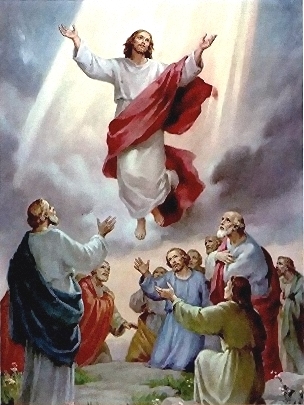
Today is Ascension Thursday–the celebration of Christ’s ascension into heaven, 40 days after Easter Sunday.

In many parts of the U.S. (though not in California, where I live), this is a holy day of obligation.

I view that as an absurdity. A country should either treat this as a holy day of obligation or not. Culture doesn’t vary that much within a country that it should have different holy days of obligation compared to other parts of the same country. But I’m not the one who makes the rules, and the Vatican approved the current arrangement.

Part of the edge for me is that–given St. Luke’s indication that the ascension occurred 40 days after Easter, we know (at least in approximate terms) that the Ascension occurred on a Thursday, and I don’t like the idea of transferring it to the following Sunday. Of all the holy days, we have special reason to place this one on a Thursday.

Part of it also is that I’ve stood on the place on the Mount of Olives where the site of the Ascention is commemorated by a stone tower, though no one knows precisely where on the mountain the spot was from which Jesus ascended.

Still, it makes it more real to me.

Regardless of what ecclesiastical province you live in–inside or outside of the United States–I hope that you have a very blessed celebration of the transition of Our Lord from this lowly, fallen world back to the realms of glory from which he descended.