Christian Priesthood and Sacrifice: Part 2

SDG here. In my first post, I noted that while it is true that the NT writers do not use the word "priest" in relation to Christian ministers, it is equally true that — with the obvious exception of Hebrews — they also avoid using it in relation to Jesus.

In fact, in the NT the word "priest" overwhelmingly means one thing: the Levitical priesthood. (There are only a few passing references to the universal priesthood of all believers, and perhaps only a single reference, in Acts, to priesthood in a pagan context.)

This does not mean that the NT does not present Jesus as a priest. It does, and not only in Hebrews. Although only Hebrews uses the word itself, the theology of Christ’s priesthood in Hebrews is found throughout the NT.

Above all, Hebrews sees the priesthood of Christ in relation to Psalm 110:4: "The LORD has sworn and will not change his mind: You are a priest forever after the order of Melchizedek."

Although this specific verse is quoted in the NT only in Hebrews, Psalm 110 is the single OT passage most quoted in the NT. Significantly, Jesus himself implicitly applies Psalm 110 to himself, challenging the Pharisees to explain the Messiah’s precedence over his own father David in the opening verse:

"What do you think of the Christ? Whose son is he?" They said to him, "The son of David."

He said to them, "How is it then that David, inspired by the Spirit, calls him Lord, saying,

‘The LORD said to my Lord,

Sit at my right hand,

till I put thy enemies under thy feet’?

If David thus calls him Lord, how is he his son?"

"The LORD" God here speaks to "my lord" the Davidic king, the son of David who is also somehow his lord. Since Jesus assumes that his hearers recognize this to be the Messiah, it follows that it is also the Messiah to whom the LORD God speaks in verse 4: "The LORD has sworn and will not change his mind, ‘You are a priest for ever after the order of Melchizedek.’"

Jesus thus implies that the Messiah, the Christ, is a priest — not in the usual sense of the Levitical priesthood, but of an older order, the priesthood of Melchizedek aspired to by King David and the Davidic monarchy.

This, however, raises another notable point: Although Jesus effectively implies that the Messiah is a priest after the order of Melchizedek, the term "Messiah," like that of priest, is one with which Jesus avoids openly identifying throughout much of his ministry. In fact, when others recognize him as the Messiah, he orders them to secrecy (the so-called "Messianic secret"; cf., e.g., Mark 8:27-30, Matt 16:16-20, Luke 4:41).

A similar reticence seems to emerge at his trials, where Jesus gives the affirmative but ambivalent response "You say that I am" in response to questions ranging from "Are you the Christ?" (Matthew 26:63-64) to "Are you the Son of God?" (Luke 22:70) to "So you are a king?" (John 18:37).

These responses are apparently affirmative (Mark’s Gospel has Jesus saying simply "I am"), but also seem to express some level of reservation or evasion, perhaps a disclaimer regarding misunderstanding. I like the rendering in The Miracle Maker: "These are your words." Jesus seems to be saying something like: "Yes, it is true to say that I am [the Christ, the Son of God, a king], though what I mean by that and what you mean may not be the same thing."

A well-known triple formula (noted in the combox of my first post) acclaims Jesus as "prophet, priest and king." "Prophet" correlates with his messianic role (the "prophet like Moses"). "Priest" is the term under discussion. As for "King," Jesus was acclaimed "king of the Jews" by the Magi at his birth, and died under a titulus bearing that title; yet although he preached constantly about "the kingdom" of God or of heaven, he had very little to say about being a king, except in that ambivalent response to Pilate.

Although each of these terms is rightly ascribed to Jesus, and although he claimed them all in different ways, Jesus also distanced himself from each of them in certain ways as well. Disclaimers like "My kingdom is not of this world" offer a reasonably clear window into this ambivalence, certainly as regards "king" and "Messiah." In the first-century Judaism of Jesus’ day, such language was implicitly understood as a political and military challenge to the Roman empire; and whatever challenge Jesus’ teaching might have had for the Roman empire, he was not a revolutionary in the usual sense. Jesus was the heir of David, not of Judas Maccabeus. 

But it was more than that. If Jesus’ mission could be understood in terms of the Davidic and messianic hope of Psalm 110, it must also be understood in terms of the still older archetype to which, in that very psalm, the Davidic monarchy itself aspires: the royal priesthood, or priestly kingship, of Melchizedek, "king of Salem" and "priest of God Most High" (Gen 14:18).

Although Psalm 110 attests the hope of the Davidic monarchy for a restoration of this double office of priest and king, it was a hope never completely fulfilled in the Davidic kingdom. The Davidic kings did exercise some priestly functions, particularly in the early years, but the priestly function remained with the Levitical establishment, where it resided since Exodus 32.

It would be a mistake to reduce Jesus’ mission to any Old Testament type. Only Jesus is Jesus: He is unique, the one and only Savior. He is not simply the son of David, the Messiah or even the new Adam.

Still, the primeval blend of priest and king represented by Melchizedek, reaching back before such specifically Hebrew institutions as the Levitical priesthood and Davidic monarchy — a priestly kingship with one foot in the pre-Abrahamic world of the early chapters of Genesis — clearly represents an important touchstone in NT thought for understanding Jesus’ mission, one going back to Jesus himself.

In this connection, it’s helpful to remember that both the Levitical priesthood and the Davidic monarchy were institutions with origins in sin and rebellion. The origins of the Levitical priesthood are directly connected with the worship of the golden calf; the Davidic monarchy succeeded to the kingship of Saul, crowned by Samuel at the insistence of the people in spite of God’s warnings. Neither of these provisional and concessionary institutions is an adequate background to understand Jesus’ mission. If Jesus is a king and a priest, he is in a way less like Aaron and Levi, or even David and Solomon, than like Melchizedek.

All of this, though, is a nuance liable to be lost in a world in which words mean what people use them to mean. For first-century Jews, a "priest" was a Levitical priest — period. A king was either someone like Herod or Caesar, or else someone who would challenge the rule of these foreigners and restore the kingdom to Israel. For Jesus to openly claim titles like "king" or "priest" would inevitably have meant something to his hearers Jesus didn’t intend.

This continued to be the case in the early decades of the New Testament church. The process by which the Church’s sense of its own identity as a phenomenon separate from Judaism (or of Judaism’s emerging identity as a phenomenon separate from following Christ) has been much studied; here it’s enough to note that there was a process. In the very earliest days, the Christians continued worshipping in the Temple; as time went by, the Church continued to understand itself in relation to Judaism, though that relationship was increasingly one of opposition as well as continuity.

Although in time the language of Jesus as "our high priest" would be unreservedly embraced by the early fathers, especially after the destruction of the temple in A.D. 70, the Levitical and Temple establishment continued to dominate the early Christians’ understanding of "priesthood" for decades. Jesus laid the foundations by quoting Psalm 110, but it was still a bold leap for the writer to the Hebrews to identify Jesus as "our high priest."

(To be continued)

California Home Schooling Update

EXCERPT:

I think the state court is looking at the state Constitution upside down. The court finds no constitutional right to homeschool one’s children. But in a free country, people are free to do anything not expressly prohibited by law. If the Constitution is silent about homeschooling, then the right is reserved to the people. That’s how the Framers of the U.S. Constitution said things are supposed to work.

Last week, the appellate court surprised everyone by agreeing to rehear the case.

GET THE STORY.

Christian Priesthood and Sacrifice: Part 1

SDG here with the first post in a series on Christian priesthood and sacrifice.

Among the doctrines of the historic Christian faith rejected by the Protestant Reformers was the understanding of the Eucharist as a sacrifice offered by a ministerial priesthood.

Although this language of priesthood and sacrifice was ubiquitous in the early Church, going back to the earliest days of the apostolic and post-apostolic church, and was both widespread and uncontroversial, Protestantism from its inception has considered considered it unscriptural.

For the New Testament writers, Protestants contend, the only Christian priesthood is the high-priesthood of Jesus Christ (especially in Hebrews) and the universal priesthood of all believers (cf. 1 Peter 2:9, Revelation 5:10); the only sacrifice is that of the Cross.

It must be acknowledged that the New Testament writers had the word "priest" (Gk hiereus) available to them; indeed, they used it to refer to the Levitical priesthood as well as the priesthood of Christ and of all believers. Yet for Christian ministers they appear to have scrupulously avoided this usage, preferring instead terms such as "elder" and "bishop" for church leaders, and never once designating such leaders as "priests." This usage cannot be dismissed as inadvertent; it is clearly intentional.

This is indeed a striking fact. Yet the usage of the apostolic and post-apostolic Christ is equally striking and equally intentional. The Fathers possessed and venerated the sacred scriptures, yet they unhesitatingly chose language that went beyond the NT record: From the beginning, Christian ministers were called priests (Gk hiereus, Lat sacerdos), and sacrificial aspect of the priesthood was explicitly developed in relation to the Eucharist.

This language of priesthood and sacrifice applied to Christian leadership and Eucharistic worship can be found from Clement, Ignatius, Justin Martyr, Irenaeus, Tertullian, Cyprian, and so on. Moreover, Christian history records no resistance, opposition or resistance on the part of any Father to this widespread usage.

From the facts briefly described so far, it appears only two conclusions are possible:

(a) Either the usage and theology of the apostolic and post-apostolic Church departed very early and very thoroughly from the biblical pattern, so much so that a covenant ordinance was converted into a sacrificial rite and a presbytery into a ministerial priesthood without anyone apparently noticing; or else

(b) the usage of the apostolic and post-apostolic Church represents the theology but not the language of the NT; in which case it is necessary to explain why the NT writers so carefully avoided terms readily available to them.

In seeking a solution, it should be noted from the outset that the biblical data has been somewhat oversimplified. It is true that the NT writers had the word "priest" available, and used it readily for the Levitical priesthood. Yet within a Christian context the word "priest" does not seem to have caught on particularly easily in any connection — either with respect to the priesthood of Christ or the universal priesthood of believers. 

Although it figures prominently in Protestant thought and is equally valid in Catholic theology, the universal priesthood of all believers is mentioned only fleetingly in two late NT books, 1 Peter and Revelation.

More strikingly, and crucially, throughout the NT the word "priest" is never once applied to Jesus Himself in any book but one — that one, of course, being the gigantic and enormously significant exception, the book of Hebrews.

Unquestionably, the magnificent treatment of Christ’s priesthood in that book more than makes up for the silence elsewhere, and (insofar as the canonicity of Hebrews is accepted as a settled matter) establishes this doctrine as unquestionably scriptural. Still, it leaves the question: Why did all the other NT writers consistently avoid applying the term to Christ?

It is not that the theology of Christ’s high-priesthood is contrary to the rest of the NT, or even that it is simply unknown to the other writers. Rather, the priesthood of Christ is present, though implicitly, in the teaching of Christ Himself and of the rest of the NT, and made explicit only in Hebrews.

But this only refocuses the question in a new form: Why teach the theology but scrupulously avoid the term? Why were the NT writers (with one major exception) so reticent to call Jesus a priest?

In considering this question, we may cast light on the NT church’s preference for the language of the presbyterate and episcopacy over the priesthood for its own ministers. It may be that whatever is at the root of the reticence here is also the reason that the term was not applied to church leaders.

(Continued in part 2)

Why Muslims Become Christian

SDG here with a Yankee cap tip to Mark Shea for pointing out Sherry Weddell’s in-depth blog post on a recent study of why Muslims convert to Christianity — a timely subject with Magdi Allam’s Easter Vigil baptism by Benedict XVI.

I’ll give the summary of the reasons below from the last link above at Christianity Today Library site, but do check out Sherry Weddell’s blog post for some good commentary… and a great punch line in the combox.

1) The lifestyle of Christians. Former Muslims cited the love that Christians exhibited in their relationships with non-Christians and their treatment of women as equals.

2) The power of God in answered prayers and healing. Experiences of God’s supernatural work—especially important to folk Muslims who have a characteristic concern for power and blessings—increased after their conversions, according to the survey. Often dreams about Jesus were reported.

3) Dissatisfaction with the type of Islam they had experienced. Many expressed dissatisfaction with the Qur’an, emphasizing God’s punishment over his love. Others cited Islamic militancy and the failure of Islamic law to transform society.

4) The spiritual truth in the Bible. Muslims are generally taught that the Torah, Psalms, and the Gospels are from God, but that they became corrupted. These Christian converts said, however, that the truth of God found in Scripture became compelling for them and key to their understanding of God’s character.

5) Biblical teachings about the love of God. In the Qur’an, God’s love is conditional, but God’s love for all people was especially eye-opening for Muslims. These converts were moved by the love expressed through the life and teachings of Jesus. The next step for many Muslims was to become part of a fellowship of loving Christians.

Those are the highlights. The reasons for checking out Sherry’s blog post include her own commentary and insights, but JA.o readers scanning down to the combox will note a very familiar tone in the very very very extensive, yet almost totally insubstantial, rambling, ADD-tinged polemical headlines that follow.

Scanning down, and down, and down… and down… I found myself wondering why Sherry hadn’t just deleted the comment… and then I got to her reply, and laughed out loud.

As Mark Shea says, check thou it out.

P.S. Mark also links to a couple of worthwhile articles on priestly doings among Muslims. Thanks, Mark!

NewsWeak – “Well, That About Wraps It Up For God”

As always, the rumor of God’s demise is a tad premature. The
journalist (and I use the term only in the driest academic sense) of this piece is all a-twitter because an upcoming experiment might provide evidence of a particle that might lead to more experiments that might
one day lead to a Great and Glorious Unified Theory that permanently
consigns God to the dustbin of history, and she wants to be there with
a dustpan.

Archimedes is once supposed to have said something like "Give me a
lever long enough, and a place to stand, and I can move the world".
Journalist Ana Elena Azpurua is all giddy over the mere rumor of a
"lever long enough", but fails to consider the lack of any place to
stand.

Her problem is this; How does she expect scientists to
mathematically disprove the existence of God, when they can’t prove the
existence of mathematics? I’m puzzled how she hopes Science will go
about proving that faith is unreasonable, when it can’t begin to demonstrate even that reason
is reasonable. All Ms. Azpurua’s faith is in Scientism, her chosen
religion, and she is on the verge of a religious ecstacy, overtaken by
mysterious utterances that sound a great deal like gibberish;

"At some point will it be possible to find proof that God or the Ultimate Designer does not exist?" or, "What about possible contributions toward finding a final theory? Would that upset religious believers?"

I
don’t care how many theories and equations you stack on one another,
explain "2+2=4". For that matter, explain why "2" is not just a private
concept to which you have some inexplicable sentimental attachment.
Face it, madame, the first and fundamental action of Reason is an
unreflective leap of blind faith. Faith in our senses, first, and in
our ability to rely on reasonable guesses after that. You (and your
interview guest) are as thoroughly religious, in your fashion, as any
cloistered nun.

Add to that the fact that we learn absolutely nothing of scientific
interest from the interview, and you begin to understand how such
science groupies as Ms. Azpurua are doing more to destroy real science
than any tub-thumping fundamentalist preacher could ever hope to. She’s
too busy salivating (over the prospect of mankind handing God his pink
slip) to actually ask any questions that have to do with, you know,
science. It makes the article not only silly, but mind-numbingly dull.

Way to go, Newsweek.

(Visit Tim Jones’ blog Old World Swine)

B-16 Mystery Photo

SDG here with a real Mystery Photo culled from the Internet. Who is pretty obvious, and When, judging from the directory path, is recent. Anyone have any insight into Where and What?

A few penetratingly insightful observations:

  • Wherever B-16 is sitting, it’s a darn huge space with a darn huge, um, wood or metal thing.

  • I would call it a reredo, if I knew the space were a church, and if I could see an altar anywhere.

  • The cleric on the right (our right) could be reading from a book of the gospels, so this could be Mass.

  • It looks to me like Christ, center top, is rising in triumph in the harrowing of hell, or something. Although theoretically he could be descending into hell.

  • Not entirely sure what’s going on around his head.

  • The figures around him presumably include denizens of hell.

  • But there may be other figures too.

Well, that’s all I’ve got to say about that. Any other thoughts, guesses, speculation, opinion, knowledge?

P.S. A friend found this at the Web clearinghouse site Digg.  I scanned the comments there to see if anyone knew anything. They didn’t. Warning: Do not head over to Digg to read the comments unless you feel like being offended today. People can be unbelievably moronic/vitriolic/puerile. It actually makes you appreciate how thoughtful and smart combox discussion around here tends to be, odd trolls and all.

Thoughts on Being Catholic (Year 16)

SDG here, at the beginning of my 17th year as a Catholic, with some thoughts in response to a combox post from a reader calling himself John:

My wife and kids and I joined the Catholic Church last Easter, went to mass fairly reliably for the first number of months, then less consistently over the ensuing months. My wife revealed to me a few months ago that she just can’t stand all the pageantry and symbolic acts of the mass; that it seems contrived and unnecessary, and that she doesn’t think she needs to attend confession, that she can simply bring her issues straight to Jesus. She and I agree the preaching (homily) is quite weak at all the services we’ve attended compared to nearly every other type of church we’ve attended, and we don’t get that same feeling leaving church like we did years ago while attending Lutheran services. Our kids are also bored to tears at Mass and really dislike going. We’ve started visiting other churches (baptist, free churches, etc.) but haven’t found one we like. I still feel some sort of attachement to the Catholic Church, but don’t know what to do…any suggestions?

John, you raise a lot of important and complicated issues in a few sentences. One thing that might help me (and others) as we try to offer responses would be to know more about what originally led your family to the Church in the first place. Did you have friends that were Catholic? Were you convinced by the stories and arguments of converts? Did you read books? Were you drawn by the Real Presence of Christ in the Eucharist, or by the teaching authority of the Magisterium?

Since the issues you mention are significantly (though not entirely) experiential, for what it’s worth, I’d like to share something of my experiences over the last 16 years.

First of all, let me say that I understand and empathize with your experience of not getting what you want out of going to Mass. While that is very far from my present experience, it has been my experience for long stretches in my past.

My wife Suzanne and I were received into the Church on Easter Vigil 1992, the year after we were married, in what I would consider a far-from-great diocese in a far-from-great parish. (I remember one “homily” consisting solely of a dramatic reading of Dr. Seuss’s Oh, The Places You’ll Go!) Shortly afterwards, we moved to Philadelphia, where I entered the Religious Studies MA program at St. Charles Borromeo Seminary.

Our years in Philadelphia were in many ways a godsend. We had some solid priests, my studies at St. Charles were wonderful, and partly through St. Charles we connected with a vibrant community of Catholic young people in the area. Among other things, we met semi-regularly for Catholic movie nights in which we watched morally and spiritually rich films, prayed night prayer, and sang hymns. Once a month early on a Saturday morning, there was a  pro-life prayer vigil that began with Mass followed by a rosary prayed outside a nearby abortion clinic, then back to the church for eucharistic exposition. Often afterwards a number of us would go out for brunch together.

Although we never found a parish where we felt deeply at home, those Philadelphia years were in many ways a blessed time for us, and helped us connect culturally and experientially with the Catholic faith we had originally come to embrace for scriptural, theological and historical reasons.

Then this blessed time ended, and whatever strength we gained was sorely put to the test after we moved to a diocese where we struggled in isolation and agony for years. During that time we visited nearly every Catholic church we could find within a thirty-minute radius. Almost uniformly, the liturgy was more or less miscarried, the music ranged from lame to unbearable, the preaching ranged from insipid to downright heretical, and the architecture was high-school gymnasium/auditorium by way of 1960s décor.

For the most part, we tended to alternate between two parishes with adequate pastors. One was a convert from Lutheranism, a staid and steady fellow with a canon-law background who wasn’t much of a people person but had the great virtue of doing the liturgy with punctilious correctness. It was a well-to-do parish of mostly older parishioners, which for a young family like us wasn’t great from a community perspective, but did have the virtue of bringing a certain dignity and traditionalism to the music and hymn choices, too. However, we never really connected with anyone at that parish, and always felt like visitors even though we were as involved as we could be (we taught seventh-grade CCD, among other things).

The other parish we frequented had a pastor with a lively faith and a good heart, but among other things had a hard time saying no to anyone, and one consequence of this was that the so-called music ministry was pretty oppressive: guitars, drums and aging hippies singing glory-and-praise songs off-key. I vividly recall one bleak Good Friday service with a younger guitarist enthusiastically drumming on his guitar during a rousing rendition of “We Come to Tell Our Story.” My only comfort in that dark moment was that I could dimly relate to Jesus’ Psalm 22 cry on the cross.

Incidentally, at that parish we were befriended by a lovely Catholic family who became our only local Catholic friends at that time in our lives. Shortly after that, they moved to Boston, and we were alone again.

This went on for five years. It was an arid, lonely, miserable time; looking back, I call it our years of wandering in the wilderness. In the grand scheme of things, we were blessed — two kids, a good job (mine) that allowed Suz to stay home with the kids, a house, family nearby, and toward the end the beginning of my work with Decent Films. Still, many, many times I prayed to God to deliver us.

And then, about six or seven years ago, He did.

It happened all at once: A third kid, a new job, a different commute, and suddenly we were looking at houses in a different neighborhood, a different diocese. Before long we became aware how different the diocese of Newark — to which Archbishop Myers was just moving at that time, same as we were — was from where we had been.

Before long, we found a parish home with solid priests and strong community that has gotten stronger over time. We worship in a magnificent 150-year-old French Gothic church with nearly all of its traditional accoutrements intact. We are surrounded by (generally large) Catholic families who love their church (local and universal) and take their faith seriously, Recently we began holding monthly men’s meetings and women’s meetings (we have to take turns because there’s way too many children for the men and women to regularly get together at the same time).

The music has been a great blessing. Our church is known for its Hook & Hastings pipe organ (Thomas Edison, who lived just down the road, did some work on it). Our former music director, a convert from Episcopalianism, was a treasure, and when he retired I was not sanguine about finding someone to fill his shoes. Glory to God, we did (another convert from Episcopalianism!). I’m just coming off four days of Triduum and Easter singing in the choir or cantoring at four Masses plus the Good Friday service, with Latin, polyphony, plainchant, traditional hymns, and not a glory-and-praise ditty in sight. On Easter Sunday we had a small brass orchestra and both children’s and adult choirs (on Christmas we had a small string orchestra). I can truly speak of praising God “with greater joy than ever” in this Easter season.

Our life here isn’t perfect, but it’s richly blessed in so many ways that I can’t begin to thank God for it all. I’m especially glad to be able to raise my children in this environment, to let them grow up in a church that looks like the church is meant to look. (Incidentally, we now have five children, and are expecting our sixth.)

Looking back now at our wilderness years, I believe we were being tested. A vibrant faith community of like-minded believers is a wonderful thing, and I’m profoundly grateful for what we have now. But it’s not something God owes us. Nor is it a sine quo non of the Christian life. We are called to be faithful in good times and in bad.

John, your wife talks about being able to bring her issues straight to Jesus. All right. But is that an argument for not going to a Catholic church? Or for not going to church at all? Why go to any church, since one can take one’s issues straight to Jesus?

Where would you go, anyway? Some evangelical church with 45 minutes of praise songs and/or an hour of Bible class? That might be rewarding (or not), as far as it goes. But it’s not church. I have an MA in religious studies; I’ve taken a lot of Bible classes, and I’m a big fan. But that’s not the historic pattern of Christian worship. And neither is 45 minutes of praise songs.

As regards the “pageantry and symbolism” of the Mass, John, I’d hazard a guess that your wife could possibly be reacting to the lousy way the ritual and ceremony of the Mass has been enacted in her experience. Just wondering, has she read Thomas Howard’s Evangelical is Not Enough? I highly recommend it. Of course it helps that I encountered that powerful little book at a time in my life when I was utterly ripe for it, when I was fed up with reductionist Protestant forms of Sunday gatherings and ready for something richer and fuller. For me, Howard crystalized a thousand and one things I had already begun to work my way toward on my own.

Ritual and ceremony are not contrived and unnecessary, except in the sense that all human culture and experience is contrived and unnecessary. Wedding rings, shaking hands, Christmas trees, birthday cakes, napkin on the left, pallbearers, tuck the children in at night, floral arrangements in church or at a wedding or a funeral, Easter eggs, “Hail to the Chief,” bride and groom cut the cake, stand up for the judge, mortar boards at graduation, hold the door for the lady, kiss each other hello and goodbye and good morning and good night — none of these are pragmatically necessary, and all of it is how we human beings order our lives — if not with these symbols, then with something else.

In ordinary life, what the particular symbols and gestures are often enough doesn’t matter. But to be Christian is to believe, first of all, that the Creator of the world happened to make contact with our race within the context of a specific cultural milieu, in a specific symbolic world sovereignly chosen and carefully shaped and guided for millennia by His Spirit. From circumcision to Passover, from the annual chanting of the psalms of ascents on the pilgrimage to Jerusalem to the vestments of the Aaronic priesthood, the world into which Jesus was born was full of pageantry and symbolism.

And then, when our Creator favored our race by taking on our flesh and offering us so great salvation, He left us with symbols and gestures chosen by Himself and not matters of human convention. He took bread and broke it, and wine, and pronounced them to be His body and blood. He commissioned His disciples to go about immersing people in water in the name of the Father and the Son and the Holy Spirit. When the Holy Spirit fell on Pentecost, He did not proceed to liberate the people from pageantry and symbolism: Three thousand people were ceremonially dunked in water on the first day alone, and they immediately proceeded to devote themselves to the business with the breaking of the bread, along with the apostles’ teaching, fellowship and the prayers (Acts 2:42), particularly on the first day of the week (Acts 20:7).

The Lord left His church in the care of apostles who went about laying their hands on chosen men and appointing them to continue the ministry of the church. The New Testament also mentions anointing with oil and laying on of hands for the sick. The Gospels record set words given by Jesus: This is my body; in the name of the Father and the Son and the Holy Spirit; Our Father who art in Heaven. Given by Jesus, not made up by us.

The book of Revelation describes pageantry and symbolism even in the worship of Heaven itself: thrones, crowns, robes, antiphonal exclamations, prostration. Why should the twenty-four elders not only fall down before the throne of God, but also throw their crowns at His feet, of all things? Does God need or require such lavish outward gestures of worship and self-abnegation? No. But we creatures of bodies and senses and imagination find in such outward acts and symbols the crown and completion of the worship in our hearts.

From the outset the worship of the early church was structured and liturgical. St. Justin Martyr describes it in his mid-second century Apology, only decades after St. John’s death, and there are glimpses of it in the earlier Didache as well as the New Testament. As documented by St. Justin and other early sources, it’s the same basic structure the Church has followed for 2000 years. The brethren assemble on the first day of the week. First comes what we today call the liturgy of the word. There are readings from the Apostles’ memoirs and the prophets, followed by instruction and exhortation from the one presiding. Then comes what we today call the liturgy of the Eucharist. All rise for the prayers; bread and wine are brought; the one presiding offers prayers and thanksgiving, thanking God at length for our being counted worthy to receive the sacred things. Justin cites the words of Jesus at the Last Supper: This is My body; this is My blood. No ordinary food and drink these; they are the body and blood of Jesus Christ. All the people give their amen — what we today call the Great Amen — and the Eucharist is distributed (by deacons) only to the baptized. For those who are infirm and unable to be in attendance, the Eucharist is carried to them.

This is what Christian worship looks like. For some of us, it may come more naturally than others. For all of us, it is essential. I have great sympathy for those who struggle through services with “creative” priests, popcorn music and Protestantized architecture — and all the more for those struggling to raise Catholic kids in such an environment. It is hard to look past all that and see yourself surrounded by angels and archangels and all the company of heaven. And yet there it is: It is in the Eucharistic liturgy, as nowhere else on earth, that we when we lift up our hearts to the Lord we are actually caught up into the eternal worship of the heavenly liturgy.

For those who struggle with seeing it, I can only report that God is faithful and faithfulness is rewarded. Early in our journey to Catholic faith, Suzanne, as yet reluctant and unhappy, wanted to know what would be expected of her: Would she have to pray the rosary, or have statues in her house? No, I told her: Mary must be honored, but the rosary is not strictly obligatory, nor would she have to own statues. Today, Suzanne has sizable collections of rosaries and statues, and what began as her daily rosary with our eldest daughter has become an evening routine for our whole family.

John, I’m glad, truly, that your wife continues to value her faith in Jesus. Obviously I can’t in this post begin to touch on all the apologetical issues, but I do want to say that in what will be very soon forty years of following Christ, I have struggled through many issues, doubts and uncertainties — but one thing I have not found reason to doubt in going on 20 years as a Catholic, one thing I have come ever more firmly to hold as a fundamental conviction, is this: If there is any truth whatsoever to the whole Christian story — if Jesus is who He says He is, and if in this Easter week we can truly celebrate His victory over death — the fullness of that truth is nothing else than the Catholic Faith. Biblically, historically, theologically, Catholicism is Christianity, in its full and complete form. The Christianity that Jesus left on earth, the Christianity proclaimed by the apostles and those who received the faith from them and passed it on to others who then passed it on to others in turn, is a Christianity with a saving water baptism that washes away sins, a priesthood offering a eucharistic sacrifice in which Jesus is really present, an episcopal office reigning in place of the apostles.

Every other Christianity that has come along is truncated, fragmentary, partial in relation to Catholicism. The essence of heresy is to deny, to pick and choose, to pit one truth against another, affirming the part over the whole (“catholic” = pertaining to the whole). Heresy never adds to the whole. It always begins with subtraction. The Arians subtract Christ’s divinity; the Docetists, his humanity. Modernists subtract the divine authorship of scripture; fundamentalists, the human authorship. Pelagians detract from God’s grace and sovereignty; Calvinists (some at least) from human freedom and responsibility. Various monarchian, modalistic and monadic sects, from Islam to Jehovah’s Witnesses and even the Jewish people, deny God’s Triune nature; most Protestant communions subtract the efficacy of the sacraments as well as the authority of the ecumenical councils and of sacred tradition; even the Orthodox subtract the Petrine office of the bishop of Rome.

Of course many of these groups try to spin their denials as positives and  Rome’s affirmations as negatives. But these efforts are transparent special pleading. Non-Trinitarians claim that Trinitarians “deny” the oneness of God, but of course we don’t: We affirm both that God is one being and also that He is three Persons. It is they who deny, not we. The Orthodox claim that Catholics effectively deny the principle of conciliarity, but in fact we affirm both conciliarity and also the Petrine office; the denial is theirs, not ours. Protestants say that Catholics deny sola scriptura and sola fide; but in fact it is the Protestant solas, the “onlys,” that constitute denials and fragment the faith; Catholics affirm both the authority of sacred scripture and also that of sacred tradition; both the sufficiency of Christ’s once-for-all sacrifice and also the efficacy of the sacraments in communicating the grace of that sacrifice to us, the salutary effects of that grace in our lives and works done in Christ, and so forth.

These are intellectual arguments, but for me there is something critical at the bottom of them that holds me fast to the Church, whether I am blessed with a good parish, as now, or suffer in the wilderness as formerly: I will not exchange or sacrifice any part of the historic Christian faith for whatever potential perks I might hope to get hanging my hat at a different church.

Indeed, having been brought by God to where I am now, I literally could not go elsewhere; there is nowhere else to go. Like St. Peter in John 6, I can only say to the Church that is our Lord’s Bride and Body, the fullness of Him who fills all in all: To whom would I go? You alone have the words of eternal life.  It is here that Jesus gives us His flesh and blood to eat and drink, here that the whole Christ is really present, here that the teaching of Christ is proclaimed in its fullness. There is nowhere else to go.

An Actor for All Seasons

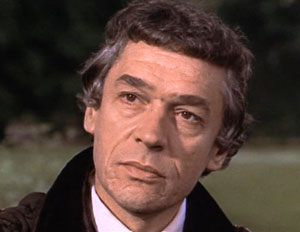
SDG here with sad news: Paul Scofield, who brilliantly portrayed St. Thomas More in Fred Zinneman’s A Man for All Seasons, has died.

Scofield originated the role of Robert Bolt’s stage play, adapted by Bolt himself for the screen. He knew the role intimately, and his performance is magnificently layered and sensitive.

Primarily a stage actor, Scofield’s filmography also included Quiz Show, Branagh’s Henry V and the Mel Gibson Hamlet.

Few actors could make decency and integrity as convincing and appealing as Scofield. If his Thomas More isn’t enough for you, check him out as Ralph Fiennes’ father in Quiz Show. He embodies a character for whom principles are not just abstract theories, but concrete realities taken for granted as matter-of-factly as gravity.

He does the same thing as More in A Man for All Seasons, although with more worldly-wisdom about the weaknesses of other men. In that film, the principles he stands for include the indissolubility of matrimony, the Petrine primacy of the Bishop of Rome, the inviolability of an oath, and (perhaps most importantly for Bolt) the binding authority of conscience.

He could also do villains, e.g., the Nazi  colonel opposite Burt Lancaster in The Train. But even there he brought traces of corrupted idealism and nobility to the role.

A Man for All Seasons is one of the Vatican film list‘s 15 films in the category of Religion.  Bolt’s language, based as much as possible on More’s own words, strives to create what Bolt called "a bold and beautiful verbal architecture." For the rest, Bolt added, "my concern was to match with these as best I could so that the theft should not be too obvious." I my book, as noted in my review, he succeeded.

I first saw this film nearly twenty years ago, before I became a Catholic, and it had an enormous impact on me. It was one of the first films I reviewed, and while my skills as a critic were still in an early stage of development, I don’t think it’s a bad review (though I would write it differently today).

For those who have not lately seen A Man for All Seasons, More’s via dolorosa would make ideal viewing during Triduum.

An Important Question

A while back I was watching the 1970s version of Invasion of the Body Snatchers, and there’s a moment where the four heroes are holed up in Donald Sutherland’s San Francisco apartment/house/whatever, and they’re surrounded by pod people, and they can’t phone for help because the pods control the phone system, and they can’t stay where they are, and they don’t know what to do or how to defend themselves, and in this panicky moment Jeff Goldblum turns to Donald Sutherland and anxiously says, "Do you own a gun?"

"No," Donald Sutherland says sheepishly.

And at that moment every gun owner in the audience wants to say, "Yeah! Take that, you 1970s Bay Area stereotype! That’s where you and all your gun-controlling friends will get the human race: Overrun by shape-changing extraterrestrial plants!"

LET’S HOPE THE SUPREME COURT DOES BETTER.

A Voice Of Sanity?

Despite the current UK government’s seeming desire to plunge headlong into as much babykilling as possible, there are a couple of interesting developments on the pro-life front in Britain at the moment.

First, the Royal College of Psychiatrists has reversed its earlier stance (PDF warning) that abortion’s mental health risks to the mother were outweighed (before 24 weeks) by the relief of getting an abortion when the mother found the pregnancy distressing.

Now they have announced (PDF warning), based on a review of the literature, that the possible mental health risks of abortion are significant enough that they need to be taken seriously and that the whole question of the mental health risks associated with abortion needs to be revisited, with possible changes to medical practice and public policy.

Legislation, which is not supported by the UK government, is also being introduced that would shorten from 24 to 20 weeks the time when abortions can be performed "for social reasons" (ick!). I assume, since this proposal isn’t backed by the government, that it isn’t likely to pass, but it’s at least a sign that the pro-life movement in Britain isn’t so dead that it’s unwilling to try a legislative route to protecting babies’ lives.

GET THE STORY.

(NOTE: One of the mental health accounts in the story will rip your heart out.)

One other thing: It might be too much to hope for, but in the Royal College of Psychiatrists’ re-evaluation of this subject, I hope they don’t overlook the importance that a mother’s faith can have in helping her cope with post-abortion syndrome. Finding forgiveness from God is important in a situation like this, not just pharmacology and secular counseling.