Decent Films doings, 8/2009

SDG here with a few Decent Films notes.

Remember the LifeSiteNews Harry Potter / Pre-16 brouhaha? Jimmy has written about it more than once (as has Eastern Orthodox Harry Potter maven John Granger).

Well, the story’s still out there, and recently I got an email asking me about the Ratzinger letters as well as Fr. Amorth’s anti-HP comments, so I’ve offered my own take in a piece facetiously called “Harry Potter vs. the Pope?” (a play on the title of my eight-year-old essay “Harry Potter vs. Gandalf“).

The new essay is a spin-off of my Decent Films Mail column, for which I just posted two new batches, DF Mail #14 and DF Mail #15. In these batches: Watchmen and caveats of an (apparent) atheist-anarchist who objects to associating either label with nihilism; lots and lots on Up and Harry Potter; The Wizard of Oz and Theosophism; and more. If you haven’t read my DF Mail column, you might enjoy perusing the last few installments as well.

Also, of course, my review of the latest Harry Potter film has been up for awhile now.

Other new reviews posted since my last Decent Films update include G-Force, Public Enemies and Ice Age: Dawn of the Dinosaurs.


Sadly, Disney’s G-Force has nothing to do with this.

P.S. Sadly, G-Force has nothing to do with the much more awesome “Battle of the Planets.” In fact, the more I think about it, the more I suspect that the whole inspiration for G-Force (other than a corporate mandate to sell talking plush toys to children) began with a single family-film-ified pop-culture reference joke (“Yippie kay yay, coffee-maker”), and then the whole plot was constructed around that single line. What else could possibly be the explanation for a plot about robotic household appliances planning to take over the world (or whatever)?

White House Handwaving

I really don't understand why President Obama is so interested in passing the type of health care bill he and his colleagues have been trying to ram through Congress. 

Any reasoned look at what is being proposed will lead to the conclusion that the long term effects of the program will be to increase costs (something bureaucracy does exceedingly well), increase taxes, lead to greater deficits, lead to health care rationing, drive private insurance out of the market, promote euthanasia, lead to more nanny state interventions in people's lives, promote greater dependency on government, stifle the development of new medical treatments (just when we're getting to the point that we might start seriously extending the human life), and basically kill a lot of people, both here in the U.S. and in other countries, which have been relying on American innovation since their own socialized medical systems put the squeeze on domestic innovation.

Why would anyone want that?


I understand that some people might want individual parts of that. Nanny staters, for example, would be in favor of more nanny statism. Euthanasia supporters would want more euthanasia.


But the package as a whole would be a disaster.


Why would he want that as part of his legacy?


It's not like we haven't had experience with seeing what happens with massive federal entitlement programs and how they morph into major threats to the nation.


This isn't the 1930s or 1960s when people could pretend that these things could be sustained indefinitely. The writing is now on the wall, with crises for Social Security, Medicare, and Medicaid looming.


So I dunno what is in our president's mind.


But the following video provides some peeks . . . 


When this video got linked on Breitbart and Drudge, the White House was quick to respond and put out the following video by Linda Douglass, who you may remember from her time as an ABC reporter. (An ABC reporter getting a job in a Democratic White House . . . fancy that.)


While I confess that I wasn't pleased that the first video has as many cuts in it as it did, I don't find Ms. Douglass's video to be anything other than
handwaving.

She alleges statements being taken out of context, without showing how the statements in the first video were taken out of context.

That won't do. 

It's just a slimy political tactic to claim you've been taken out of context and then not provide the original context and demonstrate it.

What she does provide is some recent clips of the president talking about health care, saying reassurring things like if you like your insurance plan or your doctor then you can keep them–clips she says people on the other side of the debate aren't likely to show you. (I did.)

The "out of context" charge also suffered a blow when Breitbart and Drudge linked another video of the 2003 Obama event without a cut in it:


In her video, Ms. Douglass ends with an appeal for people to focus on what the President is saying about health care.

This is more handwaving.

What the President is saying (present tense) about health care isn't sufficient. 

The fact is that Obama's previous statements about health care do shed light on his desires and intentions.

And the impression that he is being disingenuous with his present statements is reinforced by his Pinocchio-like style of government, his repeated bait and switch tactics, and his ram-it-through-Congress-before-anyone-including-Congressmen-can-read-and-digest-it behavior.

Ms. Douglass's efforts notwithstanding, there is just no reason to see the President's desire for a "public option" as anything other than a deliberate attempt to get the government into compe
tition with private health insurance companies so it can drive them out of the market and lead to a single payer system.

That is clearly his and his allies' intent, as quotations in the first video show. (The same quotations also disprove the President's assertion that "nobody is talking some government takeover of healthcare"–which is what single payer is.)

Since the American people do not want a single payer system, what we have is the President, again, trying to pull a fast one on the people of his own nation.

It's a disgrace.

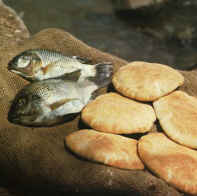
Five Loaves And Two Fish


Loaves-fishes-tilapia002
Right now in the Sunday liturgy we're working our way through John 6, which contains the feeding of the 5,000 (John's version of it) and the Bread of Life discourse.

Last Sunday contained the feeding of the 5,000, and I was annoyed when the priest at the Mass I was attending emphasized a perceived "sharing" aspect of the passage. 

He didn't go so far as to fully subvert the miracle. That is, he didn't say that it was a "miracle of sharing" where people's hearts were moved to share what they had rather than hording it for themselves–a repudiation of the physical miracle that occurred.

But he seemed to be skirting the edge of that idea, without saying anything that would explicity mandate this interpretation.

What he did do was emphasize the idea of sharing, and particularly the generosity of the little boy with the five loaves and two fishes.

This Sunday there was a new priest, and he did the same thing. He didn't spend as much time on feeding (that was last week's reading, natch), but he did stress the generosity of the little boy sharing his lunch.

He also misinterpreted the loaves as probably like rolls instead of probably like pitas or tortillas in form, though we can let that pass.

What I find annoying is all the confident talk about how the miracle occurred because the little boy was selflessly willing to share his lunch.

Not only does that make it sound like God's omnipotence would have been hamstrung if the little boy had said no, and thus giving the little boy's action way too much credit in an ontological sense, it's also giving the little boy undeserved credit in the generosity department.

First of all, who says this was the little boy's lunch–or dinner for that matter?

Five loaves of bread, even if they aren't as big as what you'd buy in a modern supermarket, and two fish, even if they're relatively small, is way too much food for a little boy in that time and culture to have for a single meal. It was too much for a full grown adult to have for a single meal. (When was the last time you had five pitas and two fish for lunch?)

Of course, the boy might have brought food for more than one meal, not knowing how long he'd be at the event, but is there another, better explanation that might be suggested by the text?

Let's look at it. Here is the text in the squishy NAB (so there can be no argument I'm pulling something out of the text that shouldn't have been obvious to the priests just from reading the lectionary version):

When Jesus raised his eyes
and saw that a large crowd was coming to him,
he said to Philip,
Where can we buy enough food for them to eat?”

He said this to test him,
because he himself knew what he was going to do.

Philip answered him,
Two hundred days’ wages worth of food would not be enough
for each of them to have a little.”

One of his disciples,
Andrew, the brother of Simon Peter, said to him,
"There is a boy here who has five barley loaves and two fish;
but what good are these for so many?” 

This isn't exegetical rocket science.

The topic that Our Lord has introduced is where can they buy enough food for the crowd, not how they can get people to share or how they can find somebody who has a little bit of food to share. The topic is buying food.

If you look at the Greek, the verb is agorazo, which means things like "attend market," "do business," "buy or sell," etc. It's a specifically commercial, marketplace term, not a more general one like "get" or "find." So the NAB gets it right with rendering it "buy."

The theme of buying is thus carried on in the conversation, with Philip and Andrew pointing out problems for the proposal.

First, Philip points out the huge expense of feeding the crowd–presumably because the disciples don't have that much money in the purse.

Andrew then carries the theme forward by pointing out a source where food can be bought–the little boy–but that the source doesn't have enough food for the crowd. (Incidentally, he may have started with more but have already sold the rest of what he had.)

It makes much more sense, given the context and the flow of the conversation, to see the little boy not as a local who happened to pack an extraordinarily large amount of food for him to eat at the day's event but as an enterprising young salesman who brought food to where he knew there would be a lot of people spending the day and he could sell it.

Like the kids who swarm over Israel's holy sites to this day trying to sell trinkets or snacks or bottled water to the pilgrims who have shown up for religious reasons.

Jesus' crowds were bound to attract such kids, and Andrew happened to spot one.

Presumably, then, before the miracle of the feeding the disciples paid the little boy for his five loaves and two fishes.

That's not a dead certainty. Of course, I'm sure that they didn't steal them from the little boy, and while it's possible that he was overcome by religious feeling and simply donated them (or decided not to charge once he saw them being multiplied), given that his interest in bringing them to the site was probably commercial, it's not unreasonable to infer that he was paid for them.

We're not told one way or the other, but given the clear buying and selling theme in the text, preachers ought not be rhapsodizing about the generosity of the little boy or how he was willing to share with others or how without his act of sharing the miracle might not have occurred.

If anything, the miracle might have had to start with another source of food if the little boy hadn't been paid for his wares.

Of course, the above doesn't amount to a proof. It could be that the little boy had brought a surprisingly large amount of food for himself and then, for unknown reasons, mentioned this to Andrew and then generously shared it with Jesus and the disciples.

But this isn't the way the text reads.

And it's just annoying when preachers get so wrapped up in a sickly sweet, Hallmark card spirituality that they go off rhapsodizing about human sharing and generosity in a way that flies in the face of the text.

The point here is that God did a miracle through Jesus, not that a little boy was generous.

Sheesh!

UPDATE: MORE FROM STEVE RAY.

A Nation Divided!

Hey, Tim Jones here.

The Beer Summit is upon us, and much as I have tried to avoid
reading very much into this hastily manufactured CYA photo-op (where's
Rodney King? Can't we all just get along?), I can't help but notice the
deep and sobering fractures in our society that are revealed in the
beer choices of President Obama, Professor Gates and Sgt. Crowley.

Let me elucidate:

Is it a surprise to find the President choosing Bud Light, the most popular beer in America?
On the contrary, it would have been a shock had he chosen anything
else. Undoubtedly the product of fevered consultation and nail-biting
among the president's advisers, and bolstered by some last-minute focus
group data. To choose a beer with any real, determinate character might
have been to risk alienating some other beer demographic… so, as he
has done since the earliest days of his candidacy, Mr. Obama has chosen
the path that is the safest politically, and that reveals the least
about himself. As I have said before, Bud Light tastes as much like nothing as beer can.

Professor Gates, on the other hand, has boldly chosen Red Stripe, the beer of Liberation from White Oppressors. Think I'm exaggerating? The Red Stripe web site trumpets;

The birth of Red Stripe would later be considered a milestone in
Jamaican history. When the island gained independence from Britain in
1962, a columnist for The Daily Gleaner wrote "the real date of
independence should have been 1928, when we established our self
respect and self confidence through the production of a beer far beyond
the capacity of mere Colonial dependants.

Take
that, Christopher Columbus! I tried Red Stripe a year ago, or so, and
found it remarkably unremarkable (it tastes a lot like any American
mass-market brew) and a good deal too expensive, to boot. Cool bottle,
though.

Sergeant Crowley, of the Cambridge Police Department, has
chosen Blue Moon, a mass-market brew from Coors, coyly and carefully
marketed as a "craft" brew. The third best-selling "craft beer" in
America, right below Sam Adams Boston Lager (which is getting into some
big numbers).

An unfiltered, multi-grain Belgian style beer,
lightly flavored with orange and coriander, it is a tolerable brew,
more substantial than Red Stripe, but still tame enough to be welcome
at any back yard barbecue. Your craft beer friends will still respect
you, and your Lite-weight friends – unaccustomed to beers with a
distinct flavor and color -  will (mostly) not make cringe-y faces and
say things like, "Thanks… now, do you have any beer? This tastes like
swamp water and Earl Grey filtered through a gym sock.". It walks the
line between two worlds, that of the Trousered Ape and the Craft Beer
Snob. The choice doesn't exactly peg Sergeant Crowley as a Complex Man,
but he has chosen the best beer of the three, for my money.

Meanwhile,
we all sit by as the fate of the free world hangs in the balance. What
if there are fisticuffs? Will professor Gates pound his shoe on the
table? What if it is just an awkward and embarrassing twenty minutes of
forced smalltalk? Will Obama have some (carefully planned and
professionally written) one-liners on hand to break the ice? If all
goes well, will they stand together out by the fence in the back alley
behind the White House and say "Yup" in turn, like they do on King of the Hill?

That would be sweet.

(Lovingly cross-posted, for double your blogging pleasure at Tim Jones' blog, Old World Swine)

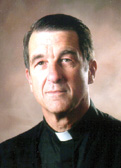
Fr. Fessio No Longer At Ave Maria University–Again

Fr-joseph-fessio QUOTE:

From: Fr. Fessio, S.J.
Sent: Monday, July 20, 2009 1:54 PM

This morning, (Monday, July 20th) Dr. Jack Sites, Academic Vice President of Ave Maria University, flew from Houston, where he was attending a meeting of the Southern Association of Colleges and Schools, to San Francisco, to inform me personally that I was being dismissed from Ave Maria University. Our meeting was amicable and Dr. Sites, as always, acted as a Christian gentleman.

He said that the reason for my dismissal stemmed from a conversation I had in November of 2008 with Jack Donahue, then chairman of the board of AMU. At that time I felt it an obligation to speak to the board chairman before the upcoming board meeting, to make sure he was aware of the urgency of the university’s financial situation. After I had informed him, using projections based on publicly available documents and statements, he asked me what I thought was the solution. I told him that there were policies being followed that were at the root of the problem, that the present administration was irrevocably wedded to those policies, and that without a change of administration the university was at great risk.

Dr. Sites said that Jack Donahue related this conversation to Tom Monaghan, and it was decided (I don’t know specifically by whom) that the university could not have a faculty member making these criticisms of the administration and thus undermining the university.

Dr. Sites told me that there were unspecified others who had similar substantive concerns that I was undermining the university.

I continue to support the university. I pray for its success. I have great admiration for the faculty, students, and many of the staff. I do disagree with some of the policies of the administration. This seems to be the reason I was fired the first time, in March 2007, since the official explanation was “irreconcilable administrative differences”.

Nevertheless, I think it is an accurate summary to say that I am being dismissed as a faculty member because of a private conversation with the chairman of the board in which I made known my criticisms of the university administration; and because of allegations which have not been made known to me and to which I have not been given an opportunity to respond.

I will continue to recommend AMU to students and parents. And I will continue to think my dismissal is another mistake in a long series of unwise decisions.

3-D Tooth Tech

Recently I was having some dental work done (some crowns put on), and I was very intrigued by the technology that they were using–so intrigued that I decided to make a mini-documentary about the process. Basically, they were using desktop manufacturing (not quite 3-D printing, but something close) to make me a new crown on the spot, using computer assisted design.

Because I can't splice videos from my iPhone (and because of YouTube's length limit), there are two videos. The first shows how the crown is physiclaly manufactured (actually, the end of the process) and the second showing how the new tooth is designed on the computer.


Check them out.


(And don't worry. There is no drilling or anything like that in the documentary. The focus is exclusively on the tech.)


(BTW, sorry if the sound is low on your system. I'm still figuring out the best way to do this. At least this time I remembered to get the aspect ratio right!)


(Not Sarek–Spock's father–or Surak–Vulcan's major philospher. But given C-3P0 and Chewbacca, we're in that loose territory.)

BTW, I want to give a very special thank you to Dr. Adam Raschke, who was an excellent documentary partner. He was very articulate and informative, and without him I couldn't have produced this kind of documentary, which was totally unscripted (making up our words as we went along), unedited (no cuts, no splices, no rearrangements), and unrehearsed (no re-takes, no walk-throughs).

Kudos to him! 

Attaboy, Big Guy!

Jupiter-impact Some amateur astronomers have detected a dark spot on Jupiter (left, near the upper pole) that they think may be an impact mark in the atmosphere.

In other words, Jupiter may have been hit by an asteroid, comet, or comet fragment, like when it was struck by fragments of Comet Shoemaker-Levy back in 1994.

MORE INFO ON THAT.

The difference would be that back in the '90s we saw the comet coming and this time we apparently didn't see whatever-it-was sneaking up on the big planet.

I'm just glad that Jupiter is out there taking bullets for the rest of the solar system.

It's thought–especially among rare-earth advocates–that the existence of Jupiter is one of the reasons life was able to evolve here on Earth by shielding the inner solar system from impat events (though there is doubt about that).

In any event, astronomers should figure out soon whether this was a real impact event.

It's just cool that astronomy is one science where nonprofessionals can still make valuable contributions.

And look at how the guys in their combox go into action trying to get the sighting reported and confirmed. 

GET THE STORY. (cht: Instapundit)

Gold, Red, Dark Blue

Sorry I haven't blogged the last few days, but my old laptop died late last week. I was typing along and suddently hit the Black Screen of Death. Not the blue one, the totally black one that you can't even kinda reboot after. Since then I've been struggling with getting a new laptop, data transfer, and getting the new one set up right. (Still working on that. Can't get a couple of programs installed properly.)

Anyhoo . . . 
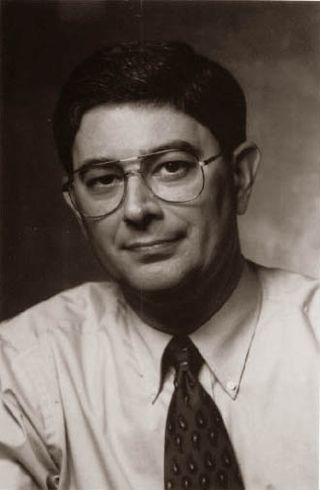
G_weigel I thought I'd offer a few (late) thoughts on George Weigel's piece on NRO on Caritas in Veritate.

Weigel has received a lot of criticism for the piece, some of it justified, some of it not.

Let me begin by saying that Weigel is certainly right and dead on the money about much of what he says.

First, this encyclical is a problem child. That's widely known and can be clearly seen just from what the Vatican has said about it publicly in the run up to its release. We knew that before it even came out.

Once it did come out, the matter was abundantly confirmed.

It's clear that the encyclical was, as Weigel indicates, intended as a 40th anniversary commemoration of Paul IV's encyclical Populorum Progressio, which means it should have come out in 2007. 

But it didn't. It's two years late.

Why?

The Holy See has acknowledged that it was delayed because of the global economic crisis, but if memory served that really didn't hit, not with encyclical-delaying force, until 2008.

It also was delayed because, unlike his previous encyclical Spe Salvi, which B16 wrote all on his own with virtually nobody knowing about it, the pontiff had people from the Pontifical Council for Justice and Peace drafting it and, as Weigel says, he wasn't happy with the drafts and kept rejecting them. 

How many drafts were rejected is unknown, but once the financial crisis happened, Pope Benedict rejected the then-current draft as simply inadequate to the world situation.

Which is quite revealing. Thank God he pulled that version! Presumably it would have been bolder, more moralizing, less nuanced, and more leftist. It would have been terribly embarassing for the Church to have such a document representing its views in the middle of a world financial crisis or to have it released just before the crisis.

All of this fits with Weigel's narrative of the previous drafts of the encyclical being filled with loopy leftist stuff from the PCJP and Benedict struggling to whip the thing into shape.

And look how long it took!

If this was meant to be in print in 2007 then, given how things work around the Vatican, it must have been in production in 2006 at the latest, and possibly 2005–the same year Benedict became pope. Agreeing to do this encyclical (plausibly, as Weigel says, at the suggestion of the PCJP) must have been something that happened very early in Benedict's reign.

What we're looking at is an encyclical that has been under construction for virtually all of Benedict XVI's four-year reign.

That's a problem child, and we should expect it to show signs of that kind of history.

And it does.

Pope Benedict's ultimate response to the drafts he was getting was to try a hybrid solution in which he drafted certain parts himself but left others alone or only modified them (notably by putting in qualifiers to tone down things the PCJP had proposed). 

The result is a patchwork that, as Weigel says, can be marked "gold" where Benedict is speaking and "red" where the default positions of the PCJP are on display. Weigel is totally correct about this. Anybody with an ear for Benedict's voice (meaning a knowledge of his own distinctive theological themes) and a knowledge of the views common at PCJP, can instantly distinguish between the two voices in reading the document.

It's enough to make you think that the source critics have more going for them than you thought.

There's also another kind of passage that Weigel identifies but doesn't assign a color to, so let's use our third primary color and call it dark blue.

Why dark blue? Because these passages are very hard to undertand, even at present incomprehensible. It may be the PCJP talking, or Pope Benedict, or someone else, but whoever is talking, they're not making themselves easily understood.

Reading the encyclical I was struck over and over by passages that just left me scratchi
ng my head. They weren't Benedict's usual style, and I don't know who wrote them. Some may be so difficult precisely because they are hybridized passages with more than one hand at work.

However that may be, they're definitely there. An example is one Weigel treats well:

[A]s when the encyclical states that defeating Third World poverty and underdevelopment requires a “necessary openness, in a world context, to forms of economic activity marked by quotas of gratuitousness and communion.” This may mean something interesting; it may mean something naïve or dumb. But, on its face, it is virtually impossible to know what it means.

Weigel assigns this to the red category, but on my division it's dark blue because it's just hard to tell what it means in concrete terms other than people ought to be nice to each other in some way. It seems to be an attempt at soaring rhetoric that doesn't so much uplift the reader as cause him to pop right up out of the experience of reading the text and start wondering what the text means.

Regardless of who wrote them, there are many passage in the encyclical that are just dense and hard to make sense of. (Which means they likely aren't Benedict, because he tends to be clearer.)

So far Weigel's take on the encyclical is on course. There is the kind of tension between different viewpoints at the Vatican, including the one that predominates at the PCJP, the encyclical is a fusion of ideas of Benedict's and the standard PCJP positions, and there was a big unhappy behind the scenes process for this encyclical's production.

It may even be reasonable to say that at a certain point Benedict threw up his hands and let the PCJP have its way on some things even though he wasn't entirely happy with the way they came out. 

Benedict might well feel that there is still room for improvement in the encyclical, though he obviously felt it was "good enough" at this point to be released.

And that's where Weigel goes wrong.

Weigel depicts the pope as allowing the PCJP passage to stay in the encyclical just so Benedict could maintain peace inside the Vatican.

Nonsense.

Pope Benedict has no problem telling people "no" or undertaking decisions that leave others at the Vatican absolutely mortified. (Summorum Pontificum, anybody? Lifting of the Lefebvrite excommunications–even apart from the Holocaust-denying tendencies of one of the bishops?)

And then there's the fact that he's apparently been saying "no" to the PCJP about this very encyclical for the last several years.

Maybe they wore him down of a few things that he would have liked to have come out better, but he was entirely capable of saying, "You know, guys, I really appreciate the work you've done here, but given the current state of things, I think it best that we shelve this idea."

That kind of thing happens all the time at the Vatican, and Pope Benedict certainly has the wherewithal to shelve an idea that he thinks isn't working.

Also problematic is Weigel's apparent implication that the "red" passages of the encyclical do not represent Benedict's thought. 

I think it's fair to say that they may not always have the same intensity in Benedict's mind as the "gold" passages that he felt needed to be in there and inserted on his own personal initiative. But even if some of them are of lesser importance to Benedict or even if he isn't happy with the precise way they ended up being worded, surely they correspond to his thought in at least a general way. (And possibly a much, much stronger way than that.)

So I think Weigel is simply mistaken with this implication.

This is not some minor speech that the pope had ghost written and that he read maybe once before he delivered it in public. In documents such as that the pope might, indeed, pass over something by accident that doesn't really reflect his thoughts.

This is an encyclical for crying out loud! 

The pope–and his chosen experts–have been over every single word of this. The pope has spent years wrestling with this thing and personally critiquing the drafts from the PCJP. This thing has been scrutinized by the pope and his chosen experts so thoroughly that anything appearing in the document at this date is something Benedict has made his own.

He or may not be entirely happy with the result, but it's his now, and–to come to the last problem I want to mention with Weigel's essay–it's just insulting to the pope to suggest that the contents of numerous passages in his encyclical do not, at least in general terms, reflect his own views.

I mean, really.

The PCJP is de
finitely a dicastery that can be subject to legitimate and forceful critique, but Weigel simply goes too far in making them out as the villain. In the process he, certainly unintentionally, insults Pope Benedict by portraying him as a man so weak as a Vicar of Christ that he can be bullied by a mid-range dicastery into including in an encyclical (one of the most authoritative papal teaching moments) things that don't even reflect his thought.

Or so it seems from what Weigel wrote.

Perhaps he will clarify.

He's usually very insightful, and I'd love to see him interact more with this encyclical.

Early Tentative Thoughts on the New Encyclical

A reader writes:

The Pope recently came out with his position on capitalism. Can you
explain his position possibly better than what I have read in the papers?
Also, I am hearing secular talk on the radio wondering about Papal
infallibility and this economic view. On the surface what he has said
appears to me to be even further left of Obama! To me that would be worse
for the poor not better!

What the reader is querying about is the new encyclical, Caritas in Veritate, that Pope Benedict released yesterday.

Actually, the document does not ever use the word "capitalism" or "socialism"–which seems to be by design. The pope is not trying to comment on particular economic systems but on general principles. Within that framework, he actually has good things to say about the market. This is not an anti-market encyclical, so beware of the oversimplifications that the mainstream media is going to offer.


Thus far I have read through the encyclical once, but I need to go back and do further reading and digesting.


Because of the pressing news cycle (even stepped on as the encyclical release was by the Michael Jackson funeral), though, here are a few early thoughts:


1) Do not put weight on anything you read in the newspaper or on secular talk radio regarding the encyclical. The mainstream media simply does not "get" religion, and they are too incompetent on matters of religion to report accurately anything that the pope says or does. Sorry, but it's the truth.


2) In particular (and this will be an even greater temptation on talk radio), there is a tendency on the part of the MSM to read everything in terms of a liberal/conservative dichotomy. This political, polarized reading should not be imposed on the encyclical. When you read it, it quickly becomes clear that it does not fit neatly into either a liberal or a conservative box. It says things that are challenging no matter what one's political persuasion is.


3) Consequently, it is not possible from the encyclical to simply compare the pope's views to Obama's and say which is in what direction from the other. This is a complex, multi-axis matrix, not something that can be reduced to a simple left/right spectrum.


4) Because of the complexity, it would be possible to pick an item–or several items–out of the encyclical and take them out of context and say, "The pope sounds to the left of anything Obama has proposed so far." It would be equally possible to do the reverse and say, "The pope sounds to the right of anything Obama has proposed so far."


5) Either of the above would be a mistake. One reason is the multi-axis nature of the document. Another is that the pope includes important qualifiers that have to be given their full weight. If you lop off the qualifiers then you distort the picture.


6) Yet another reason is that, as the pope points out in the encyclical, the Church does not have specific, technical solutions to propose. Figuring those out are the task of the laity, and it is precisely in this area where most politics is generated. In other words, "left" and "right" are often agreed upon the goals that need to be achieved (full employment, combatting poverty, helping families thrive, making sure children are educated, etc.). The point of dispute is how these things are to be done, and that is the point that the Church tries to leave to the laity.


7) It therefore simply is not productive to engage in pope/president political comparisons. So don't.


8) That being said, there are points in the encyclical where, at least in general terms, the pope seems to go beyond his stated intention not to offer technical solutions and to make proposals that at least point in the direction of particular solutions. There is a blurry line here between theory and application, and pastoral concern for human well-being will always present churchmen with a temptation to cross that blurry line and at least recommend particular applications that seem right to them.


9) When that happens we need to take seriously what they say, particularly in the case of the pope, the Vicar of Christ. At the same time, we must not put greater weight on what they say than what they themselves do, and thus we must remember that they are not teaching infallibly. In releasing the new encyclical, Benedict XVI does not even remotely come close to using the kind of language that popes use when signalling that they are speaking infallibly. There simply is no attempt on the part of Benedict XVI to engage his charism of infallibility here, and so anything the reader has heard on talk radio regarding the encyclical calling infallibility into question is just nonsense. See point #1, above.


10) Because the document is not proposing anything infallibly, it is in principle open to revision in the future. This is particularly so because by its very subject matter it is an intervention of a prudential nature, seeking to apply general principles to a particular set of socio-economic problems in the world today. In describing documents of this nature, the Congregation for the Doctrine of the Faith (then-headed by Cardinal Joseph Ratzinger), wrote:

When it comes to the question of interventions in the prudential order, it could happen that some Magisterial documents might not be free from all deficiencies. Bishops and their advisors have not always taken into immediate consideration every aspect or the entire complexity of a question. But it would be contrary to the truth, if, proceeding from some particular cases, one were to conclude that the Church's Magisterium can be habitually mistaken in its prudential judgments, or that it does not enjoy divine assistance in the integral exercise of its mission. In fact, the theologian, who cannot pursue his discipline well without a certain competence in history, is aware of the filtering which occurs with the passage of time. This is not to be understood in the sense of a relativization of the tenets of the faith. The theologian knows that some judgments of the Magisterium could be justified at the time in which they were made, because while the pronouncements contained true assertions and others which were not sure, both types were inextricably connected. Only time has permitted discernment and, after deeper study, the attainment of true doctrinal progress (Instruction on the Ecclesial Vocation of the Theologian 24).

11) It is quite likely that a person reading the encyclical will find himself challenged at various points, no matter what his native political instincts are. This is part of the pope's intention. He wants to challenge everybody and shake them out of the uncritical political orbits that people find themselves sliding into. One should therefore avoid two mistakes in reading the document: (a) One should not casually dismiss things that seem to conflict with one's previous views; this is the Vicar of Christ talking, and we need to take what he says seriously. (b) One should not simply seize on things that seem to confirm one's prior views and absolutize them; there is a very substantial element of nuance to what the pope says, he is deliberately leaving room for legitimate diversity of opinion even as he makes certain proposals, and he is not attempting to engage his infallibility and thus is deliberately leaving much of what he says open to future revision.

12) The most constructive course is not to rush to conclusions regarding the encyclical but to read it, meditate on it, take a willing, open perspective, and allow oneself to be challenged by what it has to say, regardless of where one is coming from.