Kudos to Archbishop Chaput!

Chaput2Archbishop Chaput deserves another round of kudos for a stand he has taken regarding a school in his archdiocese.

Basically, he backed the school up when it refused to allow two children of lesbian “parents” to renew their enrollment.

This should cause no controversy whatsoever, but of course it has.

GET THE STORY.

I’m not surprised at the controversy, because a few years ago I blogged about a similar case in Orange County, California. The amount of blowback was a bit startling, given my readership. That led to a follow-up post, and then another follow-up post as we sorted through the arguments.

A key issue that was raised at the time—and that, indeed, kicked off the discussion—was the question of where Catholic schools should draw the line regarding what is acceptable in parental behavior.

And—no surprise—that argument is being trotted out now.

You see, an awful lot of parents of kids in Catholic school aren’t morally perfect, and if children were to be excluded on the mere grounds that their parents are sinners then enrollment would be quite low indeed.

And this is true. If a Catholic school applied that kind of test in determining enrollment then it would thwart its principal mission, which is providing a Catholic education to students to help them be more holy and closer to God.

So, “Your child can’t enroll because you’re a sinner” is a nonstarter as a principle of enrollment.

But does it follow from this that a parents’ actions should have no bearing on the enrollment of their children? Couldn’t certain actions of the parents cause such a problem that it would fundamentally interfere with the school’s mission?

Suppose that the parents insisted that their child attend the school naked (and suppose that civil law allowed this, for purposes of the thought experiment).

This fundamental rejection of the school’s dress code would cause such severe problems that the school would be entirely warranted in saying, “I’m sorry, but your child cannot come to school if you’re going to insist on nakedness.”

That’s an extreme, but it’s not hard to see how having a child in class whose “parents” are of the same gender could interfere with the mission of the school:

1) It will impede the ability of teachers to be frank about the nature of marriage due to the problems that will ensue with a child in this situation in the classroom.

2) The child will also become a proselytizer for homosexual “marriage” and/or be tormented relentlessly by other children.

3) The other children will be scandalized (in both the proper and the colloquial senses) by knowledge of the child’s situation.

4) All of the above will be exacerbated to the extent that the “parents” have any presence at or try to play any role in the life of the school.

So . . . bad idea.

It’s not the fact that the “parents” are sinners that makes it rational for the school to deny their children entrance. It is the fact that the nature of their public relationship is such that either the school would have to refrain from teaching the fullness of Christian doctrine regarding the nature of matrimony or tremendous problems would arise with a child in this situation in the student body.

At least that’s how I see it.

How do you?

United Breaks Guitars

Busted Regular readers know that one of my commitments for Lent is to blog something every day (except Sundays). Well, last week I wasn't able to do that because . . . I forgot.

I had company over, and by the time the evening ended it was getting late, and I realized the next morning that blogging had slipped my mind.

Since Lenten resolutions of this sort are free-will commitments and don't bind under pain of sin, I could just say, "Oh, well," and move on.

But I thought I'd make it up anyway by doing a double-post today.

Herewith are some videos that you might find amusing. I like the lighthearted way that Dave Carroll treats the issue. The lightheartedness is even more on display in Songs 2 and 3. 

The whole affair also gave his career a nice boost–a way of taking lemons and making lemonade.

Basically, here's what happened: United Airlines baggage handlers recklessly damaged his $3,500 Taylor guitar and then the company refused to pay for repairs. After exhausting his options with United, he told them he would write three songs and put them on YouTube. Reportedly, he was told, "Good luck with that one, pal."

The first has eight million views, one million of which happened in the first week of release. He was quickly contacted by United with an offer of compensation in hopes of his pulling the video. Reportedly, he replied, "Good luck with that one, pal."

He did say that he wasn't interested in compensation any longer and suggested that they donate the money to the charity of their choosing. They did. It went to the Thelonious Monk Jazz School.

So what's the Catholic Answers connection to this?

It turns out that Catholic Answers is housed in the same business complex in El Cajon, California as Taylor Guitars. Some of the guys from work play basketball at lunch with the guys from Taylor, so we're neighbors, and neighborly.

That made the videos a topic of discussion at work when Song 3 was released recently.

I'm not sure what stereotypical Mariachi singers, stereotypical Germans, and stereotypical hillbillies have to do with anything, but . . . enjoy!

SONG 2 

SONG 3 

A WORD FROM TAYLOR GUITARS (video)

AN INTERVIEW WITH DAVE CARROLL (text)

New Vatican Initiative on Medjugorje?

RuiniThere are new reports that the Holy See is preparing a commission to investigate the reported Marian phenomena at Medjugorje.

We’ll see.

There have been such reports before. Three years ago, for example, it was reported that . . .

Cardinal Vinko Puljic of Sarajevo, Bosnia-Herzegovina, announced a commission would be formed to review the alleged Marian apparitions at Medjugorje and pastoral provisions for the thousands of pilgrims who visit the town each year.

“The commission members have not been named yet,” Cardinal Puljic told Catholic News Service in a July 24 telephone interview. “I am awaiting suggestions from the Congregation for the Doctrine of the Faith” on theologians to appoint.

“But this commission will be under the (Bosnian) bishops’ conference” as is the usual practice with alleged apparitions, he said.

The cardinal said he did not expect the commission to be established until sometime in September because of the summer holidays.

Such an announcement would seem to have a high degree of reliability, but as far as I know, nothing came of it. (I could be wrong on this point and would love to find out the details if so.)

Assuming the plan was to do something back then, what might have held it up?

Well, last year there were reports that the CDF was preparing a new document for the evaluation of apparitions. But the sourcing was very thin. On the other hand, Medjugorje is such a massive phenomenon that before re-examining it the Holy See might want to re-look at the criteria for judging apparitions, which (so far as we know) were last dealt with in a 1978 document.

So if they got the document done then it might explain why, last October, Cardinal Puljic told Reuters that they were awaiting some kind of action from the Holy See on Medjugorge:

We are now awaiting a new directive on this issue,” said Puljic, the Sarajevo archbishop who survived the city’s long wartime siege in the 1990s. “I don’t think we must wait for a long time, I think it will be this year, but that is not clear… I am going to Rome in November and we must discuss this.”

Then, when he did go to Rome the next month, he apparently denied the existence of a new document or that the would be a commission created by the Holy See to investigate Medjugorje. Also

Nevertheless, he reiterated, “for the moment, everything is under the jurisdiction of the local bishops.”

“Still, at any given moment, the Congregation for the Doctrine of the Faith could establish an International Commission in order to study the case of Medjugorje,” the cardinal remarked.

So we fast forward two months to January 2010 and Cardinal Schonborn, after his controversial visit to Medjugorje (for which he apologized to the local bishop for not following protocol), is talking as if there is a commission:

KATH.NET: In the past few days, you visited Pope Benedict XVI. Did you tell him about your positive experiences of Medjugorje? Did he express any opinion about it?

Cardinal Schönborn: It’s not customary to talk about audiences. But I can naturally say this much: that Medjugorje was a topic in Rome during those days, due to the public awareness of my pilgrimage. I reported about my impressions in Rome. And I am very confident that the Commission, which the Holy Father is setting up to examine the events of Medjugorje, is very good and will work very conscious of its responsibility, and that the result will certainly be good. And I am confident that it will proceed with great prudence and great sensitivity to a phenomenon that has attracted about 30 million pilgrims and brings very many good fruits, but certainly also some open questions.

Jump ahead another two months, to now, and the Italian paper Panorama is reporting:

Benedict XVI wants a clear understanding about the apparitions of the Madonna of Medjugorje. That’s why he has decided to form a commission of inquiry, led by Cardinal Camillo Ruini, associated with the Congregation for the Doctrine of the Faith.

And then it’s reported that Bishop Ratko Peric of the diocese of Mostar, where Medjugorje is located, has been called to Rome, possibly about Medjugorje.

Maybe more about this commission will be known in the coming days because Dr. Ratko Peri?, the bishop of the Diocese of Mostar-Duvno and apostolic administrator of Trebinsko-Mrkan has been invited to Rome.

Well . . . we’ll have to see, won’t we?

We’ve seen this kind of reporting before, and thus far it hasn’t materialized . . . but maybe it will.

If so, should we expect—as Cardinal Schonborn seems to—that the results of such a commission would be positive toward the reported phenomena?

I wouldn’t be quick to assume that. On the other hand, I wouldn’t be quick to assume the opposite.

Rather than pre-judging the matter based on what one’s own personal opinion of the phenomena is, I think people on both sides of the issue should be prepared for a judgment—if one comes—that is contrary to their opinion.

Your thoughts?

You Know How In Sci-Fi . . .

Flyfire-3dfaces-small-660x426  . . . they always picture holograms as free-standing, 3-D projections? (Frequently blurry, with lines running through them, like on a badly adjusted, low-def TV set? I'm thinking of you, George Lucas.)

Actually, real-world holograms tend to be flat (e.g., printed on a flat surface, like your credit card), but you see the 3-D effect if you stare into them.

The other kind, the kind you see in sci-fi, is known as a volumetric display.

We only have the beginnings of that technology now.

In sci-fi, volumetric displays are often portrayed as insubstantial projections, presumably of laser light.

But there are other alternatives. . . 

MORE INFO HERE.

Adults Preparing for First Confession

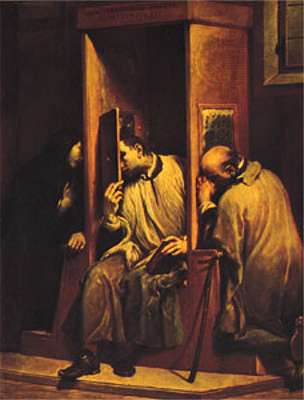
Confession  Since we are approaching Easter, many candidates will be making their first confession in preparation for reception into full communion with the Church.

This can be a scary thing if you've never been to confession before, particularly since this first confession may cover a period of years in one's life, rather than a shorter time.

In light of that, I thought the following e-mail exchange (with the inquirer's identity shielded, per my usual policy) might prove helpful to some preparing to be received.

An inquirer wrote:

I have a huge issue. I am looking to convert to Catholicism and have heard all the horror stories involving confession. I committed [a particular act] and am extremely revolted by what I did, and have prayed that it might be removed from my being. I have also read in several places online about the penance for such acts. As I would be confessing it in my first confession would those penances allow me to still take part in the confirmation activities and first Eucharist? What would the penance be? It is a thing that brings me great shame and I am still not sure if I could voice it in regular company, let alone to the priest who is acting as the corporeal Christ.

I responded:

Thank you for writing. I want to praise you for your willingness to respond to God's call, even when it means facing some difficult situations. He will surely bless you for that.

It is also clear that you are sincere and want to do God's will. Again, he will bless you.

I am not sure what horror stories you are referring to regarding confession. There are times when priests make mistakes, but the vast majority of priests are very kind and gentle in confession. This is true of confession in general, but it is especially true in first confessions.

Typically the penances that are given are saying a few prayers, perhaps reading the Scripture readings for the day, meditating in front of the Eucharist for a few minutes–that type of thing. I would not worry about getting a severe penance. While such were more common in earlier centuries, today penances are very mild.

You also do not have to have completed the penance before you can receive the other sacraments. Thus if you went to confession right before confirmation or the Eucharist, you could go ahead and receive these sacraments and do the penance afterward.

More typically, candidates for reception into full communion will go to confession a day or more before they are received into the Church and confirmed.

Also, I should mention, that if you are not baptized then when you are baptized it would take away all previous sins without the need to confess them.

If you are baptized and thus need to confess the act, but find it difficult to say out loud, then take heart! You don't have to say it out loud. You can write it down on a piece of paper, hand it to the priest, and say, "I have this to confess" (or words to that effect).

In fact, for first confessions that can be kind of lengthy and in which one might have a bunch of sensitive and easy-to-forget stuff to review, using the written form is not a bad idea. Just make sure that you take the paper and completely destroy it afterwards so nobody can read it. (Burn it, tear it up and flush it down the toilet, whatever.)

Also, don't worry about the priest serving on behalf of Christ. God already knows all of our sins, and the point of the priest is so that we can be reconciled with God.

I hope this helps, and God bless you! I'll be keeping you in my prayers. Please keep me in yours.

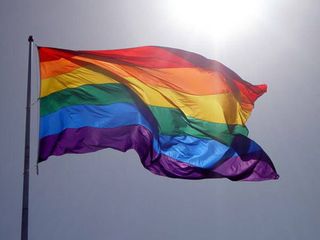
Babylon Is Fallen!

Dore And after these things I saw another angel come down from heaven, having great power; and the earth was lightened with his glory.


And he cried mightily with a strong voice, saying, Babylon the great is fallen, is fallen, and is become the habitation of devils, and the hold of every foul spirit, and a cage of every unclean and hateful bird.


For all nations have drunk of the wine of the wrath of her fornication, and the kings of the earth have committed fornication with her, and the merchants of the earth are waxed rich through the abundance of her delicacies.

Or . . . perhaps in this case I ought to say "Sodom is risen" rather than "Babylon is fallen."

Either way.

WHAT AM I TALKING ABOUT?

We’ve Lost The Capital

It’s always dramatic when, in a war, the capital city falls.

Jerusalem before Romans.

Rome before barbarians.

Constantinople before Turks.

Richmond before Yankees.

Paris before Germans (twice).

Berlin before the Allies.

Kabul . . . Baghdad . . . and countless others.

And now Washington has fallen.

In the culture war.

As of today, licenses for homosexual “marriages” are being issued in Washington, D.C.

You might not have known it—the media has been deliberately under-reporting the march of homosexual marriage across our nation—but the D.C. city council recently passed a measure allowing homosexual marriages to be performed in the district.

It could have been stopped by Congress, but it wasn’t—which tells you where Congress is on this issue.

And it followed the pattern by which capital cities usually fall.

They aren’t the first thing to go. Before the capital is taken, other areas fall first.

Take a look at the map above. Anything blue is bad. Those are the areas that have already partially or totally fallen.

MORE INFO ON THE MAP HERE

And in Washington the barbarians—now in control of the city—are rejoicing.

GET THE STORY

AND THE CHURCH IS BEING FORCED TO MAKE HARD CHOICES.

So.

What does the loss of the capital portend in this war?

Your thoughts . . . ?

New Service For Pregnant Moms! The Abortion Doula!

Yes! No longer do pregnant moms have to make do with the services of ordinary doulas—women who assist them during or after the birth of a child and who aren’t midwives.

No! This is the twenty-first century, and now women—in New York City—have a brand new service available to them: the abortion doula.

These service-providers hang out on a web site called DoulaProject.Org, where they blog about their services and experiences. They have an e-mail list and a Facebook fan page, and their suggested reading section includes titles like, “The Girls Who Went Away: The Hidden Story of the Women Who Surrendered Children for Adoption in the Decades Before Roe v. Wade.”

Imagine that! It’s so much better now that we have Roe v. Wade and mothers can simply terminate their children rather than having to surrender them to adoption.

But let’s meet some of the abortion doulas themselves, shall we?

First, there’s E. Kale Edmiston, who describes herself as “a college-educated, white genderqueer,” who works as “a research scientist” and who is “a reproductive justice organizer.” She’s committed to her work as an abortion doula, as she has to take the train from her home in New Haven, Connecticut to her abortion gig in New York City. She says that she became “pro-choice because I grew up in the rural Midwest and saw how abstinence only education, coupled with limited access to abortion, exacerbated class disparities in my hometown.”

When she first became an abortion doula, she worried that she might not be able to relate to her clients, “who are mostly lower-income women of color and immigrants,” but fortunately . . .

What I found after my first few shifts of work was that I had worried way too much about saying the right thing. With most of my clients, I barely speak at all. In the waiting room, I sit next to her as I hold her hand. During the procedure, I try to be a solid presence- I plant my feet squarely next to the table and I face her; I try to make our dynamic her focus- whether its letting her squeeze my hand or looking her in the eye with absolute confidence that she is going to be ok. Afterward, we mostly sit in silence together, only really speaking if I sense that she wants to talk. This is a huge departure from my normal way of being in the world. I live mostly in my head; I over-think everything; my 9-5 job is working as a research scientist. Being an abortion doula is my one much-needed chance to be embodied emotion with another person.

Another abortion doula is “Lauren Mitchell, a petite redhead from Williamsburg” who is one of the founders of the Doula Project and who, according to the Meet the Doulas page on their site, “firmly believes in the inherent interdisciplinary connections that appear in the context of the body and throughout the spectrum of pregnancy.” She also is evidently a firmly-committed believer in the singular efficacy of bafflegab. Her bio notes, “When she’s not thinking about women’s health (which is rare), she writes. Her work can be found under the pseudonym L.A. Mitchell,” but the bio quickly qualifies this by saying, “(please note, she is not the L.A. Mitchell who writes sci-fi Christian romance novels).”

Whew! I am so relieved to hear that. (Not that I read sci-fi Christian romance novels, mind you.)

Another founder of the project is . . .

Miriam Perez, 25, an editor at Feministing and author of the blog Radical Doula, found that some people like herself felt isolated in their doula communities because they were queer, pro-choice or uninterested in making a full-time career of doula work. For Perez, it was also an issue of reconciling her reproductive rights work with being a doula.

And so the Doula Project was imagined when Perez met the Mitchell and the project’s co-founder, Mary Mahoney, at a meeting of The New York Birth Coalition in 2007. The idea of installing a doula unit at a local hospital or clinic became a passion project that Mitchell and Mahoney eventually carried to fruition (Perez had relocated to Washington, D.C.). And it continues to grow. Besides the partnership with the Manhattan hospital, the project appoints abortion doulas on an individual basis to women undergoing abortions at other hospitals and adoption doulas to Spence Chapin Adoption Agency. It’s also set to open a chapter in Atlanta.

There are 20 active abortion doulas in New York, mostly women under 30, and they work in shifts on a volunteer basis, serving up to 25 patients a week. To become doulas, they must complete 20 hours of clinical training, but the bulk of the job is intuitive — being present with the patient before and after the abortion, responding to her cues and providing necessary support. The intimacy of the experience can be wrenching. “What you get very used to is this weird mix of tragedy and relief and sex and death — this wild variety of emotions,” Mitchell says. “There’s always this interesting mix of remorse and relief.”

Not everybody is cut out to be an abortion doula, of course.

“A lot of people are interested in this politically, but don’t have the warmth,” Mitchell says. “You need more than just your conviction to do this.”

So it’s not enough, you see, to want to assist in homicide out of a sense of sheer ideological driven-ness. You have to have a human touch, too. Got it?

Elsewhere co-founder Mary Mahoney writes:

Three years ago I became a doula. Early in my training, I became part of a conversation that focused on providing doula support for all of a pregnant person’s choices, including abortion. Since that time, I have served more than 100 pregnant people as part of The Doula Project in New York City. The project was founded on the idea that pregnancy is a spectrum and that as female-bodied people we may experience any and all of the possibilities that spectrum contains in a lifetime. Within that, we should also have access to doula care for each of our pregnancies.

Presumably, most of the “pregnant persons” that Mahoney works with are also “female-bodied people” Probably most of them aren’t “genderqueer.” But such is the life of a “reproductive justice organizer.”

It’s interesting in how Sin-As-An-Ideology (as opposed to a weakness) causes language to be warped as a way of masking the hideous distortions it introduces.

File this one under Dr. Frankenstein’s Medicine Show.

Your thoughts on this amazing new service?

I’ll Admit . . .

Unborn-child-sucking-thumb  . . . that when I first read about "abortion doulas," I wasn't sure about the meaning of the word "doula."

Well, I recognized the origin of the term. It was clearly derived from the Greek word "doula," which means "female slave" or "female servant" or "handmaiden" or things like that.

But I wasn't aware of what it meant in a twenty-first century, English-speaking context.

It turns out that doulas are women who aren't midwives but who assist pregnant mothers during the act of giving birth and/or after the child has been born.

MORE HERE.

Unfortunately, I'm not a father. My wife died before we were able to have children, so I'm not up on some of the terminology . . . at least in the home-birth movement.

I suppose my recognition of the origin of the term reveals me as a nerd, while my failure to know its current meaning reveals me as a n00b.

Still . . . 

I CAN SPOT A BIOMEDICAL HORROR WHEN I SEE ONE.

Your thoughts?