Podcast Help

I'm starting a podcast, and to that end I've been making preparations for it.

I've got things set up on the podcast-creation end of things, but I have yet to decide which service I'm going to use to host the podcast, by which I mean: Where the files will be stored online, how they will be uploaded, and what service will send out the RSS feed.

I have researched some podcast services on my own, but I thought I'd ask if anyone with podcasting experience had suggestions of good services to use OR bad ones to stay away from.

Here are a few of things I'm looking for in particular:

1) I want the service to produce an embedable player with start/pause functionality as well as scrubbing (that's where it's got a slider bar so you can drag the little doo-dad to the point in the podcast you want to listen to, like on videos for YouTube).

2) I want to embed this player here on my blog, which is hosted by TypePad. Ideally, I'd like it to automatically publish each episode to TypePad, but manually embedding the html might be a possibility. 

3) I'm going to be doing this podcast from a Mac, so software or services that work only with Windows aren't an option. (Mac can run Windows stuff if you set it up to do that, but I don't want to do that right now. I'm still learning the Mac OS.)

4) I'm planning on making the podcast available through iTunes, so anything that would make it incompatible with iTunes won't work.

Also, I'd be particularly interested to know if anyone has used the service Hipcast (hipcast.com) and, if so, what their experience with it was.

Any thoughts?

Hey, Kids! Who Wants to Be Roman Emperor?

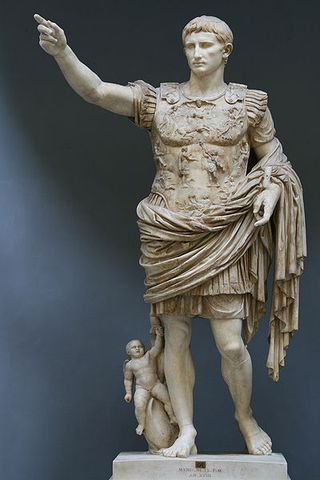
Augustus I read rather a lot of classical history, especially first century Roman history. I don't know how many times I've been through Suetonius's Lives of the Twelve Caesars, and I was recently thrilled when I discovered audio versions of Tacitus's Annals and Josephus's The Jewish War.

Lately I've been boning up on this period for an upcoming set of projects, and a thought keeps striking me:

Why would anybody back then want to be the Roman emperor?

This was something people competed fiercely over. There were multiple civil wars fought over this. But why on earth would anyone want the job? Being Roman emperor had a frightening tendency to Not End Well.

Let's look at the track record:

  • Julius Caesar (reigned 49 BC-44 BC): Assassinated by senators (also not technically an emperor, but what the hey)
  • Augustus (44 BC-AD 14): Possibly died of natural causes, but at least two of the three major historians of this period report rumors that he was poisoned by his wife, Livia, in favor of her son, his successor Tiberius
  • Tiberius (14-37): Possibly died of natural causes, but widely reported to have been killed by his successor, Caligula, possibly in conjunction with the head of his own guard, Macro
  • Caligula (37-41): Assassinated by his own guards (yes, he was that bad)
  • Claudius (41-54): Widely thought to have been poisoned by his wife, Agrippina, in favor of her son, his successor Nero
  • Nero (54-68): Declared and enemy of the state by the senate and forced to commit suicide
  • Galba (68-69): Killed in civil war by the soldiers of his successor, Otho, after reigning only seven months
  • Otho (69): Committed suicide in civil war after his successor, Vitellius, achieved a decisive advantage; only reigned three months
  • Vitellius (69): Killed in civil war by the troops of his successor, Vespasian, after regining only eight months.

That takes us up through A.D. 68-69, the "Year of Four Emperors," which began with Nero on the throne and ended with Vespasian on it.

There were other, even worse years, such as the Year of Five Emperors (A.D. 193) and the Year of Six Emperors (A.D. 238).

So, see what I mean?

Being the Roman Emperor wasn't exactly a good path toward a happy death.

I know that vast numbers of people lived in absolutely horrific conditions back then (by today's standards), and one can't blame the first few emperors for not noticing the pattern of what tended to happen, but once the pattern was established, one would think everyone would shun the job like the plague.

It would certainly make sense to adopt a philosophy like that of Londo Mollari: "I prefer to work behind the scenes. The rewards are almost as great, and the risks far less."

That worked out well for him, right?

What are your thoughts?

New Information on the Fr. Corapi Situation

Blacksheepdog Since Fr. John Corapi released his bombshell statement Friday, in which he announced that he was leaving the priesthood, several pieces of new information have emerged that shed light on the situation.

Before we get to those, though, I would like to again call attention to the written statement on his new web site and the narrated version available on YouTube. These present Fr. Corapi’s own explanation of the current situation and provide a valuable source of information regarding it.

I would also point out something that may not be obvious if you are exposed to just one of the two sources: Though the wording is the same in both (except for very slight differences), they are significantly different in tone. In particular, the modulations of Fr. Corapi’s voice convey a tone of reasonableness not conveyed by the words of the printed edition. If you’ve read only the latter, be sure and listen to the former, because it contains important tonal information not captured in the written version.

At the same time, the substance of the two is the same, and the facts are not altered: Fr. Corapi has chosen of his own volition to abandon his priestly ministry rather than wait for the outcome of the investigation of the charges against him.

At this point, allow me to issue . . .

THE BIG RED DISCLAIMER: I do not claim to know whether Fr. Corapi is innocent or guilty. I have no way of assessing that. I pointed this out several times in my previous post, but I got quite a few messages accusing me of “judging” Fr. Corapi and assuming him guilty before the facts are in, etc. None of that is true. I understand that his fans are hurting from recent events, and I fully understand that, so let me once again stress–this time in more emphatic form–that I do not knowwhether he is innocent or guilty. I am trying to offer perspective on the facts as they are known at this time

Now, let’s get to the new information about his situation.


The Black-Sheep Dog ™


I’ve received several communications by email pointing to the fact that Fr. Corapi’s business—Santa Cruz Media of Kalispell, Montana—applied for a federal trademark on the name “The Black-Sheep Dog” over a year ago. The filing was made April 8, 2010, long before the current situation developed.


The filing was made with the U.S. Patent and Trademark Office (USPTO), and you can read a summary of it here.


The trademark application was granted (specifically, the “notice of allowance” was issued) last month—on May 10, 2011—after Fr. Corapi had stepped aside from active ministry while the investigation of the charges proceeded.


In his announcement last Friday he indicated that his autobiography, “The Black Sheep Dog,” will soon be published. This fits with the description offered in the trademark application, which says that under this mark will be offered:


Printed material, namely, a series of autobiographical nonfiction books in the field of religion and spirituality


So there may be more than one autobiographical book in the planning.


What does this tell us about the current situation?


A primary thing it tells us is that the autobiography, and its name, have been in the planning stages for over a year. It would thus appear that they were not created, and were not originally intended to be launched, during the current environment.


That has implications for how one reads the name “The Black Sheep Dog.” Based on Fr. Corapi’s announcement, which did not indicate that this had been registered over a year ago, one might conclude that it has specific reference to the current situation, which would make it quite disturbing. As I pointed out in my previous post, it would appear to be both an embracing of a “black sheep” identity in conjunction with Fr. Corapi’s abandonment of his priesthood while also seeking to maintain a pastoral “sheep dog” function despite that abandonment.


The visuals used in the YouTube video, which features a closeup of a frightening-looking black dog’s eyes, one of which contains alarmed looking sheep, feeds the disturbing interpretation of the name.


It should be pointed out that the frightening-looking dog’s other eye contains an image of wolves, but as Deacon Greg Kandra points out:


I gotta say: the imagery used on that tape was creepy to the point of being diabolical.


When one realizes that the whole thing had been in the planning stages for over a year, though, a different light is cast on the subject, and however creepy one might find the imagery and the name in the current circumstances, it was not intended to be taken in that way.


This does not lessen the disturbing nature of Fr. Corapi’s abandonment of his priesthood, however.


“The investigation was compromised because of the pressure on the witnesses.”


Another important set of facts was unearthed by the National Catholic Register’s senior editor, Joan Frawley Desmond. In her piece on the subject, several important pieces of information were disclosed by Fr. Corapi’s religious superior, Fr. Gerard Sheehan, SOLT. Among them:


Father Gerard Sheehan, regional priest-servant of SOLT and Father Corapi’s religious superior in the U.S., confirmed June 19 that the order’s investigation faced complications created by a civil suit filed by Father Corapi against the former employee who had accused him of sexual misconduct.

“When she left the company, she signed a contract that she would not reveal anything that happened to her while she was at Santa Cruz Media. Father Corapi paid her for this. Father was suing her for a breach of contract,” said Father Sheehan, though he did not specify why Father Corapi had initiated the non-disclosure agreement.

The civil suit against the former employee created a problem for SOLT investigators.

“In canon law, there can’t be any pressure on witnesses; they have to be completely free to speak. The investigation was compromised because of the pressure on the witnesses. There were other witnesses that also had signed non-disclosure agreements,” said Father Sheehan.

“The canon lawyers were in a difficult situation, and Father does have his civil rights and he decided to follow his legal counsel, which he had a right to do,” he said. “We tried to continue the investigation without speaking to the principal witnesses.”

The investigation was halted after Father Corapi “sent us a letter resigning from active ministry and religious life. I have written him a letter asking him to confirm that decision. If so, we will help him with this process of leaving religious life,” said Father Sheehan.

He expressed disappointment that Father Corapi chose not to remain in SOLT and to refuse the order’s invitation for him to live in community, leaving his Montana home. Father Sheehan said he had tried to arrange a meeting with Father Corapi before any final decision was announced, but had not heard back from him. Father Sheehan said that SOLT would issue a statement shortly.

“We wanted him to come back to the community, and that would have meant leaving everything he has. It would have been a drastic change for him,” Father Sheehan said.


The article also recalled:


In a previous interview with the Register, published after Father Corapi’s suspension, Father Sheehan implicitly acknowledged that the accused priest was not living in conformity with SOLT’s constitution, approved in 1994.

“The founder’s arrangement with Father Corapi was established before that time, when Father Flanagan believed that every mission should take care of its own needs,” noted Father Sheehan at that time. “Now, according to our constitution, a different way of life has been established for members. All the money we make is turned over to the society, which gives us an allowance.”

During that interview, Father Sheehan confirmed that SOLT had “begun to address the issues of members who joined the society before the new constitution. The society is moving to a more organized structural phase of its existence, with all the Church discipline that entails.”


There are several notable things here. Among them are the non-disclosure agreements that Fr. Corapi required (and paid) at least some of those working with him to sign.


What was the reason for this?


I have more than two decades of experience working for religious non-profit organizations, and I can think of three reasons why a non-disclosure agreement of some sort might be sought: (1) to protect customer information, (2) to protect donor information, (3) to protect ideas for products or services that another organization might copy.


I cannot think of a legitimate reason why a non-disclosure agreement covering everything that happened to one during a term of employment would be required. Nor can I think of a reason why a non-disclosure agreement would need to be framed so broadly that it would prevent one from offering testimony to an ecclesiastical investigation regarding whether one had slept with multiple women or engaged in repeated drug use (i.e., the charges against Fr. Corapi).


And so I would be interested to know why Fr. Corapi sought—and apparently paid for—such broadly-framed non-disclosure agreements with several of the witnesses that his superiors sought to interview as part of the investigation.


There could have been an entirely legitimate reason for this—but I cannot think of it off the top of my head. I am thus left at a loss, trying to imagine what such a reason might be.


The Sequence of Events


Whatever the reason for the non-disclosure agreements may be, we may surmise the following as an approximate timeline of the events in question (individual elements might need to be rearranged):


1. Based on an agreement with the founder of his order, Fr. Corapi established a Montana-based media business under his financial control.

2. At some point, Fr. Corapi pays several persons who have business dealings with him to sign non-disclosure agreements regarding events during their term of employment.

3. There is a falling-out with one non-disclosure signer, an employee (presumably 2 occurred before 3, though this is not absolute).

4. The disgruntled signer from 3 complained to religious or ecclesiastical superiors (specifically: the current bishop of Corpus Christi), alleging sexual and drug-related charges against Fr. Corapi.

5. The current bishop of Corpus Christi contacted Fr. Corapi’s religious superiors, requesting an investigation.

6. The investigation was begun.

7. Fr. Corapi filed a civil suit against the complainer from 3, alleging breach of the non-disclosure contract.

8. Other witnesses refused to testify in view of the civil lawsuit against the complainer from 3.

9. Deprived of ready access to these witnesses, Fr. Corapi’s superiors decided to continue the investigation without the key witnesses, using other, less-central witnesses.

10. Rather than allow the investigation to reach its conclusion, Fr. Corapi decided to abandon the priesthood and religious life, sending a letter to his superiors to this effect.

11. His superiors sought to reintegrate him into the life of his religious community, but he has not responded to this request as it “would have meant leaving everything he has. It would have been a drastic change for him,” because “The society is moving to a more organized structural phase of its existence, with all the Church discipline that entails.”

12. Rather than embrace this new situation, Fr. Corapi announced his abandonment of the priesthood and the adoption of the name “The Black Sheep Dog.”


REMINDER: I do not claim to know whether Fr. Corapi is innocent or guilty of some or all of the charges against him.


But the sequence of events described above, even if elements here or there are re-arranged, does not look good (especially since numbers 2, 7, and 10 might be construed as efforts to prevent such an investigation or stop it from reaching a conclusion).


The Bottom-Line


Regardless of what the truth of the above matters may be—and assuming the innocence of Fr. Corapi—there still remains his public abandonment of the priesthood.


This is, for me, the ultimate point.


All the rest are mere incidentals.


I do not understand how so quickly, after only three months, a man such as Fr. Corapi—a man who was ordained by the hands of Bl. John Paul II, a man who had put in almost 20 years of service as a priest, a man who had been supernaturally conformed to Christ so as to serve in persona Christi, a man who had been empowered to turn bread and wine into the Body and Blood of Our Lord, a man who was empowered to forgive sins and thus directly save souls from hell—could turn his back on all that without exhausting the avenues of canonical recourse available to him.


Yes, he had been sidelined at least temporarily by his superiors.


Yes, he had had to endure a process that could stand improvement (like all human processes).


Yes, he had a right to be frustrated—if he was innocent, as we may hope in charity.


But how could he walk away from this great boon that had been bestowed upon him?


How could he turn his back on all that and request removal from the priestly and religious life, after only three months of sitting on the sidelines?


Did past saints who were falsely accused do that?


Did Our Lord himself walk away from his commission from the Father when falsely accused?


Even if he felt compelled to “compromise” (in his superior’s words) the investigation with civil law suits against potential witnesses against him, couldn’t he have waited until the investigation was completed with less central witnesses who had not signed non-disclosure agreements with him?


Why did he abandon his priesthood after only three months waiting for the result of an investigation whose processes he himself had intervened to slow?


I don’t have the answers to these questions, but I am left deeply disturbed and disappointed with the situation.


May all of us keep Fr. Corapi, his accusers, and everyone who has been affected by this situation in prayer.


What are your thoughts?
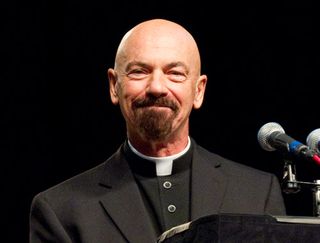
Fr. Corapi Has Lost It

Corapi-happy-to-see-you

Fr. John Corapi has published a statement—also available in video form—in which he has announced that he is leaving active ministry as a priest.

He’s right.

He is. And he has.

Unless something extraordinarily improbable occurs, he will never again function as a Catholic priest.

And it’s his decision.

I’m quite sympathetic to innocently accused priests and the need to have better safeguards to protect them. I think there is room for potential criticism of how the Church has formulated its policy, or how it applies that policy in particular cases.

I also do not know whether he is guilty of the sexual and other misconduct of which he is accused. I have no way of determining that.

Frankly, from what is known of the situation, the entire thing sounds weird, and it did from the beginning. What was known about the accuser’s actions sounded weird (although that could have been due to imperfect representation of the facts), and Fr. Corapi’s public reaction was weird. This made if hard to judge where potential misdoing might lie. It could have been with either party—or both.

But at this point it doesn’t really matter which one was at fault or whether both were, because Fr. Corapi has taken it upon himself to end the matter by publicly abandoning his priesthood.

If his statement is any guide, this was not forced upon him. This was something he freely chose.

In fact, he may have chosen it some time ago, since his statement says that his autobiography, titled “The Black SheepDog,” will be published soon. If he began working on this project while he has been on hiatus then he may have chosen to leave the priesthood—or been preparing to voluntarily leave it as a contingency plan—for some time.

The name of the book is also worthy of attention: “The Black SheepDog.” This is a portmanteau of “the black sheep” and “sheep dog.”

“Black sheep” is obviously a common English idiom for a member of a group (typically a family) who either has fallen from grace or who is regarded by members of the group as having fallen from grace. That fits Fr. Corapi’s status given the sexual misconduct allegations against him.

What’s startling is that he would identify with this label and make it his own. It’s embracing an “on the run” identity that signals separation from and disobedience to the ecclesiastical authorities.

After all, not every person accused of sexual misconduct would embrace such a label. Many would say, “I’m innocent! I’m a white sheep, and I look forward to vindicating myself against the charges that have been falsely lodged against me!”

So the embrace of the “black sheep” label is itself disturbing . . . and unusual . . . a symbol of a “rebel” or “renegade” mindset.

Then there’s the “sheep dog” part. And this is really disturbing. Even moreso than the former.

The job of a sheep dog, of course, is to herd sheep—to keep them from straying from the fold, to make them go where the shepherd wants, and keep them safe from danger.

Those are obviously pastoral functions—in the proper sense. A pastor (Latin, “shepherd”) employs sheep dogs to help him protect and guide the sheep and maintain the integrity of the flock.

By embracing the image of a sheep dog, Fr. Corapi thus announces his intention—despite his public abandonment of the priesthood—to continue in some form of pastoral ministry. It may not be priestly—he may not be celebrating the sacraments—but he still sees himself as involved in pastoral work.

But consider the snarling tone in which he writes about his relationship with bishops. Most significantly, consider this statement:

Please don’t bother the bishop or complain because it will do no good and it wastes valuable time and energy, both his and yours.

It is hard to read this as anything but a statement that Fr. Corapi plans to ignore ecclesiastical supervision of any kind and continue his pastoral, “sheep dog” ministry with respect to the sheep of Christ’s flock, even if Christ’s duly-appointed shepherds do not want him trying to manage their flocks.

The picture painted by his statement is thus of a sheep dog out of control—one who has turned on the shepherds of the flock and decided that he, not they, knows what is best for them and is willing to defy the shepherds to their faces.

And then there’s the weird aspect of the name.

“The Black SheepDog”?

Really?

Whatever name he may choose for himself, Fr. Corapi has forever ruined any chances he had of functioning as a Catholic priest.

And it didn’t have to be that way.

He could have done the sensible thing and waited.

If he faced setbacks, he could have taken the avenues of canonical recourse open to him, which included multiple potential appeals to Rome.

I am not in any way unsympathetic to falsely accused priests or priests who feel that there need to be more stringent safeguards against false accusations. In fact, if Fr. Corapi were innocent (as he may be) then he could have chosen to make himself a test case to get better safeguards enacted.

But Fr. Corapi—or “the Black SheepDog”—or whatever he wants to be called—chose not to stand firm in the face of what he claimed were false allegations.

Instead, he chose to defy authority and strike off on his own as a “sheep dog” protecting the flock whose leaders he is defying.

Unless something very improbable happens, he has thus abandoned his priesthood in a way that will from here on out prevent him from serving as a Catholic priest.

Dang.

I wish things had gone better.

Fr. Corapi has “lost it.”

And by “it” I mean any likely chance of working as a priest again.

It doesn’t matter if the charges against him were false. By refusing to cooperate with the Church’s process, and by announcing his intention to speak in defiance of that authority, he has rejected any chance of resolving the charges against him and returning to priestly ministry.

This is sad, and we should all pray.

What do you think?

Excel Problem Driving Me Nuts!

UPDATE: Problem solved through use of a pivot table! Thanks to everybody who helped! You've saved me innumerable future headaches! Much obliged!!!

—–

I have a problem with Microsoft Excel that surfaces in various forms from time to time, and I'm hoping that an Excel wiz out there can tell me what to do to solve it. I've tried Googling various ways of formulating the problem and haven't hit the right language to turn up the kind of result I'm after (assuming there is one).

Suppose I have a spreadsheet that looks like this:

EXCEL1

In column A I have some values, each of which is a duplicate (there are two cells that have 50, three that have 70, and two that have 12–and I've got the worksheet so duplicates are showing next to each other).

Each of these values is associated with another value in column B. These other values are either Q, R, or T.

What I want to do is find an automatic (non-manual) way of putting each of the column B values next to each duplicate in column A, like this:

EXCEL2
Here you can see that columns C-E do that.

The column A value 50 has a value of Q in B1 and R in B2, so columns C and D list both Q and R.

The column A value 70 has a value of Q in B3, R in B4, and T in B5, so columns C-E list Q, R, and T.

The column A value of 12 has Q and R in B6 and B7, so C and E list Q and R, just like they did for the value 50.

See what I'm getting at?

I'm basically trying to take data from one line and make it appear on every line that has that same duplicate value. That way (among other things), if I later eliminate duplicates, I'll retain all this data because it's been copied to each line with the value.

This problem has frustrated me for years and keep coming up in different guises.

I know this is the kind of thing that databases do real well, but I don't know beans about database programming.

Any ideas how to solve it in a spreadsheet like Excel?

—–

UPDATE: Problem solved through use of a pivot table! Thanks to everybody who helped! You've saved me innumerable future headaches! Much obliged!!!

How Useful Is This Argument Against Sedevacantism?

Family2Last time we dealt with the first part of a two-part query from a reader. Now for part two.

The question is: How useful can a particular quotation from Vatican I be in dealing with sedevacantists (i.e., those who say there is no valid pope at present)—particularly those who say that Pius XII was the last valid pope.

The quotation from Vatican I is:

[I]f anyone says that it is not by the institution of Christ the Lord himself (that is to say, by divine law) that blessed Peter should have perpetual successors in the primacy over the whole Church; or that the Roman pontiff is not the successor of blessed Peter in this primacy: let him be anathema.

Since the time of Vatican I the canonical penalty of anathema—which was a special kind of excommunication done with a particular ceremony—has been abolished, so nobody today is under the penalty of anathema even if they do violate this canon.

However, this canon defines a point that appears to be divinely revealed. The obstinate doubt or denial of a doctrine that is both divinely revealed and infallibly defined by the Church as such is a heresy, and thus under certain conditions a Catholic who falls afoul of this canon can indeed excommunicate himself (and automatically so). This just isn’t the kind of excommunication formerly known as anathema.

So much for the canonical aspects. What about its utility as an argument when dealing with sedevacantists?

To assess that, we first need to understand what is being defined in this text. And we have to do that rather carefully, because infallible definitions must be construed narrowly. Thus the Code of Canon Law provides:

Canon 749 §3. No doctrine is understood as defined infallibly unless this is manifestly evident.

One results of this is that we must ask what the council was trying to define. If it is manifestly evident that a particular proposition was intended then that proposition is defined infallibly. If it is not manifestly evident then it is not to be regarded as infallibly defined.

In the case of the Vatican I statement quoted above, the purpose of the council was to define that it was “by the institution of Christ the Lord himself (that is to say, by divine law) that blessed Peter should have perpetual successors in the primacy over the whole church.” In other words, the papacy is not a man-made thing. It is not by human or merely ecclesiastical law that there be an ongoing line of successors to St. Peter with jurisdiction over the whole church. (The council also identified the bishop of Rome as that successor, but this isn’t the point that concerns us here.)

It is manifestly evident that the council wished to say that Christ’s intention that St. Peter would have an ongoing line of successors with primacy over the whole Church, but this does not mean that there would be a successor at any particular moment.

There obviously isn’t a successor during the “interregnum” (between the reigns) period between the death of one pope and the election of another.  Sometimes these interregna have even lasted years, when the college of cardinals had trouble making up its mind (though that hasn’t happened in a very long time; that’s why the conclave was invented, so that the cardinals would be effectively locked up together until they came up with a successor).

So if the passage from Vatican I does not ensure that there will be a successor at any particular moment then a sedevacantist could simply argue that now is one of those moments. Something either went wrong with a recent papal election, in such a way that invalidated it, or—according to one theory that at least some thinkers in Catholic history have advocated—a pope could forfeit his office through heresy.

One of these two things is, in fact, what sedevacantists claim. So I don’t see the text from Vatican I as being a useful argument against sedevacantism in general, but there is another possibility. Might it work against a specific form of sedevacantism?

According to many current sedevacantists, Pius XII was the last valid pope. He died in 1958, which was 53 years ago.

Here is where the argument gets interesting: In order to be pope, under current canon law, one must be elected by the college of cardinals. In order to be a member of the college of cardinals, one must be appointed by the pope. In order for the pope to appoint you, he must be alive.

If the last valid pope died in 1958, that would seem to mean that no cardinals have been validly appointed since then.  How many cardinals are alive today who were appointed before 1958?

None.

The longest-serving cardinal at present is Eugenio Sales, who wasn’t appointed until 1969. If his elevation to the cardinalate was invalid, and so were all subsequent elevations due to a lack of valid popes, then it would appear that the college of cardinals now has no members. With no valid members, it would seem impossible for there to be another validly elected pope.

Ever.

That would be odd.

It would certainly seem to be contrary to the will of Christ who, in the words of Vatican I, willed “that blessed Peter should have perpetual successors in the primacy over the whole Church.” If Christ really wills that there be an ongoing series of successors then one would think he would keep the Church from getting into a position where it is impossible to elect any more successors.

So do we have a good argument here, from Vatican I, after all? An argument that deals a death-blow to a major current form of sedevacantism?

Let’s think about what responses a sedevacantist (of the requisite type) might make. What avenues of counter-argument might he have?

For a start, he would be able to say, “Hey, I agree with that Vatican I said. I think Christ did will that St. Peter have ongoing successors to the end of time (with gaps here and there). It’s not Christ’s will that we currently be without a pope. It’s a tragedy that we are!”

Responding to this, one might say, “Okay, but then how are we supposed to get a new pope?”

Here the sedevacantist would seem to have two options: (1) He could bite the bullet and say that there just is no way to get a new pope; we’re just stuck. Or (2) he could say that there is, in fact, a way to get a new pope, despite what you might otherwise thing.

If he picks option (1), do we have him?

I don’t think so. At least not based on what Vatican I says. The reason is this: God can will things in different senses.

He can, on the one hand, will that certain things happen or not happen in what’s sometimes called a “preceptive” way. That is, he establishes a precept that things happen (Honor thy father and mother) or that they not happen (Thou shalt not bear false witness). But it’s clear that when God wills something preceptively, that doesn’t mean it’s going to come to pass. People dishonor their fathers and mothers all the time. They bear false witness all the time.

On the other hand, God can will that certain things happen or not happen in what’s sometimes called an “efficacious” way. That is, he not only wills that they happen but he arranges circumstances so that they do in fact happen. This is the case, for example, when a pope or a council speaks infallibly. God wills that when certain conditions are fulfilled, the resulting teaching will be infallible, and he brings it about that the teaching is infallible. If a pope or council were to try to define something that is false, something (pleasant or unpleasant) would happen to stop this from happening.

So one question we have to face is: What kind of willing is being talked about in the text from Vatican I?

For a variety of reasons, a very strong case can be made that it’s the first. Let me give you just one reason: In its historical context, Vatican I was dealing with people who had argued that the papacy is a man-made institution, not one that exists by the will of Christ or by divine law. That was the point this particular text was dealing with.

It was not responding to people who claimed that the papacy is a divine institution but it might not endure to the end of the world—with gaps here and there (due, at least, to interregna), but with a guaranteed new successor before the end of the world and alive at the time Christ comes back.

The latter claim does not appear to be what the council was attempting to define. As a result, it is not manifestly evident that the council defined this teaching, and so—according to the 1983 Code of Canon Law—we should not regard this teaching as having been infallibly defined.

The sedevacantist thus can say, “You’re overreaching with the text from Vatican I. It’s just an affirmation that it’s the preceptive will of Christ that there be ongoing successors to Peter—not a guarantee that there will be one alive at the time of the Second Coming.”

I think this is a valid response. I don’t think we can get from the text of Vatican I an infallible definition of the proposition that there will be a living success of Peter at the very end. We might believe this on other grounds, but it’s not what Vatican I was attempting to define, and thus it’s not something Vatican I defined.

If one can produce other grounds that guarantee a living successor of Peter at the Second Coming then it is those grounds—not Vatican I—that one should point to.

The idea that there would not be a living successor of Peter at the end of time is a very uncomfortable thought—so uncomfortable, in fact, that many sedevacantists would not want to go in this direction and would instead pick option (2) and claim that there is a way to get a new pope, despite what one might think.

What might a sedevacantist of this sort claim?

I can think of several possibilities off the top of my head:

a) There was a secret conclave before the last valid cardinals died, and there is a continuing papacy that is little known or in secret.

b) God could make a new pope known by divine (and presumably private) revelation.

c) In the absence of a valid set of cardinals, and the impossibility of generating new ones, the ecclesiastical law providing for the election of a pontiff by the college of cardinals has lapsed, making it possible to elect a new pope through some other means (such as by a tiny remnant of the “true faithful,” whether they be conceived of as bishops, priests, laypeople, or some mix of those).

In fact, variations on these the proposals are what some sedevacantists claim. In fact, some have already proposed new anti-popes citing one or another of these as the basis. (In fact, I’ve had more than one current anti-pope ask to friend me on Facebook, though I have declined these invitations since I strongly suspected it was just a ploy to get in front of my FB friends to promote their anti-papacies.) This means that they and their followers aren’t technically sedevacantists but schismatics following a false pope.

A sedevacantist could even say, “I don’t know what the method is for getting a new pope, but there must be one.”

In fact, a sedevacantist could even site the very same text from Vatican I and—again taking it beyond what the council was attempting to define—argue that this text shows that there must be a way of getting a new pope, even though it isn’t presently clear what that is.

So I don’t think that the Vatican I text is a knock-down argument against sedevacantism, even of the sort that sees Pius XII as the last valid pope.

That’s not to say it’s useless. It does, after all, show that it’s at least the preceptive will of Christ that Peter have ongoing successors, and if that’s the case then it’s reasonable to suppose, hope, and think that in a matter this important he would guide the Church in such a way that we don’t get into a no-pope-ever-again situation. But this is only one datapoint in a larger argument that must be mounted.

I think there is quite a bit of fruitful material to be mined in the area we are exploring—the implications of the will of Christ for the ongoing nature of the papacy—and how this ill-fits with the claim that the papacy has been vacant for more than half a century. The cognitive dissonance created by that idea, plus the lameness of the alternative ways of getting a pope mentioned above (each of which is fraught with problems) makes a powerful case that the sedevacantists are simply wrong, and profoundly so.

But I think in order to make that case we need to appeal to a broader array of evidence and that the text from Vatican I doesn’t settle the matter for us, as great as that would be.

What do you think?

The Rebel Flesh & The Almost People

Rebel_flesh Thought I'd give a few quick thoughts on the recent two-part Doctor Who story consisting of The Rebel Flesh (episode 5) and The Almost People (episode 6).

I was not originally looking forward to this two-parter. It didn't appear connected with the main season arc, it wasn't written by Steven Moffatt, and it seemed to involve just another monster of the week (or, well, group of monsters of the week). I was expecting it to be not-that-great, possibly on the order of Curse of the Black Spot, which I thought had good parts but was overall kinda lame.

It was with pleasure, then, that as soon as we got very far into The Rebel Flesh that the show turned out to be much more interesting than I first thought.

Basically–and this is not a significant spoiler but merely an explanation of the title monster–the story concerns a 22nd century technology that allows for the standard sci-fi staple of rapidly-produced, fully-functional, fully-memoried adult clones.

Normally I don't like that trope (doesn't fit real-world science), but they get there in an interesting way: The humans in the story don't realize at first that creating such clones is what they're doing. They think they are using a generic biological substance (called "flesh") to receive a temporary impression of a person's physical form and consciousness so that it can act as a temporary, remote-controlled disposable worker body to take on dangerous jobs so the human controller won't have to.

What they don't realize is that the way they technology works, they are actually creating new living beings with the bodily forms and memories of their operators. The Doctor even warns them that these beings may (or do) have souls, qualifying them as the subjects of rights just as much as normal humans.

At this point the episode becomes very interesting from a philosophical and theological perspective. The show's creators are now playing with themes that have important real-world applications.

It doesn't matter how you come up with a new human–they can be produced by marital intercourse the way God designed the process to work, or by fornication, adultery, or rape, or by in vitro fertilization, cloning, or materialization in a nanotech chamber–however you get them, they are real humans who have real human rights that must be respectd.

Even if they aren't quite human, if you make something that's alive (and thus has a soul, or animating principle of some sort) that displays human consciousness (and thus rational thought), you have a being with a rational soul that must be treated as equivalent to a human being in terms of rights and dignity. How it got here is irrelevant. Now that it's here, its rights must be honored.

So this episode is doing what sci-fi does well when it's working at its best–using an imaginative context to re-frame actual, important elements of human experience. Ones that our own technology has (since 1978, when Louise Brown, the first test-tube baby was born) begun to confront us with.

Thereafter follows the expected story of how the humans and their "flesh" dopplegangers ("gangers," as the show calls them) will relate. Naturally, it puts them at odds, but it does so without making either side clear-cut villains. It needed to do that–to show good on both sides–or it would have become unbearably cliche and far less interesting.

There are a lot of nice Doctor Who-esque moments along the way (particularly some nice references to the Doctor's prior incarnations), and while the story is not genius from star to finish (there are paint-by-numbers parts, particular in the second episode, The Almost People), it was much better than I expected.

The ultimate resolution of the human/gangers conflict was decent, though it was tainted by the typical bad sci-fi metaphysics regarding identity (one ganger character ends up substituting for his human counterpart in a way that is not plausible), but that's par for the course.

More interesting was the way the episode linked with the overall season arc. It was much more tightly integrated than first appeared.

Moffatt seems to have been doing at least slight script revisions to other authors scripts so that they will include at least passing references to the season arc (e.g., appearances of the eye-patch lady, the Doctor looking at Amy's positive/negative pregnancy through a medical scanner, references to the Doctor's apparent death in episode 1 of the season), but these have been very brief elements clearly added in script revision. 

The Rebel Flesh/The Almost People turns out to be much more tied to the main arc than that. My guess is that Moffatt proposed the idea and assigned someone else to write it. Either that or it was proposed at an early stage of season development and Moffatt realized how nicely it would fit into his overall plan.

Whatever the case, they end up pulling the triggers on several major season elements, which is good, because it was getting a little tiresome watching the eye-patch lady peek in on Amy every episode or two and watching the Doctor looking suspiciously at Amy with the medical scanner every episode. I was afraid they wouldn't pay these elements off until the end of the series, but they did in part two of the episode, and now I don't mind them. They have a decent relative proportion to the overall shape of the season arc.

I'm very keen to see what they do in the mid-season finale which airs this weekend (in America; it aired last weekend in England).

The ominous title (which is even more ominous based on what we've heard River Song say before) is A Good Man Goes To War.

Here's the bonus, online prequel to that episode:

What do you think?