Oxyrhynchus!

Oxyrhynchus! It’s not something you use to wash your clothes!

It’s a place in Egypt where, a century ago, a huge load of ancient manuscripts were found. (This tends to happen in Egypt, where the desert climate better preserves documents written on papyrus, which has a nasty tendency to rot in wetter climes.)

A BUNCH OF STUFF WAS DISCOVERED AT OXYRHYNCHUS,

including some fragments of what later turned out to be the Gospel of Thomas (we got the full text from the Nag Hammadi find later on) and the Gospel of the Hebrews–both being apocryphal gospels that are not inspired and do not belong in the New Testament.

This much is common knowledge among folks with a passing familiarity with biblical archaeology.

But what many have been less familiar with is the fact that many of the Oxyrhynchus texts remained unread because they were simply illegible. In fact, 800 boxes of the things remained unread at Oxford.

NOW THEY’RE BEING READ.

A new technique using infra-red has enabled scholars to finally read the documents, and the results thus far have been stunning.

EXCERPTS:

The original papyrus documents, discovered in an ancient rubbish dump in central Egypt, are often meaningless to the naked eye – decayed, worm-eaten and blackened by the passage of time. But scientists using the new photographic technique, developed from satellite imaging, are bringing the original writing back into view. Academics have hailed it as a development which could lead to a 20 per cent increase in the number of great Greek and Roman works in existence. Some are even predicting a "second Renaissance".

The papyrus fragments were discovered in historic dumps outside the Graeco-Egyptian town of Oxyrhynchus ("city of the sharp-nosed fish") in central Egypt at the end of the 19th century. Running to 400,000 fragments, stored in 800 boxes at Oxford’s Sackler Library, it is the biggest hoard of classical manuscripts in the world.

The previously unknown texts, read for the first time last week, include parts of a long-lost tragedy – the Epigonoi ("Progeny") by the 5th-century BC Greek playwright Sophocles; part of a lost novel by the 2nd-century Greek writer Lucian; unknown material by Euripides; mythological poetry by the 1st-century BC Greek poet Parthenios; work by the 7th-century BC poet Hesiod; and an epic poem by Archilochos, a 7th-century successor of Homer, describing events leading up to the Trojan War. Additional material from Hesiod, Euripides and Sophocles almost certainly await discovery

Now, as this story starts to break further into public consciousness, you’re going to hear a lot about the possibility of new gospels being discovered, and the secular media will do its part to try to suggest that any that are found are as early as possible, so as to make them rivals for the canonical gospels.

Take all this with a big spoonful of salt.

While it is theoretically possible that documents from the first century could be found, it is more likely that additional works from later than that would be found. These might be simply copies of Gnostic works we found at Nag Hammadi and be no big deal (despite media hype) or they might be new documents. In any event, it would take a good bit of time to figure out what their dates are, and the first dates proposed would likely turn out to be wrong.

It is possible that documents could be discovered that would contain accurate historical traditions of Jesus or the apostles, but the discovery of anything actually by them is unlikely (which is not to say that we mightn’t find things falsely attributed to them).

If we did discover, say, a new letter of Paul that looked authentic, it would set off a huge debate in the Christian community over what to do with it, but the odds of it being added to the New Testament (certainly in our lifetimes) would be remote.

What it might do, though, is prompt a lot of folks to realize how dependent on Tradition we are for the canon of Scripture–that it was Tradition that guided the early Church in identifying as authentic the manuscripts that we now have in the Bible. Any new document appearing to be authentic would lack a tradition of use in the churches and thus would not readily be added to the Scriptures of any group of Christians–except those already favorable to Gnostic texts out of an attraction to heterodoxy and novelty.

More later on what would happen if we found such a document. In the meantime,
GET THE STORY.

"Remember The Alamo!"

That was a battle cry 169 years ago in the Battle of San Jacinto (san hah-sin-tah), the decisive battle for Texan Independence from Mexico.

The battle cry was uttered by the renowned Gen. Sam Houston (who later had a town named after him) and Darth Antonio Lopez de Santa Anna, who was the villain of the Alamo Massacre.

"Remember the Alamo!" wasn’t the only battle cry of the day, though. "Remember Goliad!" also was.

Darth Santa Anna had also been in charge of the massacre at Goliad, at which he’d ordered all prisoners put to death.

And thus it was with the memory of these two massacres that the valiant Texican warriors of San Jacinto went forth to win their independence.

GET THE STORY.

Remember the Alamo! Remember Goliad!

“Remember The Alamo!”

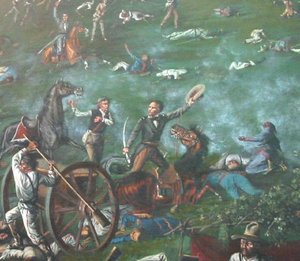
San_jacintoThat was a battle cry 169 years ago in the Battle of San Jacinto (san hah-sin-tah), the decisive battle for Texan Independence from Mexico.

The battle cry was uttered by the renowned Gen. Sam Houston (who later had a town named after him) and Darth Antonio Lopez de Santa Anna, who was the villain of the Alamo Massacre.

"Remember the Alamo!" wasn’t the only battle cry of the day, though. "Remember Goliad!" also was.

Darth Santa Anna had also been in charge of the massacre at Goliad, at which he’d ordered all prisoners put to death.

And thus it was with the memory of these two massacres that the valiant Texican warriors of San Jacinto went forth to win their independence.

GET THE STORY.

Remember the Alamo! Remember Goliad!

Beware The Ides Of . . . DUCK, JULIUS!

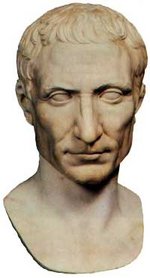
Julius_caesar March 15, 44 B.C.: Julius Caesar is assassinated by the super-hero teamgroup of senators called The Liberators.
Where why:

Romans used to have a king, just like everybody else.

Then they got rid of him and proclaimed themselves a Republic. In fact, that’s where we get the word "republic" from: res publica, which is Latin for "the public thing"–the body that governed Rome after they kicked out the last king, Lucius Tarquinius Superbus ("Tarquin the Proud," no relation to Grand Moff Tarkin).

Tarquin the Proud got kicked out both because he was a big jerk and because he had an immoral son who raped a noblewoman named Lucretia (hence the famous "rape of Lucretia"). Lucretia got revenge by summong the menfolk of her family, telling them what happened, and killing herself. They then took revenge on her behalf by driving the Tarquin house into exile and, subsequently, proclaiming a republic.

Or so the story goes.

The Roman Republic didn’t go swimmingly, though. Its first head was a guy named Lucius Junius Brutus who was, well, "the Lucius Junius Brutus of his race" (a quote from The Mikado) who executed two of his own sons! He didn’t execute all his offspring, though, because one of his descendants, almost five centuries later, was Marcus Junius Brutus.

Marcus Junius Brutus was particular dissatisfied with the events of his own day.

The Republic had proven itself ineffectual in governing (though, one must concede, it had a good run of a number of centuries) and some centralization of power was needed. Having thrown off the shackles of having a king, though, the Romans were not only proud of that fact, they were smug about it. So no king for them. It was a point of honor. (And they were justly afraid about what a king would do.) So they didn’t want to centralize power in the person of just one man.

Instead three guys began unofficially to assume supreme power, and these three guys were known as The Triumvirate (which is based on the Latin for "The Three Guys": trium viri–or, more literally, "the Men of the Three").

That honked a bunch of people off, but what honked even more off was that the Triumvirate proved unstable, with two of the triumviri trying to seize personal power and one kind of sitting out the fight.

The Triumvir who won was none other than Gaius Julius Caesar. He never became emperor (that title went to his successor), but he did get named "dictator for life." (Kewl, huh?)

Well, that was the straw that broke the camel’s back for ol’ Marcus Junius Brutus. He was descended from that guy who executed his own sons, ‘member? And that being the case, killing a cousin like Julius Caesar would be no sweat at all for such as him.

So that’s what he did: He and his Liberator buddies all thought Julius needed killin’, and so when Julius strides in, they stab him! And then they go and stab him twenty-two more times! Just to make sure he’s good an’ dead!

And they did all this on March 15, or the Ides of March (WHAT "IDES" ARE), which history (not just Shakespeare) records Julius as having been warned about by a fortuneteller.

And so they got the Republic back and avoided having a nasty ol’ king.

Well . . . not.

The Republic collapsed into Civil War and eventually there emerged a Second Triumvirate, which proved no more stable than the first and which had two of the triumviri trying to be king and one eventually got his wish, except that the Romans couldn’t bear to call him "king" so they called him "emperor" instead.

Romans, y’see, could have kings as long as they didn’t call them that.

Kinder the way America might one day (certainly not now) have an empire, only we would never be able to call it that.

Countries are funny like that.

Ain’t ancient history a hoot?

Oh, and Julius did apparently die saying something pretty close to "Et tu, Brute" or "Even you, Brutus?"

LEARN MORE THE LAST WORDS OF GAIUS JULIUS CAESAR.

ALSO LEARN ABOUT HOW GAIUS JULIUS CAESAR’S NAME WORKS.

The Guy Who Did It?

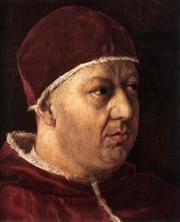
Leo_xMarch 11, 1513: Giovanni di Lorenzo de’ Medici is elected pope and takes the name Leo X.
It is said (though this is not proven) that upon being elected pope he said: "Let us enjoy the papacy since God has given it to us."

A flawed personality, Leo X came into conflict with another flawed personality of his age: Martin Luther.

Leo authorized the monk Johann Tetzel to offer (NOT SELL!) indulgences in exchange for charitable donations to the fund for building St. Peter’s Basilica.

Tetzel’s reportedly-overzealous preaching enraged Luther, who then launched the Protestant "Reformation."

It happened on Leo X watch. He failed to take effective action to prevent the split.

Was he responsible? Not solely, surely. But to a significant degree? Quite possibly.

INFO ON LEO X FROM A SECULAR SOURCE.

INFO ON LEO X FROM A CATHOLIC SOURCE.

Can You Hear Me. Now?

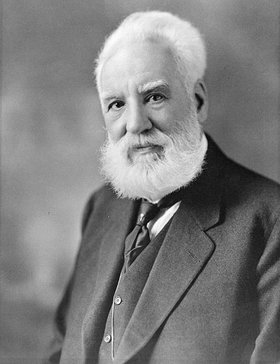
Alexander_graham_bell March 10, 1876: The first bi-directional telephone message is sent by Alexander Graham Bell.

The message?

"Mr. Watson, come here, I want to see you."

The previous year Bell had sent a uni-directional message: "Do you understand what I say?" and Watson rushed in and announced "Yes!"

LEARN MORE ABOUT BELL.

LEARN MORE ABOUT THE PHONE.

What I want to know is: Why wasn’t the Bell Phone Company (remember that?) known colloquially as "Pa Bell"?

Remember The Alamo!

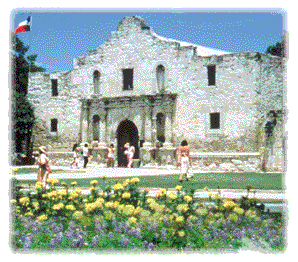
Alamo March 6, 1836: The final massacre at the Battle of the Alamo happened.

Those who died in or shortly after the massacre included:

  • Lt. Col. William Travis (commander of Texas regular army forces)
  • Jim Bowie (leader of the militia forces)
  • Davy Crockett (former congressman)

The massacre of the Alamo inspired Texican forces as they continued to fight for their independence. The battle was memorialized at the Battle of San Jacinto (the last battle of the revolution) with Gen. Sam Houston’s cry "Remember the Alamo! Remember Goliad!"

REMEMBER THE ALAMO.

REMEMBER GOLIAD.

Texas Independence Day!!!

Bonnieblue_2 Texas_state_flag_2

YEEEEEEE-HAW!!!

This here is Texas Independence Day!

On March 2, 1836, the Republic of Texas declared its indepencence from Mexico at Washington-on-the-Brazos! (The Brazos is a river, y’all.)

Just over two months later, Mexico recognized Texas’ independence in the Treaty of Velasco.

The original flag of Texas was the Bonnie Blue Flag (left). It was later replaced with the current flag (right). The presence of a single star on these flags is why Texas is known as "the Lone Star state."

The Texas Declaration of Independence was signed 169 years ago today by both Anglo-Texicans and Tejanos to end their perceived oppression by the Mexican central government of the day.

READ THE TEXAS DECLARATION OF INDEPENDENCE.

BTW, note that one of the charges against the Mexican government was that it wished to inflict upon Texans that scourge of all mankind: gun control!

It [the Mexican government] has demanded us to deliver up our arms, which are essential to our defence, the rightful property of freemen, and formidable only to tyrannical governments.

Asking Texans to give up their guns? What did they expect to happen?

(No dissin’ Texas in the comments box: DON’T MESS WITH TEXAS!)

Tragedy In The Sky

Shuttleplume

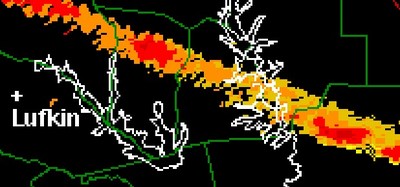
This is a radar track out of Lake Charles, Lousiana.

It shows the debris plume of the Space Shuttle Columbia just after it zoomed over my family’s cattle ranch in Deep East Texas (the river down the middle of the picture is the Lousiana line).

The noise was so loud and went on for so long that my 82-year old grandmother (running the ranch single-handedly) thought it might be the end of the world.

That was two years ago today.

REMEMBER THE TRAGEDY.

WATCH THE LOOP.