I basically don’t watch TV any more. Most TV shows–even ones that I like and intend to watch–don’t motivate me to tune in each week. So what I’ve done with such shows is to just watch them on DVD when they come out.
That way I don’t have the hassles of commercials or having to tune in each week or being frustrated by cliffhangers (except for the season finale).
That’s the up side. The down side is that I also have to wait a really long time between getting to see seasons of the show, but it works for me.
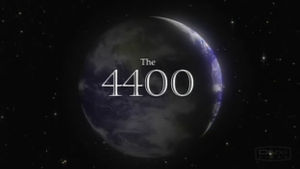
I’ve just started watching the second season of The 4400, which just arrived in the mail, and so far I’m pleased. The opening episode is two hours (well, 90 minutes) long, and it serves as an effective reintroduction to the premise and cast of the show–though the first few minutes of it were a little rough given how long it’d been since I saw season one.
You may not have heard of The 4400 since it’s not getting that much publicity, but here are the basics: It’s a show that airs on the USA Network and–like other USA Network shows (such as Monk)–it has really short seasons (12 episodes in the second, and even less in the first). But they’re trying to do quality rather than quantity, which is what is important to me.
The show was co-created by Rene Echevarria, who was one of the best writers on Next Gen and DS9. It also has Ira Stephen Behr as a regular writer. He also was one of the best Next Gen/DS9 writers. It was their names which got me to watch the first season, and I wasn’t disappointed.
The premise is that, beginning in 1941, a bunch of people–4400 of them (big surprise)–were abducted, apparently by aliens (though we’re later told that isn’t the case) and then returned–all at the same moment–in the present day.
When they were returned, the government did the only sensible thing: It locked them up.
But eventually it was determined that they didn’t seem to be a threat to themselves or others, and so they were released. The government’s still watching them, still trying to figure out what’s up with the whole getting abducted and then being returned all at once thing. It’s a good thing that the government’s watching, because a few of the 4400 start manifesting unusual abilities that even they don’t understand or know why they have.
The writing on the show is quite good, and Echevarria and his team have avoided some of the obvious traps that a series like this could fall into. The government is not persecuting the 4400. It’s acting reasonably. We don’t have an evil government versus righteous 4400 plot. This isn’t a standard good versus evil show. Both members of the 4400 and the normal population are shown being good and bad, helpful and creepy.
That ambiguity is the stuff that human drama is made of.
Let me give you an example of a really nice bit of writing from the series pilot episode, which shows insight into the human condition:
One of the guys we see get abducted is an American serviceman in the Korean War. When we meet him, he’s not aware that he’s about to be abducted, and with an especially good reason since he has other things to worry about at the moment: He’s getting the snot beat out of him by fellow American servicemen.
Why are they doing that?
A clue is found in the fact that he’s black and they’re white and it’s 1951, just after the integration of the armed forces.
Now the standard, easy thing to do in the writing here would be to chalk the snot kicking incident up to simple, straightforward racism: They’re bigots who view him as sub-human. But that’s not what happens.
Instead, as his fellow servicemen are leaving, one of them turns to the gentleman and says: "We treated you like an equal. . . . But that wasn’t good enough for you."
All of a sudden we’re not in familiar territory anymore. They’re not the kind of simple, unadulterated bigots we were expecting. They were willing to treat him like an equal–or at least they thought they did so.
So what was it that sparked the incident?
We find out when they leave and the serviceman looks at a photograph of himself and his white girlfriend.
Now it all makes sense!
His fellow servicemen are bigots! But they’re not the simple, stereotypical bigots we were expecting. They’re a bunch of "separate but equal" bigots. Their racism isn’t simple, unalloyed hostility towards black people. It’s tempered in a way that makes them and their motives–and the writing of the show–more complex.
And it’s a fully believable moment that shows insight into the human condition: This kind of thing could and did happen in 1951. We have an example of racist evil in this scene, but it shows more subtlety and thus deeper insight into human psychology than the simple, comic book racism we’re used to seeing on screen.
There’s also a nice bit when the serviceman is returned–along with the other 4400–in the present day: As he’s sitting in the detention center with the other returnees, he’s reading a magazine and he exclaims: "What? The Secretary of State is colored!"–at which point another character, abducted years later, walks by and corrects him and says, "Black."
(What would have been even better here is if another abductee then walked by and said, "Afro-American" and then a third walked by and said "African American." That also would have showed the evolving racial situation, but the writers didn’t go in that direction.)
Once he is released from the detention center, the serviceman has culture shock at seeing a genuinely integrated society and as being treated–for real this time–as an equal and one who can cross racial boundaries and isn’t expected to remain separate. But he gets over his culture shock and is able to fit in to 21st century society . . . at least as well as a member of the 4400 can.
That shows you the kind of writing you can expect in the series. It’s more complex than the run-of-the-mill, hackneyed stuff you’d get on most shows of the type, just as Echevarria’s and Behr’s scripts were better and more complex than typical Star Trek stuff. Now that they’re freed from the (amazingly tight) shackles that Star Trek writers were under, they have a chance to spread their wings, and I’m enjoying watching the results.
It’s the same kind of situation as with Battlestar Galactica–where DS9 veteran Ron Moore got the chance to spread his wings.
The second season opener–the only ep I’ve watched so far–has some nice touches as well.
There is, unfortunately, a violent, Fundamentalist zealot in it, but I can accept that since some Fundamentalists would react negatively to the 4400 in real life (and the one in the show is able to cite a verse from Revelation that does sound like the events of the series).
(Also like Battlestar Galactica, there are interesting religious themes in the series, that I’m curious to see how and if the writers will pay off.)
Summer Glau (River from Firefly/Serenity) makes an appearance as a mental patient and does her usual excellent job playing a mentally disturbed young woman.
Jeffrey Coombs (Weyoun from DS9) also has a cameo, which may turn into a regular part. It’s nice to see him without prosthetic makeup.
And an H. P. Lovecraft book plays a significant role at a crucial moment in the plot.
CHECK OUT THE FIRST SEASON.
OR THE SECOND.
 The Pirates of the Caribbean turned out to be the surprise summer hit of 2003 and left the newly-minted fans of the franchise wanting more.