The Circle falls, but the price is one hero’s life. Dom Bettinelli, Jimmy Akin, and Fr. Jason Tyler close the DS9 opening trilogy: duty vs. family, a holosuite trap, and the politics that end a coup.
https://youtu.be/4QMNmlF5o7M
The Circle falls, but the price is one hero’s life. Dom Bettinelli, Jimmy Akin, and Fr. Jason Tyler close the DS9 opening trilogy: duty vs. family, a holosuite trap, and the politics that end a coup.
https://youtu.be/4QMNmlF5o7M
A legend built on a lie. Or is it?
DS9’s second season opens with “The Homecoming,” the first episode of Star Trek’s first real three-parter, and a story that could only exist on Deep Space Nine. **Dom Bettinelli**, **Jimmy Akin**, and **Fr. Jason Tyler** break it all down.
**Major Kira** learns that **Li Nalas**, the legendary Bajoran resistance hero, is alive and imprisoned on Cardassia IV. She borrows a runabout, brings Chief O’Brien along for the ride, and pulls off a brazen rescue involving an improvised infiltration ruse that immediately raises questions about their prior experience together. Li Nalas arrives back on DS9 to a hero’s welcome, and almost immediately tries to flee on a freight ship.
His secret: the legend isn’t real. He killed an unarmed, embarrassed Cardassian who was bathing in a stream, and never corrected the story that grew up around it. His friends built a myth; the myth built a movement. Sisko tells him it doesn’t matter. Bajor needs a symbol, not a man. The panel notes the episode’s one missed beat: Sisko is the Emissary, a symbol himself. That parallel never gets drawn out loud.
Meanwhile, **the Circle** — a Bajoran supremacist group under the slogan “Bajor for the Bajorans” — escalates from graffiti to something uglier. They break into Quark’s bar and brand him on the forehead. The panel reads this clearly: it’s the equivalent of cross-burning, a targeted act meant to drive non-Bajorans out. The Circle vanishes from the series after this three-parter, which the panel considers one of DS9’s more significant missed opportunities.
A quieter moment lands the hardest. Jake’s date cancels because her father won’t allow her to date a human. Sisko walks in, asks about the evening, and Jake tells him. Sisko’s response — “I’m sorry you’ve become a victim of these things. You don’t deserve it. Nobody does” — is delivered with total restraint. The panel notes that Avery Brooks and Cirroc Lofton being Black adds a layer to that scene that white actors couldn’t carry in the same way.
**Frank Langella** plays Minister Jaro Essa uncredited, a favor to his Star Trek fan kids. **Richard Beymer** (Tony in West Side Story, Ben Horne in Twin Peaks) plays Li Nalas.
And for the first time in DS9’s run: Morn doesn’t appear. The panel wants to know how he gets paid for episodes he skips.
https://youtu.be/e5Ov_QE0zRU
Subscribe on iTunes. | Other Ways to Subscribe.
Podcast: Play in new window | Download
When Admiral Quinn dispatches the sharp-elbowed Lt. Cdr. Dexter Remmick to investigate the Enterprise crew, every conversation becomes an interrogation — and Captain Picard’s fitness for command comes under the most personal scrutiny he’s faced yet. Dom Bettinelli, Jimmy Akin, and Fr. Jason Tyler dig into “Coming of Age,” a first-season TNG episode that quietly plants the seeds of a major conspiracy while putting both Wesley Crusher and Jean-Luc Picard through entirely different kinds of tests.
On the A-plot, Wesley Crusher travels to a Starfleet Academy testing facility competing against three other exceptional candidates — including a Benzite named Mordock, author of the Mordock Strategy. The panel takes apart the episode’s baffling selection process: only one candidate per regional pool can advance, despite the competition being stacked with super-geniuses. Wesley outperforms Mordock on every visible metric — the 1:1 matter-antimatter intermix ratio problem, the Zaldan cultural encounter, the rotating matrix test, and the psych evaluation. Yet Mordock wins. There’s a leaderboard the audience never sees, and points that don’t matter until they suddenly do.
Wesley’s psych test hits close to home: forced to choose which person to save in a simulated accident, he must make the same kind of life-or-death call that shaped his entire childhood. Worf, of all people, offers him the episode’s most useful advice beforehand — don’t waste energy on what you can’t control — a moment that hints at the character Worf will eventually become.
The B-plot belongs to Remmick, who manages to get under the skin of nearly every senior officer aboard. Riker folds immediately. Beverly Crusher delivers the episode’s sharpest rebuke. And when Remmick asks Worf if he likes him, Worf’s reply is perfect: “Is it required?” It’s also the first on-screen appearance of the Riker Maneuver, as Riker steps over a chair to physically impose himself on his interrogator.
All of this functions as setup. Admiral Quinn reveals he’s investigating the crew because of whispered threats to the Federation’s stability — and he wants Picard elevated to Commandant of Starfleet Academy to protect him. Picard declines. Those who’ve seen the season finale “Conspiracy” know how this thread ends, and it gets dark. At this point, both Quinn and Remmick are still the good guys — which makes rewatching the episode a different experience entirely.
The panel also examines the episode’s clunkier moments: the shuttle rescue that collapses under basic scrutiny, Picard’s cryptic instructions to teenager Jake Kurland, and why no one on the bridge — including Data — seems to recognize what the captain is doing. Plus the Feedback segment tackles a hypothetical: if you intentionally use a neuralizer to erase the memory of your mortal sins before going to confession, is the absolution valid?
https://youtu.be/oW1OY_gRTQU
Subscribe on iTunes. | Other Ways to Subscribe.
Podcast: Play in new window | Download
Spock is dying — and the cure is in enemy hands.
**Choriocytosis** encases copper-based blood cells so they can’t carry oxygen, and it’s 100% fatal to Vulcans. The medicine is en route aboard the **USS Huron**, a Starfleet freighter — until Orion pirates hijack it. What makes the situation worse: the Orions are a neutral power, and they’d rather blow themselves up than let the Federation prove they’ve gone rogue.
**Dom Bettinelli**, **Jimmy Akin**, and **Fr. Jason Tyler** dig into “The Pirates of Orion,” widely regarded as the best episode of *Star Trek: The Animated Series* — and the one written by **Howard Weinstein** at age 19, in a submission that almost never got read.
The discussion covers a lot of ground. McCoy finally gets to be the hero, devising the rendezvous plan before Kirk can even open his mouth. Lt. **Arex** gets real things to do for once. **James Doohan** voices the Orion captain and most of the Huron crew, demonstrating the vocal range that made him indispensable to TAS. And the Orion ship design — a pouncing, crab-like silhouette — effectively sells the menace before the mystery is revealed.
The panel also interrogates the episode’s central premise: can a neutral planet really disclaim its own pirates? A look at Somali pirates, letters of marque, and Larry Niven’s Kzinti subplot from another TAS episode all come to bear. And the transporter-defuses-the-bomb ending gets scrutinized — “molecular chain reaction” only goes so far as an explanation.
Feedback from the previous episode rounds out the show, including a listener’s detailed correction on dinosaur genus nomenclature and what it reveals about Neelix’s insult to Tom Paris.
https://youtu.be/eOeJR0-VZxk
Subscribe on iTunes. | Other Ways to Subscribe.
Podcast: Play in new window | Download
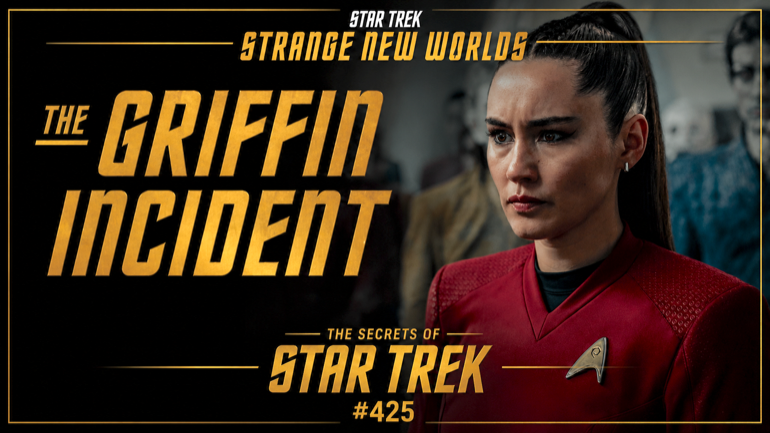
A woman who hates her unborn child. A scheming Klingon. A Prime Directive that’s barely an idea yet. Dom Bettinelli, Fr. Jason Tyler, and Jimmy Akin unpack D.C. Fontana’s bold “Friday’s Child.”
https://youtu.be/HFt7LUW6J84
Subscribe on iTunes. | Other Ways to Subscribe.
Podcast: Play in new window | Download
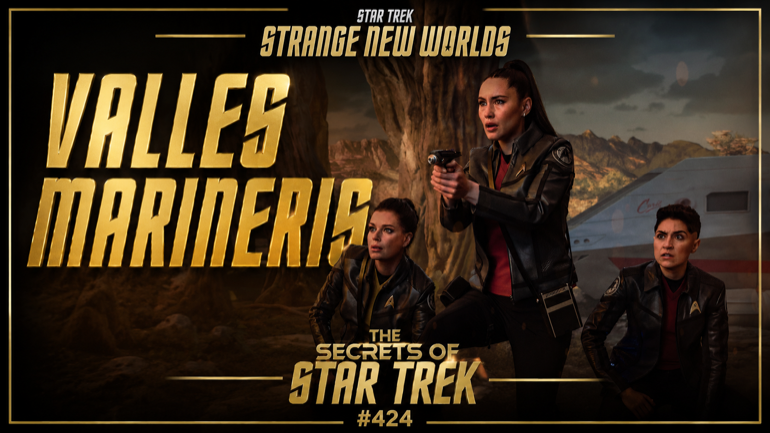
She erased the memory. The guilt came back anyway. T’Pol hunts a Vulcan fugitive on an icy moon — and relives a killing she’d had ritually purged from her mind. Dom Bettinelli and Jimmy Akin on memory, guilt, and trust.
https://youtu.be/9UTpQ2TOko8
Subscribe on iTunes. | Other Ways to Subscribe.
Podcast: Play in new window | Download
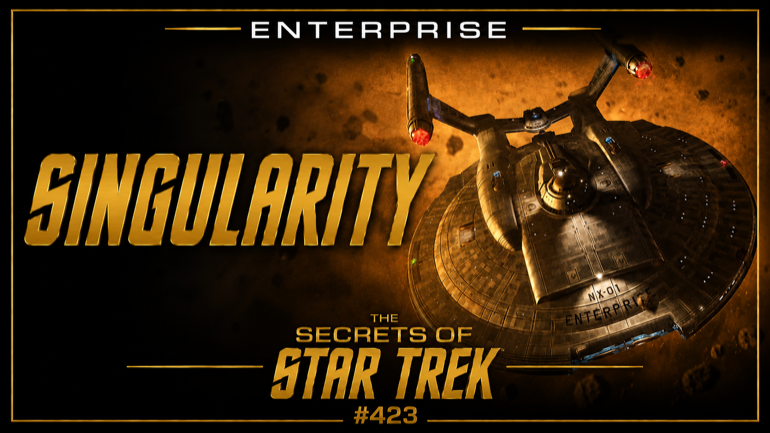
Tom Paris and Neelix crash on Planet Hell and are forced to care for a newly-hatched alien creature — and finally put their rivalry over Kes to rest. Dom Bettinelli, Jimmy Akin, and Fr. Jason Tyler break down the Voyager episode Parturition. Stranded together, Paris and Neelix must cooperate to care for a newly-hatched creature. The panel examines Neelix’s controlling jealousy, Janeway’s command style, plot logic holes, and the writers’ deliberate choice to finally resolve the Paris-Neelix tension.
https://youtu.be/U22bIp8KHQI
Subscribe on iTunes. | Other Ways to Subscribe.
Podcast: Play in new window | Download
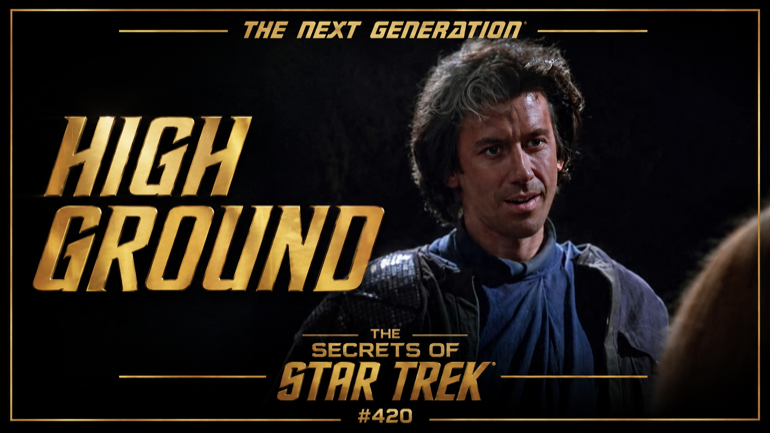
In DS9’s “Crossfire,” Odo’s longing for Kira collides with First Minister Shakaar’s confidence. Dom Bettinelli, Fr. Jason Tyler, and Jimmy Akin ask: is Odo’s emotional rigidity protecting him — or guaranteeing heartbreak?
https://youtu.be/TWX2RRpmEiE
Subscribe on iTunes. | Other Ways to Subscribe.
Podcast: Play in new window | Download
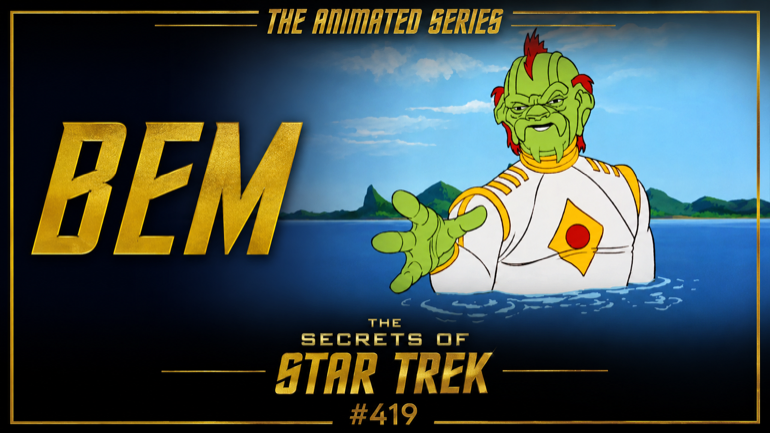
TNG’s “The Hunted” is a Vietnam allegory that rarely gets its due. Dom Bettinelli, Jimmy Akin, and Fr. Jason Tyler examine what works, what doesn’t, and how stronger dramatic choices could have made it truly great.
https://youtu.be/InAUvrR9PLY
Subscribe on iTunes. | Other Ways to Subscribe.
Podcast: Play in new window | Download
The season finale of Starfleet Academy Season 1, “RubinCon,” stages a live-broadcast Federation trial, sends cadets racing to neutralize omega mines, and asks whether a season’s worth of character work can pay off in a single hour. Dom Bettinelli, Jimmy Akin, and Fr. Jason Tyler break it down.
Nus Braka’s show trial is equal parts spectacle and procedural chaos. Anisha is appointed judge despite already knowing Caleb is alive and a plan is in motion — and still rules irrationally, leaving the panel wondering why the writers gave away the dramatic tension before it was needed. The larger problem is the backstory reveal: Braka’s entire vendetta turns out to be rooted in a childhood misperception. Strontium burns red. Federation weapons fire doesn’t. His father’s missiles killed his colony, not the Federation’s. The panel argues that while the twist is clever in isolation, it radically deflates a villain who had genuine menace — and fits a troubling modern pattern of antagonists whose menace is unhinged irrationality rather than cold calculation. Khan, the benchmark they’re all chasing, had both.
Captain Ake’s courtroom defense prompts a comparison worth having: how would Picard, Sisko, or Kirk have handled the same tribunal? The panel finds Ake emotionally credible but lacking the steel those captains brought — the restrained righteous indignation of Sisko, the Shakespearean reserve of Picard, Kirk’s barely-contained fury. Meanwhile, Reno’s command of the Athena is the episode’s clearest win. Her instinct to keep teaching even in crisis — quizzing cadets rather than simply ordering them — functions as both character consistency and a practical way to keep nervous young officers focused on what they’ve been trained to do.
The omega mine neutralization leans on Trek’s most reliable crutch: technology that conveniently fails until it just as conveniently doesn’t. The air-pressure-as-sensor-countermeasure gets particularly rough treatment, capped by listener feedback cataloguing the three 20th-century detection technologies — thermal imaging, audio, Doppler shift — that would have blown the plan in seconds. The panel also maintains a “hug counter” throughout, which reaches impressive heights by the time the group embrace closes the episode.
Stepping back, the season one verdict is nuanced: better than feared going in, but structurally hampered by the abbreviated episode count that defines streaming-era prestige TV. Short seasons rush character development and leave the cast emotionally remote. DS9’s Julian Bashir took time to become someone worth caring about; Starfleet Academy’s cadets never quite get there. Season 2 is confirmed as the last, and all three panelists are cautiously open to returning — especially if the rumored shift away from a central villain in favor of a situational threat bears out.
https://youtu.be/IeeHJfrUhUg
Subscribe on iTunes. | Other Ways to Subscribe.
Podcast: Play in new window | Download