Ascension Thursday

Ascension

Today is Ascension Thursday–the celebration of Christ’s ascension into heaven, 40 days after Easter Sunday.

In many parts of the U.S. (though not in California, where I live), this is a holy day of obligation.

I view that as an absurdity. A country should either treat this as a holy day of obligation or not. Culture doesn’t vary that much within a country that it should have different holy days of obligation compared to other parts of the same country. But I’m not the one who makes the rules, and the Vatican approved the current arrangement.

Part of the edge for me is that–given St. Luke’s indication that the ascension occurred 40 days after Easter, we know (at least in approximate terms) that the Ascension occurred on a Thursday, and I don’t like the idea of transferring it to the following Sunday. Of all the holy days, we have special reason to place this one on a Thursday.

Part of it also is that I’ve stood on the place on the Mount of Olives where the site of the Ascention is commemorated by a stone tower, though no one knows precisely where on the mountain the spot was from which Jesus ascended.

Still, it makes it more real to me.

Regardless of what ecclesiastical province you live in–inside or outside of the United States–I hope that you have a very blessed celebration of the transition of Our Lord from this lowly, fallen world back to the realms of glory from which he descended.

Extreme Mountaineering

Mteverest

A young mountaineer’s tragic death on Mount Everest has divided climbers around the world. David Sharp, 34, is believed to have died of oxygen deficiency after being passed up by an estimated forty climbers determined to press on to the top rather than cancel their ascent to help him.

"Sharp was trying to climb the mountain alone. He died after he apparently ran out of oxygen 300 metres below the summit.

"[Climber Mark] Inglis [himself a double amputee who climbs with prosthetic legs] said his party was the only one among about 40 climbers to stop and help Sharp as he lay in Everest’s ‘death zone,’ above 8000 metres. He said his group kept climbing after deciding there was nothing they could do to save the Briton.

"’He had no oxygen, he had no proper gloves,’ Inglis said. ‘He was effectively dead … so we carried on. Trouble is, at 8500 metres it’s extremely difficult to keep yourself alive, let alone keep anyone else alive.’"

GET THE STORY.

Another veteran climber isn’t buying the excuses.

"’There have been a number of occasions when people have been neglected and left to die and I don’t regard this as a correct philosophy,’ [Sir Edmund Hillary] told the Otago Daily Times.

"’I think the whole attitude toward climbing Mount Everest has become rather horrifying. The people just want to get to the top,’ he told the newspaper.

"Hillary told New Zealand Press Association he would have abandoned his own pioneering climb to save another’s life.

"’It was wrong if there was a man suffering altitude problems and was huddled under a rock, just to lift your hat, say "good morning" and pass on by,’ he said.

"He said that his expedition, ‘would never for a moment have left one of the members or a group of members just lie there and die while they plugged on towards the summit.’"

Edmundhilary

GET THE STORY.

Who is Sir Edmund Hillary?

CLICK HERE.

"’It was wrong if there was a man suffering altitude problems and was huddled under a rock, just to lift your hat, say "good morning" and pass on by,’ [Hillary] said."

"[Jesus asked] ‘Which of these three, do you think, proved neighbor to the man who fell among the robbers?’ [The lawyer] said, ‘The one who showed mercy on him.’ And Jesus said to him, ‘Go and do likewise’" (Luke 10:36-37).

READ THE WHOLE THING.

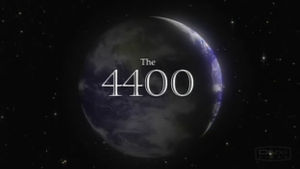
The 4400

4400

I basically don’t watch TV any more. Most TV shows–even ones that I like and intend to watch–don’t motivate me to tune in each week. So what I’ve done with such shows is to just watch them on DVD when they come out.

That way I don’t have the hassles of commercials or having to tune in each week or being frustrated by cliffhangers (except for the season finale).

That’s the up side. The down side is that I also have to wait a really long time between getting to see seasons of the show, but it works for me.

I’ve just started watching the second season of The 4400, which just arrived in the mail, and so far I’m pleased. The opening episode is two hours (well, 90 minutes) long, and it serves as an effective reintroduction to the premise and cast of the show–though  the first few minutes of it were a little rough given how long it’d been since I saw season one.

You may not have heard of The 4400 since it’s not getting that much publicity, but here are the basics: It’s a show that airs on the USA Network and–like other USA Network shows (such as Monk)–it has really short seasons (12 episodes in the second, and even less in the first). But they’re trying to do quality rather than quantity, which is what is important to me.

The show was co-created by Rene Echevarria, who was one of the best writers on Next Gen and DS9. It also has Ira Stephen Behr as a regular writer. He also was one of the best Next Gen/DS9 writers. It was their names which got me to watch the first season, and I wasn’t disappointed.

The premise is that, beginning in 1941, a bunch of people–4400 of them (big surprise)–were abducted, apparently by aliens (though we’re later told that isn’t the case) and then returned–all at the same moment–in the present day.

When they were returned, the government did the only sensible thing: It locked them up.

But eventually it was determined that they didn’t seem to be a threat to themselves or others, and so they were released. The government’s still watching them, still trying to figure out what’s up with the whole getting abducted and then being returned all at once thing. It’s a good thing that the government’s watching, because a few of the 4400 start manifesting unusual abilities that even they don’t understand or know why they have.

The writing on the show is quite good, and Echevarria and his team have avoided some of the obvious traps that a series like this could fall into. The government is not persecuting the 4400. It’s acting reasonably. We don’t have an evil government versus righteous 4400 plot. This isn’t a standard good versus evil show. Both members of the 4400 and the normal population are shown being good and bad, helpful and creepy.

That ambiguity is the stuff that human drama is made of.

Let me give you an example of a really nice bit of writing from the series pilot episode, which shows insight into the human condition:

One of the guys we see get abducted is an American serviceman in the Korean War. When we meet him, he’s not aware that he’s about to be abducted, and with an especially good reason since he has other things to worry about at the moment: He’s getting the snot beat out of him by fellow American servicemen.

Why are they doing that?

A clue is found in the fact that he’s black and they’re white and it’s 1951, just after the integration of the armed forces.

Now the standard, easy thing to do in the writing here would be to chalk the snot kicking incident up to simple, straightforward racism: They’re bigots who view him as sub-human. But that’s not what happens.

Instead, as his fellow servicemen are leaving, one of them turns to the gentleman and says: "We treated you like an equal. . . . But that wasn’t good enough for you."

All of a sudden we’re not in familiar territory anymore. They’re not the kind of simple, unadulterated bigots we were expecting. They were willing to treat him like an equal–or at least they thought they did so.

So what was it that sparked the incident?

We find out when they leave and the serviceman looks at a photograph of himself and his white girlfriend.

Now it all makes sense!

His fellow servicemen are bigots! But they’re not the simple, stereotypical bigots we were expecting. They’re a bunch of "separate but equal" bigots. Their racism isn’t simple, unalloyed hostility towards black people. It’s tempered in a way that makes them and their motives–and the writing of the show–more complex.

And it’s a fully believable moment that shows insight into the human condition: This kind of thing could and did happen in 1951. We have an example of racist evil in this scene, but it shows more subtlety and thus deeper insight into human psychology than the simple, comic book racism we’re used to seeing on screen.

There’s also a nice bit when the serviceman is returned–along with the other 4400–in the present day: As he’s sitting in the detention center with the other returnees, he’s reading a magazine and he exclaims: "What? The Secretary of State is colored!"–at which point another character, abducted years later, walks by and corrects him and says, "Black."

(What would have been even better here is if another abductee then walked by and said, "Afro-American" and then a third walked by and said "African American." That also would have showed the evolving racial situation, but the writers didn’t go in that direction.)

Once he is released from the detention center, the serviceman has culture shock at seeing a genuinely integrated society and as being treated–for real this time–as an equal and one who can cross racial boundaries and isn’t expected to remain separate. But he gets over his culture shock and is able to fit in to 21st century society . . . at least as well as a member of the 4400 can.

That shows you the kind of writing you can expect in the series. It’s more complex than the run-of-the-mill, hackneyed stuff you’d get on most shows of the type, just as Echevarria’s and Behr’s scripts were better and more complex than typical Star Trek stuff. Now that they’re freed from the (amazingly tight) shackles that Star Trek writers were under, they have a chance to spread their wings, and I’m enjoying watching the results.

It’s the same kind of situation as with Battlestar Galactica–where DS9 veteran Ron Moore got the chance to spread his wings.

The second season opener–the only ep I’ve watched so far–has some nice touches as well.

There is, unfortunately, a violent, Fundamentalist zealot in it, but I can accept that since some Fundamentalists would react negatively to the 4400 in real life (and the one in the show is able to cite a verse from Revelation that does sound like the events of the series).

(Also like Battlestar Galactica, there are interesting religious themes in the series, that I’m curious to see how and if the writers will pay off.)

Summer Glau (River from Firefly/Serenity) makes an appearance as a mental patient and does her usual excellent job playing a mentally disturbed young woman.

Jeffrey Coombs (Weyoun from DS9) also has a cameo, which may turn into a regular part. It’s nice to see him without prosthetic makeup.

And an H. P. Lovecraft book plays a significant role at a crucial moment in the plot.

CHECK OUT THE FIRST SEASON.

OR THE SECOND.

STICKS HICKS NIX DIX CHIX

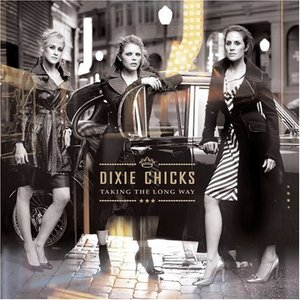
Dixie_chicksSince I was talking about music earlier today, I may as well touch on this story as well.

To the left is the cover of the Dixie Chicks’ new album, Taking the Long Way, which is their first new album since they shot off their mouths in a spectacularly rude way at a specutacularly bad time that was sure to alienate their country music audience.

GET THAT STORY IF YOU DON’T KNOW IT.

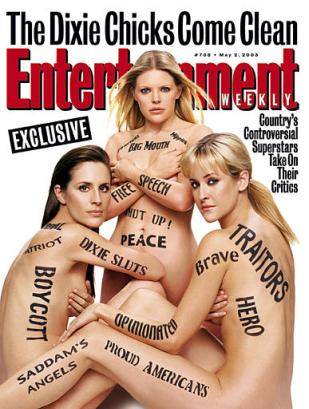
They could have recovered from that, but instead they issued a string of smouldering non-apologies and eventually appeared–bizarrely!–on the cover of Entertainment Weekly stark nekkid with inflammatory words and phrases painted on their bodies.

That ain’t really the country thing to do, and their fans turned their backs on them.

Now, personally, I don’t care if they hold the opinions of President Bush that they expressed in England. I’m not happy with President Bush, myself. But to say what they did (that they’re ashamed that the president is from Texas) when they did (in wartime) where they did (on foreign soil) to whom they did (Euro liberals) was sure to hack off the people who bought their records, and following it up with a bunch of non-apologies and bizarro stunts LIKE THIS (skin warning!) was utterly contemptuous of their core audience.

In other words, they were alienating their base.

So, three years later out comes their first new album and their label starts pitching it to country music stations and with news stories being written with headlines like "Dixie Chicks Return To Country Radio."

So have three years changed things? Is all forgiven? Will their country fans start listening to them again?

A precondition for forgiveness is repentance, and with defiant, in-your-face songs on the album like "Not Ready To Make Nice"–a contemptuous stab at those who were offended by their actions three years ago–it’s clear that the Chicks have some repenting to do if they want to be forgiven by their country fans.

AND SO THE ALBUM IS GOING NOWHERE, MANY STATIONS AREN’T PLAYING ITS SONGS, AND THOSE THAT ARE ARE GETTING COMPLAINTS.

Good.

I used to listen to their songs–I particularly liked "Goodbye Earl"–but the Chicks showed themselves to be a bunch of spoiled girls who have never grown up. I have no interest in listening to their songs because I will have no ability to enjoy them until they can adopt an attitude other than contempt for those who gave them their success by buying their albums and supporting them and their careers.

A basic rule of getting along in life for public figures is "Don’t show contempt for your base."

That’s a principle Mr. Bush ought to learn if he’d like his reputation to fare well in the long term, too.

Quote Of The Day

Oscarwilde

Digging into the Great Quotes File, we find a quote that I first found attributed to that apostle of common sense, G. K. Chesterton, and was pleasantly surprised to later find attributed to an unexpected source:

"Morality, like art, means drawing a line someplace." –Oscar Wilde

Who was Oscar Wilde?

CLICK HERE.

As you may know, Oscar Wilde lived an actively homosexual life for some years. What you may not know is that he was received into the Catholic Church on his deathbed. For more on that story, check out Joseph Pearce’s biography The Unmasking of Oscar Wilde.

GET THE BOOK.

The Many Faces Of James Darren

MoondoggieSee the guy in this picture?

That’s Moondoggie from the Gidget movies, and it’s Gidget he’s standing next to.

Moondoggie was played by a teen idol of the day known as Jimmy Darren (who was popular enough that he later appeared in animated form on The Flintsones as Jimmy Darrenrock.)

As part of his teen heartthrob career, Jimmy recorded a number of albums.

But he moved out of this phase of his career (as teen idols tend to do). He tried to move on to more "serious" roles, like this one . . .
Tony
Here he is as Dr. Tony Newman, one of two time-travelling scientists on the Irwin Allen thriller TV show, The Time Tunnel.

I recently blogged about the release of the DVDs of that series, which I was a fan of as a boy.

This was the role in which I first became aware of Jimmy Darren, though I had no clue who he was in real life any more than I did any actors I saw on TV at the time.

During this period of is career he also went for "serious-er" roles than that of a time-travelling scientist, such as Pvt. Spyros Pappadimos in The Guns of Navarrone.

I like The Guns of Navarrone, but I was oblivious to Darren’s role in it, too. It wouldn’t be until he started performing another role that I really became aware of who he was.

That role–which is the one for which I’ll always best remember him–is this one:
Vic
Here he’s appearing as the holographic 1962 lounge singer Vic Fontaine on Star Trek: Deep Space 9.

This was a great role for him! It drew on his musical and sci-fi background and he did an absolutely outstanding job as a suave, wise, strong, and (once in a while) vulnerable lounge singer who could really sing.

There was also some irony to the role since in the imaginary 1962 world that Vic inhabited, he sang at a Vegas nightclub and hung with members of the Rat Pack like Frank and Dino and Sammy–and in real life the actor Jimmy Darren was a close friend of Frank Sinatra.

The Vic Fontaine role came along at an important point for Darren and allowed him to re-enter the kind of musical world that he had worked in at the beginning of career. His role on DS9 proved so popular that not only did he become a virtual regular on the show (in more than one sense of the term), it also re-launched his career as a singer.

After the show he started recording albums again, and a number of his older ones have been re-released.

In fact, there’s ten of ’em on iTunes for download right now (search on the term "James Darren").

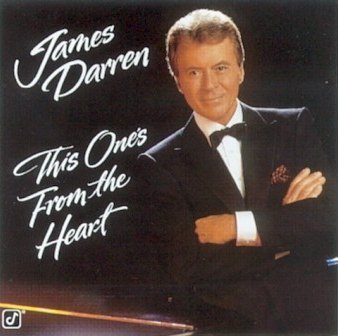
From_the_heartI haven’t heard all ten, but if you enjoyed his singing on DS9–or if you just like really well-sung American standards in the Frank Sinatra/Mel Torme tradition–then I’d like to recommend one album in particular: This One’s From The Heart.

This is the first album he did after DS9, and as a thank you to the fans of the show who would form a key part of its purchasers, it includes virtually all the songs he sang as Vic Fontaine–only this time without them being interrupted for story or covered over by dialogue or cut short for time.

Here’s the playlist of standards it includes:

"The Best Is Yet To Come," "Come Fly With Me," "That Old Black Magic," "All the Way," "It’s Only A Paper Moon," "I’ve Got the World on a String," "You’d Better Love Me," "Sophisticated Lady," "Just In Time," "I’ve Got You Under My Skin," "The Way You Look Tonight," "Here’s to the Losers," "You’re Nobody Till Somebody Loves You," "Dancing in the Dark," "Night and Day," "I’ll Be Seeing You," and "Satin Doll."

That’s quite a lineup! And Darren’s rendition of these songs is excellent.

I have a bunch of the same songs done by Frank Sinatra, but despite Sinatra’s undeniable mastery of this form of singing, I find that I enjoy Darren’s versions better. Darren’s voice has a more velvety quality, like Mel Torme’s, compared to Sinatra, and this makes it warmer. This kind of Rat Pack singing requires the singer to project a kind of strengh through his voice, but there are different kinds of strengths, and if you listen to Sinatra’s voice he at times projects a cruel streak.

Darren, by contrast, projects a friendliness and warmth, even when the song would lend itself to a cruel treatment. For example, a personal favorite are the songs "You’d Better Love Me" and "Here’s to the Losers," both of which have to be handled just right or the singer comes off sounding aloof and arrogant. That’s how Sinatra might do them. But in Darren’s hands, "You’d Better Love Me" sounds friendly and playful and "Here’s to the Losers" sounds compassionate and optimistic.

Not every song on the album is a winner to my mind. I don’t really like "Sophisticated Lady," for example. (It’s a slow song, and I have a constitutional aversion to slow songs.)

Growing up when I did, I didn’t discover this type of music until I was an adult. Back in high school, singers like Frank Sinatra were considered square, but when I grew up enough to appreciate types of music that weren’t popular with my high school buddies, I came to appreciate this genre.

Unfortunately, it’s a little hard to refer to because there isn’t a standard name for it. Some are calling it "classic pop" (i.e., the type of music that was popular before rock & roll). Others are calling it "pop standards." Or "lounge music." Whatever you want to call it, there’s just something comforting and classy about this type of music.

Overall, Darren’s This One’s From The Heart is an outstanding introduction to and example of the genre, and I’d heartily recommend it if you were a DS9 fan, if you’re a lover of this style of music, or even if you’ve never really gotten into this style of singing and would like to see what the fuss was about.

Enjoy!

McPlannedParenthood

Coming soon to a strip mall near you: A "quick-service" Planned Parenthood clinic. Next thing you know there’ll be one on every corner. Right next door to the local Starbucks, no doubt.

"Planned Parenthood wants to expand its services to more areas, and the organization’s leaders hope a plush fast-service clinic coming to this well-heeled St. Paul suburb [Woodbury, MN] next month will attract a new group of women who value convenience and can afford to pay full price.

"It could be to reproductive health care what companies like MinuteClinic and RediClinic are to strep tests and ear infections. Planned Parenthood is a nonprofit, but its leaders hope the new clinic will make enough money to help subsidize the rest of its operations."

GET THE STORY.

One these franchise PPs get going, I wonder what the tagline will be. Perhaps "Over 45 million killed"?

“At The Count Of Three You Will Wake Up Feeling Refreshed . . . “

Swinging_watchDown yonder, a reader writes:

Jimmy, what is your "informed opinion" about whether it would be morally advisable for a Catholic to be hypnotized, either to help curb an unhealthy habit, or just as part of a show at a fair or on a cruise or something?

It depends in part on what your view of hypnosis is.

If you think that hypnosis is an altered state of consciousness that results in heightened suggestibility then it would be morally licit to use it for legitimate therapeutic purposes, like stopping smoking or losing weight or curbing anxiety.

It would not be morally usable for illegitimate therapeutic or investigative purposes, like trying to dig up memories of past lives, alien abductions, or fingering real or imaginary criminals since hypnosis trying to use hypnosis in this way leads to confabulated "memories."

It also could be morally licit to use it for entertainment purposes IF (and this is a BIG IF) you’re confident that the use of it in a particular case will not result in you doing or being tempted to do something immoral. For example, if you know that the stage magician is likely to give you morally neutral commands like "Cluck like a chicken" then the act would have a different moral character than if he were going to give you commands like "You’re becoming extremely aroused by your co-worker, who I also have here on stage hypnotized. You can’t keep your hands off her, etc., etc."

If, on the other hand, you’re like me and think that hypnosis is likely a socially constructed role that people know how to "play" from movies and TV (rather than a genuine altered state of consciousness) then a different moral question comes to the fore, because hypnosis in that case functions basically as a placebo.

Deceiving people into thinking that a placebo is real is immoral because it involves the offense of lying, but–in principle–it’s not immoral to use placebos as long as you don’t lie to people about the nature of what they’re doing. If you say, "This is not a change in your consciousness; it’s just a confidence-building measure that has as much or as little meaning as you choose to put into it" then I could see where therapeutic hypnosis might be morally permissible in principle.

I could see an informed Catholic saying to himself, "This may be just a placebo–or perhaps a smidge more than a placebo–but I’m going to use the fact that I was hypnotized as a confidence-building measure when I want a smoke or want to eat or when I’m feeling over-anxious."

In that case the person would not be attributing more to hypnosis than hypnosis has or is known to have. He’s aware that it’s just a tool he’s using with himself to accomplish his goals (like counting to ten in order to cool off when you’re mad or telling yourself that you can do something in preparation for actually doing it).

I’m not 100% comfortable with that, but it’s sufficiently non-problematic I wouldn’t at this point say that a properly informed Catholic couldn’t morally use it for therapeutic reasons.

Of course, the illegitimate therapeutic and investigative considerations would still apply.

And I’d be more uncomfortable about using it for entertainment since part of the game is thinking that what the stage hypnotist is doing might be real–unless the audience was made to understand that this is all just a game.

There’s also a "content-free" school of hypnosis that treats it just as a relaxed, focused state in which a person can put himself and decide for himself what he wants to do. In that case, it’s basically a form of meditation, and as long as it doesn’t get overlaid with mysticism or claims that it’s anything other than it is then it seems morally nonproblematic in principle.

This is all distinct from using hypnotism in works of fiction, where real-world rules don’t apply and hypnotism can be presented in a humorous, fantasy light–like in the otherwise forgettable Woody Allen movie Curse of the Jade Scorpion.

Madagascar! Constantinople!

Bad News, Everybody!

SONY hasn’t learned its lesson and has optioned two more of Dan Brown’s Robert Langdon books for sequels to The Da Vinci Code.

The first sequel is the book Angels & Demons (which was actually published to no special fanfare years before The Da Vinci Code), which deals with the Illuminati and their plot against the Catholic Church and . . . are you ready? . . . killing people at the Vatican with antimatter!

Also, the pope has fathered a child out of wedlock with a nun, but to avoid breaking a vow he didn’t have sex with her instead used artificial insemination.

Obviously this pope had a degree in moral theology before becoming pope.

And a degree in canon law. (The vow is to not get married, not to not have sex; the latter is an entailment of not getting married. And it isn’t even a vow in unless he’s a religious; it’s a promise.)

And a real sense of fun. (I mean, he committed a mortal sin to have a child, and he didn’t even commit the enjoyable one.)

MORE INFO HERE.

The next sequel–based on the book Brown is currently writing–is set in America and deals with Freemasons.

MORE ON THE SEQUELS FROM A HOLLYWOOD PERSPECTIVE.

Good News, Everybody!

The Vatican’s standing pat on the requirement to do accurate Mass translations!

Some time ago the Holy See issued an instruction called Liturgiam Authenticam, which ordered and end to the hippy-dippy-squishy translations that ICEL has been ramming down the throats of English-speaking Catholics for the last 40 years.

WOO-HOO!!!

So a new translation of the Mass has been in the works–and it’s quite good! (I’ve seen drafts, and it’s worlds better than the inaccurate, tin-eared one we hear every Sunday.)

BUT NOT EVERYONE IS HAPPY WITH THE NEW TRANSLATION.

Yet time is growing short, because the Holy See has made it clear it wants these translations done without unnecessary delays, and a vote on the new translation is scheduled for the USCCB’s meeting next month.

This apparently led some bishops to have a meeting with Cardinal Arinze in whic they apparently felt him out about the possibility of just sticking with the current translation of the Mass instead of using the new and improved one.

His response, leaked to Catholic World News (CHT to the readre who e-mailed), is found in the following letter:

2 May 2006

The Most Reverend William Skylstad
Bishop of Spokane
President, United States Conference of Catholic Bishops
Prot. n. 499/06/L

Your Excellency,

With reference to the conversation between yourself, the Vice President and General Secretary of the Conference of Bishops of which you are President, together with me and other Superiors and Officials when you kindly visited our Congregation on 27 April 2006, I wish to recall the following:

The Instruction Liturgiam authenticam is the latest document of the Holy See which guides translations from the original-language liturgical texts into the various modern languages in the Latin Church. Both this Congregation and the Bishops’ Conferences are bound to follow its directives. This Congregation for Divine Worship and the Discipline of the Sacraments is therefore not competent to grant the recognitio for translations that do not conform to the directives of Liturgiam authenticam. If, however, there are difficulties regarding the translation of a particular part of a text, then this Congregation is always open to dialogue in view of some mutually agreeable solution, still keeping in mind, however, that Liturgiam authenticam remains the guiding norm.

The attention of your Bishops’ Conference was also recalled to the fact that Liturgiam authenticam was issued at the directive of the Holy Father at the time, Pope John Paul II, to guide new translations as well as the revision of all translations done in the last forty years, to bring them into greater fidelity to the original-language official liturgical texts. For this reason it is not acceptable to maintain that people have become accustomed to a certain translation for the past thirty or forty years, and therefore that it is pastorally advisable to make no changes. Where there are good and strong reasons for a change, as has been determined by this Dicastery in regard to the entire translation of the Missale Romanum as well as other important texts, then the revised text should make the needed changes. The attitudes of Bishops and Priests will certainly influence the acceptance of the texts by the lay faithful as well.

Requesting Your Excellency to share these reflections with the Bishops of your Conference I assure you of the continued collaboration of this Congregation and express my religious esteem,

Devotedly yours in Christ,

+Francis Card. Arinze
Prefect,
Sacred Congregation for Divine Worship and the Discipline of the Sacraments