By Scripture Alone

Michelle here. Virtually.

Marnold_2

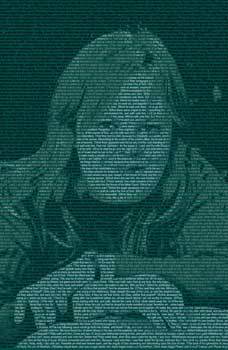
The photo is an image of me, but what do you think this picture itself is composed of? Would you believe it’s text from the Bible? Although my sister told me how she created this, I’m not a computer geek, and so all that really stuck with me is that she played around with the image, taken from an original photo, on Photoshop. You can also see the image at her blog, Once Upon A Time….

GET THE POST.

Well, We’ll Have To See . . .

Drudge is linking a story on Central Florida News 13 which is now inaccessible due to high traffic volume, so here’s a mirror of what it says:

Big NASA Announcement Today

NASA is planning to make a huge announcement today, about possible life in our own solar system.

Exact details of what we can expect to hear have not been released. We do know that evidence has been found that could point to life relatively close to the earth.

Official word is expected this afternoon at 2 p.m. We’ll have complete coverage of today’s big news when it is released. Tune to News 13 for the complete story.

I’m skeptical, but we’ll have to see.

UPDATE: Well, I was right. There was no announcement of possible extraterrestrial life. One of the high-IQ boys in the MSM failed to understand the nature of the press release he was reading.

What NASA did announce is the possible discovery of liquid water geysers on Saturn’s moon Enceladus.

Enceladus

GET THE STORY.

The Daily Planet adds:

Wink Blinkley, NASA chief of lost planets and planetoids, was ecstatic about the discovery: "It’s so cool to discover water geysers on one of the moons of Saturn! Not only, that, but it’s on a completely unknown moon! Nobody ever heard of Enceladus before. We’ve known for a long time that Saturn had moons, like Titan–the biggest moon in the solar system. But nobody knew that Saturn also had a moon named Enceladus, let alone that it had liquid water geysers! This is a double-discovery of stunning proportions!"

Immigration & Catholic Teaching

The subject of immigration is heating up. With the presence of more than ten million people illegally in the United States–or three percent of the total population–many citizens are concerned enough that we seem to be building toward a breaking point on this subject.

As a result of all the news stories on this topic, I’ve had requests to explain the Church’s teaching in this area.

Sometimes folks receive the impression that Church teaching requires essentially an open-border policy where people can come into a country with no restraints, but this is not true. If you read the actual Church documents on the subject, they contain important qualifiers that are often dropped out of the discussion when presented by some individuals.

Here is what the Catechism of the Catholic Church has to say:

2241 The more prosperous nations are obliged, to the extent they are able, to welcome the foreigner in search of the security and the means of livelihood which he cannot find in his country of origin. Public authorities should see to it that the natural right is respected that places a guest under the protection of those who receive him.

Political authorities, for the sake of the common good for which they are responsible, may make the exercise of the right to immigrate subject to various juridical conditions, especially with regard to the immigrants’ duties toward their country of adoption. Immigrants are obliged to respect with gratitude the material and spiritual heritage of the country that receives them, to obey its laws and to assist in carrying civic burdens.

I’ve highlighted three important qualifiers that are often dropped out in this discussion.

The first recognizes that there is a limit to the number of immigrants that a nation can absorb. Common sense tells you this: No nation can absorb an unlimited number of immigrants.

Precisely how many a particular country can reasonably absorb is a determination that must ultimately be made by the laity, who are charged with ordering the temporal affairs of society and suffusing them with the Christian spirit.

The laity are not served in this task by individuals who speak as if Catholic teaching requires an open border policy that does not recognize that there is a limit to the number of immigrants that a country can reasonably absorb or the responsibility of the laity in making the practical determination of what this number is.

The second qualifier that I have highlighted recognizes the state’s right to set legal requirements that must be met for immigration.

Again, this is something that common sense would tell you needs to be there. A state cannot reasonably be expected to absorb immigrants of any and all types. For example, a state may reasonably refuse immigration to murderers or terrorists–to name two very obvious examples.

Ultimately, it is the laity via their role in ordering the temporal affairs of society to determine, in the case of a particular country, what the reasonable conditions are to which immigration to their nation should be subject.

As before, the laity are not served in this task by those who would advocate an open borders policy that fails to recognize the state’s right to set conditions on immigration and the laity’s responsibility to determine in practice what those requirements are to be.

The third qualifier that I have highlighted reflects the duty of immigrants to respect the laws of the nation to which they are immigrating.

This includes respecting the laws of the nation regarding whether or not the person is able legally to be in the country.

Immigrants are morally bound to respect the laws of the nation to which they are immigrating, including its laws regarding whether they may legally be there.

Discussion of this subject is not served by those who speak as if this were not the case.

Church teaching on immigration thus does not reflect a free-wheeling, open borders policy in which anyone can enter a country at will. It conceives of immigration process as a responsibility of prosperous nations as a form of humanitarian aid, conducted in an orderly manner subject to legal requirements, with limits on the number of immigrants, and with the immigrants obeying the laws of the host nation.

This is a very different picture of how immigration should work than is presently being advocated by some.

Of course, what the Catechism has to say cannot in such a brief space represent all that moral theology would have to say about this topic.

For example, this passage of the Catechism does not mention another humanitarian endeavor that is incumbent on prosperous nations, which is teaching underdeveloped nations how to grow economically so that all of their citizens may benefit and not just the lucky few who can immigrate.

Since the latter humanitarian endeavor cures the problem at the source, it is the one that would be preferred by moral theology. Orderly, regulated immigration is a stopgap for cases in which this doesn’t work, but the goal must be primarily to help other nations shake off the problems (such as corruption and legal barriers to starting and maintaining businesses) that keep their populations in poverty.

You will note in this that I haven’t said anything about whether the U.S. has or has not absorbed all the immigrants it can or what the requirements on immigrants to the U.S. should be or what should be done with people who are present in the United States illegally.

I’m simply trying to point to certain parameters of the discussion as they are articulated in the Catechism.

Toil And Trouble…

Witchhat_1

Someone page Martin Luther: Witches are returning to the forests of Germany.

"Witches have returned to the German forests, dancing naked in groups under the full moon and calling to their gods.

"The covens vary in size and in how seriously they take their calling, but the numbers are rising, particularly amongst the young.

"Their religious ideas are described as ‘pagan’ rather than Satanist, and many of the older practitioners have a history in the environmental movement, where they learnt a passionate love of nature.

"In some cases this has led on to a belief in the natural powers of the forests. The women are convinced they can work magic."

GET THE STORY.

For a good Catholic evaluation of modern witchcraft, see Sandra Miesel’s article "The Witches Next Door."

GET THE ARTICLE.

The news piece on the return of witches to the forests of Germany notes a distinction between teens dabbling in witchcraft because of exposure to the rise of occult literature in the various forms of media and older witches with a background in secular feminism. My guess is that the two groups are attracted to power: The teens want power over their personal lives (the article notes that they want to conquer shyness and master their homework through potions and incantations) while the older women want WomynPower.

"All practices of magic or sorcery, by which one attempts to tame occult powers, so as to place them at one’s service and have a supernatural power over others — even if this were for the sake of restoring their health — are gravely contrary to the virtue of religion" (CCC 2117).

Or, as Lord Acton put it: "Power tends to corrupt; absolute power corrupts absolutely."

Attack Of The Blind Albino Yeti Crabs!

Yeti_crabWhat’s this?

That’s right! It’s a Kiwa hirsuta!

A what?

Well, it’s a creature that was discovered last year in the South Pacific, near Easter Island, though they only just announced its existence.

It’s similar to a lobster or a crab, but it’s so odd that they had to come up with a new family and genus name for it.

It’s family name is Kiwaida, after the Polynesian goddess of crustaceans, Kiwa.

To the name Kiwa they added hirsuta, which is Latin for "hairy." (Duh! It’s the critter’s most distinctive feature!)

The creature is about 6 inches long and is white and has only a vestigial membrane in place of eyes, so it’s blind.

Colloquially, those who discovered have been calling it a hairy lobster or a yeti lobster or a yeti crab.

H. P. Lovecraft would be proud.

GET THE STORY.

WIKIPEDIA ENTRY.

Unusual Canon Law Situations #2

A bunch of folks have e-mailed me about a situation occurring in the Diocese of Orange (California) in which a number of parishioners have been "invited" to "leave" their parish and the diocese.

According to some, the reason for this is that they insist on kneeling after the Agnus Dei when the local bishop has determined otherwise.

Now, for those who may not be aware, the determination that there will not be kneeling after the Agnus Dei is a determination that liturgical law empowers a bishop to make in this country. He’s within his rights to do that. Section 43 of the U.S. version of the GIRM provides:

In the dioceses of the United States of America, they [the faithful] should kneel beginning after the singing or recitation of the Sanctus until after the Amen of the Eucharistic Prayer, except when prevented on occasion by reasons of health, lack of space, the large number of people present, or some other good reason. Those who do not kneel ought to make a profound bow when the priest genuflects after the consecration. The faithful kneel after the Agnus Dei unless the Diocesan Bishop determines otherwise.

Now: I don’t know whether this is the real issue in the parish in question or not. I’ve had people e-mail me links to a bunch of stories that give the parishioners’ side of what is going on, but that’s the problem: It’s the parishioners’ side of things. I don’t have a full account of what the other side of the story is.

I’ve seen the text of the letter in which the priest invites them to leave, but this document only makes summary allegations (e.g., that the parishioners have distributed literature that made false allegations against the diocese and the priest). It doesn’t get into the specifics underlying these charges (e.g., what was it specifically that the parishioners said that was false?).

In the absence of further information, I can’t make any judgment one way or the other about this situation.

But I would comment on one thing: What the priest said in his letter is . . . odd, canonically speaking.

Here’s the relevant passage:

With full responsibility, authority and faculties of an Administrator of St. Mary’s by the Sea, appointed by Bishop Brown, for the sake of the common good of the Church, the parish and the diocese, with the approval of the Bishop, I (very sadly) officially invite you To leave the parish St. Mary’s by the Sea and the diocese of Orange.

You will be welcomed back only with your sincere heart-felt repentance/conversion on these issues mentioned above.

What is one to make of this?

It is certainly not a decree of excommunication. That’s obvious on its face. So the parishioners aren’t excommunicated.

What is meant by inviting them "to leave"? This obviously isn’t an old fashioned "Get out of Dodge" request. The priest isn’t expecting them to physically move out of the Diocese of Orange (or I assume he’s not).

Is he suggesting that they formally defect from the Church? If so, then Rome is going to take a very dim view of that. Formal defection from the Church is an intrinsically evil act, and priests should not be in the business of recommending that people commit intrinsically evil acts.

Is he just inviting them to not attend church in the diocese until they shape up? Maybe. That’s something that could arguably be within the authority of a bishop.

I mean, there may be individuals in a diocese who are so disruptive–even though they haven’t committed the canonical crimes that would ordinarily result in excommunication–that it is reasonable to request their non-attendance until they shape up.

I suspect that there would be a way for the bishop to handle this via the Code’s "just penalty" provisions, without going all the way up to an excommunication. But we don’t have a decree imposing a penalty here.

We may, in fact, have a translation problem. The priest’s last name is "Tran," which I assume means that he is of Vietnamese extraction, so English may not be his first language. That could play a role either in the way he articulates himself in the letter or in what he understood the bishop to be authorizing him to do.

I suspect we’ll be hearing more about this in the future.

Amateur Catholics Anonymous

Bteamlogo_1

Are you a member of The B-Team?

What is The B-Team, you ask?

St. Blog’s Junior Varsity Squad, those Catholic bloggers without "name recognition" as apologists, writers, speakers, or other Professional Catholics, are banding together to conquer the blogosphere.

"This is the home of the Amateur Catholic® bloggers — or as we like to refer to ourselves, the B-team. We don’t write books or do speaking tours. In fact, we barely do our jobs. That’s not to say we’re unambitious though… You see, this coalition is just the second phase our blogoshpere conquest. We suppose you could think of us as amateur crusaders too.

"Membership will not bring you any money, perks, notoriety, or prestige — but you will get the privilege of proudly displaying the B-team badge on your blog! Lucky you, huh?"

VISIT THE SITE.

SIGN UP FOR THE B-TEAM.

(Nod to the Curt Jester for the links.)

Question:  Do priest and nun bloggers count as Professional Catholics on St. Blog’s Varsity Squad, or do they get to join The B-Team if their names aren’t instantly recognizable?

Hmmm….

Unusual Canon Law Situations #1

You may have heard about a case in the Diocese of Phoenix in which there is controversy over a 10-year old autistic boy’s ability to receive Communion.

The boy’s autism apparently causes him to spit out things with certain textures, and a typical Host has such a texture. Neither can he swallow the Precious Blood, according to his father.

The solution that the family has arrived at is for their son to receive Communion in the form of the Host and, after a few seconds, for the boy’s father to take the Host and consume it himself.

The family argues that this practice was approved by the diocese in Pennsylvania when they lived there, though this is disputed.

The matter was referred by the pastor of their current parish in Arizona to the bishop, who indicated that the family’s current practice could  not be approved but that the diocese wanted to work with the family to find a solution that would allow their son to receive Communion, perhaps using differently shaped Hosts.

Now the family is up in arms and the media has got the story.

GET THE STORY.

Fortunately,

ED PETERS OFFERS SOME CANONICAL COMMENTARY ON THE SITUATION.

This issue involves the intersection of three related fields: canon law, liturgical law, and sacramental theology.

I don’t have a solution on this one about what the law or theology definitely requires. It seems to me that the law is not designed to address this kind of situation and the matter may ultimately have to be decided by Rome if a mutally agreeable solution cannot be found on the diocesan level.

But let’s examine some of the relevant considerations that the involved parties (including potentially Rome) would want to consider.

Ed covers the canonical aspect, which centers on the boy’s presumptive (but not absolute) right to receive Communion and the bishop’s responsibility to enforce liturgical law and regulate the liturgical life of the parishes in his diocese.

Liturgical law is engaged on the subject of how Communion is distributed. Thus the General Instruction of the Roman Missal provides:

161. If Communion is given only under the species of bread, the priest raises the host slightly and shows it to each, saying, Corpus Christi (The Body of Christ). The communicant replies, Amen, and receives the Sacrament either on the tongue or, where this is allowed and if the communicant so chooses, in the hand. As soon as the communicant receives the host, he or she consumes it entirely.

And the instruction Redemptionis Sacramentum provides:

[92.] Although each of the faithful always has the right to receive Holy Communion on the tongue, at his choice, if any communicant should wish to receive the Sacrament in the hand, in areas where the Bishops’ Conference with the recognitio of the Apostolic See has given permission, the sacred host is to be administered to him or her. However, special care should be taken to ensure that the host is consumed by the communicant in the presence of the minister, so that no one goes away carrying the Eucharistic species in his hand. If there is a risk of profanation, then Holy Communion should not be given in the hand to the faithful.

The Diocese of Phoenix has apparently appealed to these two documents in explaining the bishop’s decision, and these seem to be the two relevant passages.

You will note that the passage from Redemptionis Sacramentumdoes not specifically address the situation of the boy’s family. Since the father consumes the Host before leaving the presence of the priest "no one goes away carrying the Eucharistic species in his hand." However this passage may contain a principle that the bishop is attempting to unearth and apply pastorally. (Or I may have the wrong passage; or the diocesan representative may have misspoken in referring to this document.)

The GIRM passage, however, does address the situation assuming that the word "consumes" has its usual signification, which would include not just placing something in one’s mouth but swallowing it as well.

But is that what is meant in this passage? It seems that a case can be made that what the text means is that the communicant is to put the sacred species entirely into his mouth. It doesn’t mean that he has to swallow it immediately after receiving it. If he allows it to dissolve in his mouth, or if he waits to chew and swallow until the host is softened and he is back in his seat, that is permitted (it could be argued) by this passage. So "consume" may not entail swallowing in this passage.

Certainly, by parallel, the passage in Redemptionis Sacramentum does not mean that the communicant must swallow the sacred species in the presence of the priest. It just means he has to put them in his mouth.

There’s also a dimension of this that goes beyond the law and engages sacramental theology:

What does it mean to receive Communion?

Jesus told the apostles to "take and eat" the species, and eating normally involves swallowing. But is swallowing the species necessary to receive Communion in all circumstances?

What about the widespread practice of individuals who allow the Host to disolve in their mouths before they swallow it. Since the process of letting the Host dissolve means that it no longer has the appearance of bread, this would mean that the Real Presence has ceased by the time they swallow. Yet the Church has not traditionally said that such people have not received Communion.

Further, what about people who are medically unable to receive more than a few drops of the Precious Blood? In the case of their reception of Communion, the Real Presence may also cease before they swallow as the sacred species are corrupted by the saliva in their mouths. Yet the Church does not deny these people Communion or say that they have not received Communion in these situations.

Whenever anyone receives Communion, the Real Presence ceases at some point when the action of their bodies sufficiently corrupts the species that the appearances of bread and wine are no longer present. In some people’s cases this happens in the stomach, and in some people’s cases it happens in the mouth. Where it happens does not seem to be determinative of whether the person has received Communion.

Further, the process of digestion actually begins in the mouth, as the saliva starts to soften the food we eat and our enzymes start working to decompose it. (Chewing also softens the food.) So even though a person hasn’t swallowed the food while it’s still in his mouth, anthropologically the process of consumption or eating has been initiated.

In the boy’s case the process of digestion is not carried through to completion, but then the Real Presence vanishes from everyone before the process is carried through to completion since the species never survive long enough as the body breaks them down.

A case can be made that what Communion fundamentally involves the oral ingestion of elements containing the Real Presence. If one has done that then, regardless of what happens afterward, one has received Communion. It isn’t necessary for the elements to be swallowed or fully digested.

Indeed, if–immediately after you received Communion–someone went into your stomach and retrieved the elements while they still had the Real Presence then we would not say that you had not received Communion. We would say that after you received Communion that someone took the elements before the Real Presence ceased.

That’s the closest analog to what is happening here, except that it’s occurring while the elements are still in the boy’s mouth rather than in his stomach.

A case thus can be made that the boy is receiving Communion in a fashion that would be recognized by sacramental theology as a reception of Communion, even if his father is then taking the elements and re-consuming them.

This, it seems to me, is where the real issue may lie. It may not be a question of "Is the boy receiving Communion even though he doesn’t swallow the elements?" A good case can be made that he is, as with people who are comatose and receive a few drops of the precious blood without swallowing them.

The question may be: Does the Church’s liturgical praxis allow–to prevent the desecration of the elements (by being spit out)–another person to re-consume the sacred species after they have been received by someone else?

I can’t recall a clear answer to that from canon or liturgical law. If there isn’t one already established then Rome may need to weigh in on this issue if the family and the diocese cannot come to a mutual agreement.

Let’s hope the latter happens.
Mother, Abort Thyself

Pro-abortion activists like to opine that if abortion is "safe, legal, and rare," then mothers who don’t want their children won’t turn to vacuum cleaners and clothes hangers when they decide to abort their children. But the self-abortionists are still out there. Apparently on the very day that her baby was due, one such self-abortionist decided to use a gun.

"The defense attorney for a woman accused of shooting herself in the stomach and killing her unborn child says an abortion charge won’t hold up in court.

"Suffolk’s lead prosecutor says his office is still investigating the crime.

"Tammy Skinner, 22, is charged with inducing an abortion and filing a false police report. Prosecutors have already said they plan to drop a firearms charge because it doesn’t apply."

GET THE STORY.

Prosecutors are still trying to figure out exactly what crime the woman committed. They may not get a self-induced abortion charge to stick, they’ve dropped a firearms charge, and Virginia’s fetal homicide law only provides justice to pre-born children whose mothers wanted them. That’s because the law is aimed at prosecuting those who kill the "fetus of another."

Before legalized abortion, the charge would have been simple: Murder. There also would not have been this kind of sympathetic clucking for the murderer:

"’I understand that people feel moral outrage over this,’ Martingayle said. ‘And there is likely to be some criminal punishment. But perhaps [Ms. Skinner] been punished enough.’"

Tell that to the baby girl who was shot by her own mother.

Proof!

Or at least as much proof as photographs can provide these days! (The "pictures don’t lie" being long over.)

Yes, I’ve told y’all about my regular activities each week square dancing and round dancing, but here are the pictures to prove it!

On Sunday nights I dance with a group known as the Sundown Squares. (In addition to my Tuesday night group, the Valley Twirlers, and my Friday night group, the Alpine Squares–beside random pickup dances on other nights.)

Recently the Sundown Squares had a party night, complete with volunteer photographers, and they captured these images.

First, here’s a picture of me with my round dance class:
Rounddancersteachersright_1

That’s me in the middle of the back row. Our teachers are the man and woman on the far right. And the ladies in the middle of the front line are really, really small. (Makes them extra cute, don’t you think?)

For those who may not know, round dance is the same thing as ballroom dancing, except that there’s a "cuer" who cues the moves that you’re supposed to make, so that you don’t have to have a dance memorized in order to do it. As long as you know the moves, you can do any dance the cuer puts on the turntable (or CD player, or iPod, or computer). The presence of a cuer lets you do many more dances than you could in traditional ballroom dancing, making it much more diverse and fun.

After my round dance class is finished, I switch to square dancing with the Sundown Squares, and here’s a picture of that:
Stevepatjimmy

In this picture, I and my fellow dancers are in lines, doing an "eight-to-the-middle-and-back" move.

You may notice in these pictures that many of the other dancers are older than I am. Partly that’s because of the particular composition of the Sundown Squares, and partly it’s because most young folks today are glued to their iPods and are too lazy for real dancing. I’m far from the youngest member of the group, though, and there are some who aren’t even in their teens yet.

But who cares about age?! It’s all about fun!

CHECK OUT THE GROUP’S BLOG!