“I Am Not A Straussian.”

Robert Kagan is a foreign policy expert who wrote a very nice little book a few years ago in the run-up to the Iraq War called Of Paradise and Power, which I read and which I thought explained a lot about the disconnect between Europe and America and about the state of thinking in the European ecclesiastical hierarchy when it comes to going to war.

It’s worth your while to read as a exploration of the two mindsets.

Also worth your while to read is his article, "I am not a Straussian," which is one of the funniest things I’ve read in some time.

I meant to blog it when it came out a month ago, but I forgot and a chance encounter with the word "Straussian" yesterday brought it to mind.

I re-read it, and it hasn’t changed in a month: It’s still hilarous.

ENJOY.

Gumming Up The Works

Frankenbay_1

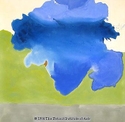
A young boy has learned an expensive lesson: The painting pictured to the left was not a trash receptacle for his wad of gum. (Click on the image to enlarge.)

"A 12-year-old visitor to the Detroit Institute of Arts stuck a wad of gum to a $1.5 million painting, leaving a stain the size of a quarter, officials say.

[…]

"The gum stuck to the painting’s lower left corner and did not adhere to the fiber of the canvas, officials told the Detroit Free Press. But it left a chemical residue about the size of a quarter, said Becky Hart, assistant curator of contemporary art.

[…]

"’Even though we give very strict guidelines on proper behavior and we hold students to high standards, he is only 12 and I don’t think he understood the ramifications of what he did before it happened, but he certainly understands the severity of it now [that he has been suspended and disciplined by his parents],’ said [school director Julie] Kildee."

GET THE STORY.

I certainly hope that Ms. Kildee is correct that the boy did not intend harm, but stories like this have me shaking my head over how much longer it takes children to mature these days than it did fifty to one hundred years ago. Or, even twenty-five years ago, considering that when I was twelve most kids knew better than to stick a wad of gum to an artwork. They might stick it to the underside of the desk, which does show immaturity, but they knew better than to stick it to a painting.

Gum At Mass

A reader writes:

I was at Mass for Ash Wednesday and the Gentleman sitting next to me was chewing gum throughout the WHOLE Mass.  I was getting so perturbed that I thought to myself that I should say something to him.  So just before we were to receive Communion I asked if he was going to receive Holy Communion himself.  He answered that he was, and then I gently asked him if he could remove the gum from his mouth before receiving Our Lord.  His faced changed to a bit of a frown and not another word was spoken.  I do not know if he took out the gum or not, but I was wondering if I was right to ask him to remove it before receiving the Sacrament?

This kind of thing is a judgment call, so I can’t say that you were either right or wrong. You just have to take your best guess in such situations and do what seems right.

For a person who knows better than to have gum in his mouth when receiving Communion the request not to have it there comes across rather like the question, "Could you please not be an idiot, okay?"–and that’s going to generate a frown.

On the other hand, some people are idiots, and steps need to be taken to warn them away from profaning Our Lord in the Eucharist in this manner. They may frown at the request, too, but it needs to be put to them in some fashion.

Without being there to see the guy–and without being inside his head to know whether he was planning to be chewing gum while receiving Communion–I couldn’t say whether he needed the query put to him or not.

So don’t beat yourself up about it. You did the best you could at the time, so rest in that.

If nothing else, you gave him a clue about the kind of signals he’s throwing off at Mass and the questions he’s causing to arise in others’ heads.

Incidentally, for those who may be wondering, gum does not violate the Eucharistic fast, because GUM IS NOT FOOD. Gum is one of those non-food things like mouthwash, toothpaste, medicine, throat losenges, barium solutions, and breathmints that you put in your mouth (and may even swallow) for reasons other than wanting to provide nourishment to your body. It therefore is not food and does not break the fast.

Just don’t leave it on your bedpost overnight.

20

MORE On When To Wipe The Ashes Off

A reader writes:

Tonight my family and I went to Ash Wednesday Mass. We came home and immediately prepared ourselves for bedtime since it was already way past kids’ bedtime, and I wondered what to do with the ashes on our faces.  If Ash Wednesday Mass is in the morning, then typically the ashes gradually fade over the course of the day, and so I don’t feel bad to wash the residual ash off my face– the ashes served their purpose most throughout the day. But this evening when I arrived home it seemed disrespectful to immediately remove the ashes that had only been on for 30 minutes and unseen by anyone outside church. 

My wife stuck to her extensive face-washing routine, and I (hey, I’m a guy) left my face ‘as is’, with the exception of some gentle and reverent blotting to clean off excess ash that might soil the bed linens.

Does the Church teach specifics how to treat the ashes once applied to the forehead?  For example, how long should we wear the cross on our forehead?  And in what manner should we wash-off?

The Church does not require us to get ashes on our heads in the first place. It’s a custom, but the individual members of the congregation are not bound to go forward to receive them.

Neither is there a mandate about how long they should say on. If they stay on for a long time and others see them then that is a side benefit, but their real purpose is to remind you of your mortality (hence what the priest says when he puts them on you) and your need to repent.

Once that goal is accomplished, you can wash them off at any time–especially to avoid things like getting them on bedsheets–though if you can leave them on longer then it is a good public testimony to one’s faith.

I would definitely not have them on the day after Ash Wednesday. Then you’d look like a nut and the good of a public witness would be undone.

There also is no specific manner mandated for washing them off. Just don’t be deliberately respectful as you do so.

Incidentally. lightly blotting the ashes would have never worked for me yesterday. So as to be a better public witness, at Mass at Catholic Answers, Fr. Serpa put BIG BOLD BLACK CROSSES on everyone’s foreheads, not the customary small grey smudges you get most places. We had ashes falling on our clothes all day, and the ashes were so dense that there would have been plenty left to get on my pillowcase if I hadn’t washed them off first.

Lenten Protestants

Ashcross

More and more Protestants are beginning to see Lent as less and less of a "papist" barnacle on the barque of the Christian Church and instead something to which they feel called to observe.

"So, how did Catholic Lenten traditions spread across the border [to Protestantism]? For one thing, the boundaries between traditions are not what they used to be. Crossing them is a steady traffic of believers and seekers. Want to meet someone who was raised Catholic? Try an evangelical megachurch, or the local United Church of Christ. About one-third of believers change churches at least once, according to commonly cited studies. Inevitably, all this changing of churches ends up changing the churches, as people bring bits of their worship traditions with them. Catholic liturgy has appropriated pop music and hand-holding in evangelical style. So, maybe it’s not that surprising that more Protestants are now dipping into the well of Catholic ritual and devotions. In that sense, Lent may be part of a trend: Check out the Ecumenical Miracle Rosary, which recasts Catholic devotional beads for Protestant use by eliminating those troublesome Hail Marys.

"Observing Lent is also part of a Protestant move in the last generation toward more classical forms of spiritual discipline. The hugely influential 1978 book Celebration of Discipline, by Quaker theologian Richard J. Foster, encouraged churchgoers to rediscover fasting and meditation in ‘answer to a hollow world’ and as a way to turn toward God. Some questing Protestants started making like monks, practicing silence and solitude. All this was made more palatable by the improved relations between Catholics and Protestants that followed the Second Vatican Council reforms of the 1960s.

"Perhaps it’s the things that made Lent hard to take as a Catholic kid — the solemnity, the self-denial, the disappearance of hot dogs from the lunchroom — that account most for the season’s broadening appeal. I was schooled to see Lent as a time apart, a respite from the daily pursuit of self-gratification. That apartness seems not unlike the ‘inward and spiritual reality’ that Foster suggested could be found in the ancient disciplines. Catholics have for so long thought of themselves as the defenders of ritual — the masters of incense, genuflection, and splendor — that it still seems strange to be sharing ash-wearing with Presbyterians and Methodists. But our shared affection of late for some of the old ways of worship represents a small victory for mystery, ritual, and awe. Now if we could just come to ecumenical agreement about the evils of frozen fish sticks."

GET THE STORY.

Perhaps the main reason why Lent is migrating again is because the human heart sees in it a helpful spiritual discipline in which the Christian believer may draw near to Christ. That human longing for asceticism as a spiritual discipline may be stifled but cannot be smothered. The renewal of Lent in Protestant circles goes to show that when a wheel is useful enough, it will be reinvented.

Why Pray?

A reader writes:

If everything that happens to us is by God’s will or permission, then of what value are prayers that request things from God.  For example, if a person is sick and you pray that they be healed, do our prayers really make a difference in the outcome of that person’s final health?  Can we really "change God’s mind" about things?

I know that the Church, scripture, and the lives of the saints teach our prayers do make a difference, but I can’t seem to get any light on how this might be the case.

Do you have any thoughts on this or books I might consult?

I don’t have any books to recommend (though I’m sure there are some), but I can give you some thoughts.

The purpose of prayer is not to give God information or change his mind. He’s already got all the information he needs, has no need to change his mind, and couldn’t anyway since he’s outside of time.

The real reason for prayer, therefore, is not for God’s benefit but for ours.

How does this work?

Well, first off, when we pray for things we realize our dependence on God. It’s too easy to forget that in the hustle and bustle of life. But when we turn to him to ask for something, we realize that we need him, that he is the source of all the good things we have, and that’s important.

Second, we often pray for other people, and this builds up the Christian community–and the human family–in love. It fosters an attitude of mutual caring and concern. (This also extends to those in purgatory and heaven via prayer for the souls in purgatory and prayer to the saints in heaven.)

Third, by trying to figure out what to pray for, we exercise the intellects God gave us in a way that brings glory to God.

Fourth, when we succeed in figuring out what we should pray for then we in so doing align our intellects and wills with God’s.

Fifth, when we fail in figuring out what we should pray for we may simply ask God to do what is best, thus confessing our own limitations and dependency on him.

Sixth, we are taught as Christians to ultimately subject our prayers to whether or not they are God’s will (either by saying "If it is your will" or some equivalent or by leaving this condition unspoken), so even when we pray for the wrong thing we are conditioning our will to be subject to God’s.

We thus see that prayer has a whole host of benefits, as it schools us in a variety of virtues, including humility, love, thoughtfulness, and holiness. Because of all these benefits that prayer has, God has chosen to make prayer effective.

That is to say, he has chosen that if we pray for certain things then he will grant the request. This is not changing his mind. (He knows from all eternity whether we will pray, leading to us getting what we’re praying for.) It’s triggering the condition on which he will grant certain boons to us.

Hope this helps!
Title-Dropping

B16

You’ve heard of name-dropping, haven’t you? That’s where someone likes to show off how important he thinks he is by working into the conversation the names of all the famous people he knows personally (however slightly). Pope Benedict XVI is too humble to engage in that. So he’s taken up title-dropping instead.

"In the new edition of the Vatican yearbook, the German pontiff is no longer referred to as Patriarch of the West.

"He is simply Bishop of Rome, Vicar of Jesus Christ, Successor of the Prince of Apostles, Supreme Pontiff of the Universal Church, Primate of Italy, Metropolitan Archbishop of the Roman Province, Sovereign of Vatican City and Servant of the Servants of God.

"According to sources in the Vatican publishing house, the move — noticed by only the most observant of Vatican-watchers — was requested by the pope himself.

"It is seen as a sign of Benedict’s desire to overcome the 992-year division between Roman Catholics and Orthodox Christians.

"It is a ‘sign of ecumenical sensitivity,’ officials said."

GET THE STORY.

Interestingly enough, it can also be seen as Pope Benedict’s continuing efforts to preserve the legacy of John Paul II. According to the article, the move was originally considered by JPII, who was passionate about reconciliation with Orthodoxy.

Hungry, Yesterday?

Good. It was Ash Wednesday. You were supposed to be.

Ash Wednesday is one of two days of mandatory fast under current Church law. (The other is Good Friday.) Neither day of fasting is severe. In fact, the reduction in food required by law is quite mild.

This is not how it has always been, though. There used to be many more days of customary fasting in Lent. In fact, you basically had to fast for the whole of Lent under universal law.

Sometimes fasting has also been much more severe than it is now.

And that’s okay. There is no one right way to do fasting, and the same amount is not always suitable for everybody in every time and every place, which makes it a good thing that Christ didn’t mandate a particular amount of manner of fasting for his followers. He simply said

And when you fast, do not look dismal, like the hypocrites, for they disfigure their faces that their fasting may be seen by men. Truly, I say to you, they have received their reward. But when you fast, anoint your head and wash your face, that your fasting may not be seen by men but by your Father who is in secret; and your Father who sees in secret will reward you [Matt. 6:16-18].

The general manner in which Jesus addressed fasting allowed his Church to adjust the requirements of fasting to meet the changing needs of society.

It’d be really hard–in a developed society today–to mandate a whole month of severe fasting for the entire populace.

For example, if you required people to fast all day and only eat at night then people would get up (or stay up) to eat before it was light and then be tired during they day, perform their job duties sluggishly from lack of sleep and food, and then drive home at 90 miles an hour in a hunger-induced panic to get their evening meal, causing bunches of traffic accidents.

If the only fasting requirement was that you not eat during the day then people would gorge themselves at night, actually gain weight during the month of fasting, and make each night a sleepless Mardi Gras, figuring they’d sleep on the weekends.

How do I know this?

BECAUSE IT’S WHAT HAPPENS IN SAUDI ARABIA EVERY RAMADAN.

Unfortunately, the specificity with which Muhammad is held to have mandated the Ramadan fast makes it difficult or impossible to adapt the institution to the needs of a modern society.

It’s easy for us today to look at the Ash Wednesday and Good Friday fasts as not very much to ask–perhaps even too little to ask–but more severe fasting for long periods of time causes its own problems. It’s one thing to keep a strict fast when the pace of life is slow and you’re in a pre-industrial society and don’t have to get behind the wheel of a car while you’re ravening with hunger.

But those kinds of long, more severe, society-wide fasts are not suited to the living conditions we find ourselves in today in much of the world.

Whether or not the Church always adapts its laws on these matters wisely, I’m so glad that the Church has the Christ-given freedom to adapt them.

Catholic-Lutheran Issues

A reader writes:

Hello JamesJimmy, I have a Roman Catholic friend who was in the process of becoming Lutheran.  After speaking with him regarding our Faith he has halted the process and is interested in understanding the differences between the Lutherans and us Catholics.

Is there a book or some literature out there that in a no-nonsense sort of way can explain the differences ?

One of the first things that springs to mind is the book The Spirit and Forms of Protestantism by Louis Bouyer. It’s a sympathetic look at Lutheranism and Calvinism by Bouyer, who is a convert to Catholicism from Lutheranism.

Bouyer is a real theologian, though, so the book may be a little heady for what your friend is wanting. If that’s the case,

HERE’S A GOOD ARTICLE BY MARK BRUMLEY SUMMARIZING BOUYER’S KEY POINTS.

There’s also a lot of good material over at CATHOLIC.COM.

And if justification is a special issue for him, he might want to check out a copy of my book, The Salvation Controversy, which goes into the subject in detail, along with an analysis of the Joint Declaration on the Doctrine of Justification that the Holy See signed with the Lutheran World Federation a few years ago.

Hope this helps!

Waiting To Exhale

So, I surfed into an article that was billed as reporting a "an unprecedented [pro-choicepro-abortion] summit [for pro-choicepro-abortion advocates] to re-examine their strategies — and the ethical aspects of the [abortion] debate" and found out that pro-abortionists are now seeking to capitalize on the post-abortion healing services sponsored by pro-life groups by offering their own post-abortion "healing services."

"Aspen Baker does something most women don’t do: she talks about her abortion. When she got pregnant at 23 she wasn’t ready to be a mother and her relationship was already dissolving. Pro-choice, Baker unexpectedly found herself facing a moral quandary about her decision. ‘I really struggled,’ she says. After the abortion, she figured she’d be given a list of support groups or even just a number to call. But the California hospital that performed the surgery sent her home with only a prescription.

"The procedure left Baker relieved, but sad enough to seek out counseling. What she found, though, were mostly judgmental pro-life Web sites and religious groups. Even when her search led her to volunteer at CARAL, the California affiliate of the National Abortion and Reproductive Rights Action League, she didn’t find many sympathetic ears. The battle to keep abortion legal left no room for emotional turmoil. Neither side of the polarized political debate really spoke to her. ‘Abortion is either tragic or a simple choice,’ Baker says. ‘But I had a lot of complicated feelings about it.’

"Today, six years later, Baker finally has a number to call. In fact, it’s a post-abortion counseling hotline that she helped to create, called Exhale. She has joined a new generation of pro-choice activists and abortion providers that is insisting on talking about the emotions — and, yes, morality — surrounding abortion. Exhale recently went national and fields hundreds of calls a month in five different languages."

GET THE STORY.

Immediately I set aside the reason I checked out the article because I was intrigued by the notion of a "pro-choice" post-abortion counseling hotline. So, I went googling to find it.

SEE THE SITE.

And what exactly does Exhale offer women who have suffered abortions?

"Exhale offers a free, After-Abortion Talkline that provides emotional support, resources and information. The talkline is available to women and girls who have had abortions and to their partners, friends, allies and family members. All calls are completely confidential and counselors are non-judgmental.

[…]

"At Exhale, we believe there is no ‘right’ way to feel after an abortion. We also know that feelings of happiness, sadness, empowerment, anxiety, grief, relief or guilt are common. Abortion can be hard to talk about and finding the right person to talk with can be even harder. Exhale provides the opportunity to talk with someone that supports and respects you, in a safe and confidential environment."

GET THE STORY.

Or, to put it more pithily, in the words of one of Exhale’s satisfied customers:

"After calling Exhale, I felt relieved because I realized that I don’t have to feel ashamed about my abortion."

This isn’t about healing from an abortion; it’s about numbing the pangs of conscience. Screwtape must be proud.